I, Science

Around the nation tomorrow, there will be marches for science.  Why should that be so?  We might understand marches for women, or marches for a minority group, but why should scientists march?  We make only 5% of the population, it’s clearly a small proportion of the workforce.  I am sure I could build a compelling scholarly argument for the importance of science, but rather than go about it mechanically, I’ve decided to talk more about my relationship with science and why it’s so important to me.

Like many children I enjoyed books with different animals and learning about their characteristics.  I remember watching many an episode of Mutual of Omaha’s Wild Kingdom.  I had a book on whales that I love to read a lot, and one on dinosaurs.  I remember learning about the different planets.  I found the colors of the planets, the sun, so stunning.  Different atmospheric compositions led to vastly different looks.  I marveled at the thought of looking up at the red sky of Mars.  I used to capture a variety of insects in jars.  And while I would certainly not encourage such behavior from my child without proper care and the hopes of setting it free, I marveled at the structure and behavior of such creatures.  When I look back on these memories, I have hard time imagining every child not being like this.  Maybe it was a precursor to what I would eventually become, but there seems nothing so natural as wanting to observe the world around us and learn about it and wonder how it works.  How can one not marvel at the array of colors that nature provides?  How can we not wonder at the flight of some creature and the scurrying of others?  How can we not be fascinated by the massive size of the blue whale, to the little aphid that seems but a speck in your hand?  I am certainly not an expert in child behavior, but I have watched enough children to know what observers they are.  And while they may not understand all they see, they are constantly looking.  It seems to me the essence of science lies in the very heart of who we are as humans.

From at least my early elementary age, I remember being fascinated by thunderstorms.  Seeing the lightning streak across the sky was nature’s fireworks and I loved every minute of it.  Often peeking out the window at night, and occasionally sneak out at night so it under the ledge of our house to watch the thunderstorms.  My very first introduction to meteorology was in grade 6 when we learned about different cloud types and how different cloud types could often be predictors to the type of weather that was coming your way.  For some reason I found that fascinating, but I know there was also an aesthetic quality to clouds that I found beautiful.  Their variety of shapes and colors depending on the position of the sun.  To this day I still look up at them and they seem almost beautifully magical floating there.  My first real act as an atmospheric scientist at around adolescent to early teens.  I say this because my observations were recorded mentally over probably a couple of years.  Thunderstorms in the prairie of Alberta are seen a long way off and I noticed that when a line of bubbling cumulonimbus clouds was on the horizon the wind was always blowing towards the clouds, yet the clouds kept getting closer.  After enough observation I saw this as simply a fact, and knew when to tell my family to prepare for thunderstorms.  Often adults would question me, saying “you’re wrong kid, the wind is blowing the other way”.  Of course I wouldn’t learn why this was the case until university, but it gave me some pride to recognize patterns in such a way.

My mother was always good at supporting me asking questions, and even better at showing me how to find those answers.  In those days it was the library.  How easily today I could have looked up the answer as to why wind blows towards the thunderstorms before they come to you. Kids today really have it so much easier, but they also have to deal with a lot more misinformation than I had to deal with in a library.   She taught me a lot about research and to look for answers in multiple places to make sure there was some consensus.  Though she didn’t have an advanced degree, she was always one to have questions herself and research the answers before forming an opinion.  Although she never said so explicitly, I think it was important more to see that our own senses are not enough to really understand how things work, and having information from other sources can help us answer our questions and make better sense about what we see.

When I look back, the ingredients it took for me to become a scientist seem rather organic.  Parents who encouraged questions and were curious themselves, made science feel like it was no extra effort.  School was effort at times, and I didn’t understand everything easily, but it never stopped me from finding it all quite interesting.  My favorite subject in high school was actually biology.  I loved learning especially about organ systems.  The way the body works and maintains itself still amazes me to this day.  So while there may be some combination of genetics that works in my favor, I find it hard to understand how we aren’t all scientists.  Not by profession, but just by nature.  I think, that regardless of my job, science would be a part of my life.  It has already helped me immensely in understanding so much and answering so many questions, and knowing that there is always more to learn is rejuvenating because it means that maybe I will learn something and it will change my whole outlook.  It means that what I do today, because of what I have learned, might be something that I never saw myself doing before.  I used to think that it was sad that I could not learn everything there was to know.  Beyond the impossibility of that task, I think life would go stale quickly if there wasn’t newness.  Science may not bring certainty, but it does bring to the fore previously unknown possibilities and who can say that does not make life more fulfilling?

Some people think that science removes mystery from the world and thus makes it less exciting.  It was in the 8th grade that I decided to become a meteorologist.  I can tell you that a thunderstorm today excites me to less than it did when I was a child.  In fact now, when I look at a thunderstorms I see equations and physical laws floating around like code from the Matrix.  I see into the cloud and in my head see interactions between droplets and crystals that I never saw when I was a child.  I understand the magnitude of the forces that meet to produce this wonder of nature, and I feel the weight and power of it, in a way I never could have as a child.  It is like the difference between falling in love with someone, and the deep intimacy and friendship that you develop after you’ve known that someone for many years.  It is love with depth, it brings a lasting feeling of happiness and well being.

Somewhere a child has nowhere to turn for answers to the questions they have.  Somewhere a child is told not to ask questions, or is simply told what their parents say is the truth of things, and that questions are dangerous.  Somewhere parents have decided that their girl shouldn’t be educated, or that science is not for girls.  Somewhere a teacher doesn’t understand science themselves and thus kills the joy of curiosity and learning in their students.  Somewhere a group of politicians have decided that memorization-based exams are the important metrics to determine funding.  Somewhere a television show is making scientists seem irrelevant and worthy of ridicule for finding excitement in discovery. Somewhere a journalist is completely misrepresenting a scientist’s findings.  Somewhere a government is denying the findings of scientists to help rich people make more money.

These things make me sad.  I see no reasons why we can’t be a society that is constantly asking questions.  We have a tool for answering those questions that we know is reliable.  It is so pervasive now that we don’t even recognize all the ways it shapes our lives. If we supported that scientist in all of us, the one who first makes their appearance at the earliest of ages, the power and value of this tool would be immense.  It helps us ethically and morally.  It helps us fight oppression and inequality.  Science is the only thing that has no politics, no religion, no race or culture.  It truly is for everyone, and in everyone.

I see the March for Science as not just a political statement.  It is about showing the value for curiosity, for education, for discovery, and for wonder that we seem to be losing.  Our government has become one which seems to think it has nothing to learn.  One where opinion is as valid as fact.  One where there is no consequence for lying.  I don’t blame Trump for this alone, he may be the penultimate in this dangerous attitude, but it has been bleeding into our society for some time.  The March for Science is a march for progress.  A march that shows we care about our fellow human, and that we value science as a means to reduce suffering in the world.

I say all this, not because I am a scientist and I worry about my job.  I say this because it is my lived experience.  I say this because we all intrinsically know that change is the only truth in this universe, and that time makes a fool of the arrogant who think they have nothing more to learn.  I say this because history is full of the darkness that follows when we rest our futures on superstition and falsehoods.  Finally, I say this because I do think there is significant evidence that human-induced climate change is the scientific issue of our time, and threatens our very existence.  It challenges us like no other issue, because it cannot be solved by one nation.  It cannot be “felt” on a day to day basis.  It is the essence of science because it takes us beyond the narrow field of view that we each individually possess and asks to widen the lens and reach out into space and time, and think big.  If we cannot do that, the story of humanity becomes a tragedy.  I, for one, refuse to let it be, because I know we can do better.


Of the Many and the One

In late spring thaws or pouring rain,
The water finds its way from peak to base,
With gravity and a groove it is turned,
First one way and then another,
Splitting here or there as chance permits,
So many thrills, with rills, and spills,
Into braided streams and channels,
Until all the many choices become one.

And where that mighty mouth,
Dares a salty kiss on majestic sea,
It slows its approach out of respect,
And unloads grain upon grain,
Until a bed is made for them both,
And the river does tease with dendritic hands,
The ocean ebbs and flows with delight,
In brackish ecstasy they become one.

In winter bare does the tree invite,
A labyrinthine exercise for the eyes,
From small sprout it begins to climb,
Branch to branch, twig to twig,
Steadily, always going out on a limb,
Spreading high and wide, leaves unfurling,
All to catch those golden rays of sun,
The majestic sylvan purpose is one.

Darkened skies heavy with bloated drops,
An ominous base hovers over thirsty land,
Millions of electrons bully others away,
Full of potential an army charges out,
Their leader searches from something positive,
It sends one battalion here, one there,
A more covert operation you’ll never see,
And in a flash, power surges in finding the one.

And as I sat and pondered these things,
I looked ahead at the decisions before me,
And those that were far behind,
Would one different turn have changed me?
And what decision should I make next,
Not knowing where I might be sent?
Are all the many branches of possibility,
Just an illusion that lead to an outcome of one?

Opposition and Divisiveness

This is going to be a little bit of a rant, so if it seems like I forgot to breathe at times, don’t worry I assure you I’m alright. 🙂

We’ve all heard the tone of those who voted for Trump, maybe they were third party voters, or didn’t vote at all “let’s give him a chance”, “let’s see how he does”, “I am going to support him since he’s my president”.  As nauseating as this can be, there is something worse to me that’s driving me up the wall.

“You’re being divisive”.

This is hard for me to understand.  Look, there is no question that we are a nation very much divided right now, and we need to, somehow, try to unite as a people.  There is no question about that.  During the past 8 years I heard people say all sorts of ridiculous things about Obama being a socialist, death panels, taking away everybody’s guns, and host of fabricated tales mean to discredit the president and his administration.  I tried presenting counter information without name calling.  I did not see their disagreement as divisive, just somebody who wasn’t informed or had a different point of view.  I never accused anybody of being divisive.

Now all of a sudden everybody on the right is concerned about how divided this nation is, and at that by opposing Trump’s terrible ideas we are being divisive.  When the right said they didn’t like the ACA, did anybody tell them to shut up they are being divisive?  That they aren’t helping?  To get behind the president?

I am a scientist.  I try to base my opinions based on something, and defend my point of view.  Sometimes my information isn’t the best and I own up to it.  But when my disagreement is being labeled as divisiveness, this is pure distortion and I will not take ownership of that label.  I’m not being derisive to people personally, but I will challenge ideas that I think are harmful.  And these people who label me as being divisive were never calling out people on their own side for the same behavior.  I mean if you know a large portion of the country is pro-choice…shouldn’t you tell your pro-life friend to stop posting videos of bloody fetuses on Facebook?  Never seen that happen once.  Never seen a Republican tell the birther’s they were being divisive.  I’ve never seen a Republican ever tell another Republican they are being divisive for posting something that the other side disagrees with.  But all of a sudden liberals are all divisive.  We are the ones causing division.

It’s not divisive to make abortion illegal, to normalize sexual assault, to call scientific consensus a hoax, to label illegal aliens as drug dealers and rapists, to build a giant wall, to freeze immigration on refugees if they are Muslim, to say gay people can’t marry the people they love, to say you are going to lock up your political opponent in jail….an entire campaign run entirely on divisiveness.

And because I not only resist those notions, but can defend those positions with evidence and statistics, that is deemed divisive.

Look, I am not saying their aren’t a great deal of liberals calling people names, or calling Trump names gets us nowhere and is arguably divisive.  But posting tips for activism, pointing out hypocrisy, presenting one’s viewpoint in a reasoned manner should not be seen as divisiveness.  One person, who dropped me off of Facebook, even told me that my divisiveness was of the kind that would lead to war.  And this was somebody who told me that she doesn’t vote for any party that doesn’t support banning abortion and told me Trump would restore morality to the country.

So I’m not sure what you want from me.  If it’s silence, that isn’t going to happen.  I am going to keep presenting what I think are informative and well-argued articles, and I am still going to reasonably explain why I think a certain action or ideology is wrong.  People act like I don’t spend a great deal of time trying to understand other points of view, I’ve reached across the aisle more than anybody has reached across to me to understand my point of view and I’ve actually adjusted a number of my positions on issues as a result of it.

So when somebody who denies the existence of climate change is put in charge of the EPA, or a white nationalist is put on the National Security Council, or a completely unqualified person is put in charge of the Department of Education and you are silent about it.  You are the one being divisive.  You are the one who voted for someone who used divisiveness as a tactic to win your support.  I am speaking out because you won’t, because I feel we will all lose at the hands of the people in charge of government.

And in the end, if you still think that’s being divisive, well then I can accept that, because I have no business being on the side of someone who, if they find my viewpoint disagreeable, can’t engage in civic discourse about it.  I still bear you no ill will, but I have a country to worry about and I really don’t have time for your hypocritical judgment.

Rant over.

Climate Scientists Embarrassed but Thankful for People on Internet Telling Them About the Sun

In a surprise reversal of position, numerous climate scientists now say they could be all wrong about climate change, thanks to a plucky group of public skeptics who have spent numerous hours on the internet reading articles by people not associated with the climate research in any way.  For years climate researchers have failed to listen to these pleas for reason and understanding.  Much to the chagrin of the climate community, a major misstep has been brought to light, climate researchers have forgotten to take into account the sun in the now shaky theory about human-induced climate change.

The moment of truth came Dec. 9th when an article that was reporting 2016 was shaping up to be the hottest year on record when a commenter who goes by the name “drillbaby” said the warming we are seeing is caused by the sun.  We were able to track down this commenter as internet climate expert and full-time real estate agent, Derek Laskin, to ask him how this revelation came to him.  “It really was the stuff of stories the way I was inspired,” exclaimed an excited and proud Laskin, “it was a cool morning, but the sun was out, and I noticed that throughout the day things started to get warmer.  That’s when I came upon this article about climate change and global warming, where the scientists are blaming on carbon dioxide from fossil fuels, but based on my experience on how the sun seemed to be working, I decided to comment on this article to suggest that maybe we shouldn’t be looking at carbon dioxide, and that the sun is responsible for the warming.”

This comment may have been missed by the climate science community if not for a bit a random luck.  Climate researcher, Dr. Mike Hulme, received a text message from his sister who happened in the article that simply read “Holy shit, some guy commented on an article and mentioned the sun!  I’ve never heard you talk about the sun before in telling me about your work.  WTF!?”  The word spread at the speed of light in the scientific community, and while some resistance remains to this new development, the change has been visible and scientists are now contemplating a spectrum of new ideas in regards to the warming we are seeing.  We had a chance to go to King’s College in London to talk to Hulme.  “Needless to say I am shocked.,” said a shaken Hulme, ” All those years in school studying weather and climate, and nobody ever brought up this glowing orb in the sky called the sun.  I’ll admit it made the physics of climate somewhat implausible, but you know we tend to respect our teachers and believe what they tell us without every going through that process of discovery on our own.  I am just glad that we have internet commenters like drillbaby to clue us in to important things we have missed.”

When asked why some researchers are still resistant to this very pervasive idea of the sun causing warming, Hulme replied “Well I have no idea why they would prefer to remain in the dark as it were, but I guess most scientists care more about money, and it’s a tragedy really.  But I have no other explanation.  I will say that there really is a lot of confusion right now and so some scientists are reticent about changing their views yet until all the information comes out.  Currently we are still mining internet comments and finding out all sorts of things we previously did not know.  As it turns out there are many people who haven’t spent years studying atmospheric physics and research climate data who are writing some pretty in depth articles about how we got it all wrong.”  We then asked Hulme if there was anything else these internet comments were shedding important light on.  “Absolutely,” responded Hulme, “Quite a lot really, but one thing stands out.  As it turns out there are many people saying that the climate has actually changed naturally over the course of Earth’s history and there really is no need to worry.  Apparently if things change naturally any suggestion that changes may be enhanced or made more severe unnaturally is a pointless argument.  I’ve even changed my views about gun control.  People die naturally, thus homicide is irrelevant.  I’m just going to retire early and hang out with my Scottish Terrier”

Silence ensued for a few minutes as the exasperated Hulme simply shook his head in quiet contemplation.  I then asked him about the field of paleoclimatology that looks at how climate has changed in the past.  Hulme looked up at me wild-eyed and said, “Don’t you understand, it’s all been a lie? We missed the part about the sun and so you can’t trust any of our understanding about past climate either!  Honestly how can you trust us or anything we say ever again?!”

The Sun, featured here in the upper right.  The missing piece of the global warming puzzle, previously missed by scientists.
The Sun, featured here in the upper right. The missing piece of the global warming puzzle, previously missed by scientists.

We left the sobbing Hulme, but there still seemed to be some questions.  Previously computers models had demonstrated the warming could only be explained with the additional CO2 going into the atmosphere, and not by natural causes alone.  What then were those computer models even showing?  We sat down with a distraught Dr. Michael Mann at his office at Penn State University to ask him.  “We’ve all been taken aback by this sun thing, and it’s really made us look more carefully at the qualifications of the people involved in this research.  Models are really complex and most of us don’t really understand it.  As it turns out those who make these models don’t have years of experience studying computational fluid dynamics, but are rather out of work video game designers.  Apparently it’s quite common to randomize things in a video game, and this is apparently what the designers were doing – just randomly throwing in some false warming into the models.  Overall it’s pretty disappointing that we missed the sun in our models.  Right now I’m in the processing of going through my old syllabi that I have from my many years in college to make sure that there was no section called “the sun”.  If not, I think I have grounds to ask for a refund on my tuition.”

Finally, we asked Mann when the climate research community would have an official statement to make to the public they lied to all these years.  Mann, like Hulme, said there are many more internet comments to troll through, but he did say this “Right now I’d just like to say thank you to all those who persevered through perhaps 6 or 7 articles from right wing media outlets and were still able to find time to post their well-defended comments underneath articles with our nonsensical babbling which represents, to be honest, some of the shoddiest science mankind has ever seen.”

The Good News and The Bad News on Climate Change

On Friday, at my university, we were fortunate enough to have a very well know climate science researcher speak, Michael Mann.  IF the name sounds familiar it’s because he was the one that produced the famous “Hockey Stick” graph that appeared in the peer-reviewed Geophysical Research Letters journal in 1999 (I wonder how many graphs have their own Wikipedia page!).  The graph of course was much maligned by climate change deniers funded by various lobbying groups, but has since that time proven to be quite accurate and verified by other researchers.  His was also among the e-mails leaked in the scandal called “climategate” which, despite the spin of deniers from out of context e-mail excerpts, has been debunked by the scientific community.  It was a great opportunity to hear from someone who has been at the heart of promoting scientific research on climate change, while also dealing with a great deal of political controversy and pseudo-science promoters who try to claim human-induced climate change is a hoax.  Like many climate scientists he has reached a point where he no longer finds it very useful to reach out to the public with facts and figures.  Numerous research articles have concluded that now, views on climate change are governed by political ideology rather than directly arguing with the science behind human-induced climate change.  I found the talk quite illuminating since I too have reached the same conclusion that scientific evidence seems to carry little weight when having discussions with people about the issue.  I also found it illuminating to learn more about the political state of affairs in the U.S. right now, so I wanted to share some good news and bad news takeaways for those of you concerned about our Earth.

The Good News

One thing that I thought was a good take away is that if you are a person debating or discussing this topic with a friend, relative, stranger whatever, that talking about the scientific consensus is probably the most helpful thing you can do.  Obviously there are always going to be contrary people, but for many there is still a misconception that this is a split issue, and research demonstrates that a lot of minds are changed by pointing out how much consensus there really is.  For more conservatively minded people reminding them that there are more economic benefits to doing something to not doing something, and that climate change also represents a national security issue is also important.  Fortunately there is already a faction of the military addressing climate change from this perspective.

The other bit of good news is that there is a great deal of plans in place by scientists and engineers to start dealing with climate change.  Basically the scientific community is prepared, and are simply waiting for the political will to be able to spring into action.

Michael Mann also said there are a lot of Republican members of congress who are closeted climate change supporters.  They accept the scientific evidence and feel that it is important to do something about it.  Why are they in the closet, well they have learned the lesson of Bob Inglis.  He was a SC congressman who served from 2005-2011 and came out for doing something about climate change from an evangelical Christian perspective.  He said the scientists were right and as Christians we should be caring for God’s creation.  If you are a Christian this is a valid position to take and is supported by scripture.  Bob Inglis ended up losing by a landslide in the Republican primary as his opponent was support by the Koch brothers.  Michael Mann and Bob Inglis are good friends and so I believe this political inside information to be plausible and valid.  In some ways by releasing him like that, conservative America has opened up a can of worms and Mr. Inglis now promotes doing something about climate change from both a Republican and Christian viewpoint.

The Bad News

Well the bad news is also related to the good news.  It makes me concerned, not only that the massive money of the Koch Brothers and energy companies lobbying against solid science is preventing us from taking action that will help this planet, but also that we have so many Republican people in congress without the political courage to stand up to the money.  It seems if they all banded together I am not sure what the likes of the Koch Brothers could do, if all of a sudden all of those people in congress lost their next elections suddenly. It would sort of “show their hand”.  I guess it upsets me that the people we elect can be so intellectually dishonest and live with themselves.
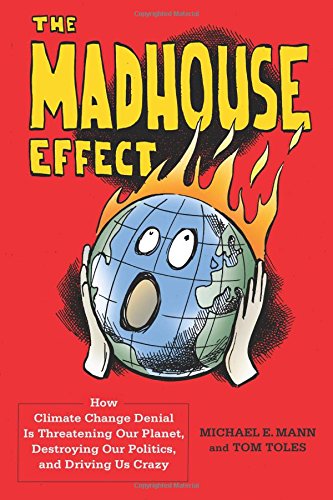
I asked Michael Mann what the political tipping point would be to make all these Republican congress people come out the proverbial closet.  He said that it would take the Republican party to crash and burn in this next election.  Only by losing the executive branch and the senate (and possibly the house) would make them turn around and start to support more environmental concerns.  The problem is that this election is looking a lot closer than it should be.  A small margin of victory by Clinton isn’t going to cut it.

——————————————————-
What is clear is that whatever your political stance, climate change is in your best interest and it behooves you to vote for politicians who do have the courage to fight for this planet.  Given Gary Johnson, and Trump’s stance on climate, these are really not viable options.  And most importantly make sure you vote for people in the senate and the house who accept the scientific consensus on climate change as well.

Finally I also want to help promote Michael Mann’s new book.  It gives a much more in depth discussion than my little summary here.  He also teamed up with a satirical cartoonist from the Washington Post who provides some good humor throughout the book.  The book address things like ethics, politics, the money and ideologies behind climate science deniers, logical fallacies, and of course some basics about the science.  I highly recommend it.


The book discusses tipping point in the climate system which are points which there is no quick return from and can lead to rapid disaster.

Hooked on a Feeling

I don’t plan on making this a long one, but there are some times when you see something where all you can think is Yes.  Yes. Yes, yes, and yes.  Yes.  Yes.  That’s the problem.  That is THEEEEE problem. Yes. We have lots of other problems, but we can’t start to solve those problems until we address this one.  It is not uniquely U.S., but we certainly have a lot of it here.  And it is not uniquely Republican, but they have made it a central theme to their party platform.  If you haven’t watched John Oliver’s piece from “This Week Tonight” on the RNC national convention you should.  For those with less time, I encourage you to start at about 3:39.  And for those with even less time I encourage you to watch when they start talking to Newt Gingrich.  I love that old Newt entirely gave the game away.  I am don’t like the fact that there are far too many in this nature who don’t see that.  For those with even less time I will give you the quotes of the night:

Newt: “The average American, I will bet you this morning does not think crime is down, does not think they are safer…”

Anchor: “But it is…we are safer…and it is down.”

Newt: “No that’s your view”.

Anchor: “Those are facts”

Newt: in articulate mumbling and then “…but what I said is also a fact”

John Oliver “NO IT ISN”T! No it isn’t! It’s only a fact, that that’s a feeling people have”

After John Oliver makes some great points they go back to Newt.

Newt: “The current view is that liberals have a whole set of statistics that theoretically may be right, but it’s not where human beings are.”

The reporter argues that his accusation of liberals using these numbers is partisan, but she explains that the numbers come from the FBI, and that’s not a partisan source.

Newt: “But what I said is equally true, people feel more threatened…”

Anchor: “Yes they FEEL it…but the facts don’t support it”

Newt: “As a political candidate, I’ll go with how people feel and I’ll let you go with the theoreticians”.

The fact that a major politician feels his feelings = facts is a problem.

The fact that politicians feel that their role is to appeal to feelings and not facts is a problem.

The fact that politicians intensify and exploit those feelings and manipulate us because of them is a problem.

And while this CNN anchor (sorry I don’t my anchors that well as I avoid the major news channels like the plague) is doing a tremendous job pointing out the flaws in Newt’s arguments, the media frequently also appeals to our feelings and not facts as well.  This is also a problem.

Imagine politicians and media if you presented us with actual information, and actual facts, and we determined our own feelings.  But then we’d be more powerful and government would actually have to answer to the people.  And the poor media would be relegated to actually watching over both us, making sure we remained informed and making sure the people making the decisions remained honest.

Drug users and petty thieves fill our jails, but this crime against humanity continues unabated.

It All Hangs in the Balance

One of the problems I revisit regularly in my mind is the one of individualism versus collectivism.  It has been brought back to my mind as I finally concluded reading Isaac Asimov’s Foundation series. His final two books in the series look at the idea of having individual consciousness or a more global consciousness which is inspired by the Gaia hypothesis, in which humans participate in self-regulating consciousness cooperatively with each other and all other life to create a state of perfect balance.  Asimov too struggles with the loss of individuality in favor of the common good.  Asimov seemed to be in favor of the latter, although I believe he tried to argue that a global consciousness doesn’t mean there is no individuality only that at times we must put that aside for the greater good.

The United States is a highly individualistic nation and it’s no surprise why so many nations with throngs of people forced to conform into a faceless, impoverished mass would envy the American way of life and freedom.  It occurred to me that many of the debates I seem to have about politics and ways of life are often have, at the heart, the issue of the greater good (collectivism) vs. individual freedom.  I guess it seems that I also side with the collectivist philosophy, but I also recognize the value of individuality to make that collective dynamic and adaptive to a changing understanding of our universe.  Whether it’s capitalism versus socialism, gun rights, globalism vs nationalism, justice and law, these debates often rest on arguments on what benefits the greater good and how much freedom we should have as individuals.  There is a balance to be had, and most critically thinking people I know agree on this, even if we disagree where that balance should be.

Freedom in itself is a strange concept because it doesn’t seem possible in the absolute as a social species.  How free am I to make any of my decisions? I should be free to buy my own clothes, but what if those clothes are made in a sweatshop?  But what if, even that meager wage allows people to live instead of starve, or at least a few more are able to break from that impoverished life.  When I simply provide for my family I make a thousand decisions that can impact positively and negatively others in the world, and though it may seem like I am living a quiet life causing no harm this may not be necessarily true, even if that harm is indirect.  How much does my lack of struggle in life come at the expense of someone who must struggle more?  It’s easy to ignore that which is not in front of your face and that which does not feel like part of your community.

Our species is a social one, and there is no getting around it.  Regardless of whether we are shaped as a hunter-gatherer society or “civilization” everybody has a role and can play a part.  And even if age or some accident in life, or a random birth defect we even have the ability to carry that small fragment of population along with us, and even find a way to find a use for them, even if that use is only to increase our capacity to have compassion.  As a result whatever values we hold will shape who we are as a species.  Too strong of a value on individualism over the greater good could leave us with vast degrees of inequality, decreased value on cooperation, and dysfunction in the ecosystem.  Too much emphasis on the collective can lead to greater conformity, loss of diversity of thought and ideas, and thus stagnation from individual growth and growth as a society.  The question becomes how can we promote individuality while at the same time convince people to work together and be in harmony with their environment?

If we remove humans from the Earth we would find a very self-sustaining organism.  Barring some large collision with an asteroid, life would persist until the sun went nova.  However it would be a mistake to think that there was a global consciousness such as described by the Gaia hypothesis.  I think it’s always a bit of a myth that other organisms live in balance with nature, whereas humans do not.  If you studied population dynamics in school you perhaps learned about cycles of rabbit and wolf populations.  The wolf is not conscious of the fact that it must conserve how many rabbits it eats or that it should hold off on having babies this year because if all the wolves in an area increase in population there will suddenly be a rabbit population in starve.  It thrives according to the food it can gets, and if can no longer get food, it starves, and there are less wolves, allowing the rabbit population to rebound.  Rabbits that evolve better evasion skills pass on their genes, and wolves with better hunting skills pass on theirs. And the population of both rabbits and wolves oscillates about an equilibrium, an average value that both populations of rabbits and wolves do not know they are maintaining.  One of the values of our intelligence should be that we can discover these equilibriums and we are best adapted at maintaining it.  We always haven’t been conscious of our place in the ecosystem, but we are now, and understanding more all the time.  It’s not surprising we could be so destructive, but as we learn more we also have the ability to extremely great stewards.

Annotation of the PREDATORS-PREY Relationship

Of course Asimov’s Gaia world, just as proposed by Lovelock, is likely a pipe dream in reality, because in his idea there was a collective consciousness that made decisions only in proportion to maintaining balance.  Such a reality for humans would mean that we would have all make sensible decisions about how many children to have, what to eat, and how to live peaceably in our environment.  But what’s interesting to me is that we also see examples of this in our human histories.  Many groups that ended up on islands learned how to conserve rather well.  Spacing out how often and how many children we had, techniques at preserving and storing food, techniques for domesticating plants and animals were all attempts to have ample food supplies for harsh seasons and changes in the environment.  But like any form of life, when abundance is presence, there is no thought to be conservative in terms of population.  We became masters of farming and population exploded as we began to be able to seemingly provide ourselves with food at will.  As it turns out we were only fooling ourselves, because our powers were still not limitless, although it made sense how it might seem so in the short term.

What I do see when I look at humanity is a potential for a march towards that ideal of global consciousness.  We may never truly have a global consciousness with each other and all life on the planet, but what we do have is empathy.  We have the ability to be conscious of the damage we do to our environment and other life, and what the long term impacts of that damage will be.   We have the ability to recognize that we might all be different pieces in a puzzle, but that we have equal value to the whole.  Just like each piece has uniqueness and is still integral to the puzzle, we can maintain our individuality while also recognizing what we are all a part of.  In this sense there would be no difference to an actual global consciousness and all acting in a way as if there was one.  We have a long way to go, but I believe it all begins with humility and compassion, and acceptance of the idea that all humans are part of the same tribe, the same community, the same species, and that we all have value.

Shepherding the Earth: Fallacies That May Destroy Us All

I was listening to one of my favorite podcasts called The Hidden Brain on NPR and they were talking about the climate change situation in a great episode called Losing Alaska.  Basically they were saying that scientific arguments have little merit anymore in talking about climate change.  I would have to say that I agree.  As WhiteEarthWhite EarthAlaskaMuirGlacierDisappearingFast194120040001Asomeone who holds a Ph.D. in the Atmospheric Sciences I can most certainly say that few people that I have debated with on the subject truly understand the problem scientifically and I don’t claim to be the smartest person in the world, this is simply the truth.  My field is applied math and physics.  Not only that, the climate system is complex.it   Involves interdisciplinary knowledge as well in chemistry, oceanography and geology.  To change someone’s mind from a scientific point of view, it would take a lot of study and learning.  Now you may be saying, wait I accept man-made climate change, and it it’s pretty obvious.  Well I would argue that you don’t really understand it, but it’s easier for you to accept because it already fits in with your ideology.  And I don’t say that to be demeaning, especially I don’t think it’s necessarily a bad ideology to have.  Specifically the one in which we recognize that something is very complex and we don’t have years to study it on our own so maybe I should listen to what experts are saying.  Much like we tend to believe our doctor when they tell us we have cancer as opposed to learning the requisite knowledge we need in order to test ourselves.

Instead of a Heavenly Father, maybe a Mother Earth isn’t a bad person to start worshiping.

But more to the point it really does come down to our personal ideology whether we accept the science, because let’s face it the science is telling us some pretty harsh things.  Not only is the Earth in a lot of trouble, but we actually might be responsible for it all.  And in order to combat the problem we are causing we are going to have to give up a great deal.  Transitioning away from a fuel source we heavily depend on will require large shifts in business and industry affecting the jobs of many.  And of course such a transition cannot be made overnight, but even at a moderate pace will require a cultural change at a rate faster than many of us would have a hard time adjusting too.  That of course does not make it any less compulsory.  Interestingly this podcast made the argument that we all are capable of great sacrifices at times of war or crises, and that dealing with man-made climate change requires an approach that is used by religion rather than one that is used by science.  I find myself having a hard time disagreeing.  While I would love to live in a society where science had a much more powerful influence on changing minds ultimately it does seem that we need to change minds at an emotional level over an intellectual one (which is to me what the podcast suggested by saying a “religious approach”).

In that vein, I wanted to address some of the main arguments I see used by climate change deniers, which tend to be more ideologically based instead of arguments that attack the scientific data on the subject.  They are more dangerous to me, because they seem reasonable.  They seem irrefutable.  This is not the case.

Science had been wrong before, why should we trust scientists?

                          The Geocentric Universe

This is quite true.  Scientists have been wrong before.  In fact progress is actually built on that very premise.  But notice the word “progress”.  It always strikes me as strange that people overlook this aspect of science.  Much like we learn from our own mistakes and grow and get better as people, this is how science works as well.  So we do get things wrong, but we also get a lot of things right.  Your daily lives in this modern world are a living result of that.  From the car you drive to the device in which you are punching out your arguments.  Now you could be right that someday we will discover that we were all wrong about this, but if we do, it will not because we were willfully trying to mislead people, but rather a new discovery has allowed us to view the world in a different way thus disproving our theory.  So unless you’ve got that said discovery I can guarantee you that our assessment about the state of the climate system is based on the best available knowledge we have about how it works.  And personally I see no shame in acting in the best interest of all on this planet based on what we know of it.

Finally, just because you don’t trust science or want to focus on the things it got wrong makes it your problem, and not science’s problem.  To refute climate change science on those grounds is to commit the genetic fallacy.  Directly address the assertions being made by those advocating the position in terms of their conclusions analysis of their data.  That is really your only option.  To explain it more simply “Al Gore is a democrat, and I hate democrats.  Al Gore gives evidence for why man-made climate change is happening, but since he is a democrat, he must be wrong.”  That’s not how it works.  Sorry.

Scientists are just doing it for the money. IPCC is corrupt.  Liberal media…

This argument is the same as the genetic fallacy because it is again an attempt to discredit to the reliability of the source to simply argue away what the source has to say.  I’ll admit that in such instances I will use the same fallacious argument back, because, quite honestly two can play that game, and I can play it better.  Let’s say all of us scientists are ego driven money-grubbing bastards.  My options are renewable energy companies and liberal governments, or oil companies.  Hmmm…I wonder who has more money.  Not only that with all the other scientists clearly in the wrong camp, all that sweet oil money could be mine (as it was for Wei-Hock Soon) as there are even less people to share it with.

In terms of fame, the fallacious argument made by deniers fall even shorter.  If I had definitive proof that all the other scientists were wrong.  I would be the one who was famous.  I’d be on all the news programs, giving talks around the world on a sweet oil company payroll, and even the liberal media would have me on their shows even to abuse me while I valiantly stuck to my guns with the full conviction that I was doing my science right.  I would be the hero of deniers everywhere.

Sometimes even fallacious arguments are hardly worth the effort.

The climate has changed before when humans weren’t around.  It’s natural.

7wG9WakThis is the first part of an argument constantly used.  It’s also known in logic as a type of naturalistic fallacy.  Just because something can happen naturally, doesn’t mean it can’t happen unnaturally.  Do floods happen naturally?  Sure.  Can floods also happen because of human activities?  Absolutely.  Natural selection happens in evolution.  But you know what also happens?  “Unnatural selection”.  The fruits and vegetables we eat, the dogs and cats we have as pets, and the horses we ride are all examples of this.   The same thing can happen with or without intention.

We cannot have an impact on something as big as the Earth.

                                                       The ecosystem formerly known as rain forest.

This argument is made without any substantiation at all.  It is often also used by people who are trying not to be religious but would rather take the James Inhofe argument that God controls the climate!  Of course examples of how we have changed climate locally can be found all over through the building of structures like dams on rivers, cutting down forests and poor farming practices.  In terms of the climate change issue specifically this person does a pretty nice break down of looking at how the amount of carbon we produce can quite easily explain the increase in carbon since pre-industrial levels.  There is no reason to believe that we couldn’t have such a global impact.  In fact that argument always seems to me a way of insulting or discrediting scientists again because it’s a pretty important question to answer before we would even start putting out evidence about climate change.  I mean if the amount of carbon we produce paled in comparison to the amount of increase we’ve seen then I am not sure how the scientific consensus could be developed in the first place.  It’s like when people say, the warming is being caused by the sun, and I think to myself “Oh my…we scientists all forgot to take into account the sun.  I better make a few calls.  Can’t believe we missed that one!”.

The Earth will survive.  We’ve had major disasters before and life persists.  Whatever is going to happen is going to happen.

This is the most insidious arguments, because it’s not fallacious at all in a logical sense.  However it is apathetic and immoral.  A lot of times people will say things like…”we’re just another species.  Whatever we do is natural, and whatever happens will happens.”

Let’s say you are an emergency manager who works at a national park in a mountainous area.  The weather is starting to warm and there has been heavy rains in the mountains and typically when such rains occur, especially in combination with some ice jams in the water flash flooding occurs.  It’s not a guarantee, but likely.   A town at the foot of the mountain in which the river runs through is going to get flooded, people could easily die if they are not warned.  This is a natural event, it was going to happen whether humans are around are not do you warn them?

I think most people would answer that they would.  To me arguing that doing nothing is the only option we have because the Earth is just going to do is thing is tantamount to doing nothing in this example, and simply letting people die.  Many people who accept the fact that the climate is changing but don’t think man is responsible still must accept the consequences to this warming.  Some of the one’s we are more sure of are:

  1. Rising sea levels drowning coastal populations and increased damages and deaths from coastal hazards such as tropical storms and tsunamis
  2. Increased heat waves and droughts
  3. Increases in extreme weather events as climate patterns shift
  4. Increased severity of extreme weather events.

What’s more is that these types of things will adversely impact the most vulnerable of the worlds population.  People who are in poverty.  People who depend on subsistence farming.  When local hazards happen communities do make sacrifices, and do look for solutions, through re-zoning laws, construction improvements, and other engineering solutions to try and make the world safer and have less loss of life.  So even if man has nothing do with the problem it doesn’t mean that we don’t have a responsibility to act to come up with a solution.

One can be logically sound but be ethically and morally irresponsible.  Ignoring what experts are saying, making sweeping and unsubstantiated statements that there is nothing we can do, that it’s just nature, and the Earth will be fine is really the same as having the power to do something to save lives and not doing it.  And this is why I agree that the conversation about climate change has to shift away from science and facts and be more about compassion, about love for our fellow human beings, valuing equality so that we all have the same chance to adapt and survive the changing climate, and about taking responsibility for the home that sustains us all.  These are important values regardless of what is causing the climate to change and these are things we can address and even already have some solutions for.  Of course I know that is even overly idealistic to think that such a solution of addressing people on an emotional level might work.  Hell it’s difficult to find a religion that unanimously agrees poverty is something we should do something about. I feel pretty bleak in general about us actually doing something about climate change.  It requires people to move beyond nationalism, beyond their own religious beliefs and worldview, which tend to not be very worldly at all.  Maybe we can’t win against the forces of nature, but it sure would nice if we could overcome the forces that divide us as a species.  We can try.  Maybe in the end it really is easier to move mountains.

The Heart of the Matter

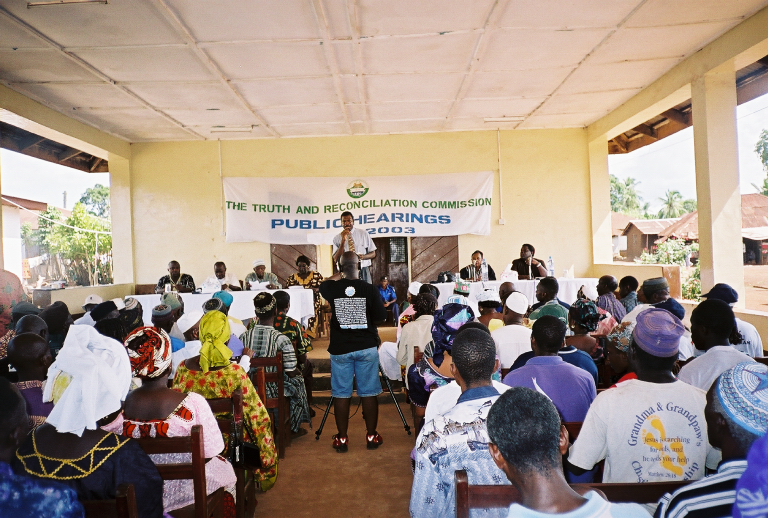
I was listening to another episode of the NPR podcast The Hidden Brain this morning and it rekindled something that often comes into my mind when tragic events happen and this the act of forgiveness.  This podcast was extremely interesting because they were talking with a researcher who was studying forgiveness by collecting data and interviewing people in Sierra Leone in the aftermath of their civil war.  It is a unique situation because after they democratically elected a new government people who were on separate sides of a conflict were in the same communities, and even neighbors.  You could be living next to somebody who cut off your hand, raped or killed a family member.  What happened in that country is truly horrific, and no side was necessarily worse than the other. People were allowed to go back to their lives unpunished by the new government (with perhaps the exception of certain leaders).  In the main story that they follow in the podcast the play excerpts of an interview with two men who were friends before the civil war and when one was captured by the rebels he was made to do horrific things. He came across his friend and the rebels wanted him beat his friend, and he would not do it, and so they shot at him injuring him and told them that if he didn’t he would be killed.  Fearing for his life he did as they asked, and then asked him to kill his friend’s father.  He also ended up doing that in fearing for his life.

I am going to stop there before I going into the aftermath.  Right now some of you are judging the friend harshly who killed his friend’s father.  Some of you feel extreme anger towards the adult rebels who would ask a youth to do this and some of you are just lost in sorry for the pain and anguish that both of these boys must have felt.  You are maybe thinking what you would do in the same situation.  You are thinking about it rationally and cooly.  Let me say first that whatever decision you are making right now, may not be the decision you would make in the moment.  And I think the most important thing that you should think about is that you never want to have to face this situation.  Fear, when facing our own depth makes us capable of much more than we think.  Sometimes horrific acts.

Now the question you have to ask yourself is how forgiving do you feel right now?  And if you can forgive, how much should we expect those who were in that particular situation to forgive?  The podcast asks the question, how does one move forward from such atrocities after neighbor has been set against neighbor?

The way Sierra Leone has dealt with this in trying to stitch their society back together is that all over the country they have reconciliation ceremonies in communities where people stand face to face with people who have done harm to them personally or friends or family members.  They confront each without physical violence.  There is confession and ask for forgiveness.  And forgiveness often happens, because those who are willing to take part in the ceremony want to be able to forgive.  When following up on those who had taken part in the ceremony and when forgiveness happened they found those people were more productive in their community.  They made friends easier, they helped others in their community, more participation in politics and ensuring a positive political future and were more conscious of social justice issues.  It all sounds pretty great.  Forgiveness is a powerful part of healing and there is no psychological study that I know of that recommends holding on to anger and exacting revenge.  Many think it will bring peace, but it does not.  But if forgiveness is the better way, why do we have such a hard time doing it?  Already there are a number of you who are thinking that you could not forgive in such situations as described earlier.

It turns out that the downside of these people who participate in these reconciliation ceremonies is that while society at large gains, the individual suffers.  The act of forgiveness requires a great deal of courage because in that confrontation with a person who caused you harm you must also confront your pain.  You must relive the trauma, the memories, and those horrific images.  Individuals report greater depression and other symptoms of PTSD.  The researcher’s recommendation is that the act of forgiveness needs to be followed by individualized mental health treatment.  It makes a lot of sense.  In addition to the obvious reminder about the importance of mental health it revealed to me that ultimately to truly overcome pain that we experience requires a confrontation within ourselves.  As hard as it may be for two people stand face-to-face in these reconciliation ceremonies, it’s even harder to face the pain with in us.  Perhaps this is why people choose not to forgive and seek external solutions so they don’t have to deal with that pain and never find that path to peace.  Anger, addiction, or just disciplined suppression are all hallmarks of those who cannot forgive and this generally leads to more pain for others and cycles of conflict and violence continue.  I say this without judgment, because no matter how rational my thought process is right now, I cannot know how I would react in the face of extreme fear, and extreme pain.  I find it hard to blame others for not being able to forgive, and I don’t blame people for being angry when they experienced trauma and pain.

shaw_trc_moyambaAs I’ve said to others in the past, the most powerful part of the message of Jesus Christ has always been about the power of forgiveness and that if there is something to believe in, it’s redemption.  The good news from the story told in the podcast is that those two men are once again friends.  I am sure there are times when it is not easy.  The one who killed his friend’s father helps the other plant his crops as he was injured during the civil war.  There are no quick solutions I am sure for them but both are clearly on a path to peace and healing and a chance for a new generation to not have to face the horrors they faced.  And maybe that’s the best reason to be courageous and forgive.  Maybe our own wounds will still burst open from time to time and cause us pain, but maybe we can keep that pain out of future generations.  Because when we act outwardly on our pain and harm others the suffering it causes as pain ripples outwards into their loved ones makes your wound everybody’s wound.  And in I’m not saying it’s all easy but as a people we need to get better about supporting paths that lead to peace.  Especially those of us who have been fortunate enough to not have such events happen in our lives. We need to help people confront the pain that tears through their soul and teach them how they can overcome it.  Forgiveness has value in the face of hurt and harm in whatever form it comes in.  We need to give compassion without judgment and replace despair with hope.

Plan B

Don’t worry this one won’t be about abortion.  I was listening to an excellent podcast called The Hidden Brain recently and the subject was backup plans (episode 8).  It is worth listening to, but I’ll save you some time and summarize.  Basically the program discussed research that showed that people who have back up plans tend to not be as successful in their primary plan or “plan A”.  I have written blogs posts in the past that look at the value of taking risk versus staying safe, and so this subject caught my brain’s attention.  It seems to me that developing a backup plan is something that runs along the lines of playing it safe.  Yet by playing safe we might end up more likely not getting what we really want in life.  So what’s the right answer?  Is there a right answer?

First I began to wonder, why do we do we develop a primary goal to begin with?  The primary goal represents our own hopes and dreams and in theory represents what we really want out of life.  A primary goal should also lead us to a feeling of security while also maximizing our happiness.  At least that’s what we think.  It makes sense that without a backup plan our only choice would to be put ourselves entirely into making this goal work, persevere and never give up.  Having a plan B might make it difficult when things get hard.  With any goal that is hard to reach there are setbacks, frustrations, moments of doubt.  There is absolute value in being able to push through those times to reach one’s goal.

If our plan A is what will make us the happiest and the safest, why do we then come up with a plan B?  I often council my students to have backup plans when applying for graduate school, like picking a few schools with perhaps lower standards so that if they don’t get in to their top choices they will still have a graduate program to get into.  There is a lot about having a backup plan that seems prudent, and this, to me, is simply because we can’t know the future.  We don’t know all the variables.  A student with a 4.0 GPA may still not get into the graduate school of their choice, because it is unknown how many positions they will have open, whether they might opt for a student they know better because he/she came from their program, whether there aren’t other extracurricular experiences that might make one candidate more desirable than another than just GPA, or perhaps a student’s interests simply don’t match up with a professor who has a graduate student position available.  Now if a student could afford to put their life on hold, and didn’t have to worry about money, it might be a worthwhile tactic to keep applying to the same school you want each year until you get in.  The higher the risk of a primary goal, the more perseverance will likely pay off provided you actually have the skill.  The reality is that seldom do we have the ability to always stick with something long enough when we are in need of resources to be able to survive.  In addition to that an inability to understand all the variables that can lead us to success, we may also overestimate our own ability.  As a professor I have certainly come across many of these students also.  Having a backup plan is crucial when a primary plan is even less probably in achieving because the person has overestimated their own ability.  Of course it could also be that my ability to estimate somebody else’s ability may be incorrect as well.  Either way, I think there is an equal amount of positive arguments that could be made for having a backup plan.

I tried to think about whether I am person who makes backup plans or not.  I think that, in general I do not, although I would say part of the reason for that is that I am not sure I have had very specific primary goals.  I wanted to be a meteorologist and become a professor.  I guess I added some specificity to that over time, but I never really said, I have to live in a big city, or in a particular area, I have always tried to be realistic beforehand in what the uncertainties are, and so even though I never had a backup plan, I never set my sights particularly high.  Of course this one possible solution to living life by only having a plan A, and that is to make sure plan A isn’t really that hard to achieve.  This could also be seen to be a questionable strategy as having lowered expectations can also have its pitfalls and is something I would like to follow this post discussing in greater detail.
One study that was discussed in the podcast was one that found that students whose parents paid for their tuition did on average worse than students whose money came from other sources such as student loans or their own pockets.  This study concluded that the reason was simply that students whose parents paid for tuition weren’t as driven because they had nothing to lose, and the security of their parents in case school didn’t work out.  As a college professor I have certainly seen this ring through.  While there are some students who work so much to put themselves through school and thus as a result end up doing poorly because they have too little time to study, in general the students who perform better are ones who either pay for tuition themselves or who take loans out and know they will have to pay it back.  However I was one of those students whose parents paid my tuition.  My family was not wealthy and while the cost of tuition in Canada compared to the U.S. was less and I lived at home, my parents had put a little money away each month since my birth and that came to enough to put me through 4 years of college.  Unlike the results of the study,  I did fairly well at school, I felt the exact opposite of a lackadaisical attitude precisely because my parents were putting my through college.  It was not my money I was using.  I don’t really want to waste my own money either, but in the end it’s my money and I can live with it if I end up wasting some, but to waste somebody else’s hard earned money that they put away and did without many of the creature comforts themselves to give me brighter future…well this increased my sense of responsibility to do well in school.  I suppose I did have the security of staying at home until I figured out what I wanted to do with my life, I really had no backup plan but being a meteorologist and then eventually becoming a professor.  Regardless it doesn’t seem like in all cases having a safety net is necessarily counter to achieving what we want in life.  When I look at my own life, I know my parents taught me the value of money, even if it wasn’t my own, and more importantly I loved and respected them and would never want to disappoint them by doing poorly in school and throwing away their money. Maybe it’s because I knew that they didn’t have much money to spare that made me respect the fact that they were paying my tuition more.

I am not sure I can conclude anything concrete from all this as I am still in the exploration phase of this idea, but it seems to me that in the end maybe whether we have just a plan A, or both a plan A and plan B isn’t the most important thing.  Maybe what matters most are the values we are raised with.  One can still achieve a plan A, even with a plan B provided we recognize that plan A simply doesn’t get achieved without putting our full effort forward.  Maybe our default to a plan B is simply because we really didn’t want plan A enough.  I know plenty of students whose plan A was given to them by their parents and has very little to do with their own plans for themselves.

Are you the type of person who makes a plan B or do you usually just make a plan A?   I am interested in learning how your plans have worked out, so please feel free to leave a comment.