Striving for a better world where you can keep your guns

An article I read recently has helped me admit the truth in regards to gun control.  There is truly no tragedy bad enough for us to reform our gun laws.  So be it.  It is a tiresome debate to be sure, and so I wanted to approach it from a different perspective.   In fact accepting the fact that people want their guns in this country has helped me ask questions that I might never have asked.  So let’s begin.

Let us accept as fact that guns are the best way to ensure safety in the U.S. today, which is full of criminals and people who want to hurt you.  Or in other words there are bad guys with guns; you need to be a good guy with a gun.  I don’t deny that there are far more good guys with guns than bad.   Okay, so you need this gun, whether it is to protect the people you love at home, or you might have to stop a bad guy with a gun in a public place.  I hope that it is not too much of an assumption to say that neither side of the gun control debate wants to have crazy people invading their homes or pointing guns in public places wanting to cause harm to others.  If you feel you need a gun in the world we live in now, that’s fine, but wouldn’t you like the world to get better?  Wouldn’t it be nice to be in a world where you didn’t need that gun?  Because let’s face it, a crazy person with a gun wanting to harm people is a stressful situation.  Somebody is likely to get hurt anyway before that person can be stopped, and the fright of a crazy person with a gun breaking into your home and being shot in your living room is an ugly sight to all who live there and can be traumatic, even if you were to just scare the intruder away with your gun.   So would it be safe to say that all would like to live in a safer world in which a gun wasn’t necessary?  It seems reasonable.  Again nobody physically wants to take your gun away.  I personally have no problems with guns staying in boxes in the corner of your basement, collecting dust because there is never an occasion to use it.  Even soldiers at war look forward to a time when they can lay down their weapons and not have to use them again.

Let us also accept the fact that there will always be criminals.  This is probably true also.  But is it true that crime levels are the same everywhere?  Of course it isn’t.  There are places with less crime, less homicides, and in some cases a stunningly low amount of guns. Now if we removed the U.S., which is a statistical outlier in terms of gun ownership, we might find that some of the countries with higher gun ownership (still less than half of the U.S. average gun ownership) have low crime.  If such societies exist then it seems that we would want to learn about what that society has done to lower crime, especially violent crime, so much.   Perhaps it is non-restrictive gun laws, but if gun ownership is 20-30 per 100 people, there are still a large number of people unarmed who could be taken advantage of by a bad guy with a gun, so the answer to their lower crime can’t be entirely gun ownership.   And this is aligned with what gun rights activists say, which is that gun control is not a means to make society safe.  So given that there are other countries that are safer, shouldn’t we be trying to achieve this type of society and trying to understand why they are safe?

What we’d probably find is that such societies have low economic inequality, good health care, emphasize education and have a high degree of education equality in all of its schools and universities.  Non-

From whenchemistsattack.com
From http://www.dailyyonder.com

restrictive gun ownership laws are likely to be only a partial answer to the solution.  The NRA lobbies to make sure gun ownership laws remain unrestricted.  They see it as sensible to make sure society is safe.  That being said, why isn’t the NRA also one of the biggest lobbies for quality education? Why are they not helping schools in low income areas getting better equipment and teachers to help people in those communities raise themselves out of their poverty?  Why aren’t they pushing for more funding to universities to lower tuition and public debt?  Why aren’t they using their vast wealth from supporters to create research grants for more research into mental illness?  Why aren’t they pushing for educational programs in schools that might help people recognize the signs early of mentally and emotionally unwell children, who when these problems go unaddressed, grow up into teens or adults who have the potential for violent behavior?  Why aren’t they pushing for better education about drug use and alcohol while decriminalizing, at the very least, marijuana which gives so much of the population a criminal record impacting their chance for future economic stability?  Don’t we want to live in a country where guns are not necessary?   Do we want our Generals in the military to be busy, or would we rather live in times of peace?

What seems strange to me is that it is mostly us naïve liberals who are constantly pushing for more money to education, health care, decriminalization of drugs (particularly marijuana), increased money to social services which help at risk youth, etc.  So I would like to formally say that I am willing to never speak of gun control again, if those who most vehemently support the 2nd amendment also take up the cause to live in a safer society.  You can still have your guns for when the government turns on you to attack you.  But just because society is unsafe, doesn’t mean we can’t strive for something better.  And there is better out there so let’s fight for that, instead of fighting over gun control.  Sound fair?


Destiny’s Child


One facet of human nature that fascinates me is the idea of destiny.  Now when I say destiny here I don’t mean like some blockbuster movie in which I am destined to save the princess, fulfill the prophecy and become the most benevolent leader of mankind.  I am talking about something more fundamental than that.  What some people might refer to as “a calling”.  And maybe not even in the sense of a career only, but rather one’s passions, one’s nature.  It is not too surprising that I am reflecting on that, because as I watch my son, I wonder what he’s going to be like.  What will his interests be?  How will he want to live his life and how different will that be from me or his mother?

The nurturing influence of parents cannot be overlooked, but we’ve all known people who were vastly different from their parents in some very fundamental ways.  Two parents might be very messy and their child is neat.  Two parents might be teachers, and their child wants to run his own business.  Of course trying to determine why somebody ends up the way they do is a fool’s errand in a lot of ways, because nurture is not just a function of parents, but of teachers, friends, relatives, society, etc.  It could be that one day a kid sees a fancy car that he just loves and says to himself, alright how do I get a job that allows me to drive around with that.  Perhaps not the most noble of callings, but he we like shiny things that enhance our status and so these kinds of things certainly happen.

For most of my life I thought I had a calling to be a meteorologist.  I’ve loved storms since I was a small child.  I would get up in the middle of the night to watch the lightning.  In grade 6 we learned about different clouds and how they could tell us about the weather that was coming our way.  I was fascinated by this and remember feeling hooked by it.  I wanted to learn more about clouds and forecasting.  In grade 8 our science class was a full year and broken up into 3 parts:

From http://www.noaanews.noaa.gov

astronomy, meteorology, and geology.  I loved all 3 of those and at the time they had us thinking about careers, but I was already hooked on meteorology and I decided then that I was going to be a meteorologist.  During my undergraduate I decided that being a forecaster wasn’t for me and wanted to teach it so I went to grad school and I loved it and don’t regret a second of it.  At the end of my undergraduate I took a linguistics course and I loved it.  At that time I questioned my career decision a little, but it was my last year of undergrad and it seemed too late to do anything else, and what did it matter, I still loved the weather.  I do think that I would be just as happy if I had chosen linguistics as a career had I been introduced to it earlier in life.  Now my interests lie in cognitive science and neuroscience.  I could definitely see myself being a researcher, or even a clinical psychologist because I am deeply interested in understanding others and our nature, and feel I have some aptitude in understanding the motivations of others.

Despite these ponderings on alternative careers, I still don’t have any regrets.  I enjoy my job, and perhaps being a professor is the reason I have had time to pursue these other passions.  But it has led me to some questions about this idea that I was somehow “destined” to be in the atmospheric sciences.   Would I still have become what I became had I not lived in a climate that did not have thunderstorms?  What if our curriculum in grade 6 did not include learning about clouds?  What if the grade 8 science curriculum didn’t have meteorology which helped me appreciate the subject at a greater depth and attract me to it even more?  What if I had a mother who was afraid of storms and that made me afraid of storms?  Yet my choice to go into meteorology seems beyond these things.  We had lots of subjects in school and with some good teachers.  Why didn’t any of those subjects arouse a passion in me?  My parents were not scientists, teachers, historians, writers, etc. and it seems that they didn’t influence me in any particular academic field so I could have chosen anything.  In terms of time, we spent more time learning about many other subjects than meteorology.  There are rocks everywhere and I had been to the Rockies, so why didn’t I go into geology?  I loved watching nature shows so why didn’t I become a biologist?  Why did I feel I had a “calling” when I meet so many students who aren’t even sure what they want to do?  Is this a rare feeling? Or do other people feel it and just ignore it?

From http://www.zoriah.net

I don’t know that I have an answer to any of these questions, but what I do know is that I was very fortunate.  I’ve seen many students with a passion for meteorology but very weak quantitative skills, having weaknesses in math and physics that forced them to take a different career path even if their interest remains.  I do not have that problem. I am fortunate by circumstances having parents who worked hard for me to give me a chance to pursue my passions.  I wonder how many people feel this “calling” towards science, the arts, humanities, history, education, etc., but simply must take a job as soon as possible to support a family.  Maybe they can’t afford to go to school and don’t want to take out student loans.  Some people might argue that their “calling” is perhaps not that strong to drive them, but there are practical realities that must be adhered to and when basic needs must be met they simply must be taken care of first.  Somewhere there are people who could have been brilliant athletes with enough training and leisure time, but instead had to work in a factory to support their family.  How many geniuses have simply died of starvation?  How many talented artists have died of curable diseases simply because they couldn’t afford a doctor or the vaccine that would have save their life, or a doctor or vaccine simply wasn’t available?

In the end I don’t think I subscribe to this idea of destiny, because whatever natural passions we have, they must be cultivated, and even those passions may fade slightly as new ones take their place.   In the end I can only be thankful for the natural gifts I seem to possess and the family, friends, and society that has allowed me to develop them.


More ramblings about climate change

I was asked to submit an essay to include in an introductory climatology text by a colleague but what I originally wrote didn’t get accepted because it was decided they wanted to place it in another chapter with a slightly different take so I had to make some revisions and changes.  I liked the original though and thought I would post it here.

In 2010 the burning of fossil fuels and the production of cement released 33.4 billion metric tons of carbon into the air.  It’s a big number.  An intimidating one perhaps, but what does it really mean?  Can any human identify with such a number?  A weight we can’t possibly experience for a gas that we can’t see.

Global averages temperatures which are not experienced by anyone. (from http://www.globalsherpa.org)

As individuals we experience only a fraction of the surface area of the Earth at any one time.  Our ability to experience change on a global scale is extremely limited.   The detection of changes in temperature on such long time scales is masked by diurnal and seasonal fluctuations.  We don’t experience average temperatures, yet the important environmental issue of our times asks us to take action based on things we do not perceive in our everyday life.

As individuals we are heavily biased towards survival from the pressures we face every day.  Civilization has given us the comfort of living apart from environmental pressures that other species experience more acutely.  It could be that civilization only gives us the advantage of delaying these pressures and gives us the illusion of comfort.  As an evolved species of animals who depends on other life for our very survival, our ability to fight off the enormous pressures that nature can exert may be dwindling.

In a typical thunderstorm there are approximately 1 x 10¹⁸ droplets.  Of course no one droplet means very much, but the collective of droplets in

From http://www.albany.edu

the cloud itself can produce lightning, damaging winds and hail, and flash flooding.  With approximately 7 billion people on the planet it is easy to view ourselves as a single drop.  With the issue of climate change it may be time to focus on what we are in fact part of:  As a species with a massive and growing global population with a great deal of power to change the world for better or for worse.  The question then becomes, “What can we, as individuals, do?”

On September 27th meteorologist and journalist Eric Holthaus, in response to the 5th Assessment Report on Climate by the International Panel for Climate Change (IPCC), vowed never to fly in an airplane again.  He felt very strongly about his carbon footprint.  A criticism often made against climate scientists who travel to conferences and meetings to discuss the issue.  His gesture is extremely noble and perhaps sets a good example for the rest of us.  He participates in many meetings now via Skype to avoid flying.  There are probably many of us, companies and organizations alike, who may not be taking great advantage of the technology that is available to us.  However, his case may also be an example of our disconnect between experiences as individuals without seeing the whole picture.  A response by William MacAskill, an ethicist at Oxford, pointed out that while Holthaus’ individual footprint might be high, his active participation through face-to-face interactions with policymakers internationally may reduce carbon emissions so drastically that it more than offsets his carbon footprint.  We all have different roles as individuals as part of the whole and although Holthaus’ sacrifice is well intentioned, perhaps he has not chosen the best way to reduce his carbon footprint given his abilities and role in this world.

Life constantly asks us to find that delicate balance between our individual needs and those of the collective.  It asks us to evaluate how our individual freedoms impinge on the freedoms of others.   The consequences of our actions as individuals have never had more far reaching impacts.  Climate change impacts the largest community we are part of: the global community.  The truth is, we all share the same space even if we can’t experience it.  It’s important to remember that in the individual fight for survival we always do it best when we work together.

Teacher Teacher, Can You Teach Me?

As an educator, naturally I think a lot about education (now if you liked that riveting beginning please read on).  Over my years as a professor we hear a lot of about better methods to educate.  A lot of fancy phrases get thrown around like problem based learning, inquiry learning, student centered pedagogy, etc.  Rather than discuss the merits of these techniques and whether or not they are better than the “chalk and talk” style of teaching (another exciting catch phrase) I want to take a look at things from a more fundamental and philosophical level as is often my nature.

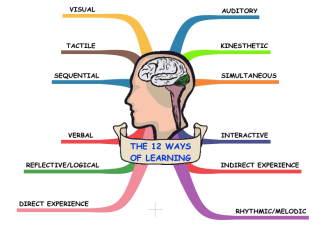
Let’s first forget about the fact that there are multiple learning styles amongst people and that the way we learn also changes as we grow in age.  What I mainly want to talk about has to do with knowledge, learning, and critical thinking and we may return to some more specific stuff later, I really can’t be sure, because I haven’t decided what the point is to this blog. 🙂

So how much knowledge is there in the world?  Before we quibble about what knowledge is, or whether we can truly “know” anything, let’s just sort of look at it from a somewhat quantitative point of view.  It seems clear to me that if you take any field of study we simply know more today than we did yesterday.  Every day we are discovering new things.  So we have a lot more to learn or that we can learn today than in the past.  Yes there are always things that we are going to be a little unsure about or that we are on the leading edge of discovery and so haven’t solidified our views yet, but each day we move a lot of things into “okay we know this” category and out of the “unsure” category.  Truthfully speaking every day we probably do the reverse as well, but I would say there is a net movement towards “knowing” something new all the time.

It is also clear, as we look at education (and I am speaking mostly about North America) that critical thinking skills are low.  I am a huge proponent of encouraging better critical thinking skills in children.  In fact children already have great critical thinking skills, it’s just that the education system eventually drives it out of them.  Perhaps due to the fact that kids are often wrong in the conclusions they make (which by the way is amazingly okay because we should be encouraging the process and I think instead we tend to shut the process down in favor of the “right” answer, and perhaps because education as an institution promotes rote memorization over critical thinking.  Not to give rote memorization a completely bad rap, because I think there always has to be a place for being able to memorize things).

So to go back to my point

From http://www.northwestprimetime.com

about knowledge, there is a lot of things to know and even under the banner of better critical thinking skills it is, in my opinion, extremely wasteful to have young children rediscover everything we know in this world.  I also think this is okay because kids are extremely good at memorizing things so why not let those sponges soak up some basic knowledge?  Some very thought provoking researchers on education like Sugata Mitra would argue that in the age of information memorization of information is not necessary, that anybody can simply look up the information they need.  Given the amount of misinformation out there in cyberspace I think at the very least a basic set of knowledge is required to at least help students from sorting out bad information from good.  And as the picture indicates, memory is an important part of the processor that is our brain.  We need to have some stuff in there.

But young children are good at a lot of things and there are certain ages where they are exceptionally good at certain things such as learning languages, learning mathematics, and rote memorization.   I gave a talk one time to a bunch of 2nd graders on tornado safety and there was not a single student who didn’t have a question and who was curious.  At that point I began to wonder, how do we go from this child thirsty for knowledge to the typical apathetic college student I see in my class? The next question then becomes why don’t we take advantage of what we know about how kids learn and when they learn best?  In answer to that question I have only opinions so please forgive me if I’m grossly mistaken, but I think it comes down to several things:

  • A pace of learning that is too slow. Children become bored and their active minds turn to other things.   The rate in which knowledge is expected to be absorbed by a student actually increases with time which is exactly the opposite order it should be. I’ve heard the argument that young children shouldn’t have to work so hard at school at younger ages that they should play more. My experience in watching young children learn is that play and learning aren’t really that different. And I think there are ways to even make the learning more interactive socially for those who might worry about a loss of social skills as they spend more time learning.
  • A lack of funding for schools and low pay in general for educators. I know, another educator complaining about funding, but the emphasis a society places on good education is important. Giving all schools equity in retaining good teachers, smaller class sizes, and having effective tools for the trade is important. By making teaching a higher paying and attractive career by ensuring they will have the tools they need when they start their career, we can bring in brighter and better teachers. In my experience I have seen far too many students choose teaching (especially in science) because specializing in their chosen interest was too hard. This seems wrong to me. Currently most of the brightest and best go elsewhere because they can make more money, and those that are extremely bright and choose nobility over money (I praise them all!) are often frustrated by a system in which they do not feel supported and actually feel constrained and trapped.  I think the lack of finances is in large part why curriculums become less varied and standardized because they are more easily measurable in making decisions on how to dole out the limited funding that all schools fight for.
  • Homogenizing teaching. The feeling that many teachers have is that they have little freedom in their curriculum or how they teach. Exposing students to a diversity of teaching styles and material increases the value of collaborative efforts among students and helps students understand the teaching style that works best for them. If all students are exactly the same and exposed to exactly the same style of learning it doesn’t surprise me that many students are bored, or don’t see the value of education. It doesn’t surprise me that many students simply see education as a game in which once they figure out the system they can cheat themselves out of actual learning and simply get the grade they need to move forward. Let student’s express their individuality through learning is important, and I think part of that comes from letting teachers express their individuality more through teaching.

I apologize for the length of this post as I find I can never be brief when it comes to talking about education.   I think instead of coming up with ways to make learning fun, let’s remember that for every little kid, learning IS fun.  Let’s figure out instead how to foster that feeling as they grow older.

From http://students.ou.edu

Terms of Two

Not that I am any great writer or am treating any of my subject matter with a great deal of academic rigor I would nevertheless like to add the final chapter to my blog posts on self and individualism, and collectivism.  There is another facet of the human mind and human behavior that fascinates me and that is our ability to be dual-minded.  I’m not positive if my definition meets any particular psychological definition, but let me describe what I mean.

I often have trouble reconciling how many Republicans can be anti-abortion but pro

From http://www.elfwood.com

war or pro capital punishment.  Growing up with an alcoholic father I found myself always wondering who my father was.  Was he the neglectful alcoholic who passed out and missed spending time with me, or was he the jovial affectionate sober dad?  Is he the bold man whose not afraid to go up to anybody and strike up a conversation or ask a question, or is he the coward unable to handle even is own inner demons and needing the escape that drugs can give just to get through the day?  The somewhat recent passing of Philip Seymour Hoffman reminded me of this paradox as I saw people debate.  As one side would simply praise his genius while the other side condemned him as selfish and stupid for abandoning his wife and children for heroin.  What about those who believe that God wanted us to have free will, but who also believe that everything is part of God’s plan for us?  How do we reconcile those who are scientists whose work depends on forming conclusions based on evidence, but at the same time are people of faith subscribing to a set of beliefs which have no such evidence?  We hate those people who might bud into our private business, but then have no trouble doing it to other people.  Is it a contradiction to want to be part of group, but within that group you try hard to stand out as individual?

It is clear that we are all walking contradictions to a certain extent.  What makes it all so remarkable is that we simply don’t see it.  It seems we are unable to recognize these contradictions within ourselves and our behavior seems perfectly natural and sensible.  Of course we are not dealing with simple opposites like hot and cold, black and white, left or right, but complex behaviors.  So while they may seem contradictory, perhaps if we analyzed them at a deeper psychological level they would not seem so contradictory.  Since we rationalize our beliefs and behaviors rather than base our beliefs and behaviors on reason, if we try hard enough we can bend any two contradictions complex enough to our will.

Of course our brains are complex and contain different systems that have different functions.  Perhaps these contradictions are simply feeding off a different set of neural pathways and there is no communication between the two such that there is no cross-check for incompatibility.  Richard Dawkins in his book The God Delusion postulates that we may have conceived of the notion of God simply because when we are young we don’t understand that the voice in our head is us.  We are dual-minded from the beginning because we aren’t really aware that the voice in our head is our own.  I, as I am sure all of you have as well, have had many a debate in my mind.  It is clear that our mind can simultaneous take different sides of an argument with sincerity in order to weigh our options in order to make the best decision.  So it seems at least possible that we might have these different sides of our self that remain separate, for which there is no debate or where we can’t resolve the debate.  It could be that a dual sided nature appeals to our sense of self as adding complexity and uniqueness to who we are.

It seems likely to me that this duality, like our sense of self, is quite possibly an illusion.  Perhaps it is part of our need to categorize and separate things; labeling people and actions.  But Freud seemed to think that our minds are always in conflict.   For instance I came up with this scenario in which parents tell their child not to cheat, that it’s wrong.  At the same time they get very happy when their child gets good grades.  So let’s say they aren’t prepared for an exam and they are now caught between perhaps cheating off the person next to them so they can please their parents (because what child doesn’t want to make them happy) or listening to their parents advice about not cheating and do poorly thus disappointing them.  Such conflicts are perhaps simply a series of battles we fight.  Sometimes winning sometimes losing.  Perhaps my father is simply fighting his addiction everyday.  Some days he wins and is able to the be the man I love, and other days he loses and becomes the man that I feel distanced from.  Perhaps for some people the struggle ends in compromise, unable to resolve what is truly right and wrong they allow one answer to pervade one type of behavior and another answer to govern the other.

In the end I think it’s all you.  Our brain can quickly consider many possible solutions to any problem, and not all of them are right, but what does right have to do with it?  Perhaps any solution that helps you survive as well as possible is all that matters.

It’s the End of the World as We Know It and I Feel Fine

There are some topics which completely perplex me, and this is certainly one of them. It seems strange to me for many reasons why people subscribe to the

From http://www.hydramag.com

possibility of the world ending in a sudden almighty purge.  This post has been a long time coming and I am sure I will not blow many people’s minds with anything I say here, but I will try to address the topic a more serious tone rather than the rant I feel like doing.

This post was prompted by an article my colleague quite humorously ranted about on Facebook about the blood moon being an indication of the end of the world. I quote: “People, it’s a freaking rock, orbiting a slightly wetter rock, orbiting a hot mess called the Sun! Shadows happen!” This end of the world prediction is just one in another line of many that have been made in human history. This Wikipedia listing gives a pretty good run down of whom and when end of the world predictions were made and you can see that there are around 150 listed in addition to ones that are supposed to still happen.  I am also sure there have been many more in human history that have not been documented. Most rational people would wonder why anyone would still buy into any more predictions about the end of the world when none of them have come true before. You know the whole “fool me once shame on you, fool me 150 times…” But it’s not enough to say well it’s obvious that these people with apocalyptic imaginations are wrong, the fact that they keep popping up should tell us that there is something in our psychology that causes some people to subscribe to such scenarios.

I read an interesting article in a great journal called Daedalus called Apocalypse and The End of Time by Richard Fenn who tried to analyze a lot of the commonalities between end of the world predictions and what societal influences seem to make them most likely. These are some of the things he came up with:

  • Many apocalyptic predictions come from people who feel society is in moral decay. This can arise from greater secularism in society, or because one culture feels that they are being influenced by an outside culture. Both of these represent cultural shifts in which an old way is being replaced by a new way.
  • Decreased economic conditions and oppression (or perceived oppression as is often the case by more religious zealots).
  • A fear of change in general. The young , people who think for themselves, and in more patriarchal societies, women all can represent a change to a current way of life.

Of course many of these things are interrelated and I think we can easily see how many of these things boil down simply to change and our inability to deal with an increasingly complex world. Thus it is not completely surprising to me that those who are more prone to believing in a fixed set of rules that govern the universe which are immutable and prescribed by the supernatural are also more likely to subscribe to end of the world predictions. As a scientist, to me change seems natural and inevitable and though some change is less pleasant than others I hope that the world will be propelled forward more than it is pulled backward.

For those who know me, you also know how fascinated I am with the subject of time, and, to me, time is also the study of change. Thus it comes as no surprise that Fenn argues that the apocalyptic imagination is an attempt to move away from the passage of time. With this timelessness we also lose change. We also lose individuality. Many of the apocalyptic prophecies involve the destruction of corrupting influences and the preservation of those who fit a prescribed moral code, merging with the one true God. Thus this desire for end times also perhaps plays to our psychological desire to remove complexity from the world to some harmonious state of peace in which nothing is changing and everyone is like everybody else.

And I can understand this desire.

There are plenty of times in which I wish I could freeze a moment and time and make it last longer. There are times in which I wish the world wasn’t so difficult, that there was no pain and suffering, and that I didn’t have to argue and fight.  This of course is fantasy. And fantasy has its place and I believe we need it from time to time to stay sane. Adhering to a fantasy for a prolonged length of time, however, is insanity. More importantly we should not forget that there is real beauty in change. The fact that I am an example of change, from a fertilized cell to a grown 40 year old man, that I have strived to learn and grow wiser and more moral with time, indicates that change can be a good thing. Change is inevitable, so let’s not fight change, let’s keep fighting to make things better. We still have a long way to go.

Respect my authoritah!

I was reading a fellow blogger’s post about the vaccination debate (a debate that should not even exist) as the author of the blog had highlighted a particular response to her blog from a physician and posed the question about why are we not willing to

From http://dublinopinion.com

listen to the physicians point of view.  She was also interested about why we would trust doctor’s in one case, but not in the case of vaccinations.  This is a very valid question.  If you are going to say doctors are out to lunch on vaccines and the very same medical science goes into everything else in the profession then you should never go see a doctor, take care of things on your own, and most importantly keep your kid at home so he or she doesn’t infect anybody else.

However it is the “Why don’t we believe the physician?” question that had me thinking as I drove to work this morning and I started thinking about how this is true for things like climate change and other scientific issues now and in the past like GMOs, evolution, the dangers of smoking, etc.  I was reminded of an excellent YouTube video that I have posted many times before called Good without Gods that talks about the basis for morality in a society.  One of the ways in which we can acquire morality is by default to authority, sometimes mistakenly so.  I believe that this is a basic cognitive bias humans have, perhaps because we all, from a very young age, default to the authority of our parents.  Part of growing up is realizing that your parents don’t have all the answers and don’t know everything, but part of our brains never really grows out of this default to authority bias.  This is in part why many people feel comfortable deriving their morality from religious authority without question.  Of course there is too much to know in the world and defaulting to authority saves time, and thus energy of which we all have only a finite amount of.  As a scientist I would say always be skeptical, but that means that we should also be equally skeptical to somebody who says vaccines cause autism.  In the face of controversy it seems the default to authority is what people rely on, so the question is, why isn’t the authority thousands of scientists who by consensus and exhaustive amounts of research say one thing as opposed to a politician who says another?  I have come up with a few possibilities but would be interested to hear what others think.  Here are the thoughts that I have come up with so far:

  1.        False authority figures. Who are the people we value in our society?
    Michele Bachmann – Not an authority figure (From http://www.warrenjasonstreet.com)

    Here in the U.S. it seems like the views of celebrities, politicians, and people with money (who are sometimes all one and the same) carry weight as being an authority on scientific issues.  This is simply not the case.

  2.        The power of money. In a highly consumer based society, money is seen as equivocal to power and thus authority.  If you have a lot of money you must have been smart to get it.  That is false of course.  Many people inherit their wealth, have connections, work very hard (but don’t necessarily have a high intellect), and some just get lucky breaks. Most of the smartest people I know don’t make money their goal.
  3.        Devaluing intellectualism.  In many countries I have visit those who are well educated, teachers, scientists are well respected in the community and in society at large.  Education itself is increasingly devalued here in the U.S. and so if educated people don’t have value in society that how can they be a worthwhile authority on anything?

The American Dream was built on valuing education, change, and progress.  We do not live in a society in which that dream is simply unobtainable for most and yet we believe in the concept like it manifested itself out of nothing.

Are we ourselves?

Psychology has become a fascination for me in recent years, particularly trying to understand how the mind works.  A class I sat in last year about love which focuses a lot on our relationship to others had me also asking the question “What about the

From Illinois.edu

love we have for ourselves?”  In talking to my colleague who teaches the class, she said to her knowledge, while many have done intensive studies both through surveys and neuroanalyses of the brain in relation to the love we feel towards others, she wasn’t aware of any studies that really studies our brain when we think about our own self.  For instance I wonder, what areas of the brain activate when we start talking about ourselves?  Is it the same area that activates when we talk about our mother?  A frightening thought indeed. Like many questions it began to lead me down a whole other path of thinking as well about how we develop identity and about individualism.  How do we become the people that we are?  How do we know ourselves?  Is our sense of self just an illusion?

From http://www.studentaffairs.pitt.edu

In the first month or so it is clear that newborns don’t have a sense of self, and numerous studies have shown that they still see themselves as extensions of their mother.  Essentially still in the womb, although the womb conditions have clearly gone through some big changes.  🙂  For the past few weeks I can clearly start to see changes in my son as he begins to engage in the world and starts realizing that he is an individual separate from others.  Although filled with a lot of terminology I am less familiar with my colleague sent me a link to a paper that talks about the development of self (as well as other things).  I found it interesting to learn that the sense of self is initial learned by imitating and watching the behavior of others.  As social animals only through learning about others do we begin to get a sense of self.  I found this to be a fascinating dichotomy.  Because on one hand we think of ourselves as unique, which is at the heart of our individualism, but this uniqueness appears to come from the observations of others.

Now I am not suggesting that we don’t have some genetic uniqueness as well.  Many parents report their children having a personality from very young ages that appears to be different from their own or their siblings.  I have no doubt that this is true.  But it could be that the children are picking up on personality traits that we don’t recognize (or admit) in ourselves or it could be that genetic differences influence how we perceive the actions of others and thus each child interprets behaviors and intentions slightly differently.

It seems to me that even if this would not be the case we would still all be quite unique because our lives are sum of a unique set of experiences.  No person meets the exact same people, goes to the exact same places, and experiences the exact same education.  We are all dynamic and constantly changing individuals such that even children of the same parents will experience their parents and different times in their lives when they have more or less experience, different skill sets, etc.

So it’s not that self is so much an illusion but rather that the concept of self perhaps has no value without the context of others, especially for a social species.  We are constantly comparing ourselves to others, judging others, labeling and categorizing others, and while I can see the harm that this can sometimes, it seems that it is something we have been doing all our lives.  Without doing that can we understand who we are as individuals without comparing and contrasting ourselves to

From http://www.chameleion-web.co.uk

others?  People tell you not to care what others think of you, but this seems like somewhat unrealistic advice.  No matter how much a person protests that they don’t care, there is no question we all do care.  What we really want to do is shrug off the people who think we suck and believe hook, line, and sinker in the people who think we are awesome.  It seems to me that this is really hard thing to do given how much of our life we spend defining ourselves through our relationships with other people and so we must often take the good with the bad and then reflect on the interpretation that others seem to gather of our behaviors and actions.

I would love to hear the thoughts others have about this, and would love to get academic about it as well is you have any expertise to share.  This I would like to be just one in a 3 part series as I am also fascinated, as an extension of individualism, by collectivism.  After that I’d like to look at the somewhat more ethereal topic of duality.

Isolation in a crowded world

I have been reading a lot of Isaac Asimov lately.  I am not sure if all lovers of science fiction would love Isaac Asimov, but if you are interested in the human condition I think Asimov would be your thing.  His understanding of human nature is phenomenal and his writing of the future seems to me more of a commentary on who we are as a people and what we are capable of then attempt to be some sort of prognosticator of the future.  To me that

From http://www.media.tumblr.com

is the best part of good science fiction and I am sure it is to many as well.

One of his books that really got me thinking was The Naked Sun which is part of his Robot Series.  In it he paints a picture of a planet called Solaria that has been colonized by Earth and is similar in size to Earth but has only 20,000 people.  The people are very spread out having vast estates that are similar in size to something like Delaware.  In this future people have robots and especially on Solaria where the ratio is around 10,000 to 1 for every human.  Robots do everything.  Build all the houses, maintain the grounds, cook the food, and basically tend to every human need.  It is a world without human contact, where even sex becomes mechanical and only for the purposes of breeding.  And that breeding is only selective because they always maintain the population at exactly 20,000.

Earth on the other hand is crowded with everybody living in cities and all cities at populations of 10 million or more.  While human touch is still a part of everyday life, there are many social conventions that act to keep people’s privacy intact.  Not overly different from today’s city life really.

Both societies seemed very plausible in the way they developed and I started to think of how we might be trending in a direction of isolation whether it is an isolation in which we are surrounded by others or a physical isolation in which human contact in unnecessary or unwanted.  We know from studies of anthropology that we started off in hunter-gatherer groups; a society in which we were dependent on each other for survival.  Survival was a result of the coordination of each member’s skill set applied with extreme vigilance.   As we have developed civilization, larger populations, and new technologies, life has essentially become easier for some of us, and quite a bit harder for a lot of other people.  The disparity in standard of living makes the culture of the “haves” admirable to the “have nots”. It seems, at least in this country, that many spend a lot of time reducing the value of the poor, on whose backs our comfort is maintained.  It seems to me though that the culture of the “haves” is not necessarily one to admire, and is perhaps not beneficial for our health.

In the house I grew up in, my parents knew most of the people on our street.  Perhaps not well, but knew their names, and a few of our neighbors they did know well.  I know there are some neighborhoods where people remain very close, but think there is a lot more distrust towards neighbors today than there was in the past.  I know the names of two people on my block and that’s it.  As I write this article to post it on my blog I am reminded that while it may touch the lives of others, perhaps many of them I will not meet.  I will not shake their hands, not see their smile, not hear their laughter, not embrace in warmth and friendship.  Like the people of Solaria a large percentage of my interactions are not face to face.  Is it simply because these types of interactions are not part of the mental grammar in which I was raised or are we moving towards a world in which physical interaction is less and less necessary?

And the truth is that if I wanted I really don’t need to rely on anyone if I so chose to except for in very impersonal and indirect ways.  I can still conduct

my business, get groceries, get a car fixed etc, but don’t really need to get to “know” any of them and certainly no need to touch them or for them to touch me.  You can do most of your shopping on-line and have things brought to your door.  Banking and paying bills can be done on-line.  As a professor I could even be a solely on-line teacher.  And while I would still be reliant on society, my need to actively engage in it is not necessary.  Of course, that is not to say I couldn’t be a good person and give money to charities, I’d still be paying taxes, I may even be a fantastic teacher who can write well enough and give interesting exercises that will expand the minds of others.  The question is, is that the kind of future we want to be.  Clearly what I’ve outlined is a lot of personal choice, but it seems that this is a trend amongst those who are as privileged as me and worse yet it seems that this type of lifestyle is almost admired.

For those who do know me, you know I’m not a technophobe and I don’t think technology is evil, but I do think it is worth stopping and thinking about the lives we lead and whether we are going in a direction we want to be going, not only as an individual but as a species.  Is it simply not part of our

From http://www.stupidman.com

mental grammar to be surrounded by millions, making cities a place of almost fighting against the idea of community due to sensory overload in comparison to smaller and more rural communities?  Do we have specific social traits that come from millions of years of evolution such that we do ourselves harm as we become less and less reliant on the close proximity of our fellow man?  Or do we simply adjust easily to the times and simply find happiness where we find it?  What seems clear is that many of our prejudices and distrust comes from a lack of familiarity and empathy with struggles and hardships of others.  In some ways the power of the internet and new technologies bring us so much closer in an informational way, but less so in a physical way.  Does learning about someone’s struggle from a distance build the level of compassion necessary to help them in any meaningful way?  Or is it something that I can just say I care about, disseminate the information to others and then move on to the next interesting tidbit of information.

If I had something important to say, I should be glad that it could so easily reach a million people or even more.  But is it better to reach a million people without my smile, a friendly tone of voice and warm embrace?  Or do I change the world more through the interaction with a few hundred people that I meet while volunteering at a soup kitchen?  I guess Isaac Asimov’s writing made me worry that despite global warming the world might be getting colder.  It made me pause and wonder whether we may be trending towards more separation and isolation and thus towards less empathy and more apathy.

For me I will keep working on it, try to find the right balance.  I have now spent too much time in the digital world and I will now go spend time with the family. 🙂