The Nature of Correlations – Part I


The fact that the universe is complex shouldn’t surprise anyone yet one of the things I find surprising how vehemently people try to argue that it’s not. I have already written a blog post about correlation vs. causation, but I’d like to talk about something a little broader than that. Correlations try to demonstrate the relationship between one variable and another. It would be a sensible decision to try and correlate the amount of gun ownership with gun deaths. I don’t think anybody would argue that it might be a relationship. And even if we do find a correlation what does it mean? What is a good correlation, or a bad correlation?

So what can we expect out of a correlation? First we might ask, “Can any two things to ever be perfectly correlated, even if we have a mathematical relationship?” The answer is no. Quite simply for data to be perfectly correlated it would require perfect measurements. Since every measurement always has some error there will always be a less than perfect correlation. The more difficult the measurement the less likely we are to get a good correlation at all. In social sciences measurements may depend on a survey, qualitative and/or subjective observations, and complex sampling techniques. This will all impact the correlation we calculate. Correlations range from 0 (no correlation) to 1 (perfect correlation) and it depends on the quality of the data and the nature of the problem to really determine what correlation is high enough for us to be positive of a relationship, but generally anything about 0.5 is significant. Correlations can also be negative as well. A negative correlation actually implies that as one variable increases, the other decreases, and those are important relationships as well.

From http://www.venganza.org

Now, what happens when we try to correlate things that have no relationship to each other? It turns out we can get all sorts of results. The often cited graphic to the right is often used to show the difference between correlation and causation.  Two variables may appear to be correlated but have no relationship at all even if the results are repeatable.  Correlations turn out to be even a little trickier than that. Some types of data show natural variability that is higher and lower than the average. A couple of examples would be the amount of blood sugar or atmospheric pressure. Now let’s say we correlated those two things. Let’s say I have two years of daily air pressure values. And let’s say I have sampled the amount of blood sugar in my blood every for 30 straight days. The smart thing to do is select the atmospheric pressure values that correspond to the days that I took the sample and correlate them. But what might I find. Well it could be that in those 30 days, a slow moving high pressure system moved in as we approached the end of the period meaning that in general pressure increased. And then perhaps my diet was not so good, or I ate infrequently, irregularly, or had a few big meals one day and then light snacking the next, blood sugar will fluctuate. I might find that there is a negative correlation between pressure and blood sugar. But what would happen if I did the experiment for another 30 day period. Depending on the specific conditions I might find a positive correlation. But what I’d find, that over time, after doing many of these repeated tests is that I would have no correlation. The average of all the correlation calculations I perform will be essentially zero. This speaks to the importance of having a larger sample size and whether or not results are repeatable for the same experiment. Had I taken two years worth of pressure data and 2 years worth of blood sugar data, I would have found zero correlation. Furthermore even if I did find some correlation, my results would not be repeatable over many studies. The media often exaggerates findings from experiments that try to say link certain foods or cell phones to cancer. Variables that naturally fluctuate may randomly show a correlation, but further experiments reveal no correlation. But the media usually just picks up on the one study that found a correlation.

To further illustrate this point, take a look at the following two images.  The one on the left is a large sample of raw data trying to correlate to variables.  If these two variables were correlated we would see the data points approximate a line.  Maybe a straight one, maybe a curved one, but definitely some sort of trend would be apparent.  You are right if you think that whatever these two variables are they have no relationship two each other.  Next to it is the same data set except that some of the data points are missing.  Now it looks like there might be a correlation between these two variables.  Sure I have selectively chosen in this case which ones to eliminate, but it is possible that a random selection of some of the data points could be these same data points on the left.  Thus it is possible that we might think we’ve found a correlation when we didn’t.  Once again the more data we take and the more we try to repeat the experiment we would show no correlation.

LDrXq LDrXq2

In the next part we will investigate how we hypothesize about correlations, and how complex most relationships are.

Striving for a better world where you can keep your guns

An article I read recently has helped me admit the truth in regards to gun control.  There is truly no tragedy bad enough for us to reform our gun laws.  So be it.  It is a tiresome debate to be sure, and so I wanted to approach it from a different perspective.   In fact accepting the fact that people want their guns in this country has helped me ask questions that I might never have asked.  So let’s begin.

Let us accept as fact that guns are the best way to ensure safety in the U.S. today, which is full of criminals and people who want to hurt you.  Or in other words there are bad guys with guns; you need to be a good guy with a gun.  I don’t deny that there are far more good guys with guns than bad.   Okay, so you need this gun, whether it is to protect the people you love at home, or you might have to stop a bad guy with a gun in a public place.  I hope that it is not too much of an assumption to say that neither side of the gun control debate wants to have crazy people invading their homes or pointing guns in public places wanting to cause harm to others.  If you feel you need a gun in the world we live in now, that’s fine, but wouldn’t you like the world to get better?  Wouldn’t it be nice to be in a world where you didn’t need that gun?  Because let’s face it, a crazy person with a gun wanting to harm people is a stressful situation.  Somebody is likely to get hurt anyway before that person can be stopped, and the fright of a crazy person with a gun breaking into your home and being shot in your living room is an ugly sight to all who live there and can be traumatic, even if you were to just scare the intruder away with your gun.   So would it be safe to say that all would like to live in a safer world in which a gun wasn’t necessary?  It seems reasonable.  Again nobody physically wants to take your gun away.  I personally have no problems with guns staying in boxes in the corner of your basement, collecting dust because there is never an occasion to use it.  Even soldiers at war look forward to a time when they can lay down their weapons and not have to use them again.

Let us also accept the fact that there will always be criminals.  This is probably true also.  But is it true that crime levels are the same everywhere?  Of course it isn’t.  There are places with less crime, less homicides, and in some cases a stunningly low amount of guns. Now if we removed the U.S., which is a statistical outlier in terms of gun ownership, we might find that some of the countries with higher gun ownership (still less than half of the U.S. average gun ownership) have low crime.  If such societies exist then it seems that we would want to learn about what that society has done to lower crime, especially violent crime, so much.   Perhaps it is non-restrictive gun laws, but if gun ownership is 20-30 per 100 people, there are still a large number of people unarmed who could be taken advantage of by a bad guy with a gun, so the answer to their lower crime can’t be entirely gun ownership.   And this is aligned with what gun rights activists say, which is that gun control is not a means to make society safe.  So given that there are other countries that are safer, shouldn’t we be trying to achieve this type of society and trying to understand why they are safe?

What we’d probably find is that such societies have low economic inequality, good health care, emphasize education and have a high degree of education equality in all of its schools and universities.  Non-

From whenchemistsattack.com
From http://www.dailyyonder.com

restrictive gun ownership laws are likely to be only a partial answer to the solution.  The NRA lobbies to make sure gun ownership laws remain unrestricted.  They see it as sensible to make sure society is safe.  That being said, why isn’t the NRA also one of the biggest lobbies for quality education? Why are they not helping schools in low income areas getting better equipment and teachers to help people in those communities raise themselves out of their poverty?  Why aren’t they pushing for more funding to universities to lower tuition and public debt?  Why aren’t they using their vast wealth from supporters to create research grants for more research into mental illness?  Why aren’t they pushing for educational programs in schools that might help people recognize the signs early of mentally and emotionally unwell children, who when these problems go unaddressed, grow up into teens or adults who have the potential for violent behavior?  Why aren’t they pushing for better education about drug use and alcohol while decriminalizing, at the very least, marijuana which gives so much of the population a criminal record impacting their chance for future economic stability?  Don’t we want to live in a country where guns are not necessary?   Do we want our Generals in the military to be busy, or would we rather live in times of peace?

What seems strange to me is that it is mostly us naïve liberals who are constantly pushing for more money to education, health care, decriminalization of drugs (particularly marijuana), increased money to social services which help at risk youth, etc.  So I would like to formally say that I am willing to never speak of gun control again, if those who most vehemently support the 2nd amendment also take up the cause to live in a safer society.  You can still have your guns for when the government turns on you to attack you.  But just because society is unsafe, doesn’t mean we can’t strive for something better.  And there is better out there so let’s fight for that, instead of fighting over gun control.  Sound fair?


Destiny’s Child


One facet of human nature that fascinates me is the idea of destiny.  Now when I say destiny here I don’t mean like some blockbuster movie in which I am destined to save the princess, fulfill the prophecy and become the most benevolent leader of mankind.  I am talking about something more fundamental than that.  What some people might refer to as “a calling”.  And maybe not even in the sense of a career only, but rather one’s passions, one’s nature.  It is not too surprising that I am reflecting on that, because as I watch my son, I wonder what he’s going to be like.  What will his interests be?  How will he want to live his life and how different will that be from me or his mother?

The nurturing influence of parents cannot be overlooked, but we’ve all known people who were vastly different from their parents in some very fundamental ways.  Two parents might be very messy and their child is neat.  Two parents might be teachers, and their child wants to run his own business.  Of course trying to determine why somebody ends up the way they do is a fool’s errand in a lot of ways, because nurture is not just a function of parents, but of teachers, friends, relatives, society, etc.  It could be that one day a kid sees a fancy car that he just loves and says to himself, alright how do I get a job that allows me to drive around with that.  Perhaps not the most noble of callings, but he we like shiny things that enhance our status and so these kinds of things certainly happen.

For most of my life I thought I had a calling to be a meteorologist.  I’ve loved storms since I was a small child.  I would get up in the middle of the night to watch the lightning.  In grade 6 we learned about different clouds and how they could tell us about the weather that was coming our way.  I was fascinated by this and remember feeling hooked by it.  I wanted to learn more about clouds and forecasting.  In grade 8 our science class was a full year and broken up into 3 parts:

From http://www.noaanews.noaa.gov

astronomy, meteorology, and geology.  I loved all 3 of those and at the time they had us thinking about careers, but I was already hooked on meteorology and I decided then that I was going to be a meteorologist.  During my undergraduate I decided that being a forecaster wasn’t for me and wanted to teach it so I went to grad school and I loved it and don’t regret a second of it.  At the end of my undergraduate I took a linguistics course and I loved it.  At that time I questioned my career decision a little, but it was my last year of undergrad and it seemed too late to do anything else, and what did it matter, I still loved the weather.  I do think that I would be just as happy if I had chosen linguistics as a career had I been introduced to it earlier in life.  Now my interests lie in cognitive science and neuroscience.  I could definitely see myself being a researcher, or even a clinical psychologist because I am deeply interested in understanding others and our nature, and feel I have some aptitude in understanding the motivations of others.

Despite these ponderings on alternative careers, I still don’t have any regrets.  I enjoy my job, and perhaps being a professor is the reason I have had time to pursue these other passions.  But it has led me to some questions about this idea that I was somehow “destined” to be in the atmospheric sciences.   Would I still have become what I became had I not lived in a climate that did not have thunderstorms?  What if our curriculum in grade 6 did not include learning about clouds?  What if the grade 8 science curriculum didn’t have meteorology which helped me appreciate the subject at a greater depth and attract me to it even more?  What if I had a mother who was afraid of storms and that made me afraid of storms?  Yet my choice to go into meteorology seems beyond these things.  We had lots of subjects in school and with some good teachers.  Why didn’t any of those subjects arouse a passion in me?  My parents were not scientists, teachers, historians, writers, etc. and it seems that they didn’t influence me in any particular academic field so I could have chosen anything.  In terms of time, we spent more time learning about many other subjects than meteorology.  There are rocks everywhere and I had been to the Rockies, so why didn’t I go into geology?  I loved watching nature shows so why didn’t I become a biologist?  Why did I feel I had a “calling” when I meet so many students who aren’t even sure what they want to do?  Is this a rare feeling? Or do other people feel it and just ignore it?

From http://www.zoriah.net

I don’t know that I have an answer to any of these questions, but what I do know is that I was very fortunate.  I’ve seen many students with a passion for meteorology but very weak quantitative skills, having weaknesses in math and physics that forced them to take a different career path even if their interest remains.  I do not have that problem. I am fortunate by circumstances having parents who worked hard for me to give me a chance to pursue my passions.  I wonder how many people feel this “calling” towards science, the arts, humanities, history, education, etc., but simply must take a job as soon as possible to support a family.  Maybe they can’t afford to go to school and don’t want to take out student loans.  Some people might argue that their “calling” is perhaps not that strong to drive them, but there are practical realities that must be adhered to and when basic needs must be met they simply must be taken care of first.  Somewhere there are people who could have been brilliant athletes with enough training and leisure time, but instead had to work in a factory to support their family.  How many geniuses have simply died of starvation?  How many talented artists have died of curable diseases simply because they couldn’t afford a doctor or the vaccine that would have save their life, or a doctor or vaccine simply wasn’t available?

In the end I don’t think I subscribe to this idea of destiny, because whatever natural passions we have, they must be cultivated, and even those passions may fade slightly as new ones take their place.   In the end I can only be thankful for the natural gifts I seem to possess and the family, friends, and society that has allowed me to develop them.


Ode to the Beet

Let this poem sing the praise of the beet,

From http://guardianlv.com

A finer vegetable you will not meet,

Not bland, not mushy, but delicate treat,

Displaying the best of savory and sweet.


The ways to make it are vast and wide,

Pickled, steamed, stewed and deep fried,

Its color is bright, a fun purplish-red,

So I don’t recommend eating beets in bed,

Though, I’m not Keats, nor Shelley or Byron,

I can tell you beets are a good source of iron,

To find lovers of beets just go to Ukraine,

Did you know that beets are good for the brain?

By increasing blood flow and rates of decay,

Things like dementia will long stay away,

And research shows, yes science, not rumor,

Stuff found in beets slows the growth of a tumor,

It’s got folates, fiber, phosphorous, magnesium,

Full of Vitamin C, B6, a great source of potassium,

And if the beetroot just isn’t your scene,

Then I ask you to turn your gaze to the greens,

If you thought they were trash, I’ve got a surprise,

Their delicious soup and great for your eyes,

If a good accompaniment is something you seek,

Try a fellow overlooked flavorful leek,

So get you some beets wherever they’re servin’,

At least so you can pee some reddish urine.


Why is Barack Obama Black?

Barack Obama Jr. and mother (From http://www.slate.fr)

It is given as a fact by people and media alike that Barack Obama is the first black president of the United States.  This has always irked me a little because Barack Obama is not black; he is biracial, as his mother is unmistakably white.  It makes me wonder why race is being portrayed a certain way.  It is not as if African-Americans are claiming he belongs to their race and white people are claiming he belongs to their race, everybody refers to him as being black.

I am biracial, with my father being from India and my mother born in Canada (half Scottish and half Mennonite).  Even if I were to choose which race I identify with

Barack Obama Sr. and Jr. (From http://upload.wikimedia.org)

most closely, it wouldn’t change the fact that I am of mixed race or that my skin tone is a lovely olive shade in between my darker father and my white mother.  Obama is the same way.  He is clearly lighter than his father and darker than his mother.  So why is he still black?  Personally I would be a bit offended if people try to label my race in a way that ignored the genetic and cultural influence of both my parents.  Moreover I was struck by the fact that when it comes to celebrities like Tiger Woods or Shakira, nobody has any problems identifying them as mixed race.  So, again, why is Barack Obama black?

Now it could be that African-American’s are happy to tout him as black because they are still an oppressed race in this country and for the sake of unity as they continue their fight for equality they are looking for an African-American leader.  Someone who can fly the flag for their race and as president make great strides towards greater equality in this country.  It would be sensible, but I think it would be insulting to many African-Americans to assume they are that naïve to think that one man can make that much of a difference to an elected body that is still predominantly white males and has relatively few minorities and women (in discord with the percentages of minorities and women in the country).

Then I wondered whether or not this issue doesn’t make a larger comment about race and racism.  Many people who are biracial have experienced some lack of acceptance as a result of their mixed race (fortunately not me).  This probably not only extends to mixtures of black and white, but all races.  Now here in the U.S. few would complain about a mixture between an Indian and Chinese person, but in India (and probably China) this would be a big problem.  As prejudice towards black people still lingers in this country, I wonder if it isn’t much more comfortable to label Obama as being black than biracial.  Many white people have grown to accept that black people have just as much rights at them, but for some it becomes a whole different ball game when their white child wants to date somebody who is black, or any other race for that matter.  It strikes me as interesting that while the Supreme Court ruled that segregation was unconstitutional in 1954, it would be another 13 years before they ruled that banning interracial marriages was also unconstitutional.  It seems clear that people are uncomfortable with mixing.  And I know it’s not only white people, and I know it’s not just a matter of race either.  As a half Indian I am well aware how much of a problem it would also be for my dad’s side of the family (and probably also my dad) if I married a Muslim (even if they looked like any other Indian) given that my dad was born in the Sikh religion.  Indians also have trouble with mixing amongst classes.  If I were to marry an “untouchable” or low caste Indian then that would be even worse.

Finally, it’s important to ask Barack Obama how he identifies himself.  According to what I could find he filled in African-American on his census.  I imagine as someone who has darker skin and curly hair, he was likely treated as black by most people who did not know his ethnic origin and perhaps that is why he identifies himself that way.  Certainly his struggles would have been a bit similar, but of course he did have a fairly well educated and financially comfortable situation growing up.  The cynical side of me might say that he identifies himself as black instead of mixed race to gain more voters. Either way, maybe it’s best that we respect his wishes, but it still seems to me that his “white side” is essentially never mentioned.  He’s black. End of story.  As I jokingly tell my black colleague in my department, “Obama isn’t one of you, he is one of me!”  And although this is going to be very controversial, I don’t agree that Obama is the first black president, he is the first biracial president.  It could be that because he was largely raised by his mother and maternal grandparents that he acts and sounds white enough to please white voters, and looks black enough to please black voters.  There is that cynicism again.  I truly believe that being the product of two different races gives me more uniqueness and strengths in my worldview and how I perceive race.  Given our country’s history towards racial mixing, perhaps Obama’s biracial origin is something we should be celebrating more.


Let the Children Play

An idea had been running around in my head that, like oft times before, has required the harmony of 3 separate melodies that on the surface seem disparate and maybe even discordant:

  • Watching the behavior of my child as he grows
  • University politics
  • Interacting with some wonderful people at a wedding I went to recently

The idea is that we might all still actually be children.  Of course this isn’t altogether too radical of an idea, but it seems to me that we too often separate “the child” from “the adult” and it has been observation that perhaps the distinction between the two is somewhat arbitrary or at least highly subjective, depending on your definition of the two categories.

From http://www.kidspot.com.au

It has been a disappointing realization in a lot of ways that when I look at the behavior of some of the professionals at the university that their behavior is not too professional.  Perhaps I simply expected more out of a number of people with advanced degrees, but of course it is not different from any other workplace.  There are people that are petty, there are people that throw tantrums when they don’t get their way, there are people that are petulant, there are people that lie in order to not take responsibility, there are bullies who try to boss the other people around, and there are people who think the world is ending because in a metaphorical sense they’ve dropped their ice cream cone.  These qualities all seem quite understandable for a child to have.  Since they are still unsure of how the world works and how to properly interact with others we expect these behaviors in young people and as parents help correct this behavior.  But much to my surprise these behaviors are not something everybody grows out of and just as we think these behaviors will get us what we want as a child, there are many who see them as valid ways to act as adults.  I suspect that it does sometimes work or else they might change.  It’s simply unfortunate that they don’t see that there are other behaviors that a higher chance of success, but perhaps more importantly, lead to a better personal sense of well-being and happiness.

At a wedding this past weekend I met some wonderful people who are just easy to be around and a couple of them talked about how they felt like they’ve never really grown up.  I often feel that

From http://www.coulourbox.com

way too, but unlike the negative child behaviors I discussed previously these people demonstrated those things we love to see in children.  There were people who had a child-like wonder and fascination with the world, loved to play and be silly, were made happy by the simple things in life, loved to pretend for fun,  and took joy in just making you laugh or smile.

Now I may have overstated the idea a bit that we are just big children, but I think that there is definitely a child inside all of us and it might be worth asking the question “What child is inside of me?”  Is it the child that makes us others marvel and smile, or is it the child that drains other people’s energy, stresses them out or makes people just want to run away screaming?  As I watch my child grow it’s clear that behavior is not simply a result of innocence or naivety.  It’s clear that sometimes he just wants to play and sometimes he just wants to let out a yell so we look his way and pay attention to him.  As one grows and gains knowledge of the world, it doesn’t seem like any loss of innocence precludes any child-like behavior.

Sometimes in the face of the weight of the world a little time out for playing is probably the best way to maintain some sanity and gain one’s strength to keep pushing forward.  Sometimes when what you know seems sad, perhaps it’s time to learn about something else, or go some place new so your eyes can open with wonder.  Sometimes when you’re not smiling, do something nice for someone else and make them smile and see how much better you feel.  I think it’s important to carry with us the best part of childhood always, and I hope that as my child grows I can help him hold on to those beautiful qualities that give me such joy to watch now.


More ramblings about climate change

I was asked to submit an essay to include in an introductory climatology text by a colleague but what I originally wrote didn’t get accepted because it was decided they wanted to place it in another chapter with a slightly different take so I had to make some revisions and changes.  I liked the original though and thought I would post it here.

In 2010 the burning of fossil fuels and the production of cement released 33.4 billion metric tons of carbon into the air.  It’s a big number.  An intimidating one perhaps, but what does it really mean?  Can any human identify with such a number?  A weight we can’t possibly experience for a gas that we can’t see.

Global averages temperatures which are not experienced by anyone. (from http://www.globalsherpa.org)

As individuals we experience only a fraction of the surface area of the Earth at any one time.  Our ability to experience change on a global scale is extremely limited.   The detection of changes in temperature on such long time scales is masked by diurnal and seasonal fluctuations.  We don’t experience average temperatures, yet the important environmental issue of our times asks us to take action based on things we do not perceive in our everyday life.

As individuals we are heavily biased towards survival from the pressures we face every day.  Civilization has given us the comfort of living apart from environmental pressures that other species experience more acutely.  It could be that civilization only gives us the advantage of delaying these pressures and gives us the illusion of comfort.  As an evolved species of animals who depends on other life for our very survival, our ability to fight off the enormous pressures that nature can exert may be dwindling.

In a typical thunderstorm there are approximately 1 x 10¹⁸ droplets.  Of course no one droplet means very much, but the collective of droplets in

From http://www.albany.edu

the cloud itself can produce lightning, damaging winds and hail, and flash flooding.  With approximately 7 billion people on the planet it is easy to view ourselves as a single drop.  With the issue of climate change it may be time to focus on what we are in fact part of:  As a species with a massive and growing global population with a great deal of power to change the world for better or for worse.  The question then becomes, “What can we, as individuals, do?”

On September 27th meteorologist and journalist Eric Holthaus, in response to the 5th Assessment Report on Climate by the International Panel for Climate Change (IPCC), vowed never to fly in an airplane again.  He felt very strongly about his carbon footprint.  A criticism often made against climate scientists who travel to conferences and meetings to discuss the issue.  His gesture is extremely noble and perhaps sets a good example for the rest of us.  He participates in many meetings now via Skype to avoid flying.  There are probably many of us, companies and organizations alike, who may not be taking great advantage of the technology that is available to us.  However, his case may also be an example of our disconnect between experiences as individuals without seeing the whole picture.  A response by William MacAskill, an ethicist at Oxford, pointed out that while Holthaus’ individual footprint might be high, his active participation through face-to-face interactions with policymakers internationally may reduce carbon emissions so drastically that it more than offsets his carbon footprint.  We all have different roles as individuals as part of the whole and although Holthaus’ sacrifice is well intentioned, perhaps he has not chosen the best way to reduce his carbon footprint given his abilities and role in this world.

Life constantly asks us to find that delicate balance between our individual needs and those of the collective.  It asks us to evaluate how our individual freedoms impinge on the freedoms of others.   The consequences of our actions as individuals have never had more far reaching impacts.  Climate change impacts the largest community we are part of: the global community.  The truth is, we all share the same space even if we can’t experience it.  It’s important to remember that in the individual fight for survival we always do it best when we work together.

The Perfect Blog Post

From http://www.allposters.com

A concept that has fascinated me for some time is that of perfection.  People will say something is perfect, but what does that really mean?  If we look at the dictionary definition we see that perfect means having no mistakes and flaws or completely correct and accurate.  But all of these words have some subjectivity to them.  Few people agree on what a mistake or flaw is.  And is anything completely correct and accurate?  If something can be, we often find that there is disagreement here also.

It seems to me that perfection is ultimately an ideal that everybody holds, but that nobody really agrees on.  In this way I find it very similar to the concept of God.  And many people say God is perfect and so the analogy is even stronger in that respect.  Nobody can really agree on the nature of God and everybody holds a slightly different view of what God wants and how He/She behaves.    In addition to the fact that I believe it is not up to the atheist to disprove the existence of God (but up to the theist to prove the existence of God), it seems also a fruitless task to disprove something which is not clearly defined.  Perfection seems to me exactly like this.  If perfection is an ideal and what is ideal is subjective to the person holding the ideal then perfection as a concept maybe limited in value to all but the individual.  Which means just like you shouldn’t be trying to enforce your vision of God on anybody else, perhaps we should also not be so adamant that others share our view of perfection.

Can we truly experience a shared value of perfection?  Many have tried to define a perfect system of government, a perfect society or

From http://dancearchives.net

civilization, a perfect self, but it is unclear that everybody agrees with those ideals, and many times they seem so implausible to reach that it seems that they will simply be rejected because some feel they are not rooted in reality.  But I think those that try to come up with these “universal” ideas of perfection do believe they are obtainable, at least in some distant future.  I hold similar ideals as I am sure all you do as well.  It seems to me though that we define this conceptual perfection beyond the present, but feel that the goal of perfection is not so far away that we can eventually reach it.  Science might give us some better clues as to what some perfect state might be, but to do so we would have to be sure we knew absolutely all the variables.  And we are far, far away from that and it seems likely we will never be at a state in which we know everything about the universe.

The next question then is, well what if we really do reach some state of perfection?  I wonder if we can simply be content and happy in the long term, before we are really start thinking about how things could be even better.  This seems true at an individual level or even if we do have some shared value of what perfection is.  Unless we knew everything (highly unlikely) it seems like we would always be searching for more and that perfection is not possible.

Finally I think then it is worth asking the question, are such ideals like perfection a good thing?  If it is a goal we can never reach does it prevent us from being content and happy in life?  The answer is maybe.  I think if you accept that perfection is some point on the horizon that you can move towards but never reach (or at least not reach easily or quickly) then you might instead to learn to appreciate the journey you take to get there.  If on the other hand you believe the perfect state is actually reachable in a tangible way and you don’t get there, then this can leave one frustrated, disappointed and unhappy.

While I ponder about perfection frequently, the most recent inspiration was looking at my son.  He seems perfect.  He has no mistakes or IMG_7532flaws.  He will make mistakes and he will have flaws however.  Thus I began to wonder if maybe, even as a concept, perfection doesn’t exist.  It’s just something we believe in but have no evidence of.  Because he is who he is, and while we will try to nurture him positively into the world, everything about his life will be different than mine and who he ends up as will be who he is supposed to be.  He is supposed to make mistakes and have flaws.  Thus he is in accordance with his nature.  As we all are.  Our nature is to change, to grow, and be imperfect.  In the end perhaps we are all according to our nature, and maybe that is what perfection really is.  The good news is, nobody is saying you have to like it.

I think it is very important, however, that we have these lofty concepts, and that we continue to dream of better ways to live life, because it could be that in our imaginings we do end up moving towards some better future.  I think as long as we remain humble about our dreams of perfection and be willing to modify and change our ideals when life presents us with new information then the concept of perfection can have meaningful purpose.


Teacher Teacher, Can You Teach Me?

As an educator, naturally I think a lot about education (now if you liked that riveting beginning please read on).  Over my years as a professor we hear a lot of about better methods to educate.  A lot of fancy phrases get thrown around like problem based learning, inquiry learning, student centered pedagogy, etc.  Rather than discuss the merits of these techniques and whether or not they are better than the “chalk and talk” style of teaching (another exciting catch phrase) I want to take a look at things from a more fundamental and philosophical level as is often my nature.

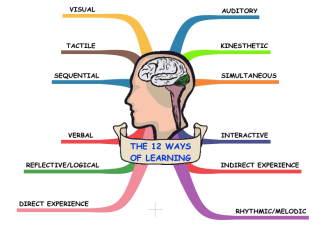
Let’s first forget about the fact that there are multiple learning styles amongst people and that the way we learn also changes as we grow in age.  What I mainly want to talk about has to do with knowledge, learning, and critical thinking and we may return to some more specific stuff later, I really can’t be sure, because I haven’t decided what the point is to this blog. 🙂

So how much knowledge is there in the world?  Before we quibble about what knowledge is, or whether we can truly “know” anything, let’s just sort of look at it from a somewhat quantitative point of view.  It seems clear to me that if you take any field of study we simply know more today than we did yesterday.  Every day we are discovering new things.  So we have a lot more to learn or that we can learn today than in the past.  Yes there are always things that we are going to be a little unsure about or that we are on the leading edge of discovery and so haven’t solidified our views yet, but each day we move a lot of things into “okay we know this” category and out of the “unsure” category.  Truthfully speaking every day we probably do the reverse as well, but I would say there is a net movement towards “knowing” something new all the time.

It is also clear, as we look at education (and I am speaking mostly about North America) that critical thinking skills are low.  I am a huge proponent of encouraging better critical thinking skills in children.  In fact children already have great critical thinking skills, it’s just that the education system eventually drives it out of them.  Perhaps due to the fact that kids are often wrong in the conclusions they make (which by the way is amazingly okay because we should be encouraging the process and I think instead we tend to shut the process down in favor of the “right” answer, and perhaps because education as an institution promotes rote memorization over critical thinking.  Not to give rote memorization a completely bad rap, because I think there always has to be a place for being able to memorize things).

So to go back to my point

From http://www.northwestprimetime.com

about knowledge, there is a lot of things to know and even under the banner of better critical thinking skills it is, in my opinion, extremely wasteful to have young children rediscover everything we know in this world.  I also think this is okay because kids are extremely good at memorizing things so why not let those sponges soak up some basic knowledge?  Some very thought provoking researchers on education like Sugata Mitra would argue that in the age of information memorization of information is not necessary, that anybody can simply look up the information they need.  Given the amount of misinformation out there in cyberspace I think at the very least a basic set of knowledge is required to at least help students from sorting out bad information from good.  And as the picture indicates, memory is an important part of the processor that is our brain.  We need to have some stuff in there.

But young children are good at a lot of things and there are certain ages where they are exceptionally good at certain things such as learning languages, learning mathematics, and rote memorization.   I gave a talk one time to a bunch of 2nd graders on tornado safety and there was not a single student who didn’t have a question and who was curious.  At that point I began to wonder, how do we go from this child thirsty for knowledge to the typical apathetic college student I see in my class? The next question then becomes why don’t we take advantage of what we know about how kids learn and when they learn best?  In answer to that question I have only opinions so please forgive me if I’m grossly mistaken, but I think it comes down to several things:

  • A pace of learning that is too slow. Children become bored and their active minds turn to other things.   The rate in which knowledge is expected to be absorbed by a student actually increases with time which is exactly the opposite order it should be. I’ve heard the argument that young children shouldn’t have to work so hard at school at younger ages that they should play more. My experience in watching young children learn is that play and learning aren’t really that different. And I think there are ways to even make the learning more interactive socially for those who might worry about a loss of social skills as they spend more time learning.
  • A lack of funding for schools and low pay in general for educators. I know, another educator complaining about funding, but the emphasis a society places on good education is important. Giving all schools equity in retaining good teachers, smaller class sizes, and having effective tools for the trade is important. By making teaching a higher paying and attractive career by ensuring they will have the tools they need when they start their career, we can bring in brighter and better teachers. In my experience I have seen far too many students choose teaching (especially in science) because specializing in their chosen interest was too hard. This seems wrong to me. Currently most of the brightest and best go elsewhere because they can make more money, and those that are extremely bright and choose nobility over money (I praise them all!) are often frustrated by a system in which they do not feel supported and actually feel constrained and trapped.  I think the lack of finances is in large part why curriculums become less varied and standardized because they are more easily measurable in making decisions on how to dole out the limited funding that all schools fight for.
  • Homogenizing teaching. The feeling that many teachers have is that they have little freedom in their curriculum or how they teach. Exposing students to a diversity of teaching styles and material increases the value of collaborative efforts among students and helps students understand the teaching style that works best for them. If all students are exactly the same and exposed to exactly the same style of learning it doesn’t surprise me that many students are bored, or don’t see the value of education. It doesn’t surprise me that many students simply see education as a game in which once they figure out the system they can cheat themselves out of actual learning and simply get the grade they need to move forward. Let student’s express their individuality through learning is important, and I think part of that comes from letting teachers express their individuality more through teaching.

I apologize for the length of this post as I find I can never be brief when it comes to talking about education.   I think instead of coming up with ways to make learning fun, let’s remember that for every little kid, learning IS fun.  Let’s figure out instead how to foster that feeling as they grow older.

From http://students.ou.edu