


My 5 year old son is going through a bit of a phase right now where he is scared of being almost anywhere in the house by himself. Even in the day time. He wants someone to walk with him to the bathroom, his bedroom, the basement, etc. He says he’s scared that their might be monsters, while at the same time freely admits that he knows monsters aren’t real. But how does he know such things, other than the fact that his parents have told him so? My wife was able to prod the reason for his current phase out of him. He says that he thought he saw something like a monster in the dark once and since that time is when he’s started being scared going from room to room. So here there is a clash between something he “knows” because it is has been told to him by authority in his life and something that he has experienced. Now obviously he is misinterpreting his experience and there aren’t monsters. There is no way he can be reasoned with through conversation. It will simply dawn to him at some point after enough time has passed and no monsters have appeared that he might have been just imagining it. And in between he may see other disturbing shapes in the darkness that might worry him further. This will take time.
As a parent it is easy to be a bit frustrated with this, especially since it is enough work watching the 15 month old, and to now have to escort a 5 year old everywhere in the house, even when it is bright and sunny is a bit annoying. But then I remembered back to how I was no different as a child. One of my first memories, although more like an emotional imprint, is that I remember being scared of the moon. Apparently this happened around the age of two. I remember that the moon would sometimes be visible outside my window, and I remember being scared of it. I don’t remember when I got over that fear, but my dad says they had to move the bed so that I couldn’t see out the window from bed. Then everything was fine. Of course now I think the moon is full of romance and beauty and I can think of no logical reason why I would fear the moon. It

was clearly an irrational fear. When I was older, maybe around 7 I also remember being scared of a stuffed Daffy Duck. It sat next to my bed and like Daffy should it had big eyes with a fair amount of white. That white almost glowed in the dark, and so when I would see the Daffy Duck sitting upright near my bed it started to freak me out. In fact I have recollections of it just appearing to me that way rather suddenly, and not having frightened me prior to that. Maybe I had some experience that made me worried about eyes in the dark. I don’t know. Needless to say I had to hide the Daffy Duck and then everything was fine.
All this made me think about fear. My friend Esme had a post where she asked her readers to come up with an analogy for fear and mine was “Fear is like water. We need a little to live, but too much and we drown.” I think this is a pretty good analogy. But even if some fear is good, there are rational and irrational fears. The fact that we would fear things irrationally makes no difference to evolution. We need to be creatures that feel fear, because there are actually things to fear in this world. And what we fear can’t be so hardwired into us, because then how would we be able to adapt to new threats and dangers? So we are just going to feel fear for all sorts of things, whether it is a poisonous snake, or the imagined menace of the eyes of a stuffed duck in the dark.
It seems to me that one of the purposes of our ability to reason (maybe the most important part) is that we can try to sort out the rational from the irrational fears. And then at a higher level of reasoning we can then try to prioritize those fears to help us make better choices about where we expend our energy to try to mitigate those things which pose the greatest threat. Anybody who is paying attention in this world knows that we are terrible at both of these things. One reason we might be terrible at this is that in general, nature really only cares that we live long enough to reproduce. As social species even if we died shortly after reproduction there would still be people in our community that could potentially raise those young. So we need to feel fear, and we need to feel it strongly to get us to the point of sexual maturity, but beyond that fear loses its utility. It seems to me that for most of us we live in a world where making it to the age of sexual maturity isn’t so difficult anymore, but our brains are still going to be wired to feel fear. And this fear can, and is exploited intentionally, or unintentionally every day.

But even if we do make a correct decision about something we should rationally fear, if there is nothing we can do about it, how do we as humans deal with such fear? The example that often comes to mind for me is how humans at the dawn of civilization, after we discovered farming and lived in close proximity to each other and animal feces, is death to diseases we did not have immunities to. Somewhere around 80% of the aboriginals in North America died of such diseases when the Europeans came. Things like small pox and influenza. Of course you can still be killed by such things today, but most of us don’t because we’ve had so many generations of living with these things our bodies have built up an immunity. Imagine living in those early days of farming and seeing people die in the prime of their lives from the flu. Not just one person who was already a bit unhealthy but many people. This would be a reasonable thing to fear. But  what could one do about it? The microscope was not invented until 1590. It’s not that humans didn’t try to combat this reasonable fear, but in the absence of being able to know what germs, viruses, and infections were at that microscopic level, truly doing something about that fear would have been hard to do. The boon that farming brought would have easily given us a blind spot as to what might be the source of problems. When I really read the entirety of the Leviticus in the Bible it was clear to me that this was how we went about combating reasonable fears. Practical advice (for the time) mixed with storytelling. Science is really also about building a narrative for why things happen the way they do, and how to go about solving those problems. I do think narratives, and stories, are important for contextualizing fears. So we can say “Alright well here is a thing that I fear, and here is why it happens, and now I can start taking steps to avoid these things.” The problem being that when you have the wrong explanation, you can expend a great deal of energy and not really solve the problem, even if you do conquer your fear. To the local follower of some divine word, it must have been a great surprise to the one who believed and did as they were told that disease still ended their lives. Leaving those alive to suspect that the only reason the person died couldn’t be because they had an incorrect narrative for the fear, but that the person who died wasn’t following the narrative correctly or worse yet rejected the narrative secretly.

One of the things that I like about the scientific method is that built-in is a self-correction mechanism so that we can constantly question the narrative. Certainly there have been scientists who have stuck to a particular paradigm, or who let ego override their humility, but I think people who don’t really understand science, underestimate how much self-correction is built in to the methodology. Maybe that’s also why the biggest religious zealots have a hard time seeing science as fundamentally different from religion. We see the narrative science builds change; openly and unabashedly. Yet books remain unchanged. Of course, this isn’t strictly true, because narratives evolve, translators change things, and some beliefs fall away from various denominations, but the story that religion often tells is that it is unchanging and forever. Such is the nature of institutions.
Maybe fear can become addictive in the brain as well. Maybe this is why it feels like so many people are drowning in it today. I think that’s what makes me the saddest about religious fundamentalists or conspiracy theorists, because for all their narratives they just seem really afraid and all I can think is “Things aren’t really as fearful as you think.” This is also what angers me about fear mongering. It really might be the worst human behavior.
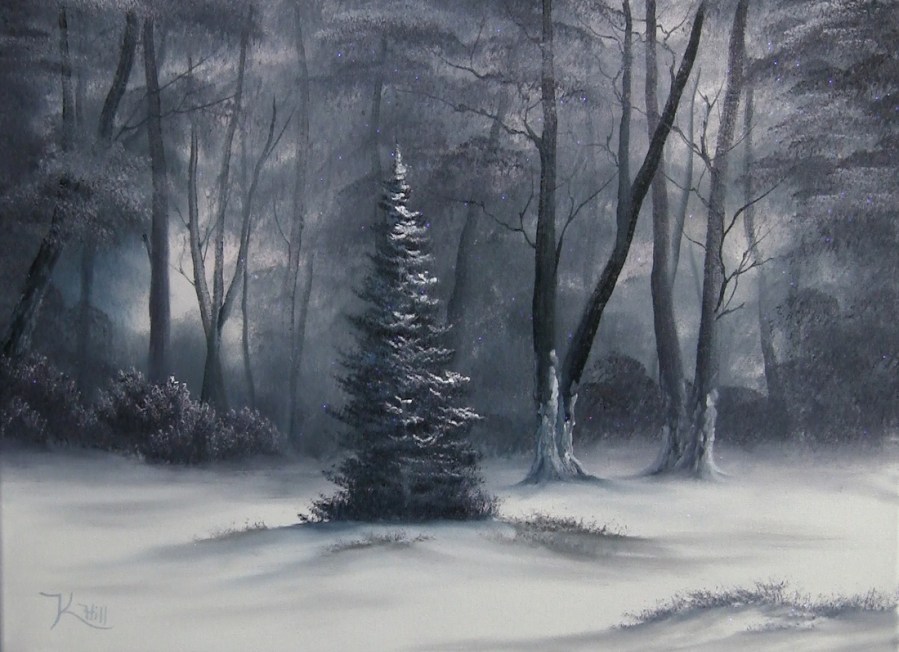

 makes sense to want to hurt them back. But if you’ve ever lashed out at your spouse or partner in anger, at your child (either physically or verbally), it almost seems counter-intuitive that this would ever be a solution to alleviating your own feelings of hurt. Sometimes those that we lash out at, aren’t even the ones that have hurt us, and so it seems even more strange that we should have such behavior. On a more personal level, it seems to me that in my life when I experience a lot of hurt I often feel like I’m in the dark. Perhaps that is not necessarily the best analogy, but what I’m getting at is that the solution for making oneself feel better is not clear. So perhaps that’s why I equate it to being in the dark, because when you are in the dark it is difficult to find a way out. Depending on the depth of the pain we may start to panic and fear sets in, so we get desperate. We want the pain to end, and get out of that darkness so bad that we claw, and scramble, and we try to move quickly. But like any fast movement in the dark we don’t know what we are grabbing at, we don’t know what we are reaching for and we hit all sorts of things along the way, hurting others and ourselves. Flailing in the dark is never going to be best solution over keeping calm and thinking our way out of that dark palce.
 memes, and self-help books that tell us that harming others is never a bona fide way of alleviating our feelings of hurt, but nevertheless we seem to drift towards hurting others who hurt us. Most of the time we just hurt people in a moment and then we quickly realize what we’ve done and apologize. Sometimes we feel justified in hurting others for the short-term satisfaction it brings, even though it doesn’t end our suffering over the long-term. When I look at war torn countries, where so many people have lost loved ones, and you wonder how can they alleviate the hurt that they feel without continuing a cycle of violence and feelings of hatred? I wonder if this just isn’t a darker part of who we are, and the only thing we can really do for ourselves is to be aware of it, and hope that in the moment we can focus on what will eventually lead to true happiness in the long-term instead of just hurting others, especially those we care about, even if they’ve inflicted pain on us. Maybe they are just as in the dark as we are.
 Cloak Unfurled