Teacher Teacher, Can You Teach Me?

As an educator, naturally I think a lot about education (now if you liked that riveting beginning please read on).  Over my years as a professor we hear a lot of about better methods to educate.  A lot of fancy phrases get thrown around like problem based learning, inquiry learning, student centered pedagogy, etc.  Rather than discuss the merits of these techniques and whether or not they are better than the “chalk and talk” style of teaching (another exciting catch phrase) I want to take a look at things from a more fundamental and philosophical level as is often my nature.

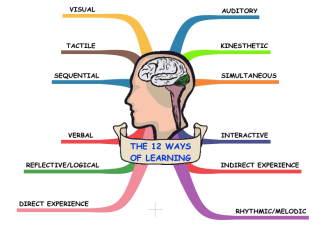
Let’s first forget about the fact that there are multiple learning styles amongst people and that the way we learn also changes as we grow in age.  What I mainly want to talk about has to do with knowledge, learning, and critical thinking and we may return to some more specific stuff later, I really can’t be sure, because I haven’t decided what the point is to this blog. 🙂

So how much knowledge is there in the world?  Before we quibble about what knowledge is, or whether we can truly “know” anything, let’s just sort of look at it from a somewhat quantitative point of view.  It seems clear to me that if you take any field of study we simply know more today than we did yesterday.  Every day we are discovering new things.  So we have a lot more to learn or that we can learn today than in the past.  Yes there are always things that we are going to be a little unsure about or that we are on the leading edge of discovery and so haven’t solidified our views yet, but each day we move a lot of things into “okay we know this” category and out of the “unsure” category.  Truthfully speaking every day we probably do the reverse as well, but I would say there is a net movement towards “knowing” something new all the time.

It is also clear, as we look at education (and I am speaking mostly about North America) that critical thinking skills are low.  I am a huge proponent of encouraging better critical thinking skills in children.  In fact children already have great critical thinking skills, it’s just that the education system eventually drives it out of them.  Perhaps due to the fact that kids are often wrong in the conclusions they make (which by the way is amazingly okay because we should be encouraging the process and I think instead we tend to shut the process down in favor of the “right” answer, and perhaps because education as an institution promotes rote memorization over critical thinking.  Not to give rote memorization a completely bad rap, because I think there always has to be a place for being able to memorize things).

So to go back to my point

From http://www.northwestprimetime.com

about knowledge, there is a lot of things to know and even under the banner of better critical thinking skills it is, in my opinion, extremely wasteful to have young children rediscover everything we know in this world.  I also think this is okay because kids are extremely good at memorizing things so why not let those sponges soak up some basic knowledge?  Some very thought provoking researchers on education like Sugata Mitra would argue that in the age of information memorization of information is not necessary, that anybody can simply look up the information they need.  Given the amount of misinformation out there in cyberspace I think at the very least a basic set of knowledge is required to at least help students from sorting out bad information from good.  And as the picture indicates, memory is an important part of the processor that is our brain.  We need to have some stuff in there.

But young children are good at a lot of things and there are certain ages where they are exceptionally good at certain things such as learning languages, learning mathematics, and rote memorization.   I gave a talk one time to a bunch of 2nd graders on tornado safety and there was not a single student who didn’t have a question and who was curious.  At that point I began to wonder, how do we go from this child thirsty for knowledge to the typical apathetic college student I see in my class? The next question then becomes why don’t we take advantage of what we know about how kids learn and when they learn best?  In answer to that question I have only opinions so please forgive me if I’m grossly mistaken, but I think it comes down to several things:

  • A pace of learning that is too slow. Children become bored and their active minds turn to other things.   The rate in which knowledge is expected to be absorbed by a student actually increases with time which is exactly the opposite order it should be. I’ve heard the argument that young children shouldn’t have to work so hard at school at younger ages that they should play more. My experience in watching young children learn is that play and learning aren’t really that different. And I think there are ways to even make the learning more interactive socially for those who might worry about a loss of social skills as they spend more time learning.
  • A lack of funding for schools and low pay in general for educators. I know, another educator complaining about funding, but the emphasis a society places on good education is important. Giving all schools equity in retaining good teachers, smaller class sizes, and having effective tools for the trade is important. By making teaching a higher paying and attractive career by ensuring they will have the tools they need when they start their career, we can bring in brighter and better teachers. In my experience I have seen far too many students choose teaching (especially in science) because specializing in their chosen interest was too hard. This seems wrong to me. Currently most of the brightest and best go elsewhere because they can make more money, and those that are extremely bright and choose nobility over money (I praise them all!) are often frustrated by a system in which they do not feel supported and actually feel constrained and trapped.  I think the lack of finances is in large part why curriculums become less varied and standardized because they are more easily measurable in making decisions on how to dole out the limited funding that all schools fight for.
  • Homogenizing teaching. The feeling that many teachers have is that they have little freedom in their curriculum or how they teach. Exposing students to a diversity of teaching styles and material increases the value of collaborative efforts among students and helps students understand the teaching style that works best for them. If all students are exactly the same and exposed to exactly the same style of learning it doesn’t surprise me that many students are bored, or don’t see the value of education. It doesn’t surprise me that many students simply see education as a game in which once they figure out the system they can cheat themselves out of actual learning and simply get the grade they need to move forward. Let student’s express their individuality through learning is important, and I think part of that comes from letting teachers express their individuality more through teaching.

I apologize for the length of this post as I find I can never be brief when it comes to talking about education.   I think instead of coming up with ways to make learning fun, let’s remember that for every little kid, learning IS fun.  Let’s figure out instead how to foster that feeling as they grow older.

From http://students.ou.edu

Respect my authoritah!

I was reading a fellow blogger’s post about the vaccination debate (a debate that should not even exist) as the author of the blog had highlighted a particular response to her blog from a physician and posed the question about why are we not willing to

From http://dublinopinion.com

listen to the physicians point of view.  She was also interested about why we would trust doctor’s in one case, but not in the case of vaccinations.  This is a very valid question.  If you are going to say doctors are out to lunch on vaccines and the very same medical science goes into everything else in the profession then you should never go see a doctor, take care of things on your own, and most importantly keep your kid at home so he or she doesn’t infect anybody else.

However it is the “Why don’t we believe the physician?” question that had me thinking as I drove to work this morning and I started thinking about how this is true for things like climate change and other scientific issues now and in the past like GMOs, evolution, the dangers of smoking, etc.  I was reminded of an excellent YouTube video that I have posted many times before called Good without Gods that talks about the basis for morality in a society.  One of the ways in which we can acquire morality is by default to authority, sometimes mistakenly so.  I believe that this is a basic cognitive bias humans have, perhaps because we all, from a very young age, default to the authority of our parents.  Part of growing up is realizing that your parents don’t have all the answers and don’t know everything, but part of our brains never really grows out of this default to authority bias.  This is in part why many people feel comfortable deriving their morality from religious authority without question.  Of course there is too much to know in the world and defaulting to authority saves time, and thus energy of which we all have only a finite amount of.  As a scientist I would say always be skeptical, but that means that we should also be equally skeptical to somebody who says vaccines cause autism.  In the face of controversy it seems the default to authority is what people rely on, so the question is, why isn’t the authority thousands of scientists who by consensus and exhaustive amounts of research say one thing as opposed to a politician who says another?  I have come up with a few possibilities but would be interested to hear what others think.  Here are the thoughts that I have come up with so far:

  1.        False authority figures. Who are the people we value in our society?
    Michele Bachmann – Not an authority figure (From http://www.warrenjasonstreet.com)

    Here in the U.S. it seems like the views of celebrities, politicians, and people with money (who are sometimes all one and the same) carry weight as being an authority on scientific issues.  This is simply not the case.

  2.        The power of money. In a highly consumer based society, money is seen as equivocal to power and thus authority.  If you have a lot of money you must have been smart to get it.  That is false of course.  Many people inherit their wealth, have connections, work very hard (but don’t necessarily have a high intellect), and some just get lucky breaks. Most of the smartest people I know don’t make money their goal.
  3.        Devaluing intellectualism.  In many countries I have visit those who are well educated, teachers, scientists are well respected in the community and in society at large.  Education itself is increasingly devalued here in the U.S. and so if educated people don’t have value in society that how can they be a worthwhile authority on anything?

The American Dream was built on valuing education, change, and progress.  We do not live in a society in which that dream is simply unobtainable for most and yet we believe in the concept like it manifested itself out of nothing.

For my parents

Dear Mom and Dad,

Though you are divorced now, you are still my mom and dad and thus I address you together as the parents who raised me.  Of course with my own child on the way my mind has drifted many times to the type of parent I will be.  There are plenty of people who have advice for you when you tell them you are expecting a baby.  A lot of it is good advice, some of it seems strange.  Some advice I imagine might make more sense once the child is an entity outside the womb.  Ultimately you can never really know exactly how good any set of parents are without seeing them in action, and there are few parents that I have seen  as intimately as I have seen my own.  As I look back on who I was and who I am today, I am proud.  I think I was and still am a good person.  I hope that doesn’t sound egocentric to say, but I also know that I am by no means perfect.  I have made mistakes and still do, but I have learned well from them.   I have strength, compassion, love, and try to be humble (even if this doesn’t sound very humble right now).  It would be foolish to think that any of my qualities that I am most proud of are simply some genetic trait, even though I know that those things do help shape you.  Ultimately I know that it is my upbringing that has had the largest impact on who I am today.  I then ask myself, what is it that you did that made me into someone that I am proud of today, and that for the most part, have always made me feel free to be who I am?  What are the lessons that I must make sure to teach my son so that at the very least he can become the man I am, even though I hope that he will be even more than I can dream.  I am not sure I know the answer to this, because I think a lot of the answer is just working hard to be the person that I want my son to be.  So instead I am writing this letter so I can let you know what things you gave me that I am so thankful for and that I hope my son will also be thankful for.

I first wanted to thank you for the things you both gave me, which was extreme amount of dedication to providing me with a life you could not have.  You wanted better for me, and you worked so hard to get it.  I am probably not even remotely aware of all the things that you denied yourself so that you could give me something that I wanted.  You cut corners everywhere to save money for your brothers and sisters, your parents, and for your children.  You gave me my undergraduate education, you helped me even afterwards when I had unexpected large expenses.  Your kids always came first in some way or another and I am so grateful for that.  You always showed a tremendous amount of confidence in me.  You’ve trusted me.  You have never tried to interfere and make decisions for me and have let me make my own decisions. And if after I made mistakes you’ve always been there though to help pick me up.  Even now with a child on the way, a situation in which many parents become over involved you place so much confidence in me and it is a source of strength. You’ve also taught me great lessons in tolerance.  Through mutual respect of each other’s cultures and other ethnicities you have made me extremely respectful of people’s differences.  More importantly though you showed me that despite the color of skin or particular beliefs there is nothing to fear.  We all just want good company, a good meal, and to learn from one another.  You’ve taught me the value of togetherness.

I also wanted to thank you for valuing education.  Even though both of you did not have a lot of education post high school, you recognized its importance.  More importantly you taught me to love learning.  It would have been very easy to work your jobs knowing nothing more about the world than you already did, but you always enjoyed reading and learning more or watching documentaries, nature shows, playing scrabble, boggle, doing puzzles etc.  You both enjoyed learning more about the world and challenging your minds, and made me feel like it was natural to do so.  This in turn made me value all people a lot more.  Not many in this world have a Ph.D. and it is easy for the educated to turn up their noses at those who aren’t as educated, but you taught me the value of every job in this world and that having a job that doesn’t require much education doesn’t mean that you have to stop learning.  And you exposed me to so many good people from the places you worked and made me appreciate the goodness in people from all walks of life. You always saw the positive in what you did.  You always wanted to do your jobs well even if there was some other job you would have rather had in life.

There were also things unique to each of you that have meant so much to me and so Dad I will start with you.  There are two things that you always said to me that are so important.  “I just want you to be happy”.  It’s simple but so important.  These weren’t just words to you either, because you made them the truth by how you acted.  And I just want you to know that I do have happiness and so if my happiness is the thing you wanted the most for me, then you can say that you have successfully completed that mission.  Also, although I have just mentioned education there is one line that sticks out in my mind, “Don’t get grades for us.  Get good grades for yourself.”  You always reinforced this selfless notion and as a result, ironically, I wanted to make you guys proud of my success in school all the more.  But you made me recognize that letting yourself down is ultimately harder to overcome than letting down others.

I have already mentioned about your jobs, but I just wanted to make a specific mention about your job Dad as a machinist.  I can’t even count all the times you would come home and show Joni and I the new cuts on your fingers from shards of metal that would fly out at you while machining.  You worked your body hard and bled for us to have a better life.  I will always be thankful for that.  I have also already mention your appreciation for other cultures, but the stories of your travels always gave me a bigger sense of the world, and has made me feel like it is natural to go where the world takes you to try and make a better life for yourself.  You came a long way to make a life in Canada from India.  That journey is what made me, and that is wonderful story.  I also appreciate how you always wanted to take us to different ethnic restaurants because you have given me my love for good food.  But really what I value most about that is how you were always interested in experiencing the food of other cultures the way they experienced it, because you recognized that all of it is part of the cultural experience.  And your interest in learning about other cultures not only developed my interest, but seeing how happy you made people when they saw your genuine interest in who they are, made me realize that the world always gives back when you truly care about it.

Finally, the most important thing you gave me was the fact that you were affectionate and emotional.  A lot of fathers are not.  I have many memories of lying in bed with a cold or flu and you sitting at my bedside before going to work, putting your hand on my forehead and cheek and looking at me saying how much you wished your touch could take my sickness and give it to yourself.  That was so wonderful for me.  You also gave me many hugs and I remember many times lying on the couch together watching hockey games or movies together.  I don’t know if this is a lesson you intended on teaching me, but from you I learned tht there is nothing wrong with men showing love through affection regardless of gender.  Touches from men are often seen as sexual in our society and that’s simply not true.  Your feeling free to show your affection is also what let me know that you had a big heart.  Even though you didn’t share deep emotional feelings with me growing up, I knew you felt things intensely and could not help but show those emotions outwardly.  I am emotional too, and I am very proud of that aspect of myself.  So many men are distant towards their sons emotionally and affectionately.  You were never that way and I am a better man for it.

As I start writing the part of this letter to you, Mom, I find myself at a loss of words.  It’s not easy because when I think of you, what you have given me is harder to breakdown.  To say you weren’t also affectionate would be untrue, so I don’t want to minimize your outward displays of love but unlike Dad who I attribute what is outward and obvious about me, you are my inside.  You are my perseverance; you are my humility, and my compassion, you are the glue that holds me together when life throws things at you in an attempt to make you fall apart.  You were a safe harbor in a storm and a rock who kept shape against all the elements.  You were thoughtful, reflective, protective but without ever lying to me.  You were both honest and kind.  Although I don’t believe in the divinity of Christ, I admire who he was as a person, and I know of no one in this world who is more Christ-like than you.   All those things you gave me were not just words, but they were things you lived and still do today.  Even if we don’t share the same faith, you taught the value of faith.  Having faith that everything is going to be alright is because of you.  All of us fight and struggle, but you conquer, and it makes me always believe that I can conquer as well when I need to.   And all these amazing things about you and you still had all the boundless energy that mothers always seem to have.  For all the cleaning, laundry, sewing, cooking, helping with school projects, doing crafts, I mean the list goes on and on.  All this on top of going to job all day that wasn’t particularly stimulating.  You showed me that love is as much a function of space as it is of time.  When it comes to being a parent, I don’t know if I can compare to you.  I don’t know if I can be as amazing as you were and I’m honestly a bit scared, ut everything will work out.  I have faith.

I hope you will forgive me for posting this letter to you both publicly.  I do it in part to let people know where I come from.  I do it also to remember where I come from so that I might better see where I am headed next.  Most importantly I do it because I think you both were wonderful parents and that maybe there is nothing really magical about it all, it’s just hard work.  I wouldn’t trade you for anything in the world.  Nobody is perfect and you weren’t always perfect and that’s okay.  I don’t know if your jobs made you feel ordinary, but you will never be ordinary to me.  You both game me so much love and never asked anything in return.  The best way I know how to repay you is to give my child all the good things that you gave me.  I know you both live far away and won’t have the chance to spend as much time with your grandson as some other grandparents, but I promise you that my child will know you because of what you’ve given me.  I hope that I make you as proud of me as a parent as you’ve been proud of me thus far.  I love you both very much.

Society. Fixed. Done.

There is one solution that really solves all our problems.  It’s just two words.  In these two words there is no more hunger, no more war, no more cruelty, or rape.   There is equality amongst gender and races.  People can have guns and don’t have to have taxes imposed on them.  Everybody makes smart decisions about their health, about sex, about when to be a parent, about how to be a parent, and raise their children well.

You probably know people like this, and you know people who advocate it because it’s so obvious and easy.  It’s called Personal Responsibility.  I capitalized it because it’s so important and because it is the answer.  Alright, I’m done blogging.

…hang on…nope…I just remembered something.  We don’t live in a utopian fantasy.

  • You shouldn’t need to have a law that tells you to wear a seat belt or text while driving I know this is important so I drive safely
  • You shouldn’t need a law that forces you to get health insurance or makes you be a responsible employer and take care of your employees by giving them a living wage
  • You shouldn’t need to have laws that force you to hire women and minorities as it should be self evident that gender and race don’t matter and that ultimately it boils down to who is best for the job
  • You shouldn’t need to have gun control laws.  One can be trained how to use a gun and keep it in a safe place away from children
  • You shouldn’t need to impose regulations on corporations.
  • You shouldn’t have taxes imposed on you.  If something is important I’ll be happy to contribute some money to someone who will do what needs to be done.
  • You shouldn’t need to get welfare because you can work.
  • You shouldn’t need money as an incentive to work.
  • You shouldn’t get raped if you are personally responsible about what you wear and how you behave (umm…how about being personally responsible and not raping someone?)

These are just some of the common complaints you hear from people in regards to laws, governance, and “responsible” behavior.  Anyone can see how sensible these statements are, theoretically.  Yet one wonders why indeed do we have laws or talk about imposing such laws and regulations?  If everyone was as awesome as you, who feels so injured to have something imposed on you when you already know you should do it, what’s the point of government sticking its nose in your business? Why is society dictating my behavior when I already know better?  You know your business and conduct yourself responsibly.  Right?

For now I am going to pretend that nobody is willfully ignorant (which is also pretty utopian).  The problem of course is, that personal responsibility is kind of like the nature of God.  Everyone has a different definition of what it means.  If every citizen in the country had the same definition of personal responsibility things might be alright.  Although this in itself would be hard for a big country, in which everybody lives in different regions and by definition the regional disparity requires different needs.  It only takes a handful of farmers to feed a lot of people, yet those farmers are just as important as the whole lot of people they feed.  So the first step would be for all people to accept within a country at the very least that people in all parts of the country have value and we may have to contribute some of our income to them.  This might include roads, education, and protection.  Protection itself can come in the form of a police department, fire department, or military.  One could argue that if everyone was personally responsible the need for a police department kind of goes away.

A personally responsible society however also recognizes their place in the world and in nature, and so realizes that the decisions they make might adversely impact other countries and wants to make sure that it is nice to other countries.  They recognize the value of preserving wildlife and rare species and is responsible about what it hunts and where it builds.  They recognize the true cost, not only in monetary units of drilling, mining, extracting.   This type of responsibility also costs some money because sometimes we might have to do things a little more expensively to preserve ecosystems or protect the environment.  This personally responsible society doesn’t mind.

And accidents do happen.  There are infectious diseases, natural disasters, etc.  Society pays for things in which nobody is to blame.  It is the personally responsible thing to accept that and contribute to help mitigate damage and help rebuild and repair.

Most of the people in this personally responsible society don’t feel too much stress, because the very rich realize that they don’t really need all that money and are quite happy to use their massive wealth to help out the person who doesn’t make too much of his own.  As a successful head of corporation he is extremely happy to contribute more to society because he has a lot of excess.

What a great place to live, but of course it doesn’t exist.

So perhaps the first question we might ask,  “Is everybody capable of this broad set of requirements for personal responsibility?  Of course the answer is no.  Nurture plays a big role in this.  We have belief systems, disparity in education, disparity in resources.  Even if nurture could everywhere be equal, we still have genetic differences.  Some people have physical and mental disorders.  Trauma happens in people’s lives that impact their ability to function at a high capacity.  Even when it’s an accidental event, and not something like murder or rape.  The free market ends some businesses, causing people to lose jobs.  Theoretically new jobs are created, but those might be in some other location.  Another country even.  Also as time goes on we make new discoveries in science and technology.  The industrial revolution has brought about climate change, but it seems unlikely that we started building all these factories knowing the harm it would do in the future.  As we become aware of things, new areas of responsibility become apparent.  So there is going to be a natural evolution towards winners and losers, new problems to deal with as old ones become understood and more cost efficient, and the personally responsible thing to do would be work together to continue fighting that imbalance.  It requires vigilance.

The next question we need to ask is “What can be done to make people more personally responsible?”  There is no quick fix, and there is no one answer.  Education can make us better aware of problems that impact society.  Of course knowledge and wisdom are very different.  In Plato’s famous treatise on love he talked about agape and love of humanity; a brotherly love for all mankind.  We need more of this kind of love, but people fear (and perhaps with good reason) that it comes at the cost of a loss of individualism.  I’m not certain that is completely true, but it might be.  But this love must extend to more than just to our fellow human, but to life itself.  The planet.  Our home.  We must also be humble and lose our conceit.  It may have served us well in our evolutionary past, but now survival is not so difficult when we are working together.

Love for the humanity and the planet, however begins at the individual level.  It begins by showing compassion and love to those in our lives and those we meet.  Helping those who need help and also thinking about how best to help them.  Being personally responsible is a journey within our own lives and does not happen overnight.  It is journey that doesn’t end when you’re 30 or 40 or 50, but continues your entire life.  And it is everyone’s job to be personally responsible but always keeping in mind that some people simply don’t have the ability to contribute as much as you, often through no fault of their own, and when you help raise them up and show sincere concern for their well-being they are likely to reciprocate that generosity.  Finally we must value happiness over wealth.

And even after all that…it’s a struggle.  The great thing is though if we do a better job of keeping these virtues in our heart we will never struggle alone.

Skills and Value

Topics are building up in my head faster than I have time to write them, and so despite the fact that I swore I was going to write about numerous other topics, particularly in the area of psychology a Facebook conversation has led me down a different path.

The conversation was about a McDonalds worker who wanted her $8/hr salary to go up to

From money.cnn.com

the living wage of $15/hr.  Which is still not a terribly high wage.  The conversation that ensued went as you’d expect.  Most people (who are in good jobs and living comfortably) saying that working at McDonalds requires no skill and thus should be paid accordingly.  Or criticizing the person for not doing more with their life and thus have no one but themselves to blame.  One person did make the argument that no wage has kept pace with inflation, which is true, but minimum wage has gone up at an even slower rate.

I made numerous arguments in response, most importantly challenging the assumption that the person had all these choices in their life.   Most of the people reading this blog live in a position of privilege.   And it’s not your fault.  Your parents probably pushed you, help educate you, made you aware of different options for your life, encouraged you to do well in school.  You probably grew up in relatively safe neighborhoods.  You had friends that were similar to you.  You had good schools to go to, with a lot of skilled teachers.  But not all neighborhoods are safe.  Not all parents care enough to encourage your education.

From blog.volunteerspot.com

Not all schools are equal in the quality of education they provide.  Some environments make it easier to fall into a bad crowd.  Not everyone has the freedom to go for further training after they get out of high school.  Maybe they have to work to take care of a sick parent who has massive bills because they couldn’t afford health insurance.  There are a million scenarios that could limit the opportunities one has.

I also made the argument that I did not choose my career path as a meteorology professor because of the money.  It is because I loved it.  I am glad it pays well enough for me to live comfortably.  But should all of a sudden a McDonalds job become available that pays more.  I am not going to jump ship and say, “Yay more money, flipping burgers all day is going to be awesome!”.

An argument was made by someone that garbage men get paid a good wage so they

From nypost.com

could do that instead of working at McDonalds.  Okay true.  But we can’t all be sanitation workers let alone teachers, lawyers and doctors.  It’s also important to remember that at one time sanitation workers didn’t get paid very much.  Thanks to unions though they could organize, strike, and refuse to pick up garbage until they made a decent wage to live by.  Because picking up the trash and removing waste from our streets is actually an important and necessary part of our society.

I think education and teachers are extremely important.  But do I think that makes a job that doesn’t require as much knowledge and skill less important?  Of course not.  There is nothing inherently more valuable about my role in society than someone who picks up the garbage.  In fact someone could argue that picking up the trash is perhaps more important.  When trash was in the streets, things like the bubonic plague happened.  Hygiene and sanitation are extremely important.  So let’s go a step further.  Is there anything more inherently valuable about my job than a restaurant worker?  Arguably we can have a world without restaurants and everybody cooks their own food.  Might  not be a bad world, but that’s not ultimately our world.  People like to go out to eat.  There will always be restaurants.  So restaurants are just as much part of the fabric of society as anything else.  So should the required skill level in any job be what determines the wage.  The sanitation worker, from a skill level is just as demanding as a burger flipper and yet makes more.   Is that right?  I would further argue that an employee earning a living wage at any job has more loyalty to the company and stays longer thus becoming better at their job.  If you’ve had bad service at a McDonalds, maybe it’s because they are constantly having to train new people since the pay is so bad that people leave after a short time.  The money isn’t probably worth the level of abuse they get from customers.

Now there are even more good arguments to be made about a McDonalds worker making a living wage.  They would need less social programs saving the taxpayer money, they can perhaps afford to move to send their kids to a better school to break the cycle of poverty, not to mention they may now have more free time to better themselves or spend with their kids, which also helps break the cycle.  However what concerns me the most is the attitude towards the poor.  One commenter on this thread said that “it serves them right making a low wage for their self-inflicted wounds”.  I was like wow.  As I’ve just argued it is extremely judgmental to assume the wounds are self-inflicted, but basically this person is saying:

“Hey poor person, sucks about the mistakes you made in the past.  You deserve now to suffer the rest of your life because of that”.

How callous is that? I wonder if that person has ever had somebody so unforgiving to their mistakes. And how should the poor person respond?

” Thank a lot Captain Hindsight.  Now that I realize my mistakes I’ll go back in time and fix it.”

Furthermore we can see how materialistic our society is by people who would look down on poor people in such a way.  Because where is the condemnation to the rich owner of

From socialmarketbuzz.com

McDonalds or any corporation?  Why don’t we judge him just as harshly?  Because he has money of course.  And obviously he must be working really really hard in order to make all that money.  This is of course nonsense.  A single mother working two jobs to support her family is most definitely working harder than the CEO of McDonalds. And I doubt that mother is having fancy lunches on an expensive account and playing a round of golf out in the sun with business associates.  But even if they were equal, why is that CEO more valuable than the person working at minimum wage jobs?  The corporation itself made almost $30 billion last year in revenues.  And the CEO’s take home pay is $9 million a year.  Is that CEO that much more valuable than one of his employees?  Is he/she that much more skilled?

And if workers should get a living wage, many argue about how much everything will cost.  But there is a second option.  The company could make less money.  The CEO could make less money.  Is that likely?  Perhaps not, but in the free market there is always somebody who is going to take an advantage of an opportunity and will undercut the competition and take home only 2 million a year instead.  That CEO is still living a better life than 99.99% of the people in this world.  If we want to equate a monetary value to skill, a CEO still makes far beyond what his or her skill warrants.

The Great Pyramids, one of the 7 wonders of the world, was built on the backs of slave labor to entomb the rich and powerful.  When I look at the vast wealth of a few, at the expense of countless millions who can barely meet their daily nutritional needs for themselves and their families, I wonder how much things have really changed.  What’s clear is that by dehumanizing the poor as many do in this country it allows a system to continue that allows the rich to get richer and the poor to get poorer.  So it saddens and sickens me when I hear people idolize wealth and abhor the poor.  If the income gap continues to widen in this country I can tell you that statistically speaking one is more likely to find themselves in a poor man’s shoes.  Perhaps only then will people learn.

Agrajag: Learning in Theory and Practice

I continue to learn from my newest teacher as I respond to her wonderfully provocative post. I am hoping if I give her an apple she will let me erase the boards. 🙂

I also agree that being defenseless is not the goal.  I see it as rather as a side effect of our intelligence.  Evolutionarily we are attracted to “defenseless”, which is why we go gooey over babies in general for many animal species.  Part of our success as a species also has to do with our longevity in age.  Having multiple generations alive at one time to possible pass on knowledge indicates how important learning is to us.  A defenseless baby is sort of a captive audience as well.  Even once it can walk it is still very dependent on adults and this gives it more time to learn from them in addition to the learning it does through during it’s own individual exploration.

From http://www.thecampuscompanion.com

Ultimately you hit on a very important point and that is the value of learning in of itself.  I think there are a number of people who are fascinated by this topic and who do very good research on this, but ultimately little of it is implemented.  There are a lot of reasons for this and sadly many of them have to do with the values of the society.  In societies where education is valued, they are much more likely to spend resources on best teaching practices.  Ultimately many of the best teaching practices require smaller class sizes so the teacher has the opportunity for more individualized instruction.  Classrooms also require ample resources so there is equity amongst schools in terms of equipment and teacher quality.  Finally when schools do not have to compete for funding they can be much more collaborative when it comes to sharing best practices instead of being competitive.  Often in the U.S. it is not a benefit to share these best practices with other schools because it means less funding for your school. Here in the U.S  education is not valued.  Class sizes increase, schools constantly compete for an ever shrinking amount of funding, and there is great disparity amongst schools in terms of resources and quality of teacher.  Investigation and creativity are sacrificed for standardized testing and rote memorization.

In my experience, it seems like, part of the reasons many students find school boring is that it simply isn’t stimulating to them intellectually because young minds are so adept at learning that the rate in which information is taught simply doesn’t challenge them.  One of the great things that Dr. Mitra’s hole in the wall experiment shows is that young children can learn at incredible rates when given the opportunity.  Children really, really want to learn.  But we dole out the information incrementally and slowly, and Dr.  Mitra demonstrates that this is not necessary.  In the U.S. parents often rail against students having hours of a homework at night, even though very often those assignments allow students to do more investigative type assignments outside of the classroom.  With class sizes increasing, teachers often hold back on assignments too as their workload increases dramatically or they fear they will not be able to give adequate feedback to the students for improvement.

From http://www.excelsiorlearningcenter.com

The type of learning that I connect with most is Mastery Learning.  I think if we accepted that children can learn at an accelerated rate and set the bar high for children from the very start of their education, then as we incorporate Dr. Mitra’s exploratory learning concept in with quality teachers who can work with students under this format we’d have the start of something great.  I agree though that learning in of itself is not necessarily something we should treat as static and yet it very much has in a lot of ways.  We should be constantly evaluating our strategies and adapting to knew technologies and the greater understanding we have gained about how we learn.  In an ideal world I would love to see everyone learn a second language so that by the time they are about 12 they are fluent in another language.

So I shall end as I began in a word about evolution.  From an evolutionary perspective we only really need to learn enough to survive.  Reading, writing, math and science, these are all things that for 99% of our evolution we did not need to do.  We are meant to learn though.  And that wonderful emergent property of consciousness makes us aware of how much we love it, and I think this is evidenced by civilization itself.  Civilization is not required for the survival of our species, but we have it.  It gives us the time to ponder, question, and learn about things we never could before.  The saddest thing I see as an educator here in the U.S. is that as a society with so much access to information and time enough to learn and absorb it, learning and education is rejected instead of valued.  Maybe it’s because education is run as a business model instead of a learning model.  Those who would make educational policy are rarely teachers and while they say they care about the outcomes rarely listen to teachers and only care about the bottom line in terms of dollars and cents.

Why people don’t trust science

So a colleague posted this article on my Facebook wall and queried me for my thoughts on the matter.  With longer things to say, I think I am going to use my blog more than Facebook.  Partly because of the easier formatting, but also the more permanency of keeping my ideas in one place.  The article is a NY Times article in which the author talks about the growing anti-science strain in this country called Welcome to the Age of Denial. Perhaps none of my ideas on the subject our very original and there are a number of excellent comments made under the article itself, but I think it’s worth sort of collecting a lot of them in one place.

The problem itself is much like Climate Change itself in that it is quite complex and no single factor can be completely to blame.  To start simply however many have pointed to a weakening economy as the reason for this change.  Of course weaker economies do tend to breed more extremism, more faith based reasoning as the amount of people living near poverty increases.  The great irony being that as the nation rejects science more the innovation and growth science can bring also goes away too.  In addition the strength of our economy is built on this growth in science and innovation and if we had all that going for us, where did we falter?

Please keep in mind that what I am going to say is a lot of opinion based on what I’ve read and what I’ve observed as an educator for now 11 years.

I think if we are going to make things better there are numerous factors that have to change:

  1. The corporation is out of control.  Money carries a lot of weight and everyone knows that.  Corporations do not want to take responsibility to the damage they’ve caused to the environment or the human body in the case of pharmaceuticals or fast food.  It’s not even conspiracy theory thinking to say that in a capitalistic society that corporations have a vested interested in making sure you are not concerned about important issues and so the spreading of misinformation in an age where information is easily disseminated is a big factor in the growing anti-trust in science.
  2. The politicization of science.  It was interesting to read this article and learn how in a way things have gotten worse in regards to scientific issues according to pulls from 1982 until now.  Especially when I had read about the increased secular population in the U.S.  According to polls also the number of agnostics, atheists or people who do not associate themselves with any particular religion is also growing.  Initially I thought these things were at odds, but not so if you think that U.S. is becoming increasingly polarized.  The continued two party system in this country is getting uglier and uglier, and despite that their is almost no difference between what the two parties actually do when operating the government the platforms they run on give a staggeringly different perception.  Especially when it comes to social issues. It is these social issues that are the main reason why I remain a democrat because quite simply science demonstrates that the democrats are right.  But there are many things I disagree with in terms of how they run the government.  That being said, somehow the democrats have sort of taken science as part of their party platform.  It shocks the hell out of me when, if I support scientific consensus on an issue, that makes me automatically a liberal democrat.  Science doesn’t take sides.  If the science is properly done it simply shows you what is, and once we are okay with that, we can move forward and figure out what is to be done about it, or done with it.  And just for the record I also am quite aware that while the democratic party has sort of taken up the reins of “pro-science” it does very little good with it.
  3. The devaluing of education.  Much could be said about this topic.  Of course it’s no big news that we continue to fare rather poorly in comparison with many other countries on the scientific literacy of youths coming out of school.  This is all too apparent to me as a professor who teaches many freshmen every semester.  Schools continue to get less funding, tuitions continue to rise.  Best practices in teaching are pushed aside in favor of standardized metrics that can be used to compare different schools to figure out who should get a piece of the every shrinking pie of funding.  This leads to increased class sizes, meaning less interaction between student and teacher, this leads to grade inflation where students do not get a meaningful evaluation of their actual abilities, and it leads to less critical thinking skills in place of rote memorization.  One day I will write an entire post probably regarding this subject, but suffice to say there is good reason why a lot of people don’t even respect the institution of education more when many students come out of school without basic writing skills let alone good quantitative skills, how to think critically and understand how science is done.  There is also politicization here too, and there should be one place where both parties agree, is that you can’t really spend too much money on education.
  4. Increasing transparency of science.  There is a word I was looking for instead of transparency, but I need the skills of the person who posted the article to my Facebook page to be able to find it. lol  What I mean by transparency here is that we take less notice of how it impacts our lives.  One commenter on the article said something to the fact that things are so small now we don’t see the gears and the machinery that makes things move so we wonder less how things work.  Well I’m not sure I necessarily agree with that, but I think he is right in some way.    Just like Republicans fail to see how taxes have actually benefitted their lives, I think many don’t understand how science is part of their everyday world and how knowledge of science would actually improve their lives regardless of what they do for their career.  Especially when so many important issues in government rely on a scientifically literate population.  I already have a blog post on this, so I won’t go into too much detail, but there does seem to be a general lack of awareness on why science is important and how many things in this world are actually rooted in science.  This is also a place where perhaps education is failing the young.
  5. Increased strain of biblical literalism.  In Europe, the fact that the Catholic church has publicly said that evolution is not in conflict with biblical teaching is huge in telling you that, while Catholicism may still have its problems it is at least trying to get away from the biblical literalism that plagues science today in this country.  A close relationship with good, good morals, and the happiness that people gain from faith should not in conflict with scientific advance.  One of my big problems is how people here can take one particular part of the bible so literally but ignore many of the other parts that are no longer practiced.  Any time words from the bible are literally used as a direct argument against scientific findings, I think we have a problem.  Much like I am annoyed that science has been associated with the democratic party, I know many good Christians who are annoyed that Christianity has become associated with the Republican Party.  Ultimately we have to take both religion and science out of party associations even if sometimes political decisions have to be made regarding science and religion.


Well those are the top 5 I can think of and I think they require a greater amount of overhaul than just one thing.  I think ultimately the most important is to continue the fight to make government value education, and also to make corporations responsible for poor practices.  I feel like the other ones sort of fade away if we can start to increase scientific literacy and not let corporations run the government.


Science is your friend (written August 13th, 2013)

A little while back I posted a quote from Carl Sagan about how we live in a world dependent on science and technology, but yet few people know very much about science and technology.  I wanted to say some more about the importance of science to kind of address some of the other things that worry me in regards to the attitude about science I’ve encountered in people.

First let me say that science is difficult but it is natural.  From a very young age we clearly have scientific principles within us that guide our learning.   You can watch young children play and manipulate objects and see that they are simply learning how those objects move, sound, feel, etc.  This is at the heart of experimentation.  Of course science in practice is far more sophisticated, but every child is a little scientist.  Of course every child is also a believer. A defenseless life form who is trying to survive and doesn’t know that it has the luxury of taking its time to think about things, the luxury to reason.  For even as safe as the world might be for some young humans it doesn’t know that.  And keep in mind for many humans even today it is not that safe.  So we have this scientific side that demands we pause, reflect, test and make conclusions based on this evidence.  Then there is the side of us that takes on face value what our parents or other authority figures tell us, we tuck it away and move on to something else.  Believing has evolutionary advantages because it’s quite simply faster.  Both types of thinking have their value up to a point, but in many ways the believer is most valuable to the self, where as the scientist is perhaps most valuable to the larger population and over a longer span of time.

Of course you actually don’t need to learn about science to survive.  One could argue that you don’t need to learn about science as a member of society if you simply accept that scientists are as right as they can be, based on the evidence that the community analyzes and thus trust the decisions and recommendations that they make.  This would work, except that, at least in the US, everybody still has an opinion about scientific issues and feel that it is of equal value to that of the scientist even when they are illiterate about the subject material and how science works.  No issue makes this clearer than when you look at the attitude of many towards climate change.  Though almost every researcher in the natural sciences find evidence of man-made climate change there are many who find the issue to be one of belief, bias and conspiracy.  So it’s not only a problem that few people know about science, but that many of these uninformed people will form an opinion based on pseudoscience, pundits, or even in some cases intellectuals who are not scientists, and then not support legislation that is based on the recommendation of the scientific community.  The issue of evolution in this country is another example, and it bothers me when people say the phrase “believe in evolution”, because evolution does not require belief.  It only requires an objective analysis of evidence and this is the natural conclusion that anyone would come to based on that evidence.

I have even learned that there are many people who don’t understand what evidence is.  What they consider evidence for something is not evidence and this is where math comes into the equation.  No pun intended.  Part of the reason why science is difficult is because math is at the heart of science.  And I don’t mean just complicated equations although sometimes to really understand a certain area of science it helps to understand some complicated equation.  The heart of math is logic.  Math is in fact cold, unemotional, and doesn’t care one iota about your passions.  This makes mathematics actually quite unique in our world which is actually why I’m passionate about it.  Math doesn’t care what you want, it’s there to tell you what is.  When you try to have a debate with someone about an issue you can see that most people don’t know how to make logical arguments.  Hey I make plenty of mistakes too, and logic, reasoning, math requires us also to be humble.  When someone points at an error in your logic it can be a blow to the ego.  Math may be perfect, but we are not. It’s something you have to get over if you want to continue to learn and grow in this world.  You are going to make mistakes, but you need to keep trying to understand where flaws in your reasoning might lie.  Often this is because you are missing pertinent information.  Logic is also dangerous because entire logical frameworks can be built on faulty premises.  The example I always use is the logical argument:

All A are B

All B are C

Therefore all A are C.

Few can argue here as this is a logical truth.  But let’s put actual information in there now.  All cats are black.  All black things are hats.  Therefore all cats are hats.  This is a silly example of course, but logic can lead us down a road when the premises we use to draw our conclusions are faulty.  However, we can test the truth of “All black things are hats” and “all cats are black” through careful observation and science.  As silly as this argument sounds it could be that any individual might come up with this conclusion if they really had not seen anything black other than a cat.  An authority figure in their life tells them now that “all black things are hats”.  You’ve never seen a hat, but you trust this adult.  So your brain makes the logical conclusion that all cats must also be hats.  The error is not your conclusion, but rather that you A) have seen only a small portion of the things that are black, and that you took at face value what the authority figure said about black things and hats.  Thus what the example actually shows is how easy it is to draw incorrect logical conclusions through having incomplete information about the world.  This person may even begin to argue with other people on the nature of cats and black things, but always remember to be humble and realize that you may not know as much as somebody else in regards to a particular subject.  This extreme example also demonstrates why religion fails to explain how the world works effectively because it generally suppresses the investigation into the truth of promises and relies heavily on simply trusting in what an authority figure as truth.  This is why religious texts have numerous contradictions and outdated information.  Any community which purports a text or set of guidelines that are not open to question, scrutiny, and testing that is a dangerous community.  That community is the exact opposite of a scientific community.

Any individual scientist can also fall victim to his/her own gospel and this is of course why I don’t advocate that a society simply trust what scientists have to say, but rather is educated about science themselves.  Questions are what drive scientists, and any one scientist would easily admit that they may not have seen all the evidence, interpreted it correctly, or may be subject to bias.  This is where the value of community comes in.  The greater the volume of scientific literacy in a community the more likely we are to arrive at correct answers about how the world works and most likely more quickly.  Any researcher always faces some criticism from others in their field.  People who disagree with them and ask them questions that they may not have considered, which eventually makes them more careful researchers in the future.  Scientists make use of peer-review for their research, as well as the fact that numerous scientists may be working on a particular problem independently but attempting different methods at solving the problem.  This can reveal holes in an individual scientist’s research and this is extremely valuable because once again we can save time and energy by learning which methodologies are inefficient, which question shouldn’t be asked, and which questions we should ask.

Science is most successful when both old questions are re-asked, and new questions are asked.  A continued investigation of old questions that are attacked from new angles and with new information allow us to make sure the foundation in which we tackle new scientific problems are sound.  Science does this all the time, which is why occasionally you find out that something you learned in school may not be true anymore.  Science makes mistakes, but continually marches forward self-correcting along the way.  If you start trying to move forward on a faulty premise you find that you hit a wall. Forward progress can sometimes stall, sometimes even by the ego of a big scientist in the field, but eventually something that isn’t right will fail.

And even if you become scientifically literate are all your problems solved?  Certainly not.  There are a lot of things to know in the world and it is time consuming to be knowledgeable about the all.  There are plenty of areas of science I know little about.  Microbiology, organic chemistry, atomic physics are just a few.  So when I read something that a community of those scientists has said, I have two choices.  I can trust them.  Knowing how scientists work I can feel pretty confident that within their own community they are doing exhaustive and rigorous research to come to the conclusions they have.  However if I’m not satisfied, I can start learning.  I can start reading.  There is a lot of information on the web now so even the simplest of terms in a particular field I can find definitions for.  I could read a few books of course too.  All this takes time.  But perhaps it is worth it.  What seems surprising to me though is all the people who would argue against something like climate change having very little understanding of the subject and spouting off incorrect information from articles which actually prey on the scientific illiteracy of the reader to convince them to a certain point of view.

We live in an age of information.  But as a consequence there is also a lot of misinformation out there.   Science can be most powerful in just helping you understand the quality of the information that you are being given, and help you separate the bad from the good.  I see many people getting their information from terrible sources.  As a scientist here are some of the steps I take when trying to learn about something (this is also how good research is done):

  • Look for consensus.  Try to find independent sources that say similar things.  This can be hard on the internet as sometimes one person’s words get republished (and uncredited) on other sites.  But usually the wording will be very similar.
  • Try to find the author.  Who is he or she?  Do they even have a degree in the area of science they are writing about?  Many critics of something  like climate change do not come from people who actually are knowledgeable about the physics that apply to climate.
  • Does that author publish journal articles on their findings?  Before any science becomes mainstream it always first or at least simultaneously published in a journal.  But also important is the nature of that journal.  Does that journal have anonymous peer-review?  Does that journal seem to fit the subject of the article?  Is the journal regional, national, or international? Many weaker studies that represent bad science or relatively inconclusive findings will be published in small journals, journals without peer-review or in journals only loosely related to the subject area to avoid it being reviewed by other appropriate experts.
  • The best sources of information often site numerous studies and try to culminate those findings to build a logical narrative.

Finally it doesn’t hurt to try and read other contradictory articles, provided that those articles meet some or all of the criteria mentioned above.

A democracy is only effective when its people are intelligent and well informed, and there are plenty of issues that are important to our future and future generation.  Climate change is only one of them.  Learn about biochemistry and understand more about vaccinations, diseases, stem cell research, genetically modified foods.   Learn about Earth Science and understand more about water quality, soil and water conservation, climate change, natural disasters, and pollution.  Learn about physics and understand important issues related to radiation, heating and cooling, lasers, and of course physics is such a fundamental science that it is the root for understand many other scientific disciplines.  Learn about biology and understand how life works such as: the similarities and differences among species, the human body, wildlife conservation, and evolution.  And don’t forget that scientific investigation is used to try to answer many questions in the social science.  Fields like sociology, psychology, education and communication.   For instance we can learn with science that if we want abortions to happen less and less than imposing one group’s morality is less effective than education, good health care, and easier access to birth control.  Learn about math and statistics so that you can understand when numbers are significant, what probabilities mean, and what uncertainties might be associated with a particular finding.

To conclude I would be remiss if I left out all the other amazing things that add color to this world.  In your quest for scientific literacy don’t forget about the humanities and arts.  Get lost in those things that inspire and excite the imagination.  Tell stories and listen to stories because there is insight interwoven into the narrative.  Learn about history and understand the process of discovery through the ages, learn about change, and the rise and fall of civilization so that we can learn well the lessons of the past for a better future.  Lose yourself in music, whether it is by dancing or just letting your mind and heart get carried away by the melody, or even just singing at the top of your lungs in the car.  I don’t expect everyone to get their sense of wonder from science, so make sure you are doing things that keep making you wonder about the world.