
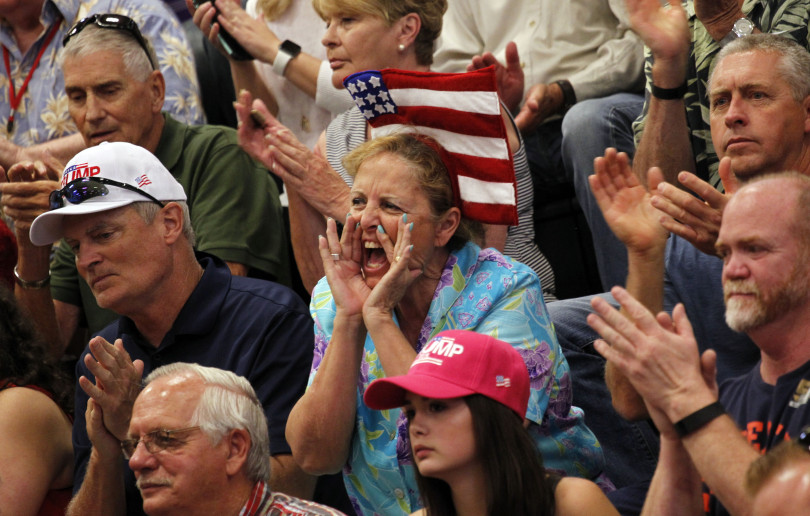
For many people that I know and that I see around this country, the idea that a person like Donald Trump could be this close to the presidency is simply baffling. A place we find it hard to empathize. I am a person who always tries to remain optimistic. The more pessimistic about things, the more I try to find that silver lining, that thread of understanding, and try to open the door to a more enlightened and positive mindset. It is very difficult to do this about Trump and those who support him. However in that journey I came across a couple of media pieces that have help. One is this video piece done by The Guardian in the UK. It is very well done and closely examines McDowell county in West Virginia and speaks to the desperation that many people are facing and why they would hang their hopes on someone like Trump.
The main thing that I want to discuss is this article from Cracked.Com. Every once and awhile I’ll across a thought provoking article from this satirical site and this is one of them. There are many points that I agree with, and few points that are hard to swallow, and I had to remind myself that I did have to open my heart a little bit more than I had. There are also some important points that I disagree with, or rather omitted points that I think provide for a more fair approach to the subject.

The main thrust of the piece is that when you look at a map of blue vs. red, the state map that we often look at during elections gives us a false idea for how that break down happen. The map in the article clearly shows that blue vs red is really urban vs. rural. The fact that blue has been taking precedence nationally I think is fairly indicative of that demographic shift to an urban dominated country. My state of Pennsylvania is a good example of how the urban centers of Pittsburgh, Harrisburg, and Philadelphia dominate the voting population even though most counties tend to be very conservative. There are very many counties like the one investigated in WV in The Guardian video, and poverty and drug use is high. As the Cracked article points out, rural America is a forgotten group of people and grows smaller and thus is paid less attention to over time. Our country was once much more agrarian, many rural counties had factories or mines and all these things allowed small town and rural America to thrive. This however is not the world we live in anymore. As the article points out, even for the most part pop culture has left rural societies out of the conversation. We forget where food comes from. We are concerned about the mistreatment of urban minorities, but show little concern for the extreme poverty that many who live in rural areas or small towns live in. The deterioration of their livelihood with no plan put into place for how to give these people a chance to better their situation.
 Republican politicians often talk about two Americas, and in some way they are right. They often talk about the good hard working folks in “any town” USA, and they are right. How many times do democratic politicians even really actively campaigned in rural areas and made their concerns part of their platform? I will concede that to many liberals, the needs and lives of rural America are forgotten or ignored. I included. We may find their attitudes deplorable, but let us also, at the very least consider how deplorable their lives have become over the past 40 years as jobs have moved overseas and that most of our food is produced by big companies and industrial farming. And here comes Trump, who addresses the “common man” who says he’s going to bring coal jobs back (even though they aren’t coming back), who says he’s going to lower everybody’s taxes, who says that he’s going to bring companies from overseas back (he’s not), and make America great again.
My criticism with the article I linked is that (and maybe this is a problem with the media) we aren’t getting people who come to the fore, supporting Trump, and really making nuanced arguments about the difficulties in rural America. What we have is a slick NYC businessman as far from rural as you can get being supported by people who rail against immigrants (even though they themselves were immigrants), who want religious law to influence government law (no abortion, end marriage equality), who shout patriotism without substance, who want to build gigantic walls that would only further their economic challenges, and who literally find their candidate’s offensive views on women to literally be no problem at all.
I think the article makes some great points and I think that in the end if we are going to survive as a nation than “WE the people” has to mean something. We all have to do a better job at reaching across the aisle. And this is one of my posts that is much as a call to action to me as anyone else. I struggle sometimes when I see someone come on TV speaking hate and intolerance, but I don’t want to become a person who writes that person off as a loss cause. So if there is this other America that is disenfranchised and needs are help than I am happy to do so, but that doesn’t mean I am going to turn my back on women, on racial minorities, religious minorities, on LGBQT people to do so. Both sides have to want to heal the divide and that means that we have to start seeing everybody as important whether it is racial vs urban, all races, creeds, sexual orientation. There are a lot of problems that we all have in common. Let’s start there, and I think you’ll find that if we worked out those things first, a lot of the other things wouldn’t matter so much.


 was much maligned by climate change deniers funded by various lobbying groups, but has since that time proven to be quite accurate and verified by other researchers. His was also among the e-mails leaked in the scandal called “climategate” which, despite the spin of deniers from out of context e-mail excerpts, has been
  Well the bad news is also related to the good news. It makes me concerned, not only that the massive money of the Koch Brothers and energy companies lobbying against solid science is preventing us from taking action that will help this planet, but also that we have so many Republican people in congress without the political courage to stand up to the money. It seems if they all banded together I am not sure what the likes of the Koch Brothers could do, if all of a sudden all of those people in congress lost their next elections suddenly. It would sort of “show their hand”. I guess it upsets me that the people we elect can be so intellectually dishonest and live with themselves.
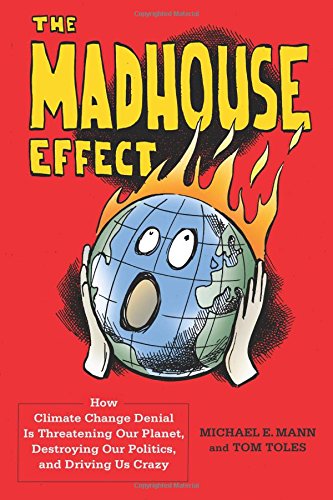 Finally I also want to help promote
 Cloak Unfurled