Why are you here?

There are many things I don’t understand about my college students.  In my 13th year of teaching as a professor I think I can at least make some solid observations.  Much of what I observed leaves me with more questions than answers.

My undergraduate experience was perhaps not typical in any way.  My parents paid my tuition, which was heavily subsidized by the Canadian government.  It is still a decent $3.500 for the year, which was a decent sum of money was back in the early 90’s.  I lived at home though, the university was about a 50 minute transit ride.  I am sure the fact that my mom got me a part time job at the university signing student loans was important in realizing how fortunate I was to not have to go in debt to pay for tuition.  My parents instilled in me that education was important and that doing well was also important.  That being said, despite the work I put in, I still ended up with only a B+ average in my undergraduate.  It was a lot of math and physics, and it was hard.  I wasn’t the perfect student either.  I cut a number of classes, but I was always aware when things were due and when were really important days to be there.   I never missed a deadline or a test.  If poor attendance led me to a less than perfect grade, there really was no one to blame but myself.  Sometimes you did get a bad teacher that discouraged you from wanting to attend that class.  But sometimes there are bad teachers.  You can complain, but it’s probably not going to make them a whole lot better.  Everyone was in the same boat and you did your best.  I never drank alcohol as an undergraduate; neither did most of my friends actually.  Which is perhaps a bit odd considering the legal drinking age in my province is 18.  I still have lots of fond memories of those days, and think it was a rather fun period of my life.

I held that dedication throughout my time in graduate school and it was that view of university and college life that I held as I became a professor at a small university in Pennsylvania.   I have found that my views about what college is about vary vastly from most of the students that are here.   Look, there are a lot of societal problems at work here too.  Perhaps the fact that guidance counselors try to convince every kid they should go to college when in fact they would be much better off in a trade school, or just taking some time off and working a low paying job to really understand what it takes to be successful in life and manage your time and money better is part of the problem.  Perhaps the fact that student loans are given out with alarming ease, with little time taken to really explain to the 18 year old how it will affect their life is the problem.  Nevertheless I have just seen a lot of baffling behavior among students since I have been a professor and it just makes me want to ask the question:

 “Why are you here?”

I have seen students spend the whole class text messaging, reading a novel in class, doing makeup, showing up 20 minutes late to a 50 minute class, or show up to class drunk, high, coked up.  And then there are the ones who don’t

From http://images.collegemagazine.com

show up.  The class is too early, too late, they are too hung over, it’s too cold, too nice, raining, etc all serve as excuses not to make it to class.  I have seen students make it to only half the classes in the semester.  I have seen students who seemingly only realized they missed an exam 3 weeks after the exam was given.  I have had students complain that I made a test for the day after their birthday, the day after St. Patrick’s day, the day after homecoming weekend, or worse yet Fridays.  Apparently Thursday nights are just party nights in general so having an exam on a Friday, especially in the morning is seen as a cruel thing for a professor to do.  All this is considered part of the “college experience”. Yet none of the people who are hired to teach or work at staff are hired to support this experience at a college, because the institution is designed to help young people further their education for the purposes of a career. Once again:

“Why are you here?”

So many students enter university undecided.  Spend an extra semester or 4 getting a 4 year degree because they switched majors and dropped classes so many times or had GPA’s so low they had to repeat courses.    The cost of

From http://www.studentloannetwork.com

tuition, even at this modestly priced public institution that I teach at, with housing, costs about $10,000 a year.  After 4 years you will start out $40,000 dollars in debt if you complete your degree in the standard time.  While it is sad that the government doesn’t emphasize education more and subsidize the cost more, from a practical point of view it is difficult to justify attending college without at least some clearer picture of what you want to do, and to simply do it as quickly as possible.  The student loan system in this country is terrible and sometimes it’s your only choice to getting an education and a career that you want.  That being said, it IS money you will have to pay back, and if you are going to be in that much debt it behooves you to also choose a career path that will allow you to pay back that money as efficiently as possible.  If you aren’t think of the financial reality before entering college then I have to ask:

“Why are you here?”

Please don’t get me wrong as I have met many mature students.  I would easily say that half of the students that I see, even ones that might not be doing particularly well in my classes will graduate and hit the ground running.  I hesitate to say too many numbers as my observations are only anecdotal, but I would say after teaching over 200 students a semester in 12 years that there are, conservatively, 20% who really don’t care and really would prefer to not be in college (or rather not be in college for the purposes of education).  Given how competitive it is to get a job, given how expensive it is to get an education, and given how salaries haven’t kept pace with inflation, why spend $50,000 on an education, to get a mediocre to poor GPA (especially when you’re field of choice has a low amount of jobs available)?  Isn’t there a better way to spend your time, money and resources?  For some people it is loan money, for some it is their parent’s money.  Interestingly I have never met a student who was paying for their own tuition who didn’t understand the importance of doing well and make the most of the money they were spending.

So ask yourself the question “Why are you here?”  And think about whether you might not be better off somewhere else.  Somewhere that was better suited to wear you are in life.  Somewhere better suited to what you want to do.  Somewhere that will give you a chance to figure out what it is you really want so that when you do enter college you are ready to get the most out of that environment.  College is an immense challenge in terms of your time and energy.  You will expand your mind and your heart.  You will meet great people from different walks of life. But, like it or not, university is about learning and education.  You can party anywhere like a rock star any where.  But think about the fact that your country needs you.  Young people are the ones with the energy, the ability to learn at a faster rate and think outside of the box.  Young people are the ones who are most needed in a democracy to be educated about issues.  Issues that they will face in the many years ahead of them.  There is a surprising amount of time to still have fun, but also start being a positive part of society and perhaps not getting wasted every night.  I love my job because of all the great young people I’ve met over the years, I just want to see young people also think critically about their decision to go to university.

Striving for a better world where you can keep your guns

An article I read recently has helped me admit the truth in regards to gun control.  There is truly no tragedy bad enough for us to reform our gun laws.  So be it.  It is a tiresome debate to be sure, and so I wanted to approach it from a different perspective.   In fact accepting the fact that people want their guns in this country has helped me ask questions that I might never have asked.  So let’s begin.

Let us accept as fact that guns are the best way to ensure safety in the U.S. today, which is full of criminals and people who want to hurt you.  Or in other words there are bad guys with guns; you need to be a good guy with a gun.  I don’t deny that there are far more good guys with guns than bad.   Okay, so you need this gun, whether it is to protect the people you love at home, or you might have to stop a bad guy with a gun in a public place.  I hope that it is not too much of an assumption to say that neither side of the gun control debate wants to have crazy people invading their homes or pointing guns in public places wanting to cause harm to others.  If you feel you need a gun in the world we live in now, that’s fine, but wouldn’t you like the world to get better?  Wouldn’t it be nice to be in a world where you didn’t need that gun?  Because let’s face it, a crazy person with a gun wanting to harm people is a stressful situation.  Somebody is likely to get hurt anyway before that person can be stopped, and the fright of a crazy person with a gun breaking into your home and being shot in your living room is an ugly sight to all who live there and can be traumatic, even if you were to just scare the intruder away with your gun.   So would it be safe to say that all would like to live in a safer world in which a gun wasn’t necessary?  It seems reasonable.  Again nobody physically wants to take your gun away.  I personally have no problems with guns staying in boxes in the corner of your basement, collecting dust because there is never an occasion to use it.  Even soldiers at war look forward to a time when they can lay down their weapons and not have to use them again.

Let us also accept the fact that there will always be criminals.  This is probably true also.  But is it true that crime levels are the same everywhere?  Of course it isn’t.  There are places with less crime, less homicides, and in some cases a stunningly low amount of guns. Now if we removed the U.S., which is a statistical outlier in terms of gun ownership, we might find that some of the countries with higher gun ownership (still less than half of the U.S. average gun ownership) have low crime.  If such societies exist then it seems that we would want to learn about what that society has done to lower crime, especially violent crime, so much.   Perhaps it is non-restrictive gun laws, but if gun ownership is 20-30 per 100 people, there are still a large number of people unarmed who could be taken advantage of by a bad guy with a gun, so the answer to their lower crime can’t be entirely gun ownership.   And this is aligned with what gun rights activists say, which is that gun control is not a means to make society safe.  So given that there are other countries that are safer, shouldn’t we be trying to achieve this type of society and trying to understand why they are safe?

What we’d probably find is that such societies have low economic inequality, good health care, emphasize education and have a high degree of education equality in all of its schools and universities.  Non-

From whenchemistsattack.com
From http://www.dailyyonder.com

restrictive gun ownership laws are likely to be only a partial answer to the solution.  The NRA lobbies to make sure gun ownership laws remain unrestricted.  They see it as sensible to make sure society is safe.  That being said, why isn’t the NRA also one of the biggest lobbies for quality education? Why are they not helping schools in low income areas getting better equipment and teachers to help people in those communities raise themselves out of their poverty?  Why aren’t they pushing for more funding to universities to lower tuition and public debt?  Why aren’t they using their vast wealth from supporters to create research grants for more research into mental illness?  Why aren’t they pushing for educational programs in schools that might help people recognize the signs early of mentally and emotionally unwell children, who when these problems go unaddressed, grow up into teens or adults who have the potential for violent behavior?  Why aren’t they pushing for better education about drug use and alcohol while decriminalizing, at the very least, marijuana which gives so much of the population a criminal record impacting their chance for future economic stability?  Don’t we want to live in a country where guns are not necessary?   Do we want our Generals in the military to be busy, or would we rather live in times of peace?

What seems strange to me is that it is mostly us naïve liberals who are constantly pushing for more money to education, health care, decriminalization of drugs (particularly marijuana), increased money to social services which help at risk youth, etc.  So I would like to formally say that I am willing to never speak of gun control again, if those who most vehemently support the 2nd amendment also take up the cause to live in a safer society.  You can still have your guns for when the government turns on you to attack you.  But just because society is unsafe, doesn’t mean we can’t strive for something better.  And there is better out there so let’s fight for that, instead of fighting over gun control.  Sound fair?


Destiny’s Child


One facet of human nature that fascinates me is the idea of destiny.  Now when I say destiny here I don’t mean like some blockbuster movie in which I am destined to save the princess, fulfill the prophecy and become the most benevolent leader of mankind.  I am talking about something more fundamental than that.  What some people might refer to as “a calling”.  And maybe not even in the sense of a career only, but rather one’s passions, one’s nature.  It is not too surprising that I am reflecting on that, because as I watch my son, I wonder what he’s going to be like.  What will his interests be?  How will he want to live his life and how different will that be from me or his mother?

The nurturing influence of parents cannot be overlooked, but we’ve all known people who were vastly different from their parents in some very fundamental ways.  Two parents might be very messy and their child is neat.  Two parents might be teachers, and their child wants to run his own business.  Of course trying to determine why somebody ends up the way they do is a fool’s errand in a lot of ways, because nurture is not just a function of parents, but of teachers, friends, relatives, society, etc.  It could be that one day a kid sees a fancy car that he just loves and says to himself, alright how do I get a job that allows me to drive around with that.  Perhaps not the most noble of callings, but he we like shiny things that enhance our status and so these kinds of things certainly happen.

For most of my life I thought I had a calling to be a meteorologist.  I’ve loved storms since I was a small child.  I would get up in the middle of the night to watch the lightning.  In grade 6 we learned about different clouds and how they could tell us about the weather that was coming our way.  I was fascinated by this and remember feeling hooked by it.  I wanted to learn more about clouds and forecasting.  In grade 8 our science class was a full year and broken up into 3 parts:

From http://www.noaanews.noaa.gov

astronomy, meteorology, and geology.  I loved all 3 of those and at the time they had us thinking about careers, but I was already hooked on meteorology and I decided then that I was going to be a meteorologist.  During my undergraduate I decided that being a forecaster wasn’t for me and wanted to teach it so I went to grad school and I loved it and don’t regret a second of it.  At the end of my undergraduate I took a linguistics course and I loved it.  At that time I questioned my career decision a little, but it was my last year of undergrad and it seemed too late to do anything else, and what did it matter, I still loved the weather.  I do think that I would be just as happy if I had chosen linguistics as a career had I been introduced to it earlier in life.  Now my interests lie in cognitive science and neuroscience.  I could definitely see myself being a researcher, or even a clinical psychologist because I am deeply interested in understanding others and our nature, and feel I have some aptitude in understanding the motivations of others.

Despite these ponderings on alternative careers, I still don’t have any regrets.  I enjoy my job, and perhaps being a professor is the reason I have had time to pursue these other passions.  But it has led me to some questions about this idea that I was somehow “destined” to be in the atmospheric sciences.   Would I still have become what I became had I not lived in a climate that did not have thunderstorms?  What if our curriculum in grade 6 did not include learning about clouds?  What if the grade 8 science curriculum didn’t have meteorology which helped me appreciate the subject at a greater depth and attract me to it even more?  What if I had a mother who was afraid of storms and that made me afraid of storms?  Yet my choice to go into meteorology seems beyond these things.  We had lots of subjects in school and with some good teachers.  Why didn’t any of those subjects arouse a passion in me?  My parents were not scientists, teachers, historians, writers, etc. and it seems that they didn’t influence me in any particular academic field so I could have chosen anything.  In terms of time, we spent more time learning about many other subjects than meteorology.  There are rocks everywhere and I had been to the Rockies, so why didn’t I go into geology?  I loved watching nature shows so why didn’t I become a biologist?  Why did I feel I had a “calling” when I meet so many students who aren’t even sure what they want to do?  Is this a rare feeling? Or do other people feel it and just ignore it?

From http://www.zoriah.net

I don’t know that I have an answer to any of these questions, but what I do know is that I was very fortunate.  I’ve seen many students with a passion for meteorology but very weak quantitative skills, having weaknesses in math and physics that forced them to take a different career path even if their interest remains.  I do not have that problem. I am fortunate by circumstances having parents who worked hard for me to give me a chance to pursue my passions.  I wonder how many people feel this “calling” towards science, the arts, humanities, history, education, etc., but simply must take a job as soon as possible to support a family.  Maybe they can’t afford to go to school and don’t want to take out student loans.  Some people might argue that their “calling” is perhaps not that strong to drive them, but there are practical realities that must be adhered to and when basic needs must be met they simply must be taken care of first.  Somewhere there are people who could have been brilliant athletes with enough training and leisure time, but instead had to work in a factory to support their family.  How many geniuses have simply died of starvation?  How many talented artists have died of curable diseases simply because they couldn’t afford a doctor or the vaccine that would have save their life, or a doctor or vaccine simply wasn’t available?

In the end I don’t think I subscribe to this idea of destiny, because whatever natural passions we have, they must be cultivated, and even those passions may fade slightly as new ones take their place.   In the end I can only be thankful for the natural gifts I seem to possess and the family, friends, and society that has allowed me to develop them.


Teacher Teacher, Can You Teach Me?

As an educator, naturally I think a lot about education (now if you liked that riveting beginning please read on).  Over my years as a professor we hear a lot of about better methods to educate.  A lot of fancy phrases get thrown around like problem based learning, inquiry learning, student centered pedagogy, etc.  Rather than discuss the merits of these techniques and whether or not they are better than the “chalk and talk” style of teaching (another exciting catch phrase) I want to take a look at things from a more fundamental and philosophical level as is often my nature.

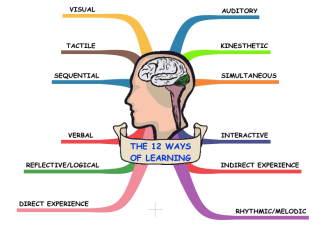
Let’s first forget about the fact that there are multiple learning styles amongst people and that the way we learn also changes as we grow in age.  What I mainly want to talk about has to do with knowledge, learning, and critical thinking and we may return to some more specific stuff later, I really can’t be sure, because I haven’t decided what the point is to this blog. 🙂

So how much knowledge is there in the world?  Before we quibble about what knowledge is, or whether we can truly “know” anything, let’s just sort of look at it from a somewhat quantitative point of view.  It seems clear to me that if you take any field of study we simply know more today than we did yesterday.  Every day we are discovering new things.  So we have a lot more to learn or that we can learn today than in the past.  Yes there are always things that we are going to be a little unsure about or that we are on the leading edge of discovery and so haven’t solidified our views yet, but each day we move a lot of things into “okay we know this” category and out of the “unsure” category.  Truthfully speaking every day we probably do the reverse as well, but I would say there is a net movement towards “knowing” something new all the time.

It is also clear, as we look at education (and I am speaking mostly about North America) that critical thinking skills are low.  I am a huge proponent of encouraging better critical thinking skills in children.  In fact children already have great critical thinking skills, it’s just that the education system eventually drives it out of them.  Perhaps due to the fact that kids are often wrong in the conclusions they make (which by the way is amazingly okay because we should be encouraging the process and I think instead we tend to shut the process down in favor of the “right” answer, and perhaps because education as an institution promotes rote memorization over critical thinking.  Not to give rote memorization a completely bad rap, because I think there always has to be a place for being able to memorize things).

So to go back to my point

From http://www.northwestprimetime.com

about knowledge, there is a lot of things to know and even under the banner of better critical thinking skills it is, in my opinion, extremely wasteful to have young children rediscover everything we know in this world.  I also think this is okay because kids are extremely good at memorizing things so why not let those sponges soak up some basic knowledge?  Some very thought provoking researchers on education like Sugata Mitra would argue that in the age of information memorization of information is not necessary, that anybody can simply look up the information they need.  Given the amount of misinformation out there in cyberspace I think at the very least a basic set of knowledge is required to at least help students from sorting out bad information from good.  And as the picture indicates, memory is an important part of the processor that is our brain.  We need to have some stuff in there.

But young children are good at a lot of things and there are certain ages where they are exceptionally good at certain things such as learning languages, learning mathematics, and rote memorization.   I gave a talk one time to a bunch of 2nd graders on tornado safety and there was not a single student who didn’t have a question and who was curious.  At that point I began to wonder, how do we go from this child thirsty for knowledge to the typical apathetic college student I see in my class? The next question then becomes why don’t we take advantage of what we know about how kids learn and when they learn best?  In answer to that question I have only opinions so please forgive me if I’m grossly mistaken, but I think it comes down to several things:

  • A pace of learning that is too slow. Children become bored and their active minds turn to other things.   The rate in which knowledge is expected to be absorbed by a student actually increases with time which is exactly the opposite order it should be. I’ve heard the argument that young children shouldn’t have to work so hard at school at younger ages that they should play more. My experience in watching young children learn is that play and learning aren’t really that different. And I think there are ways to even make the learning more interactive socially for those who might worry about a loss of social skills as they spend more time learning.
  • A lack of funding for schools and low pay in general for educators. I know, another educator complaining about funding, but the emphasis a society places on good education is important. Giving all schools equity in retaining good teachers, smaller class sizes, and having effective tools for the trade is important. By making teaching a higher paying and attractive career by ensuring they will have the tools they need when they start their career, we can bring in brighter and better teachers. In my experience I have seen far too many students choose teaching (especially in science) because specializing in their chosen interest was too hard. This seems wrong to me. Currently most of the brightest and best go elsewhere because they can make more money, and those that are extremely bright and choose nobility over money (I praise them all!) are often frustrated by a system in which they do not feel supported and actually feel constrained and trapped.  I think the lack of finances is in large part why curriculums become less varied and standardized because they are more easily measurable in making decisions on how to dole out the limited funding that all schools fight for.
  • Homogenizing teaching. The feeling that many teachers have is that they have little freedom in their curriculum or how they teach. Exposing students to a diversity of teaching styles and material increases the value of collaborative efforts among students and helps students understand the teaching style that works best for them. If all students are exactly the same and exposed to exactly the same style of learning it doesn’t surprise me that many students are bored, or don’t see the value of education. It doesn’t surprise me that many students simply see education as a game in which once they figure out the system they can cheat themselves out of actual learning and simply get the grade they need to move forward. Let student’s express their individuality through learning is important, and I think part of that comes from letting teachers express their individuality more through teaching.

I apologize for the length of this post as I find I can never be brief when it comes to talking about education.   I think instead of coming up with ways to make learning fun, let’s remember that for every little kid, learning IS fun.  Let’s figure out instead how to foster that feeling as they grow older.

From http://students.ou.edu

Correlation vs. Causation

I decided to write a response to one of the many excellent posts written by a fellow blogger.  It became long enough and I thought a worthy enough to be a blog post of it’s own!  If you are interested in the idea of correlation vs. causation you can read his blog here first.

In your last paragraph I was reminded of Dawkins’ argument in the God Delusion when he is talking about miracles.  Since miracles are by definition unique and rare events there is no way to really disprove a divine explanation.  This is of course if the same thing doesn’t keep happening again and again, which if it does, you really don’t have a miracle on your hands anymore.  He uses the example of the one documented miracle in Catholicism in which some 100,000 witness near Fatima, Portugal reported the Sun doing some odd things including zigzagging towards them and crashing to the Earth.  Dawkins argues that in looking for a natural explanation for the event, all of them, including the possibility that all 100,000 people are lying are actually more probable than the laws of physics being thwarted for a group of people in one part of the world (no other people reported seeing anything other than those at the event).  So I think that you are very correct that we the “correlation does not mean causation” argument does not negate a particular postulation for why a correlation exists.   However I would go a step further and say that it is not even an argument in of itself.

It is of course the responsibility of anybody who poses a correlation to provide a reason why such a correlation exists.  Provided you have done that, then the “correlation does not mean causation” response isn’t a logical argument in response to yours.  The person on the other side of the debate must either address why your reasons why are not valid, or must present something else that correlates better and why their reason for x causing y is more probable.  So I think you might be giving a little too much weight to the argument in how much it actually negates a correlation between two variables.

In many areas in science we can say why pretty easily because there are usually physical laws that explain why quite easily, and those things are testable and repeatable.  In social science this may be harder to do.  Especially since it is not always clear what all the variables are.  For instance it is clear that there is a positive correlation between gun deaths (accidental, homicide, and suicides) the amount of guns per capita in a population.  There are plenty of psychological factors of course to consider here on why would a person own a gun or why would someone choose to kill themselves?  There are practical questions like how to we get people to be more responsible about locking up their guns so their kid doesn’t pick it up, how to we make sure that more people remember to store their guns unloaded, how can make guns safer from accidental misfires, and how can we make sure that people who buy again are well trained in how to use it? There are likely even bigger questions like how does income disparity lead to increased crime in general? What are other ways that don’t involve firearms where people can be made safe?  All of these and plenty more are likely part and parcel of explaining gun violence, but that doesn’t change the fact that reducing access to guns would result a lowering of the number of gun deaths.  So making some laws that create a national gun registry, that do better background checks, and limit the type of weapon the general public could buy, would make some sense even though it clearly won’t eliminate gun deaths completely.  If by a counter-argument someone says “correlation does not mean causation” they haven’t actually addressed the argument being made.  They actually have to find an example with all other variables relatively constant between the U.S. and that country, except gun control laws, and show that an opposite correlation exists. i.e. Restrictive gun control laws and increased gun deaths, or high gun ownership and low gun deaths.  And that would be for a country with similar economies, democratic, with a high standard of living, and that doesn’t have mandatory military service in which the high amount of gun ownership isn’t because they keep their piece given to them in the military (Switzerland the example always used here).

So in the classic humorous example that has been around for awhile is that graph between global temperature and the number of pirates.  I can’t just show that graph and say see…look how the number of pirates is impacting global temperature?  I actually have to provide a reason why pirates might impact temperatures.  I can say there is less plundering and razing of towns so the urban heat island effect has increased thus raising global

From Wikipedia.org

temperatures.  Obviously this is a silly argument, but a response of “correlation and causation are different”, while a true statement, does not negate my assertion.  There are many ways to disprove my assertion but pointing out a correlation is not causation does not. Because the truth is, “correlation does not always mean causation” so one has to go past this statement to further argue one’s point.  This is true for many arguments that contain logical fallacies.  You could take the classic argument used against gay marriage.  Well if we let gays marry, pretty soon we’ll have to let people marry their pets.  Well this is of course the slippery slope logical fallacy.  Slippery slope arguments may not be incorrect, but are very often wrong.  So it’s not enough for me to counter your slippery slope argument with “Hey that’s a slippery slope argument”.  I would be quite wrong to think the argument was done, because they could actually be right.  Some events do lead to a chain of events that are far from where things started.  To win the argument I would actually need to argue that there has never been a push for legislation to marry a pet, that if anybody has tried this they were a crazy person, that this is not a psychological drive of human beings as a species, etc.  I could also point to many other marriage related laws or other laws that have not led to a hyperbolic slippery slope situations.

To say that “correlation and causation are not necessarily the same thing” is actually a Straw Man argument (which is fallacious) because the argument assumes a position that you have not taken in the argument.  Correlating variables is a valid method for discovering relationships, and by presenting that correlation, one’s assertion is not that correlation is a valid method, but rather that two variables are related to each other.  And to say two things are correlated doesn’t imply that this is the only important variable, or that even it is the primary or secondary cause of a particular event.  One has simply said there is a relationship and a counter argument must challenge the relationship.  A correlation must be presented along with some sound reasons why there is a correlation, and an argument in response must challenge those reasons.  The art of argumentation isn’t easy and few people can actually argue well. 🙂

The Whole Story

Who doesn’t love a good story? We see it television, in movies, and in books. We all love good stories told around a campfire, around the dinner table. We love writers and directors and people who can weave a good story together. Are stories just something that purely are for entertainment if they are fiction, and education if they are true? Is there any such thing as a true story (and if there is, is it exciting enough to listen to)? Is there any such thing as a fictional story?

There are plenty of people I’m sure who have addressed this topic, so I don’t think I am coming up with anything new here. The value of stories and storytelling has been on my mind ever since I read Patrick

From kkc.wikia.com

Rothfuss’ two books The Name of the Wind and A Wise Man’s Fear. The main character in that book is from a group of people that are somewhat gypsy like. They live their lives on the road traveling from town to town putting on performances of plays, telling stories, acrobatics, and playing music and singing songs. They are performers. The main plot of the series (which is not finished yet and I’m anxiously awaiting the 3rd and final book in the series) is that the main character is trying to determine the truth behind a traumatic childhood incident (don’t want to give too much away). The source of the traumatic event was something that he heard as a story and thought it was just a myth, something not real, and thus when this myth does seem real he questions his own memory of the event, since he was a child and could possibly have just made a story fit what he witnessed, or did it really happen. As this main character grows and travels he hears more stories from different cultures and different people. Stories are always slightly different because good storytellers exaggerate a bit here and there and of course stories generally change throughout time as they get passed down and pass from region to region. taking on aspects of the culture they move into. In a way the main character is learning about what’s real through what everyone thinks are fictional stories. Taking bits and pieces from all the different stories and putting it together into a narrative that might explain what happened to him as a child. The books represent masterful storytelling themselves, but the author really hits home the value of stories in general. The main character states at one point “There is truth to every story”.

Truer words were never spoken.

Fiction is defined as:

1. a. An imaginative creation or a pretense that does not represent actuality but has been invented.
b. The act of inventing such a creation or pretense.
2. A lie.
3. a. A literary work whose content is produced by the imagination and is not necessarily based on fact.
b. The category of literature comprising works of this kind, including novels and short stories.

Even the most damning definition of fiction here “A lie” can carry with it truth.  If you know someone is lying you might know then that the opposite is true.  You might know that to find truth more investigation is needed.  You might try to understand why I’m lying and learn something about why people lie. I think we need to be mindful that this doesn’t necessarily mean that there still isn’t any truth to be found within the context of our imagination. And I think everybody sort of gets that, but for a while I was heavily into non-fiction because I was like I have so much to learn, and I still do, but I think in my mind I had forgotten sort I also decided to write about this today because of an article I read recently regarding stories and how they impact our view of the world. For instance if we are old stories about violence repeatedly this may skew our view of how prevalent violence is.  The article has many more thought provoking ideas than that, but the gist is that stories shape our lives, because we do search for meaning in every story and when we read only one kind of story all the time, whether it is non-fiction, a news story in the media, or in a movie, our neurons start to forge pathways that make that one kind of story a narrative for our life.  So it seems it is important to actually fill yourself with different types of stories.

I love reading.  My wife and I actually read stories together, with usually me reading and her listening.  I tend to read in a British accent most of the time, because hey it makes the story sound better for me, but I also try to do different voices for different characters.  She likes the way I read, but I sort of wish she would read to me more too, because when we started she was the one that read to me, and it was actually her getting into the reading and doing different voices that made me feel comfortable getting into it. 🙂  She says I’m better at it, and maybe that’s true, but I just hope I haven’t taken something away from her that she enjoyed doing.   I do find value in reading a story out loud, telling it.  It makes you think about the characters more, what their moods and emotions might be.  I sort of find that when I read to myself I pay

Orpheus and Eurydice (from www. maicar.com).

more attention to the non-dialogue part, where as when I read out loud I pay more attention to the dialogue.  It’s a very different experience.  I strongly recommend giving it a try. 🙂  Rothfuss’ books have also made me think that it would be cool to have, instead of a book club, a story club where once a month you meet and tell stories to each other.  I am super excited to read stories to my child that is soon to be in this world, and I hope I can share the appreciation I have for the value of stories. 🙂

Society. Fixed. Done.

There is one solution that really solves all our problems.  It’s just two words.  In these two words there is no more hunger, no more war, no more cruelty, or rape.   There is equality amongst gender and races.  People can have guns and don’t have to have taxes imposed on them.  Everybody makes smart decisions about their health, about sex, about when to be a parent, about how to be a parent, and raise their children well.

You probably know people like this, and you know people who advocate it because it’s so obvious and easy.  It’s called Personal Responsibility.  I capitalized it because it’s so important and because it is the answer.  Alright, I’m done blogging.

…hang on…nope…I just remembered something.  We don’t live in a utopian fantasy.

  • You shouldn’t need to have a law that tells you to wear a seat belt or text while driving I know this is important so I drive safely
  • You shouldn’t need a law that forces you to get health insurance or makes you be a responsible employer and take care of your employees by giving them a living wage
  • You shouldn’t need to have laws that force you to hire women and minorities as it should be self evident that gender and race don’t matter and that ultimately it boils down to who is best for the job
  • You shouldn’t need to have gun control laws.  One can be trained how to use a gun and keep it in a safe place away from children
  • You shouldn’t need to impose regulations on corporations.
  • You shouldn’t have taxes imposed on you.  If something is important I’ll be happy to contribute some money to someone who will do what needs to be done.
  • You shouldn’t need to get welfare because you can work.
  • You shouldn’t need money as an incentive to work.
  • You shouldn’t get raped if you are personally responsible about what you wear and how you behave (umm…how about being personally responsible and not raping someone?)

These are just some of the common complaints you hear from people in regards to laws, governance, and “responsible” behavior.  Anyone can see how sensible these statements are, theoretically.  Yet one wonders why indeed do we have laws or talk about imposing such laws and regulations?  If everyone was as awesome as you, who feels so injured to have something imposed on you when you already know you should do it, what’s the point of government sticking its nose in your business? Why is society dictating my behavior when I already know better?  You know your business and conduct yourself responsibly.  Right?

For now I am going to pretend that nobody is willfully ignorant (which is also pretty utopian).  The problem of course is, that personal responsibility is kind of like the nature of God.  Everyone has a different definition of what it means.  If every citizen in the country had the same definition of personal responsibility things might be alright.  Although this in itself would be hard for a big country, in which everybody lives in different regions and by definition the regional disparity requires different needs.  It only takes a handful of farmers to feed a lot of people, yet those farmers are just as important as the whole lot of people they feed.  So the first step would be for all people to accept within a country at the very least that people in all parts of the country have value and we may have to contribute some of our income to them.  This might include roads, education, and protection.  Protection itself can come in the form of a police department, fire department, or military.  One could argue that if everyone was personally responsible the need for a police department kind of goes away.

A personally responsible society however also recognizes their place in the world and in nature, and so realizes that the decisions they make might adversely impact other countries and wants to make sure that it is nice to other countries.  They recognize the value of preserving wildlife and rare species and is responsible about what it hunts and where it builds.  They recognize the true cost, not only in monetary units of drilling, mining, extracting.   This type of responsibility also costs some money because sometimes we might have to do things a little more expensively to preserve ecosystems or protect the environment.  This personally responsible society doesn’t mind.

And accidents do happen.  There are infectious diseases, natural disasters, etc.  Society pays for things in which nobody is to blame.  It is the personally responsible thing to accept that and contribute to help mitigate damage and help rebuild and repair.

Most of the people in this personally responsible society don’t feel too much stress, because the very rich realize that they don’t really need all that money and are quite happy to use their massive wealth to help out the person who doesn’t make too much of his own.  As a successful head of corporation he is extremely happy to contribute more to society because he has a lot of excess.

What a great place to live, but of course it doesn’t exist.

So perhaps the first question we might ask,  “Is everybody capable of this broad set of requirements for personal responsibility?  Of course the answer is no.  Nurture plays a big role in this.  We have belief systems, disparity in education, disparity in resources.  Even if nurture could everywhere be equal, we still have genetic differences.  Some people have physical and mental disorders.  Trauma happens in people’s lives that impact their ability to function at a high capacity.  Even when it’s an accidental event, and not something like murder or rape.  The free market ends some businesses, causing people to lose jobs.  Theoretically new jobs are created, but those might be in some other location.  Another country even.  Also as time goes on we make new discoveries in science and technology.  The industrial revolution has brought about climate change, but it seems unlikely that we started building all these factories knowing the harm it would do in the future.  As we become aware of things, new areas of responsibility become apparent.  So there is going to be a natural evolution towards winners and losers, new problems to deal with as old ones become understood and more cost efficient, and the personally responsible thing to do would be work together to continue fighting that imbalance.  It requires vigilance.

The next question we need to ask is “What can be done to make people more personally responsible?”  There is no quick fix, and there is no one answer.  Education can make us better aware of problems that impact society.  Of course knowledge and wisdom are very different.  In Plato’s famous treatise on love he talked about agape and love of humanity; a brotherly love for all mankind.  We need more of this kind of love, but people fear (and perhaps with good reason) that it comes at the cost of a loss of individualism.  I’m not certain that is completely true, but it might be.  But this love must extend to more than just to our fellow human, but to life itself.  The planet.  Our home.  We must also be humble and lose our conceit.  It may have served us well in our evolutionary past, but now survival is not so difficult when we are working together.

Love for the humanity and the planet, however begins at the individual level.  It begins by showing compassion and love to those in our lives and those we meet.  Helping those who need help and also thinking about how best to help them.  Being personally responsible is a journey within our own lives and does not happen overnight.  It is journey that doesn’t end when you’re 30 or 40 or 50, but continues your entire life.  And it is everyone’s job to be personally responsible but always keeping in mind that some people simply don’t have the ability to contribute as much as you, often through no fault of their own, and when you help raise them up and show sincere concern for their well-being they are likely to reciprocate that generosity.  Finally we must value happiness over wealth.

And even after all that…it’s a struggle.  The great thing is though if we do a better job of keeping these virtues in our heart we will never struggle alone.

Evidently it’s Evidence Part II

Part I, probably doesn’t provide too much pause for thought, but hopefully this one will.  I’ve been told my posts are long, so I’m trying to shorten things up. 🙂

Perhaps I should also preface before I begin that almost anything can count as evidence.  However it seems that people with little understanding of scientific investigation often make the mistake of delineating good evidence from bad.  Or being able to determine why one source of evidence is weaker than another.  Because after all I could argue that it is faith that I believe the sun will come up tomorrow, when the truth is I don’t really know for sure.  The fact that it has come up all the days of my life, is some pretty good evidence.  It’s even better evidence that it has come up for others.  And it seems as I look through historical evidence from before I was born it has been coming up pretty regularly.  And then there is the evidence that the Earth is rotating and that we are revolving around the sun.  It may be that all that changes tomorrow, but it seems unlikely. So at the very least, I can say that my faith has some pretty solid substance to it. (Also please be aware that I do know that the sun actually doesn’t come up, it is the Earth’s rotation that gives it the appearance of rising. lol)

Here are some of the things that many people seem to think of as evidence:

  • anecdotal evidence
  • a contrary opinion
  • a book
  • a “gut feeling”
  • a low probability event (a coincidence)
  • celebrities or other famous people
  • a documentary
  • a movie
  • media
  • even worse  – social media
  • the number of hits you search for something on the internet

There are probably more things that could be added but these are some of my favorite.  Part of the problem is that any one of these could be right.  I am not going to address each one, but there are times when your “gut” tells you, you are in danger and you are right.

From hm.dinofly.com

Anecdotal evidence can also be correct.  I could say “In my experience the sun comes up every morning” and I would be right.  Sometimes celebrities are correct, and documentaries are accurate.  Someone who is disagreeing with you may actually be doing so for good reason.  Because he/she knows more than you do. And occasionally a news story might even report actual information. 🙂

I am a fairly big food snob.  I’ll admit it.  I’m probably even more proud of that fact than I should, but tasty food is an important pleasure in life to me.  Not to mention sitting down to a good meal, can be romantic, social, and/or cultural.  One of my favorite things is to

Pad thai from myrecipes.com

introduce people to new food and new culinary experiences.  It has often been the case that someone will say they really don’t like a certain food.  Upon further investigation you find that the one time they tried it, the person didn’t know how to cook it properly so they had a bad experience, and then never tried it again.  Often if I get them to give what I have prepared a try, they find that they actually like it.  The point is that our own experiences are often flawed.  I am sure the person when they first tried badly cooked spinach they had no intentions on hating spinach, they simply didn’t like what they had, and assumed it was the fault of the spinach and not the cook.

While it is not surprising from an evolutionary standpoint why we would take our own experiences as truth, it is clear that as individuals we are prone to many biases.  If you know nothing about snakes, it is ALWAYS safer to stay away from snakes since a few can be deadly.  Surviving and being safe represents 99% of our evolution as a species, but if civilization has any true advantages, it is the ability to break free from the fearful uncertainty of the wild and to give us time for reflection and thought.  The lack of detailed knowledge about something is the birthplace of beliefs that are based on little or poor evidence.  This is why education is so important.  This is why understanding of science is important.  This is why critical thinking is important.

More importantly this is why humility is important.  One lifetime, at the very least in the length it is now, is never enough time to know all there is to know (if that is even possible).  But when you have true humility, not just humility before God, but humility before all existence, you accept that you don’t have all the answers.  You accept that there is still more for you to know, and to learn.  You can accept that you can be mistaken.  When you accept this, then you can delve into the next set of questions.  How is it that we can come to know things?  What are different ways of knowing?  How do they work?  What is their reliability?

from http://www.jasonwhowe.com

How boring would life be if you just decided on how everything works at the age of 30 and then just criticized everyone else the rest of your days? Keep asking yourself questions, and enjoy the experience of enlightenment that comes from a lifetime of learning.  The feeling of enlightenment is euphoric and is an edge that never dulls, no matter the age.

Evidently it’s Evidence Part I

It is a common message from atheists that ultimately faith and science are incompatible.  Science forms conclusions based on evidence, and faith forms conclusions despite evidence.  In various debates I’ve had with people of ‘faith’ it occurs to me that there might be a slight problem with this statement.  While it’s true that people who hold strong religious beliefs often do not bother trying to explain evidence that is contradictory to their views.  Sometimes they will simply rationalize contradictory evidence away as not being accurate, or say some blanket statement “well science doesn’t know everything” or “science isn’t always right”.  These always seem like strange arguments of course.  Science doesn’t claim to know everything, and while it is true that science isn’t always right, but in proving a current hypothesis or theory wrong the bonus is that you end up with something that is more correct than what you had before.  And of course it’s true to say that faith isn’t always right either.  If faith was unfailing in the results it provides, I would certainly be willing to submit that perhaps scientific investigation wasn’t always the way to go.

But I would like to look just beyond religion and talk more about belief in general.  People who hold strong beliefs whether it is about religion, their country, or even their sports team (okay being a little glib there about sports) all share something in common.  Not only do they ignore evidence to the contrary, they also seem to have a different idea than most scientists about what evidence actually is.

As a scientist it feels fairly obvious to me what I should count as evidence and what I should not.  In the so called “hard” sciences this is fairly easy to grasp.  As an atmospheric scientist I have often dealt with vast quantities of data, measured from some unfeeling

From images.bwbx.io

instrument.  It’s unlikely to have any personal bias.  Of course instruments are not perfect and they have errors.  As a scientist I always need to be aware of the errors in the evidence.  Then once I have those hopefully close to perfect measurements I must then analyze the data.  My interpretation is thus subjective, perhaps to my own biases.  I of course try to minimize my biases by being well aware of the body of knowledge that surrounds the particular problem I am trying to solve.  I try to be aware of conflicting perspectives and points of view from previous scientist to help me keep as open a mind as possible about what my results might mean.  But in the end, even in a field that is steeped in physical equations, I might present results that are biased.  Most likely I have just made a mistake, but bias is also a mistake. 🙂

So any one study can be biased, but ultimately my mistakes will be revealed by others who are using my conclusions as truth to their study.  If I am wrong, their study will fail, and someone will say, perhaps my conclusions were incorrect thus their experiment started with a faulty premise.  An important part of science is verification and repeatability.  When there is a lot of disagreement amongst researchers, this probably means we don’t understand the problem yet very well.

In the social sciences, disagreements are more frequent, because here data and valid evidence are harder to obtain because so much depends on effective sampling and dealing with imperfect forms of subject material (namely us!).  For instance let’s say I wanted to see how humans felt about death, and I only sampled people in the U.S. who were of a Christian faith.  Meanwhile somewhere in India somebody wanted to perform the same study, but only sampled Hindus.  Any conclusion either of us made about how humans feel about death is incorrect.  Because really all we’ve addressed is how Hindus feel about death, or how Christians feel about death.  At best maybe we could draw some conclusions about how Americans or Indians felt about death.  Someone looking at our studies would say, well there are a few similarities in the our study so perhaps together you are one step closer to answering your original question, but for the most part you have only illuminated cultural difference between Indians and Americans on how they view death.  And if we were responsible scientists we would at least admit at the end of our study that our sampling was biased and thus we can only make limited claims about what humans think about death.

So ultimately any good scientist, regardless of the field, is aware of the errors and uncertainty of their data, and the scope to which their evidence is able to support their

From cdn2.edutopia.org

hypothesis.  And it is through the body of evidence in a particular field that we can turn hypotheses into theories and be confident in our conclusions.  We have a peer-review process to evaluate our application of the scientific method, and we have the process of verification and repeatability to strengthen the findings of any one scientist.

What one should gather from this is that science is actually really hard.  It takes a long time to learn how to interpret results accurately, be familiar with the types of errors that can be made, and to understand to what degree of certainty you can attribute to your research.  Nevertheless no other system has found to work better.

In my next post, I will get back to my original idea, which is what many seem to view as evidence and how much certainty they associate with that evidence.

Agrajag: Learning in Theory and Practice

I continue to learn from my newest teacher as I respond to her wonderfully provocative post. I am hoping if I give her an apple she will let me erase the boards. 🙂

I also agree that being defenseless is not the goal.  I see it as rather as a side effect of our intelligence.  Evolutionarily we are attracted to “defenseless”, which is why we go gooey over babies in general for many animal species.  Part of our success as a species also has to do with our longevity in age.  Having multiple generations alive at one time to possible pass on knowledge indicates how important learning is to us.  A defenseless baby is sort of a captive audience as well.  Even once it can walk it is still very dependent on adults and this gives it more time to learn from them in addition to the learning it does through during it’s own individual exploration.

From http://www.thecampuscompanion.com

Ultimately you hit on a very important point and that is the value of learning in of itself.  I think there are a number of people who are fascinated by this topic and who do very good research on this, but ultimately little of it is implemented.  There are a lot of reasons for this and sadly many of them have to do with the values of the society.  In societies where education is valued, they are much more likely to spend resources on best teaching practices.  Ultimately many of the best teaching practices require smaller class sizes so the teacher has the opportunity for more individualized instruction.  Classrooms also require ample resources so there is equity amongst schools in terms of equipment and teacher quality.  Finally when schools do not have to compete for funding they can be much more collaborative when it comes to sharing best practices instead of being competitive.  Often in the U.S. it is not a benefit to share these best practices with other schools because it means less funding for your school. Here in the U.S  education is not valued.  Class sizes increase, schools constantly compete for an ever shrinking amount of funding, and there is great disparity amongst schools in terms of resources and quality of teacher.  Investigation and creativity are sacrificed for standardized testing and rote memorization.

In my experience, it seems like, part of the reasons many students find school boring is that it simply isn’t stimulating to them intellectually because young minds are so adept at learning that the rate in which information is taught simply doesn’t challenge them.  One of the great things that Dr. Mitra’s hole in the wall experiment shows is that young children can learn at incredible rates when given the opportunity.  Children really, really want to learn.  But we dole out the information incrementally and slowly, and Dr.  Mitra demonstrates that this is not necessary.  In the U.S. parents often rail against students having hours of a homework at night, even though very often those assignments allow students to do more investigative type assignments outside of the classroom.  With class sizes increasing, teachers often hold back on assignments too as their workload increases dramatically or they fear they will not be able to give adequate feedback to the students for improvement.

From http://www.excelsiorlearningcenter.com

The type of learning that I connect with most is Mastery Learning.  I think if we accepted that children can learn at an accelerated rate and set the bar high for children from the very start of their education, then as we incorporate Dr. Mitra’s exploratory learning concept in with quality teachers who can work with students under this format we’d have the start of something great.  I agree though that learning in of itself is not necessarily something we should treat as static and yet it very much has in a lot of ways.  We should be constantly evaluating our strategies and adapting to knew technologies and the greater understanding we have gained about how we learn.  In an ideal world I would love to see everyone learn a second language so that by the time they are about 12 they are fluent in another language.

So I shall end as I began in a word about evolution.  From an evolutionary perspective we only really need to learn enough to survive.  Reading, writing, math and science, these are all things that for 99% of our evolution we did not need to do.  We are meant to learn though.  And that wonderful emergent property of consciousness makes us aware of how much we love it, and I think this is evidenced by civilization itself.  Civilization is not required for the survival of our species, but we have it.  It gives us the time to ponder, question, and learn about things we never could before.  The saddest thing I see as an educator here in the U.S. is that as a society with so much access to information and time enough to learn and absorb it, learning and education is rejected instead of valued.  Maybe it’s because education is run as a business model instead of a learning model.  Those who would make educational policy are rarely teachers and while they say they care about the outcomes rarely listen to teachers and only care about the bottom line in terms of dollars and cents.