Let the Children Play

An idea had been running around in my head that, like oft times before, has required the harmony of 3 separate melodies that on the surface seem disparate and maybe even discordant:

  • Watching the behavior of my child as he grows
  • University politics
  • Interacting with some wonderful people at a wedding I went to recently

The idea is that we might all still actually be children.  Of course this isn’t altogether too radical of an idea, but it seems to me that we too often separate “the child” from “the adult” and it has been observation that perhaps the distinction between the two is somewhat arbitrary or at least highly subjective, depending on your definition of the two categories.

From http://www.kidspot.com.au

It has been a disappointing realization in a lot of ways that when I look at the behavior of some of the professionals at the university that their behavior is not too professional.  Perhaps I simply expected more out of a number of people with advanced degrees, but of course it is not different from any other workplace.  There are people that are petty, there are people that throw tantrums when they don’t get their way, there are people that are petulant, there are people that lie in order to not take responsibility, there are bullies who try to boss the other people around, and there are people who think the world is ending because in a metaphorical sense they’ve dropped their ice cream cone.  These qualities all seem quite understandable for a child to have.  Since they are still unsure of how the world works and how to properly interact with others we expect these behaviors in young people and as parents help correct this behavior.  But much to my surprise these behaviors are not something everybody grows out of and just as we think these behaviors will get us what we want as a child, there are many who see them as valid ways to act as adults.  I suspect that it does sometimes work or else they might change.  It’s simply unfortunate that they don’t see that there are other behaviors that a higher chance of success, but perhaps more importantly, lead to a better personal sense of well-being and happiness.

At a wedding this past weekend I met some wonderful people who are just easy to be around and a couple of them talked about how they felt like they’ve never really grown up.  I often feel that

From http://www.coulourbox.com

way too, but unlike the negative child behaviors I discussed previously these people demonstrated those things we love to see in children.  There were people who had a child-like wonder and fascination with the world, loved to play and be silly, were made happy by the simple things in life, loved to pretend for fun,  and took joy in just making you laugh or smile.

Now I may have overstated the idea a bit that we are just big children, but I think that there is definitely a child inside all of us and it might be worth asking the question “What child is inside of me?”  Is it the child that makes us others marvel and smile, or is it the child that drains other people’s energy, stresses them out or makes people just want to run away screaming?  As I watch my child grow it’s clear that behavior is not simply a result of innocence or naivety.  It’s clear that sometimes he just wants to play and sometimes he just wants to let out a yell so we look his way and pay attention to him.  As one grows and gains knowledge of the world, it doesn’t seem like any loss of innocence precludes any child-like behavior.

Sometimes in the face of the weight of the world a little time out for playing is probably the best way to maintain some sanity and gain one’s strength to keep pushing forward.  Sometimes when what you know seems sad, perhaps it’s time to learn about something else, or go some place new so your eyes can open with wonder.  Sometimes when you’re not smiling, do something nice for someone else and make them smile and see how much better you feel.  I think it’s important to carry with us the best part of childhood always, and I hope that as my child grows I can help him hold on to those beautiful qualities that give me such joy to watch now.


More ramblings about climate change

I was asked to submit an essay to include in an introductory climatology text by a colleague but what I originally wrote didn’t get accepted because it was decided they wanted to place it in another chapter with a slightly different take so I had to make some revisions and changes.  I liked the original though and thought I would post it here.

In 2010 the burning of fossil fuels and the production of cement released 33.4 billion metric tons of carbon into the air.  It’s a big number.  An intimidating one perhaps, but what does it really mean?  Can any human identify with such a number?  A weight we can’t possibly experience for a gas that we can’t see.

Global averages temperatures which are not experienced by anyone. (from http://www.globalsherpa.org)

As individuals we experience only a fraction of the surface area of the Earth at any one time.  Our ability to experience change on a global scale is extremely limited.   The detection of changes in temperature on such long time scales is masked by diurnal and seasonal fluctuations.  We don’t experience average temperatures, yet the important environmental issue of our times asks us to take action based on things we do not perceive in our everyday life.

As individuals we are heavily biased towards survival from the pressures we face every day.  Civilization has given us the comfort of living apart from environmental pressures that other species experience more acutely.  It could be that civilization only gives us the advantage of delaying these pressures and gives us the illusion of comfort.  As an evolved species of animals who depends on other life for our very survival, our ability to fight off the enormous pressures that nature can exert may be dwindling.

In a typical thunderstorm there are approximately 1 x 10¹⁸ droplets.  Of course no one droplet means very much, but the collective of droplets in

From http://www.albany.edu

the cloud itself can produce lightning, damaging winds and hail, and flash flooding.  With approximately 7 billion people on the planet it is easy to view ourselves as a single drop.  With the issue of climate change it may be time to focus on what we are in fact part of:  As a species with a massive and growing global population with a great deal of power to change the world for better or for worse.  The question then becomes, “What can we, as individuals, do?”

On September 27th meteorologist and journalist Eric Holthaus, in response to the 5th Assessment Report on Climate by the International Panel for Climate Change (IPCC), vowed never to fly in an airplane again.  He felt very strongly about his carbon footprint.  A criticism often made against climate scientists who travel to conferences and meetings to discuss the issue.  His gesture is extremely noble and perhaps sets a good example for the rest of us.  He participates in many meetings now via Skype to avoid flying.  There are probably many of us, companies and organizations alike, who may not be taking great advantage of the technology that is available to us.  However, his case may also be an example of our disconnect between experiences as individuals without seeing the whole picture.  A response by William MacAskill, an ethicist at Oxford, pointed out that while Holthaus’ individual footprint might be high, his active participation through face-to-face interactions with policymakers internationally may reduce carbon emissions so drastically that it more than offsets his carbon footprint.  We all have different roles as individuals as part of the whole and although Holthaus’ sacrifice is well intentioned, perhaps he has not chosen the best way to reduce his carbon footprint given his abilities and role in this world.

Life constantly asks us to find that delicate balance between our individual needs and those of the collective.  It asks us to evaluate how our individual freedoms impinge on the freedoms of others.   The consequences of our actions as individuals have never had more far reaching impacts.  Climate change impacts the largest community we are part of: the global community.  The truth is, we all share the same space even if we can’t experience it.  It’s important to remember that in the individual fight for survival we always do it best when we work together.

The Perfect Blog Post

From http://www.allposters.com

A concept that has fascinated me for some time is that of perfection.  People will say something is perfect, but what does that really mean?  If we look at the dictionary definition we see that perfect means having no mistakes and flaws or completely correct and accurate.  But all of these words have some subjectivity to them.  Few people agree on what a mistake or flaw is.  And is anything completely correct and accurate?  If something can be, we often find that there is disagreement here also.

It seems to me that perfection is ultimately an ideal that everybody holds, but that nobody really agrees on.  In this way I find it very similar to the concept of God.  And many people say God is perfect and so the analogy is even stronger in that respect.  Nobody can really agree on the nature of God and everybody holds a slightly different view of what God wants and how He/She behaves.    In addition to the fact that I believe it is not up to the atheist to disprove the existence of God (but up to the theist to prove the existence of God), it seems also a fruitless task to disprove something which is not clearly defined.  Perfection seems to me exactly like this.  If perfection is an ideal and what is ideal is subjective to the person holding the ideal then perfection as a concept maybe limited in value to all but the individual.  Which means just like you shouldn’t be trying to enforce your vision of God on anybody else, perhaps we should also not be so adamant that others share our view of perfection.

Can we truly experience a shared value of perfection?  Many have tried to define a perfect system of government, a perfect society or

From http://dancearchives.net

civilization, a perfect self, but it is unclear that everybody agrees with those ideals, and many times they seem so implausible to reach that it seems that they will simply be rejected because some feel they are not rooted in reality.  But I think those that try to come up with these “universal” ideas of perfection do believe they are obtainable, at least in some distant future.  I hold similar ideals as I am sure all you do as well.  It seems to me though that we define this conceptual perfection beyond the present, but feel that the goal of perfection is not so far away that we can eventually reach it.  Science might give us some better clues as to what some perfect state might be, but to do so we would have to be sure we knew absolutely all the variables.  And we are far, far away from that and it seems likely we will never be at a state in which we know everything about the universe.

The next question then is, well what if we really do reach some state of perfection?  I wonder if we can simply be content and happy in the long term, before we are really start thinking about how things could be even better.  This seems true at an individual level or even if we do have some shared value of what perfection is.  Unless we knew everything (highly unlikely) it seems like we would always be searching for more and that perfection is not possible.

Finally I think then it is worth asking the question, are such ideals like perfection a good thing?  If it is a goal we can never reach does it prevent us from being content and happy in life?  The answer is maybe.  I think if you accept that perfection is some point on the horizon that you can move towards but never reach (or at least not reach easily or quickly) then you might instead to learn to appreciate the journey you take to get there.  If on the other hand you believe the perfect state is actually reachable in a tangible way and you don’t get there, then this can leave one frustrated, disappointed and unhappy.

While I ponder about perfection frequently, the most recent inspiration was looking at my son.  He seems perfect.  He has no mistakes or IMG_7532flaws.  He will make mistakes and he will have flaws however.  Thus I began to wonder if maybe, even as a concept, perfection doesn’t exist.  It’s just something we believe in but have no evidence of.  Because he is who he is, and while we will try to nurture him positively into the world, everything about his life will be different than mine and who he ends up as will be who he is supposed to be.  He is supposed to make mistakes and have flaws.  Thus he is in accordance with his nature.  As we all are.  Our nature is to change, to grow, and be imperfect.  In the end perhaps we are all according to our nature, and maybe that is what perfection really is.  The good news is, nobody is saying you have to like it.

I think it is very important, however, that we have these lofty concepts, and that we continue to dream of better ways to live life, because it could be that in our imaginings we do end up moving towards some better future.  I think as long as we remain humble about our dreams of perfection and be willing to modify and change our ideals when life presents us with new information then the concept of perfection can have meaningful purpose.


Teacher Teacher, Can You Teach Me?

As an educator, naturally I think a lot about education (now if you liked that riveting beginning please read on).  Over my years as a professor we hear a lot of about better methods to educate.  A lot of fancy phrases get thrown around like problem based learning, inquiry learning, student centered pedagogy, etc.  Rather than discuss the merits of these techniques and whether or not they are better than the “chalk and talk” style of teaching (another exciting catch phrase) I want to take a look at things from a more fundamental and philosophical level as is often my nature.

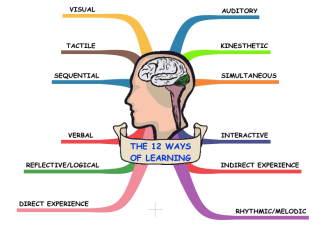
Let’s first forget about the fact that there are multiple learning styles amongst people and that the way we learn also changes as we grow in age.  What I mainly want to talk about has to do with knowledge, learning, and critical thinking and we may return to some more specific stuff later, I really can’t be sure, because I haven’t decided what the point is to this blog. 🙂

So how much knowledge is there in the world?  Before we quibble about what knowledge is, or whether we can truly “know” anything, let’s just sort of look at it from a somewhat quantitative point of view.  It seems clear to me that if you take any field of study we simply know more today than we did yesterday.  Every day we are discovering new things.  So we have a lot more to learn or that we can learn today than in the past.  Yes there are always things that we are going to be a little unsure about or that we are on the leading edge of discovery and so haven’t solidified our views yet, but each day we move a lot of things into “okay we know this” category and out of the “unsure” category.  Truthfully speaking every day we probably do the reverse as well, but I would say there is a net movement towards “knowing” something new all the time.

It is also clear, as we look at education (and I am speaking mostly about North America) that critical thinking skills are low.  I am a huge proponent of encouraging better critical thinking skills in children.  In fact children already have great critical thinking skills, it’s just that the education system eventually drives it out of them.  Perhaps due to the fact that kids are often wrong in the conclusions they make (which by the way is amazingly okay because we should be encouraging the process and I think instead we tend to shut the process down in favor of the “right” answer, and perhaps because education as an institution promotes rote memorization over critical thinking.  Not to give rote memorization a completely bad rap, because I think there always has to be a place for being able to memorize things).

So to go back to my point

From http://www.northwestprimetime.com

about knowledge, there is a lot of things to know and even under the banner of better critical thinking skills it is, in my opinion, extremely wasteful to have young children rediscover everything we know in this world.  I also think this is okay because kids are extremely good at memorizing things so why not let those sponges soak up some basic knowledge?  Some very thought provoking researchers on education like Sugata Mitra would argue that in the age of information memorization of information is not necessary, that anybody can simply look up the information they need.  Given the amount of misinformation out there in cyberspace I think at the very least a basic set of knowledge is required to at least help students from sorting out bad information from good.  And as the picture indicates, memory is an important part of the processor that is our brain.  We need to have some stuff in there.

But young children are good at a lot of things and there are certain ages where they are exceptionally good at certain things such as learning languages, learning mathematics, and rote memorization.   I gave a talk one time to a bunch of 2nd graders on tornado safety and there was not a single student who didn’t have a question and who was curious.  At that point I began to wonder, how do we go from this child thirsty for knowledge to the typical apathetic college student I see in my class? The next question then becomes why don’t we take advantage of what we know about how kids learn and when they learn best?  In answer to that question I have only opinions so please forgive me if I’m grossly mistaken, but I think it comes down to several things:

  • A pace of learning that is too slow. Children become bored and their active minds turn to other things.   The rate in which knowledge is expected to be absorbed by a student actually increases with time which is exactly the opposite order it should be. I’ve heard the argument that young children shouldn’t have to work so hard at school at younger ages that they should play more. My experience in watching young children learn is that play and learning aren’t really that different. And I think there are ways to even make the learning more interactive socially for those who might worry about a loss of social skills as they spend more time learning.
  • A lack of funding for schools and low pay in general for educators. I know, another educator complaining about funding, but the emphasis a society places on good education is important. Giving all schools equity in retaining good teachers, smaller class sizes, and having effective tools for the trade is important. By making teaching a higher paying and attractive career by ensuring they will have the tools they need when they start their career, we can bring in brighter and better teachers. In my experience I have seen far too many students choose teaching (especially in science) because specializing in their chosen interest was too hard. This seems wrong to me. Currently most of the brightest and best go elsewhere because they can make more money, and those that are extremely bright and choose nobility over money (I praise them all!) are often frustrated by a system in which they do not feel supported and actually feel constrained and trapped.  I think the lack of finances is in large part why curriculums become less varied and standardized because they are more easily measurable in making decisions on how to dole out the limited funding that all schools fight for.
  • Homogenizing teaching. The feeling that many teachers have is that they have little freedom in their curriculum or how they teach. Exposing students to a diversity of teaching styles and material increases the value of collaborative efforts among students and helps students understand the teaching style that works best for them. If all students are exactly the same and exposed to exactly the same style of learning it doesn’t surprise me that many students are bored, or don’t see the value of education. It doesn’t surprise me that many students simply see education as a game in which once they figure out the system they can cheat themselves out of actual learning and simply get the grade they need to move forward. Let student’s express their individuality through learning is important, and I think part of that comes from letting teachers express their individuality more through teaching.

I apologize for the length of this post as I find I can never be brief when it comes to talking about education.   I think instead of coming up with ways to make learning fun, let’s remember that for every little kid, learning IS fun.  Let’s figure out instead how to foster that feeling as they grow older.

From http://students.ou.edu

Terms of Two

Not that I am any great writer or am treating any of my subject matter with a great deal of academic rigor I would nevertheless like to add the final chapter to my blog posts on self and individualism, and collectivism.  There is another facet of the human mind and human behavior that fascinates me and that is our ability to be dual-minded.  I’m not positive if my definition meets any particular psychological definition, but let me describe what I mean.

I often have trouble reconciling how many Republicans can be anti-abortion but pro

From http://www.elfwood.com

war or pro capital punishment.  Growing up with an alcoholic father I found myself always wondering who my father was.  Was he the neglectful alcoholic who passed out and missed spending time with me, or was he the jovial affectionate sober dad?  Is he the bold man whose not afraid to go up to anybody and strike up a conversation or ask a question, or is he the coward unable to handle even is own inner demons and needing the escape that drugs can give just to get through the day?  The somewhat recent passing of Philip Seymour Hoffman reminded me of this paradox as I saw people debate.  As one side would simply praise his genius while the other side condemned him as selfish and stupid for abandoning his wife and children for heroin.  What about those who believe that God wanted us to have free will, but who also believe that everything is part of God’s plan for us?  How do we reconcile those who are scientists whose work depends on forming conclusions based on evidence, but at the same time are people of faith subscribing to a set of beliefs which have no such evidence?  We hate those people who might bud into our private business, but then have no trouble doing it to other people.  Is it a contradiction to want to be part of group, but within that group you try hard to stand out as individual?

It is clear that we are all walking contradictions to a certain extent.  What makes it all so remarkable is that we simply don’t see it.  It seems we are unable to recognize these contradictions within ourselves and our behavior seems perfectly natural and sensible.  Of course we are not dealing with simple opposites like hot and cold, black and white, left or right, but complex behaviors.  So while they may seem contradictory, perhaps if we analyzed them at a deeper psychological level they would not seem so contradictory.  Since we rationalize our beliefs and behaviors rather than base our beliefs and behaviors on reason, if we try hard enough we can bend any two contradictions complex enough to our will.

Of course our brains are complex and contain different systems that have different functions.  Perhaps these contradictions are simply feeding off a different set of neural pathways and there is no communication between the two such that there is no cross-check for incompatibility.  Richard Dawkins in his book The God Delusion postulates that we may have conceived of the notion of God simply because when we are young we don’t understand that the voice in our head is us.  We are dual-minded from the beginning because we aren’t really aware that the voice in our head is our own.  I, as I am sure all of you have as well, have had many a debate in my mind.  It is clear that our mind can simultaneous take different sides of an argument with sincerity in order to weigh our options in order to make the best decision.  So it seems at least possible that we might have these different sides of our self that remain separate, for which there is no debate or where we can’t resolve the debate.  It could be that a dual sided nature appeals to our sense of self as adding complexity and uniqueness to who we are.

It seems likely to me that this duality, like our sense of self, is quite possibly an illusion.  Perhaps it is part of our need to categorize and separate things; labeling people and actions.  But Freud seemed to think that our minds are always in conflict.   For instance I came up with this scenario in which parents tell their child not to cheat, that it’s wrong.  At the same time they get very happy when their child gets good grades.  So let’s say they aren’t prepared for an exam and they are now caught between perhaps cheating off the person next to them so they can please their parents (because what child doesn’t want to make them happy) or listening to their parents advice about not cheating and do poorly thus disappointing them.  Such conflicts are perhaps simply a series of battles we fight.  Sometimes winning sometimes losing.  Perhaps my father is simply fighting his addiction everyday.  Some days he wins and is able to the be the man I love, and other days he loses and becomes the man that I feel distanced from.  Perhaps for some people the struggle ends in compromise, unable to resolve what is truly right and wrong they allow one answer to pervade one type of behavior and another answer to govern the other.

In the end I think it’s all you.  Our brain can quickly consider many possible solutions to any problem, and not all of them are right, but what does right have to do with it?  Perhaps any solution that helps you survive as well as possible is all that matters.

It’s the End of the World as We Know It and I Feel Fine

There are some topics which completely perplex me, and this is certainly one of them. It seems strange to me for many reasons why people subscribe to the

From http://www.hydramag.com

possibility of the world ending in a sudden almighty purge.  This post has been a long time coming and I am sure I will not blow many people’s minds with anything I say here, but I will try to address the topic a more serious tone rather than the rant I feel like doing.

This post was prompted by an article my colleague quite humorously ranted about on Facebook about the blood moon being an indication of the end of the world. I quote: “People, it’s a freaking rock, orbiting a slightly wetter rock, orbiting a hot mess called the Sun! Shadows happen!” This end of the world prediction is just one in another line of many that have been made in human history. This Wikipedia listing gives a pretty good run down of whom and when end of the world predictions were made and you can see that there are around 150 listed in addition to ones that are supposed to still happen.  I am also sure there have been many more in human history that have not been documented. Most rational people would wonder why anyone would still buy into any more predictions about the end of the world when none of them have come true before. You know the whole “fool me once shame on you, fool me 150 times…” But it’s not enough to say well it’s obvious that these people with apocalyptic imaginations are wrong, the fact that they keep popping up should tell us that there is something in our psychology that causes some people to subscribe to such scenarios.

I read an interesting article in a great journal called Daedalus called Apocalypse and The End of Time by Richard Fenn who tried to analyze a lot of the commonalities between end of the world predictions and what societal influences seem to make them most likely. These are some of the things he came up with:

  • Many apocalyptic predictions come from people who feel society is in moral decay. This can arise from greater secularism in society, or because one culture feels that they are being influenced by an outside culture. Both of these represent cultural shifts in which an old way is being replaced by a new way.
  • Decreased economic conditions and oppression (or perceived oppression as is often the case by more religious zealots).
  • A fear of change in general. The young , people who think for themselves, and in more patriarchal societies, women all can represent a change to a current way of life.

Of course many of these things are interrelated and I think we can easily see how many of these things boil down simply to change and our inability to deal with an increasingly complex world. Thus it is not completely surprising to me that those who are more prone to believing in a fixed set of rules that govern the universe which are immutable and prescribed by the supernatural are also more likely to subscribe to end of the world predictions. As a scientist, to me change seems natural and inevitable and though some change is less pleasant than others I hope that the world will be propelled forward more than it is pulled backward.

For those who know me, you also know how fascinated I am with the subject of time, and, to me, time is also the study of change. Thus it comes as no surprise that Fenn argues that the apocalyptic imagination is an attempt to move away from the passage of time. With this timelessness we also lose change. We also lose individuality. Many of the apocalyptic prophecies involve the destruction of corrupting influences and the preservation of those who fit a prescribed moral code, merging with the one true God. Thus this desire for end times also perhaps plays to our psychological desire to remove complexity from the world to some harmonious state of peace in which nothing is changing and everyone is like everybody else.

And I can understand this desire.

There are plenty of times in which I wish I could freeze a moment and time and make it last longer. There are times in which I wish the world wasn’t so difficult, that there was no pain and suffering, and that I didn’t have to argue and fight.  This of course is fantasy. And fantasy has its place and I believe we need it from time to time to stay sane. Adhering to a fantasy for a prolonged length of time, however, is insanity. More importantly we should not forget that there is real beauty in change. The fact that I am an example of change, from a fertilized cell to a grown 40 year old man, that I have strived to learn and grow wiser and more moral with time, indicates that change can be a good thing. Change is inevitable, so let’s not fight change, let’s keep fighting to make things better. We still have a long way to go.

Music – Perspectives from an 80’s child

From http://hooniverse.com

I love 80’s music.  It’s almost an obsession. It’s the decade I was first aware of music.  As I was driving in to work this morning I had my 80’s play list on.  The song Waiting for a Star to Fall by Boy Meets Girl came on and I was reminded about how much I listened to that song to build up my courage in asking a girl out that I was for.  That and I Can’t Fight This Feeling Anymore by REO Speedwagon.   The fact that I never ended up asking any girl out and that it was all shattered dreams isn’t the point, but what I do think is neat is how music is so trans-formative in bringing back memories; sometimes long stretches of memory and in great detail.

I remember long nights in our house, sitting alone, listening to the radio, waiting for songs I liked to come on so I could record them on cassettes.  Wading through endless radio ga-ga, yelling “Let the music play!” sometimes not even knowing who I was listening to, because they wouldn’t announce the name of the band.  I remember the waiting, getting cramped legs because I’m so excited about a new band or album that I’m almost in hysteria in anticipation. And, after what feels like the longest time, when it finally plays, you go insane.  Thinking to yourself that if somebody’s watching me, they’ll think I’ve gone crazy in the nightYou might think that my description here is superfluous or overkill, but I am sure all of you can remember being in your room, spinning round and round and shakin’.

And that’s the other great things about music, is the way that it can make us move.  Sometimes the desire to move with music is simply irresistible.  You lose your self-control and your legs just start dancing like it was reflex, and having it feel like the most natural way to express yourself.  Maybe you remember waiting for that catchy song to play at prom so you can strut across the floor to the girl you like and say “Let’s dance”. Or waiting for that super romantic song so you can experience the sensation of human touch, and wondering if with every breath you take she will notice how sweaty your palms are getting.  Worried that you’ll step on her feet and not get a second chance.  Hoping it’s all not too good to be true being so close to someone you like and lovin’ every minute of it. Then you might nervously slide your hands down to her waist hoping she doesn’t tell you to keep your hands to yourself and that the look in her eyes isn’t an angry one.  And if she smiles…well…one thing leads to another.

Music is this great binding force that connects us to other people in both space and time.  As seasons change, no matter where we roam, music has people dancing in the street from Europe, to Africa, to China to middle eastern countries like Iran. So, far away places love music too, whether you live in Buenos Aires or live your life in a northern town.   People are people and all around the world music is touching their heart and soul and wouldn’t it be good if we could let our love of music bring people together everywhere.

I believe that the promise of tomorrow is in celebrating the things that we share.  The world isn’t going to get better by holding out for a hero, so go over to your neighbor and say “Hello” and see if you like the same music.  The great thing about music is that falling in love with it is not a once in a lifetime experience.  People who aren’t music lovers, well they don’t know what they are missing.  It ain’t enough to just have music on in the background.   You have to sing it loud, and lose yourself. Music can make you laugh or cry and it will always feel good.  Having music in your life can improve it beyond your wildest dreamsWould I lie to you? Don’t answer me.  I make mistakes; I’m only human.  Just put in some of your favorite songs and don’t stop believin’.  It’s the only way I know to stay forever young.

Respect my authoritah!

I was reading a fellow blogger’s post about the vaccination debate (a debate that should not even exist) as the author of the blog had highlighted a particular response to her blog from a physician and posed the question about why are we not willing to

From http://dublinopinion.com

listen to the physicians point of view.  She was also interested about why we would trust doctor’s in one case, but not in the case of vaccinations.  This is a very valid question.  If you are going to say doctors are out to lunch on vaccines and the very same medical science goes into everything else in the profession then you should never go see a doctor, take care of things on your own, and most importantly keep your kid at home so he or she doesn’t infect anybody else.

However it is the “Why don’t we believe the physician?” question that had me thinking as I drove to work this morning and I started thinking about how this is true for things like climate change and other scientific issues now and in the past like GMOs, evolution, the dangers of smoking, etc.  I was reminded of an excellent YouTube video that I have posted many times before called Good without Gods that talks about the basis for morality in a society.  One of the ways in which we can acquire morality is by default to authority, sometimes mistakenly so.  I believe that this is a basic cognitive bias humans have, perhaps because we all, from a very young age, default to the authority of our parents.  Part of growing up is realizing that your parents don’t have all the answers and don’t know everything, but part of our brains never really grows out of this default to authority bias.  This is in part why many people feel comfortable deriving their morality from religious authority without question.  Of course there is too much to know in the world and defaulting to authority saves time, and thus energy of which we all have only a finite amount of.  As a scientist I would say always be skeptical, but that means that we should also be equally skeptical to somebody who says vaccines cause autism.  In the face of controversy it seems the default to authority is what people rely on, so the question is, why isn’t the authority thousands of scientists who by consensus and exhaustive amounts of research say one thing as opposed to a politician who says another?  I have come up with a few possibilities but would be interested to hear what others think.  Here are the thoughts that I have come up with so far:

  1.        False authority figures. Who are the people we value in our society?
    Michele Bachmann – Not an authority figure (From http://www.warrenjasonstreet.com)

    Here in the U.S. it seems like the views of celebrities, politicians, and people with money (who are sometimes all one and the same) carry weight as being an authority on scientific issues.  This is simply not the case.

  2.        The power of money. In a highly consumer based society, money is seen as equivocal to power and thus authority.  If you have a lot of money you must have been smart to get it.  That is false of course.  Many people inherit their wealth, have connections, work very hard (but don’t necessarily have a high intellect), and some just get lucky breaks. Most of the smartest people I know don’t make money their goal.
  3.        Devaluing intellectualism.  In many countries I have visit those who are well educated, teachers, scientists are well respected in the community and in society at large.  Education itself is increasingly devalued here in the U.S. and so if educated people don’t have value in society that how can they be a worthwhile authority on anything?

The American Dream was built on valuing education, change, and progress.  We do not live in a society in which that dream is simply unobtainable for most and yet we believe in the concept like it manifested itself out of nothing.

Paltry Proverbs

If there was one thing Facebook is good for (or possibly bad for) is the dispensing of canned advice through adages, proverbs, clichés, and quotes from a random assortment of famous people. I’m not going lie, I do love a good quote now and then. There have been great minds in our history who have profound things to say. There is one adage that annoys me to no end, and so you’ll have to forgive for doing a little bit of venting.

“God only gives you only what you can handle”.

Now this has nothing to do with me being an atheist. Even if I was a theist this statement would be wholly false. Like many of the adages floating out there on social media at best this applies to first world citizens, but even then it still seems like it could end up insulting a lot of people.

My first thought when I first heard the expression: well how many people die of starvation every day? For your information 1.5 million children starve to death in the world each year. That’s over 4,000 children a day, or about 1 child every 20 seconds. Clearly these children were given a situation in which they could not handle. Why would God give children such a situation to begin with?

What about all the people who die of cancer, heart disease, or other fatal conditions? What about the people who suffer nervous breakdowns, have undiagnosed trauma, severe depression? What of those who go a step further and tragically take their own life?

There is no doubt that all of us have a certain amount of adversity we have to face in life. We of course want to survive and for the most case if we can handle it, we will. Nobody wants to just let a difficult situation destroy their lives, or weaken them to the point of personal neglect. Ultimately we handle adversity the best way can, and hope that we are better and stronger for it afterwards. But there are plenty of situations that are beyond one individual.

What is most bothersome about the saying is what it implies about you if you couldn’t handle the situation. If God gives you only what you can handle, if you didn’t handle it, then it must be your fault in some way. You must be doing something wrong. If this message is supposed to give you strength to handle a situation, failure to do so may not bring you the peace you desire.

In the end it is a fairly empty piece of advice, applicable to relatively mild situations, and really only verifiable in hindsight to someone who got through a difficult situation successfully. Personally I think we can come up with something a little more helpful than this expression.

Wonderful thoughts

I consider my first love, a girl who did not even love my back and who didn’t know how I felt.  It’s not the same, and I’m not going to even claim that it was as intense as the first time I fell in love with someone who was in love with me, but this girl changed my life.  Before I met her, I never even dreamed someone so beautiful would talk to me, and more importantly that I would have the confidence to talk to her.  I had a lot of self-esteem issues growing up and that may surprise some who have only known me in my 30’s and it took me a long time to even have the nerve to even ask a girl out.  I didn’t do that until I was 18.  She was very kind, said she felt flattered but that she had a boyfriend.  Of course I was disappointed, but it gave me some confidence. I then went on my first date at the age of 19.  I was a mess on that date, and she didn’t want to date again, but it was another confidence builder.  Yes it took me until the age of 20 to even have the nerve to really talk to a girl I found that beautiful like a normal human being.  We became friends though, and she had a boyfriend at the time and so it was really inappropriate for me to really express my feelings anyway.  And she was extremely beautiful and I don’t regret at all that I didn’t express myself because if you can’t also be friends with someone you find attractive than you have no business getting into relationships anyway.  Because of her I gained so much belief in myself it’s hard to describe.  And she is out there with absolutely no idea what she did for me, and I will forever feel grateful to her.

Stories of my boring early love life is not the point of this post, but what is the point is that we all have these kinds of memories.

From http://the07.deviantart.net

Incidents and people that touched our lives and trajectories have moved us apart without them ever knowing how they changed us.  It doesn’t always have to be a positive experience.  It could be negative at the time, but upon reflection we learned the right lesson from it.  It could be an acquaintance sharing a tale of woe and from that we have an extra piece of knowledge that may help us avoid that situation in the future, hurling us on a different trajectory than we otherwise would have taken.  These moments can happen so briefly and the other person has no idea the changes they’ve caused in you. And who knows, some of these small moments may even plant the seeds of greater change.

As I reflect on these people and these moments it makes life feel absolutely amazing because if I’m feeling a bit down on myself, feeling a bit invisible, or feeling smaller than I like in the vast universe, I remember that I also do not know what impact I might have had on others.  Whether I have been at my best or at worst I still may have helped someone grow, change, lead a better life.  Sometimes I think it would be nice to know, but given how people have changed me without them knowing, I don’t know need to know exactly, I can simply be confident that at least some people out there have benefitted by my existence.  I think that as long as I keep trying each day to be more than I am, then good things will always happen.  And it’s good to know that at 40, I’m still an optimist at heart. 🙂