Climate Change for the Masses (Part II)

Well it would seem that a group blog idea with a weather and climate theme has fallen apart, and so I’ll have to do my blogging about it here instead.  Several months ago I began what I hoped would be a 3 part series, themed around the John Oliver’s  “Last Week Tonight” Episode on the climate change debate.  In my first blog post I wanted to try and investigate what type of people don’t accept the evidence on climate change, based on my own experience in getting into various discussions on the topic with people outside my discipline.  In this blog article I’d like to take a look at the actual media portrayal of the problem which was more the central theme of John Oliver’s segment.

If you haven’t watched the clip, John Oliver critiques the media for having one person who accepts the scientific evidence, with one person who denies it, saying that this gives an unfair representation of the scientific consensus on the issue.  Over 97% of the scientific literature from over 10,000 scientists across earth and biological sciences have concluded that human induced climate change is a fact, making it appear as though it is a split issue is quite simply dishonest.  And this absolutely true, but it is in fact even worse than that.

The 50-50 split looks even more in favor of the deniers when the media is always using the same person to represent the scientific side.  If you watch many interviews on the subject you might actually get the picture that it seems to be only one guy who thinks human-induced climate change is real while many other people don’t think it’s happening.  If you always saw the same guy “for” an issue and many other people on TV saying they are “against” it would be somewhat natural to think that the “against” side had a better argument.  Of course you’d be wrong in thinking that.  This is called the “Appeal to Popularity Fallacy” (or ad populum for you Latin Lovers).  An extremely common one used nowadays.  Of course as it turns out, it is the logic of the arguments and the strength of the evidence that makes for who has taken the correct issue on the stance.  Of course there are many biases and fallacies that we naturally gravitate towards because it is in our evolution.  Being the outcast in a group didn’t get you very far early in our evolution and the same is in a large part true today.  Although generally today, no matter how different you might be, with a large population you are likely to find a group to connect with.  But in terms of genetic history being an outcast in a group of social animals who may be relatively isolated from other populations doesn’t really give you anywhere to go, and since survival on your own is more difficult “following the herd” is part of who we are.  Of course, in this instance, there is no real punishment for accepting scientific evidence but sometimes I think our wiring doesn’t really care.

The 50-50 perception unbalances even further when you consider who Bill Nye.  Now don’t get me wrong.  As a scientist, I know he’s

From http://brandonhillphotos.com

a scientist, and that he has the ability to not only understand the issue, speak intelligently about it, and accept the hard work done by so many scientists to reach the conclusions they have about climate change.  But to the public there are a lot of negatives about Bill Nye that would make his credibility more suspect, especially to people who are on the fence or deniers themselves.   First of all Bill Nye is not a climate scientist.  He is not an expert in the field of climate science and as such this will weaken his credibility as an advocate.  In fact Bill Nye is most famous for his use of science concepts for educating children.  Climate change is a very adult issue that will require adults in government and voting adults to accept the scientific evidence and put forth appropriate policies to address the issue.  Bill Nye is also a celebrity and many people have negative attitudes towards celebrities who get involved in issues that are political.  In Canada, David Suzuki is a very famous scientist and naturalist, but is not very knowledgeable about the issue and so while he has tried to be advocate for climate change, he has not done very well when addressing even the most common fallacious criticisms put forth by deniers in a debate format.  He was hoping his popularity would help change the minds of people, but in fact it has likely hurt those who might be willing to listen to a well reasoned debate on the subject.  So I think Bill Nye may have similar impacts.

Now don’t get me wrong, because I am not convinced that the media is intentionally using Bill Nye for the purposes of misleading others.  For them, he is a celebrity and known and will add a few viewers whether people have grown to hate him or love him.  He is also an excellent public speaker, and he is also eager to break away from his previous persona as a scientist for children (honestly go back to getting children excited about science, I think it’s too late for congress now!).   So what is the solution to making the debate fairer?  John Oliver’s suggestion is not a bad one, but of course they are unlikely to get 100 people on the stage for a debate.   We nerdy introverted scientists simply need to become better communicators.  We need to get involved in educational outreach and scientific discourse at regional, state, and national levels.  Since there are literally 1000’s and 1000’s of people researching this field and concluding that man is impacting the climate just as we hone our research and analytical skills we must also hone our communication skills so that we aren’t just contributing through the publication of an article in a scientific journal.  And media, you could do a better job of finding actual experts to have on your programs.  You could do a better job also by being honest and saying we know this is not even close to a split issue in the scientific community and have more debates about what the best way about addressing the issue is, rather than trying to debate whether it is an issue at all.

If you are interested in learning more about climate science, learn about what the common myths are about climate change and why they are not well reasoned arguments, and be able to investigate climate change science at various levels of complexities I strongly recommend this site called Skeptical Science.

Saying Goodbye to Bill Cosby

In my time I have seen many celebrities and politicians fall from grace, whether it be due to drugs, criminal acts, violence, abuse (sexual and non-sexual).  And while there were some who I found to be talented and that I respected because of their talent, there were none that I would say had any personal meaning to me.  Many of them did to other people, and I would call those people foolish for defending to the end someone who is clearly guilty, someone who is clearly criminal.  And for those who even accepted it, I never really thought about how hard it was for them.

I know I am not alone in my love for Bill Cosby.  Many people my age and older grew up with him.  My first exposure to Bill Cosby

From http://atlantablackstar.com

was through his comedy recordings (for me on cassette and record).   A friend exposed me to them early in high school and me and my friends would sit around laughing at his tales.  He had such a talent for telling a story.  A perfect mixture of embellishment and truth.  Watching a couple of his videos, the part that you don’t get is of course his ability with facial expressions which make one laugh even harder.  For me Bill Cosby was inspirational in his comedic ability and though I am no comedian, I would say he definitely influenced my humor and the way I make others laugh.  And then of course there was the Cosby Show.  One of the few shows that we would all get together as a family and watch.  It was an extremely enjoyable show, and of course the social and cultural statements made by the show had, I think, profound impacts on the country as the show literally united white and black people around this black family each week.   From then of course I saw him continue to promote the importance of education and a good work ethic.  He continued to be an inspiration to many I am sure in the black community and a role model to many African-Americans.

So it was with a great deal of surprise, when it came out recently, that over a dozen women had come forward with charges against Bill Cosby of sexual assault.  It appears that Bill Cosby did in fact drug and sexually assault these women.  Such acts are despicable and make me sick to my stomach when I think of them and how they were described by the women.  He was deceitful, calculating, invasive, and immoral.  This was a hard pill to swallow (unlike the pills he apparently gave his victims).  For the first time I was facing what many others have faced before; a childhood hero, guilty of horrible crimes.  I wanted to fight it, and I tried to read lots about it before I could accept it in my mind. The more I read, the more shocked I became, and at some point I had to stop, because it was too hard to bear.  More surprising than anything is that most of this surfaced 8 years ago, and I was only hearing about it now.  It seems like even the media, which loves to watch angels fall, didn’t even want to see Bill Cosby sink to the depths.

In some ways it has helped reinforced why people have trouble changing their beliefs, whether it be about religion, politics, or whatever, because when facts overturn your beliefs in an instant it is a very tumultuous feeling.  It is one you want to quickly get rid of, and often the easiest way to do that is to simply refuse to believe that new evidence.  It leaves you feeling divided.  Bill Cosby was cherished in my heart and now I feel like it has been ripped out of me and I wonder if I could be wrong about Bill Cosby, what other things that I cherish could I be wrong about?  It is not a comfortable feeling.

It also reminds me that when it comes to heroes, when we idolize celebrities we are always running a risk, because what we see may be a very small portion of who they are.  Maybe the true heroes in our lives should be those closest to us; the ones we spend time with on a regular basis, the ones we can talk with and listen to, and are reliable.  It also reminds me that there is perhaps no perfection, and when we idolize someone to the point of perfection, this is also dangerous.

Maybe Bill Cosby was always like this, or perhaps his fame and fortune corrupted him to such actions; I guess we’ll never know.  In some ways I’d have more respect for him if he at least admitted to his crimes and accepted the punishment.  I don’t see that happening.  He has been too big for too long, and he is much more likely to just hide and hope for all this deserved negativity to go away, in hopes that at least a majority of his fans might remember him in a positive light.

As my way of making peace, I want to say thank you Bill Cosby for all that you gave me personally throughout my younger years.  I will not feel ashamed for all the laughter you brought me.  For building you up as more than what you are, I take responsibility, but I do hope that somewhere in your heart you feel ashamed for what you have done.  Principally of course to those women you violated, but also to a country you asked to take you into your home and to a culture you helped shape and asked that they look at you as an example of what a good black man could be.

Profit over Education – Academic Fraud at UNC-Chapel Hill Gives Another Black Eye to Public Education

As a college professor in the United States it is difficult to know where to begin as I process the massive scandal that I have read about today regarding UNC-Chapel Hill in which 3,100 students, nearly half athletes, were shown to have taken fraudulent classes in the university’s athletic program.  I am not usually one to make extremely bold statements, but education is something I feel strongly

about, and this scandal could not make a clearer statement that this country has lost its way.  The love of money has replaced love for each other.  We have let ourselves become distracted by games so that we don’t pay attention to what’s most important.  We have become a culture of fear instead of striving to be a culture of understanding.

Before I begin I want to make it clear that I am sure that the majority of professors and students at UNC-Chapel Hill have the highest standards of work ethic and integrity and as I speak now I speak also in your name.  Those who were part of this conspiracy have brought the most shame to you and I am truly sorry for what you have to go through. Bringing legitimacy to your university is a battle you did not ask to fight, but you will have to.  This fight can be made easier or harder depending on who joins that fight.  In this essay I write I call upon those who can do the most to help you.

This year Penn State University had their ban lifted by the NCAA on post-season play 2 years early and still much controversy remains about whether this was the right thing to do given that Jerry Sandusky has been confirmed to have molested 26 boys and school officials looked the other way to avoid a scandal for their football team. As if this wasn’t enough of a blight on higher education and how sports plays too high a role in what is supposed to be an institute of higher learning, perhaps it could simply be argued away as the result of one highly disturbed individual, while several higher officials chose to brush off what seemed to them only rumors without clear evidence.  Personally the Penn State incident should have been enough for us to take a harder look at our priorities, but as the NCAA softened their initial judgment by lifting the ban it seems that it’s business as usual once again.

What has happened at UNC-Chapel Hill has been happening for nearly 20 years. It, as a result, must involve a far greater number of people ranging from personnel in the athletic program, recruiters, registrars, administrators, and faculty  This was a large conspiracy that was covered up for many years and even when the investigation was first opened 5 years ago, it took a long time for the full truth to come to light.  Even now this article is buried on the CNN website under many other less dire stories.  At a time when public education struggles to maintain adequate funding, when there is a great disparity in public education across the country, and public institutions of higher learning continue to raise tuition as their state funding decreases, the scandal at UNC-Chapel Hill will only act to lessen the trust in public education.  What we must work hard to do right now is to show that it is not public education that is the problem, that this is the symptom of a for-profit culture.  That when the money made off of TV deals, advertising, and merchandise of college sports takes precedent, that those without integrity can take a larger stake in our society and run it into the ground.  Let’s start our call to action with the NCAA.

The NCAA proudly lists on their website their core values which include:

  • The collegiate model of athletics in which students participate as an avocation, balancing their academic, social and athletics experiences.
  • The highest levels of integrity and sportsmanship.
  • The pursuit of excellence in both academics and athletics.

For those you not aware of the word “avocation”, it means “hobby or minor occupation”. Note also the words “integrity” and the emphasis of “balance” and “excellence” in not only their athletics but also academics.  These core values are great.  As a society we should value athletic achievement, exercise, and health.  There is a connection between mind and body and it can come together in sport and competition.  It is also important to remember, however, that only about 1% of NCAA athletes will be able to turn professional that means there are many more students for whom their education will be their primary means of having a stable and successful future.  Thus if the NCAA believes in these core values it must also be an advocate for integrity in the classroom and at least be partially responsible for the health of the players who suffer injuries while playing NCAA sports which they profit from (NCAA is a non-profit by the way).  The NCAA has been recently accused of making large profit off the players who are often fed insufficiently and do not take care of the players who suffer injuries and who many times suffer lifelong problems related to those injuries both physically and financially.  The NCAA has a chance here to do the right thing and make its core values be more than just words.

While the NCAA should punish UNC-Chapel Hill for not displaying academic integrity in accordance with their core values, what is the responsibility of UNC-Chapel Hill? The university is ultimately the one that perpetrated this conspiracy and they need to make sure everyone involved faces punishment; no scapegoats, no more lies, no more cover-ups.  I understand why, from a legal standpoint, they cannot lift the degrees of those students.   They are the ones who advised students to take those classes when they saw they were struggling academically.  Rather than providing them with legitimate academic support to help them improve they gave up on trying to expand their minds and said “Your only value to us is in the money you make us in the athletic program, we are not concerned about your future”.  They were supposed to show a student how the same work ethic they apply to their sport, can be applied to learning.  They were supposed to show those athletes the same way they stretch and bend their body they can do also with their mind.  Given the low chances of those athletes becoming professionals they were supposed to give them alternate avenues of success.  And even if they did get drafted into a professional league, injury can happen at any time, and they were supposed to give athletes something else to fall back on.  Instead they have left these students bereft of legitimate degrees, and employers will have a hard time trusting the value of any degree achieved by a UNC-Chapel Hill alum who was involved with their athletics program.

I would also like to point out that the fraudulent program in which these students were enrolled in was an African-Studies program. While I am sure many other scholars can talk about this with more vigor than I can, I find the choice in the academic field of this fraudulent program more than a little insulting given the race issues we still face in the United States.  I know and have known many scholars in this area and this is an extremely important field for young African-Americans to learn about their history in this country and to understand issues of race both in the past and today.   I am not sure whose idea it was to use African-American studies to house the fraudulent courses but those people have done a great disservice to African-Americans by doing so and have treated a very important area of scholarship cheaply.

Of course we cannot be naïve enough to believe that this is the only school where this is happening. This scandal will open investigations into all athletic programs, especially in NCAA division I programs, that have had rumblings of grade inflation for athletes in the past.  It will make employers everywhere wonder if perhaps the academic success of a student athlete is deserved.  At my university, it is only a NCAA Division II school. Athletics is a money drain on our university and does not make us profit.  Yet many student athletes report that coaches will not let them miss a practice even if a legitimate academic opportunity that will benefit their future, such as going to an academic conference,  comes along.  I have seen resources that could be used for academic programs go towards athletics.   We all must join the fight to maintain legitimacy of public higher education institutions and remember that the NCAA core values emphasize balance and that the sport is, for almost all athletes, a hobby and nothing more in the context of their entire lives.

What responsibility do the students themselves share in this scandal? While they were advised to take these fake courses, they knew they were fraudulent.  One student who has come forward even made the Dean’s list having a semester full of fraudulent courses and admitted to not attending one class and receiving all A’s.  These are young adults who were not completely unaware that what they were doing was wrong.  It is difficult, however, for me to judge a young mind bolstered by the fame that we as a society gives them,  and bolstered by the pride of their friends and family at making a renowned college sports team with a full scholarship.  This is coupled with the fear of losing the scholarship that saves their family or themselves financial burden should they falter midway through their degree and cannot continue in the athletic program.  I am not going to judge you for decision you made as a young adult, but I would ask you to consider the steps you take now with care.  Because now that the scandal has been brought to light, the next steps you take are yours, and yours alone.  You know what you did was wrong, and you do a disservice to every student athlete who has worked hard to balance their athletics and academics to legitimately achieve their degree.  You do a disservice to the meaning of the baccalaureate degree which is supposed to be based on a minimum of 120 credit hours of academic rigor.  More importantly you do a disservice to yourself by knowing that you walk around with something that many are in great financial debt for and that many have worked hard for, but for which you did not earn.  Though you were misled, you were old enough to know that the easy path was not the right path.  Retake those credits and demand that UNC-Chapel Hill allow you to do so for free and provide for you the support they should have during your time there.

From http://www.fiscaltimes.com

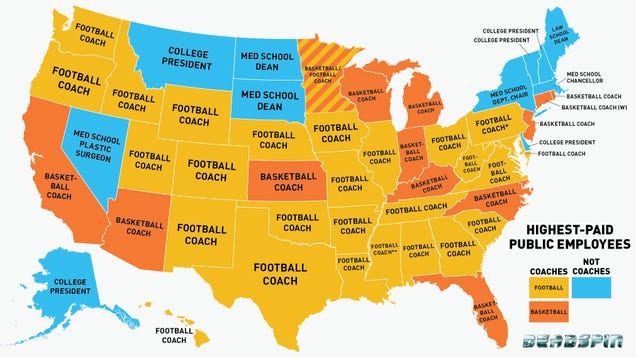
The final call to action is for the rest of us.  We must take a look at ourselves and ask ourselves some tough questions, because in the end it us who generate this profit from collegiate sports by watching and attending the games.  It us who read the articles and watch television programs of analysis.  It is us who buy the merchandise and wear the colors of our favorite collegiate teams.  So what can we do?  To start we, as parents, can make sure that the academic integrity is high at the institutions our children attend.  We can be realistic about what our child’s athletic ability really means and remember that even if they are one of the lucky ones to go professional that smart player is always better than just a player and that when the body breaks the mind still needs to be in good shape so that life goes on.  We need to ask questions, we need to talk to our children and make sure they are learning and let them always know that doing what is right is more important than a moment in the spotlight. We as the public need to make sure that we continue to fight for educational equality across this nation, to make sure that we maintain high standards in curriculum, academic rigor, and pedagogy, and vote for politicians who recognize the importance of education in making this nation great.  We must ask ourselves if it’s right that the highest paid public employee in 40 out of 51 states is a college football or basketball coach? Finally we must remember that a good life is built on a solid foundation made from love, integrity, compassion, humility, self-reflection, and learning.  Sports are fun to watch, but it’s still just a game, and the future of our children and our nation cannot rest on a game.

He Blinded Me With Science

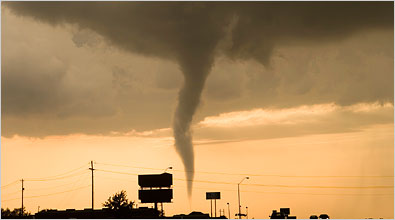
As a meteorologist and scientist I am very familiar with many pseudoscience arguments and websites like creation science, new age science, anti-climate change arguments, and all the conspiracy theories that go along with it.  My colleague recently turned me on to a little gem of a website.  Somebody has ‘solved’ tornadoes.  I hope you click on the site.  Not only will the guy who owns this WordPress website be excited that he has so many hits, but you will immediately be able to tell that this person isn’t playing with a full deck.  At first I laughed a lot as I read it, but the more I read it, the more I actually started to be impressed.  Now don’t get me wrong, it’s not that I’m impressed with the actual ideas here, they are completely wrong, but I was impressed with how much time and thought this person has gone into thinking about the problem.  I don’t want to post any individual blog posts linked here, because I really don’t care to have this person start harassing me, but if you go through a number of them you’ll see that he has talked to some real experts in the field (although it’s unclear about whether he has e-mailed them or actually talked to them personally), he has posts where he has retracted some of his statements and then explained why he retracted them.  He has designed experiments to test his hypothesis as well.  In fact I’m a bit jealous that this guy actually has more blog followers than me.  Did I say jealous?  I meant frightened.  Anyway, what I thought what was really interesting is that here is a very unique belief system which has blossomed into something rather complex.  One that to my knowledge nobody else really believes (at least not yet, or at least I hope not yet) and yet bears much similarity to existing belief systems.  So I thought it might be interesting to deconstruct it a little and see what we get.

At the heart of every belief system is at least one premise that is accepted as true, without being supported by any empirical observations.  Once this is accepted as

From http://www.nc-climate.ncsu.edu

true, much can be built from it.  For instance many religious belief systems accept as fact that there is a God and goes on from there.  Many times of course there are several faulty premises.  It could be that they stem from an original, but it’s hard to say.  Let’s take a look at the one’s that seem to this gentleman’s starting point

Premise 1:  The jet stream is a conscious entity that is thirsty for water and thus tornadoes are a result of the jet stream needing to suck up water.  I guess that makes a tornado a giant straw.

Premise 2:  Moisture is the most important factor in determining density differences in buoyant air. (Actually it’s temperature).

Premise 3:  Meteorology is a cult, and meteorologist simply believe in old and outdated arguments that have never been proved experimentally.

From this all sorts of things are possible.   If you were to accept the first two things as truth you would come up with a very different scenario for how and why thunderstorms and tornadoes form.  The 3rd premise is what then allows him to never have to rethink the first two.  People who could argue intelligently with him and are more knowledgeable are meteorologists and since they are part of a belief based cult they can’t possibly be correct or unbiased.

Another important part of a belief system is the inequality in standards the proponents of the belief system must live up to in comparison to non-believers.  For

From http://static01.nyt.com

instance, those against gay marriage will expect everyone to respect their right to be legally bound in holy matrimony, but do not have to respect the rights of homosexuals.  As is often the case pseudoscience literature like this, the expectation of other is to provide rigorous proof, yet no such proof is given by this gentleman as he espouses his hypothesis about how and why tornadoes form.   At its root I feel this comes from a lack of humility.  To be so sure you are right about something that you are beyond the need for evidence, and that you are beyond the ability of anybody (regarding their experience and expertise) to change your mind is to be so prideful that even Donald Trump would be impressed.  It is also a sad state to be in.  As I’ve argued before since reinforcing beliefs releases dopamine in the brain, over time as the neural pathways become so entrenched into a belief, this person literally will become ill to consider anything else.  The stronger the argument you make, the less likely you will get anywhere.

So what’s the harm in all of this?  Perhaps very little since there is a certain amount of crazy that even the most clueless about the subject won’t buy into.  Nevertheless there is at least enough science jargon on his website that people who are not educated about the issue may think there is controversy and conspiracy.  Just like many who are not educated about climate change think the same way.  There was at least one commenter who reblogged one of his articles saying it was an interesting “new theory”.  I wanted to also introduce this website and blog post as a lead in to a discussion of the age of information (or misinformation) that we live in.  This person has self-published a book for sale on amazon and has done a lot of writing on this subject.  If he had a little bit of money and/or web savvy he could make his site one of the top hits on google when people search for information about tornadoes.  Critical thinking skills are even more important today than they were before the internet to be able to navigate the flood of information that we are faced with on any one subject area.  Anyway, keep well everyone and stay away from thirsty jet streams!

Fleetwood Mac and why they are so great

From http://upload.wikimedia.org

On October 14th, 2014 I was fortunate enough to see Fleetwood Mac in concert.  They were amazing and I would like to talk about how amazing they are.  Or rather why I think they are amazing.  I know some purists will say that Fleetwood Mac was a band before Lindsey and Stevie.  I like that older stuff, some of it is pretty good.  However, it is clear their popularity and musical ability greatly increased with the joining of Lindsey Buckingham and Stevie Nicks. On stage Christie McVie called them her musical family and as I listened I started to get a vision of that family.  They are a family who stays together despite the fact that they are all very different people.  Their strength lies in both the tensions in personality but also that musical family combination.  It is perfection for a band and few bands can claim to have such a perfect combination of personalities and talent.  I would like to speak to this perfection by talking about their musical personalities and why they fit so well together.  I’ve even given these musical personalities a name they are as follows:  The Aura, The Violet, The Craftsman, The Silence, and The House.  Perhaps you can already guess which is which.

The Aura

Both leading ladies in the bands might be described as romantics, but in very different ways.  For Stevie Nicks love and

From http://www.fanpop.com

magic go hand-in-hand.  She is as mysterious as the moon and she is the feelings of romance that you can’t quite put into words.  You will love her and not exactly know why.  She dances, she moves, she floats, and she spins.  She is the girl you want to get close to, but not necessarily the one you should bring home to mother.  She lives in dreams and want you to live there with her. Who doesn’t love to dream? She is the theater, and who doesn’t love a good show?  You recognize that loving her might also bring peril and yet you are still drawn in.  This is why she is the aura of the band.  She envelops you and you can get lost in her.  She makes you dance to her tune, helpless, enraptured.  Her voice is as hypnotic as her beauty.  She might make you cry, make you break down, and shatter your illusions of love, but you’ll always think loving her is worth it.  And it is.

From http://www.popmatters.com

The Violet

Beautiful like a flower and modest as a violet; this is Christie McVie.  She is the sweet girl next door.  Pretty, honest, with a heart of gold.  She is the one that grows up into that mother that knows how to take care of everyone, both physically and emotionally.  She’s never wild in public, and she doesn’t dance all that well, but when she does dance you know she’s happy and you can’t help but smile when you watch her.  She is the girl you fall in love with and feel safe.  When she sings you know, she knows the score.  Her love is nurturing, solid and tangible.  You want to be with her everywhere. You listen to her and sigh, and smile, each note on her keyboard vibrates your heart a little bit.  Listening to her songs it is the same feeling you get when you taste sweet confection or a fresh baked cookie.  She is the treat you deserve after a hard day and will always make you feel right with the world.

The Craftsman

Where Stevie draws you in, Lindsey goes out and grabs you.  Where Stevie wants you to believe in magic, Lindsey tells

from http://www.entertainmentrg.com

you that you need no other plane of existence than this one.  He puts you in the here, and now and says “Listen…to…me”.  His voice and guitar will make you pay attention.  He is the hammer and chisel.  He is the designer.  He is a mastermind with background vocals, providing substance and melody to each song.  Through his genius all members of the band, as amazing as they already are, are even better because of him.  He constructs and he builds, then he sands it and varnishes it, and he works harder than everyone else, even though his genius might just qualify him to sit back and tell other people what to do.  His musical brilliance comes from the deepest heart of him, and yet he has no trouble digging to that depth to reveal it all to the listener.  You love to watch him, because you never know what he’s going to make, but you know you are going to like it in the end.  He has an intensity that is unmistakable and his greatness towers over you.  He is both humbling, but at the same time you know that his music makes you better than you are too.

From http://www.pollstar.com

The Silence

Who hears John McVie?  Everyone does, they just don’t know it.  When the others aren’t making noise, what is left?  Silence.  Like silence, John McVie is always there.  He stands in the same spot on stage, playing his bass with a stolid dedication that makes him a fixture, a landmark, an unchanging stone that all can depend on.  When there is anger and bitterness, he is playing his bass.  When there is joy and celebration, he is playing his bass.  When there is tenderness and sorrow, he is playing his bass.  When things are unfamiliar, he stands there, playing his bass.  He is that musician who will play as the Titanic goes down.  In his bass are the silent things like honor, dignity, and respect.   The silence provides solitude, peacefulness, and reflection. There at the beginning, he will be there until the end…silently playing his bass.

The House

But how would these 4 different, but amazing musical personalities ever choose to be in the same place if they didn’t

From http://www.musicradar.com

have a house to play in?  This is Mick Fleetwood.  He is the rhythm which brings them all together.  While John is reliable like a rock, Mick is reliable like a faithful valet or butler.  You might be dying on the inside, but he is going to make sure you look presentable and that the show must go on.  He is that kind of servant where you are never quite sure if you’re in charge though, or whether he is.  He is the soul of Fleetwood Mac.  He is both the history and the one who has made history.  He is also not afraid to play the buffoon, making everyone smile and laugh, breaking the tension when it’s high.  When you walk into the house you immediately know that your stay will be a memorable one.  Despite the genius of Lindsey, somewhere in the back of your mind you’ll wonder if Mick isn’t the real genius by finding a way for all these extremely talented musicians to stay in his house.  After all, every musician knows that it’s the drums that set the pace that everyone must march to.  And they all do it willingly because they know they are better together in that house than anywhere else.  He is the reason you get to say, “I love Fleetwood Mac”.

Music – Perspectives from an 80’s child

From http://hooniverse.com

I love 80’s music.  It’s almost an obsession. It’s the decade I was first aware of music.  As I was driving in to work this morning I had my 80’s play list on.  The song Waiting for a Star to Fall by Boy Meets Girl came on and I was reminded about how much I listened to that song to build up my courage in asking a girl out that I was for.  That and I Can’t Fight This Feeling Anymore by REO Speedwagon.   The fact that I never ended up asking any girl out and that it was all shattered dreams isn’t the point, but what I do think is neat is how music is so trans-formative in bringing back memories; sometimes long stretches of memory and in great detail.

I remember long nights in our house, sitting alone, listening to the radio, waiting for songs I liked to come on so I could record them on cassettes.  Wading through endless radio ga-ga, yelling “Let the music play!” sometimes not even knowing who I was listening to, because they wouldn’t announce the name of the band.  I remember the waiting, getting cramped legs because I’m so excited about a new band or album that I’m almost in hysteria in anticipation. And, after what feels like the longest time, when it finally plays, you go insane.  Thinking to yourself that if somebody’s watching me, they’ll think I’ve gone crazy in the nightYou might think that my description here is superfluous or overkill, but I am sure all of you can remember being in your room, spinning round and round and shakin’.

And that’s the other great things about music, is the way that it can make us move.  Sometimes the desire to move with music is simply irresistible.  You lose your self-control and your legs just start dancing like it was reflex, and having it feel like the most natural way to express yourself.  Maybe you remember waiting for that catchy song to play at prom so you can strut across the floor to the girl you like and say “Let’s dance”. Or waiting for that super romantic song so you can experience the sensation of human touch, and wondering if with every breath you take she will notice how sweaty your palms are getting.  Worried that you’ll step on her feet and not get a second chance.  Hoping it’s all not too good to be true being so close to someone you like and lovin’ every minute of it. Then you might nervously slide your hands down to her waist hoping she doesn’t tell you to keep your hands to yourself and that the look in her eyes isn’t an angry one.  And if she smiles…well…one thing leads to another.

Music is this great binding force that connects us to other people in both space and time.  As seasons change, no matter where we roam, music has people dancing in the street from Europe, to Africa, to China to middle eastern countries like Iran. So, far away places love music too, whether you live in Buenos Aires or live your life in a northern town.   People are people and all around the world music is touching their heart and soul and wouldn’t it be good if we could let our love of music bring people together everywhere.

I believe that the promise of tomorrow is in celebrating the things that we share.  The world isn’t going to get better by holding out for a hero, so go over to your neighbor and say “Hello” and see if you like the same music.  The great thing about music is that falling in love with it is not a once in a lifetime experience.  People who aren’t music lovers, well they don’t know what they are missing.  It ain’t enough to just have music on in the background.   You have to sing it loud, and lose yourself. Music can make you laugh or cry and it will always feel good.  Having music in your life can improve it beyond your wildest dreamsWould I lie to you? Don’t answer me.  I make mistakes; I’m only human.  Just put in some of your favorite songs and don’t stop believin’.  It’s the only way I know to stay forever young.

Isolation in a crowded world

I have been reading a lot of Isaac Asimov lately.  I am not sure if all lovers of science fiction would love Isaac Asimov, but if you are interested in the human condition I think Asimov would be your thing.  His understanding of human nature is phenomenal and his writing of the future seems to me more of a commentary on who we are as a people and what we are capable of then attempt to be some sort of prognosticator of the future.  To me that

From http://www.media.tumblr.com

is the best part of good science fiction and I am sure it is to many as well.

One of his books that really got me thinking was The Naked Sun which is part of his Robot Series.  In it he paints a picture of a planet called Solaria that has been colonized by Earth and is similar in size to Earth but has only 20,000 people.  The people are very spread out having vast estates that are similar in size to something like Delaware.  In this future people have robots and especially on Solaria where the ratio is around 10,000 to 1 for every human.  Robots do everything.  Build all the houses, maintain the grounds, cook the food, and basically tend to every human need.  It is a world without human contact, where even sex becomes mechanical and only for the purposes of breeding.  And that breeding is only selective because they always maintain the population at exactly 20,000.

Earth on the other hand is crowded with everybody living in cities and all cities at populations of 10 million or more.  While human touch is still a part of everyday life, there are many social conventions that act to keep people’s privacy intact.  Not overly different from today’s city life really.

Both societies seemed very plausible in the way they developed and I started to think of how we might be trending in a direction of isolation whether it is an isolation in which we are surrounded by others or a physical isolation in which human contact in unnecessary or unwanted.  We know from studies of anthropology that we started off in hunter-gatherer groups; a society in which we were dependent on each other for survival.  Survival was a result of the coordination of each member’s skill set applied with extreme vigilance.   As we have developed civilization, larger populations, and new technologies, life has essentially become easier for some of us, and quite a bit harder for a lot of other people.  The disparity in standard of living makes the culture of the “haves” admirable to the “have nots”. It seems, at least in this country, that many spend a lot of time reducing the value of the poor, on whose backs our comfort is maintained.  It seems to me though that the culture of the “haves” is not necessarily one to admire, and is perhaps not beneficial for our health.

In the house I grew up in, my parents knew most of the people on our street.  Perhaps not well, but knew their names, and a few of our neighbors they did know well.  I know there are some neighborhoods where people remain very close, but think there is a lot more distrust towards neighbors today than there was in the past.  I know the names of two people on my block and that’s it.  As I write this article to post it on my blog I am reminded that while it may touch the lives of others, perhaps many of them I will not meet.  I will not shake their hands, not see their smile, not hear their laughter, not embrace in warmth and friendship.  Like the people of Solaria a large percentage of my interactions are not face to face.  Is it simply because these types of interactions are not part of the mental grammar in which I was raised or are we moving towards a world in which physical interaction is less and less necessary?

And the truth is that if I wanted I really don’t need to rely on anyone if I so chose to except for in very impersonal and indirect ways.  I can still conduct

my business, get groceries, get a car fixed etc, but don’t really need to get to “know” any of them and certainly no need to touch them or for them to touch me.  You can do most of your shopping on-line and have things brought to your door.  Banking and paying bills can be done on-line.  As a professor I could even be a solely on-line teacher.  And while I would still be reliant on society, my need to actively engage in it is not necessary.  Of course, that is not to say I couldn’t be a good person and give money to charities, I’d still be paying taxes, I may even be a fantastic teacher who can write well enough and give interesting exercises that will expand the minds of others.  The question is, is that the kind of future we want to be.  Clearly what I’ve outlined is a lot of personal choice, but it seems that this is a trend amongst those who are as privileged as me and worse yet it seems that this type of lifestyle is almost admired.

For those who do know me, you know I’m not a technophobe and I don’t think technology is evil, but I do think it is worth stopping and thinking about the lives we lead and whether we are going in a direction we want to be going, not only as an individual but as a species.  Is it simply not part of our

From http://www.stupidman.com

mental grammar to be surrounded by millions, making cities a place of almost fighting against the idea of community due to sensory overload in comparison to smaller and more rural communities?  Do we have specific social traits that come from millions of years of evolution such that we do ourselves harm as we become less and less reliant on the close proximity of our fellow man?  Or do we simply adjust easily to the times and simply find happiness where we find it?  What seems clear is that many of our prejudices and distrust comes from a lack of familiarity and empathy with struggles and hardships of others.  In some ways the power of the internet and new technologies bring us so much closer in an informational way, but less so in a physical way.  Does learning about someone’s struggle from a distance build the level of compassion necessary to help them in any meaningful way?  Or is it something that I can just say I care about, disseminate the information to others and then move on to the next interesting tidbit of information.

If I had something important to say, I should be glad that it could so easily reach a million people or even more.  But is it better to reach a million people without my smile, a friendly tone of voice and warm embrace?  Or do I change the world more through the interaction with a few hundred people that I meet while volunteering at a soup kitchen?  I guess Isaac Asimov’s writing made me worry that despite global warming the world might be getting colder.  It made me pause and wonder whether we may be trending towards more separation and isolation and thus towards less empathy and more apathy.

For me I will keep working on it, try to find the right balance.  I have now spent too much time in the digital world and I will now go spend time with the family. 🙂

Parinternetiatrician

The internet gets a lot of flack these days.  And why shouldn’t it?  It’s destroying the fabric of modern society.  I know it to be true, because some very important people have blogged about it and I have watched some of their news reports on YouTube.  It’s always tough to stay current with these issues when you have a social media addiction.  I’m trying to not let it stress me out though. 🙂

Seriously internet and social media haters.  You’d be at least half as popular as you are now if it wasn’t for that massive exposure the internet gives your un-researched and unsubstantiated nonsense.   You can be addicted to a lot of things, some are far worse than others.  And “Experts” are always worried about addiction in kids.  Music, video games, drugs, sex, violence, texting, etc.  Right now my kid is pretty addicted to breast milk.  It’s ALL he eats.  I’m a bit worried.  I figure with enough things out there to get addicted to, at least there is choice.  At least theirs diversification in the things they are addicted to. 😉

Of course, I don’t think the internet is a bad thing, and to be quite honest it has been the greatest companion through this whole baby thing.  I want to of course make it clear before I say anymore that I am not suggesting the internet is any kind of substitute for a doctor in any way, shape or form, but let’s face it, there is a lot of stress to this process, and as a whole the information that is available on-line helps.  A lot.

In an effort to confuse you I’ll start of negating my previous statement, by saying that I was a bit annoyed at the internet at the beginning of the

From see7aa.blogspot.com

pregnancy.  A lot of information out there seems focused on worst-case-scenario things without giving you any sense for what type of probabilities we are talking about.  For instance when my wife was feeling incredibly thirsty in her first trimester, several sites said “this is normal” (good), “not getting enough water can cause deformation in your babies limbs” (scary).  I mean what the hell people? How often does this happen?  How little water was the person getting?  I’m yelling at my wife “Drink water woman…limbs are deforming!!”.

Okay so it takes a little time to get used to the tone of information on the internet.  Once you get used to it, you realize that it is really just trying to help you.  “Here’s what you should do take care of yourself, and here is what CAN happen if you don’t”.  When it comes to having a baby, erring on the side of

From thetvchick.com

caution isn’t a bad thing, and I had to remind myself how inaccessible such nutritional and pre-natal care information would have been 30 years ago compared to now.  Of course back then they would have given you a pamphlet.  Does anybody seriously read pamphlets though?  They are small, recyclable, and look so much better folded then unfolded.  Unfolding something is messy.  Nobody wants that.  What people want is a search engine where you can just type in “I’m pregnant.  Why am I so thirsty?”  Web pages don’t fold.  They have links.  “Yes Mr. Internet (or Ms. Internet) I would like to know more about the importance of water to the build up of blood, amniotic fluid, and nutrient flow to the baby”.  Click.  Brilliant.

Baby merchandise.  You need to get stuff for your baby.  But what stuff?  What’s really important?  In a consumer driven society there is no question companies prey on our fear of ruining our babies lives and thus convince us to buy the most ridiculous things and pay a lot of money for them.  The internet can save you money.  It’s a huge marketplace, and thus competition drives prices down.  It also allows you to read a large quantity of customer reviews.  It appears that a lot of people have babies.  It tells you if you really need something, or if you don’t.  If you want to go green, organic or whatever you can find it on the internet.  If you suddenly become concerned because you never took a baby CPR training class, you can find a YouTube video on it.  How do I swaddle my baby?  How do I burp it?  What are some good songs that I can sing to it?  Can I hire someone to sing them for me, because I can’t sing?  The answers are on the internet.  All of these things can be easily ordered on the internet with a click of the mouse as you quickly vomit into the pail next to you because of your morning sickness.  Wandering around department stores, or Wal-mart can make you nauseous enough, and they typically don’t put reviews next to the items you are looking at on the shelf.  Only the price.  Thank you consumer friendly internet!

The internet is also your friend in other ways.  Let’s say you are just walking along, you’re pregnant, and all of a sudden your wrist hurts like a bitch.  So you think to yourself well I’ve known a lot of pregnant people in my time and their wrists seemed fine.  I must be defective and I’m going to bring doom to my baby somehow.  You get a bit anxious.  So you go on-line and you find a forum where it’s a whole bunch of women talking about their hurt wrists being pregnant.  Bam!  Instant group therapy session.  You are not alone.  Others have had the problem.  This is what they did.  This is something you can try.  This is something to talk to your doctor about.  Again, the internet doesn’t replace your doctor, but there can be a big delay between you experience something or having a question, and calling your doctor and waiting for someone to get back to you.  It can be stressful wondering if something is really wrong?  Should my baby be sneezing?  Why is his eye crusting up?  Is this normal?  Is it the plague?  OMG please don’t let it be the plague?  I thought the plague was over.  But there was that rat yesterday…it’s the plague.  It’s got to be the plague.  Tell me internet is it the plague?  It’s not the plague?  This is common?  Happens in 20% of newborns?  Clogged tear duct?  Oh that doesn’t sound so bad.  Panic attack quelled.  It can be easy to think that any little thing is not common or that it’s a sign of something serious.  You will be hard pressed as a parent to find a question that hasn’t already been asked.  A baby3million times.  And you will be comforted just because at the very least you will know how much you should actually worry. or how aggressively you need to try and contact your doctor, or whether you should go to the emergency room.  I would say that if the question you have hasn’t been asked before you probably need to go to the ER, or run a spell check on your question., or check your internet connection.  Most people out there are just like you.  They get a bit worried over small things, and even that you are not alone. And they are responded to by well meaning, experienced parents who politely share their experience with you.  Sure a few people on their blame your baby’s problems on Obama, but those people are few and far between.  If you are still confused at the end of the deluge of internet information, the doctor is still there to call.  But just knowing other people are experiencing what you are is such a great help.

So we can criticize this culture of instant gratification, but you know what, some things can’t be instant.  Just don’t fool yourself into thinking that everything can be instant and you’ll be fine.  For instance babies still take about 9 months.  So thank you internet!  I appreciate you.  You’re not all pornography after all.  Who knows what else might be contained within your four walls…hmmm…that doesn’t sound right.  Actually what is the internet contained in? Hmmm…question for another blog. 🙂


Christmas in times of war

What is this war on Christmas I keep hearing about?  Is it real?  And if so, how will it lead to the downfall of the United States?  My feeling is that both sides of the argument are both a bunch of scrooges, so let’s take a look.

The Ghost of Christmas Past

I am not going to spend a lot of time going into the detail of the origin of Christmas.  And when I say origin I don’t mean the birth of

From BlogSpot.com

Christ.  Scholars agree that he was not born in December.  Using December was classic early Christianity.  A time when many already celebrated the solstice, Christianity took the day to celebrate the birth of Christ to make it appear as though everyone was celebrating it.  A celebration in December goes far back into human history.

Moving closer to the present we see the celebration of St. Nicholas’ day in Early December where gifts are given starts to overtake Christmas as a popular holiday.  Martin Luther, hero of the reformation and part-time door abuser, decided that the celebration of St. Nick be moved to Christmas eve, and even suggested that instead of St. Nick bringing presents it was the Christ Child (ChristKindl).  I find it interesting that Santa has been usurping Christ for some time.  The attempt to have a cherub-like Christ Child deliver gifts didn’t really work.  Unknowingly many North Americans mock Martin Luther’s attempt to keep the focus on Christ by calling Santa, Kris Kringle.

It’s important to remember that historically, wishing someone a Merry Christmas was only done on Christmas day and not in the weeks preceding.

Fast forward to the recent past what was life like in America before this war on Christmas?  Well anybody who has been around long enough can tell you that corporate America and marketing has been taking over Christmas for some time, and this trend has only continued.  The way Black Friday has become so ridiculous in terms of now trumping Thanksgiving is a good example of what I mean.  Jesus Christ and St. Nicholas would be turning over in their grave (or heavenly cloud shelter) knowing that the kindness, compassion, and generosity they tried to live their lives in accordance with has been replaced by the stress and greed.  So if you haven’t noticed Christ disappearing from Christmas slowly over the past 50 years you haven’t been paying attention.

The Ghost of Christmas Present

So we now live in this age of political correctness and people being easily offended.  We also live in a country that has been dominated by

From http://www.dsscorp.com

Christianity for some time and has been used to justify slavery, segregation, preventing interracial couples from marrying, and most recently homosexual couples.  We’ve never had a non-Christian President, nor does one appear to be electable in the near future.  So it’s perhaps not completely out of the question that people might be worried about Christmas being shoved in their face.

That being said, should wishing someone a Merry Christmas really be offensive?  In India, even many Muslims celebrate Diwali (the festival of lights) and wishing people a happy Diwali is not a national debate even though there are certainly a diversity of people in that country who may celebrate different holidays.  As the American population grows it makes sense that businesses should try to not be exclusionary around this time of year.  Hanukah and Kwanza are around this time and you are likely getting time off from work for so this does represent the holiday season.  So if you don’t know exactly who you are addressing as a business why not try to be more inclusive in your marketing and advertising.

As individuals though should we really be that offended if someone wishes us a Merry Christmas and we aren’t Christian?  Should we call the emergency number at Fox News because our favorite department store now says Happy Holidays and not Merry Christmas?  Perhaps I know all the wrong people but any time someone has wished me a Merry Christmas I never got the impression that the subtext was apparently “convert to Christianity you heathen pond scum”.  People seem sort of friendly when they say it and have good intentions.  I am an atheist but I grew up in Canada and my mom celebrated Christmas so we all did.  My memories of Christmas are filled with warmth, togetherness, lots of cookies and chocolates, presents, and decorations.  There wasn’t a lot Christ mentioning at Christmas for me but my parents were charitable people, and we often had wayward international students who couldn’t go home for the holidays at our Christmas dinner.  I’m pretty sure Christ would be pleased at the way we celebrated his day.  One of Jesus’ big things was tolerance.  Perhaps getting easily offended isn’t the best way to keep Christ in Christmas.

And here’s the thing war on Christmasers©, how is your Christmas going to change in anyway?  Is the day going to be less fun?  Are you going to love Jesus less on that day?  Are you going to give or get less presents?  Are you going to have to drink even more now to tell your sister she is too fat and that’s what she gets for getting knocked up when she was 16?  You can still have the best Christmas ever without nativity scenes on your capitol building lawn.  And since it tends to be Fox news and other conservatives carrying the banner of this war on Christmas you might also take a look at your own hypocrisy because you also support corporations, capitalism, intolerance towards minorities and other religions, and turn away from the plight of the poor.  These are some very non-Jesus-like qualities.

Holidays are about relaxing.  This is something we desperately need to do in a society that doesn’t value leisure time in favor of the pursuit of money.  This is a shame because the pursuit of happiness is far more fulfilling.

The Ghost of Christmas Not Yet To Come

So there are two possible futures my dear Scrooges.  One involves many angry atheists and other minorities being wished a Merry

From http://www.andrewbradley.com

Christmas by well meaning people.  The years of offense that these poor souls who have been wished a Merry Christmas endured will lead to aneurisms causing us to marvel at the power of two simple words.  The angry secular battle will win out in the media, business and government.  Everywhere you go there will be signs that say Happy Holidays and you will look up in despair because you know that even though it is the holidays, Jesus has all been forgotten by everybody, except for all the millions upon millions of families who will still be celebrating Christmas in this future which still makes calendars available to the general population.  These will not be happy Christmases though because you won’t get to hear about Christ because whenever you turn on the TV it’s just filled with advertisements, trying to convince you to spend your money on presents you don’t really need by a rotund man with a beard that has got to make it difficult to drink a bowl of soup.  People in need of help around Christmas won’t get it because after all it’s only the holidays and not Christmas.  And since there is no love for Jesus anymore (except for about half of the American population) what is really the point of being nice anybody anymore?  What day is it today?  The 25th?  Oh whatever.

The second choice is to remember that Jesus was a good human regardless about how you feel towards his divinity.  He cared for the poor, showed tolerance towards others, and was kind.  We should be like this all year, but these qualities are worth celebrating at least once a year.  Peace on Earth and good will towards men (and women).  What more can summarize the Christmas spirit better?  What could honor Jesus better if that is what you believe?  Shouldn’t such words be the central tenet of everyone regardless of race or religion?  If Christmas is to have any meaning on the 25th or on any day of the year it is in what you do to make things merry for your fellow human and not just saying the words.

So I wish everyone a Merry Christmas!  Take time to rest.  Spend it with family and loved ones if you have them.  Help people as your time and budget allows.   If you are feeling sad during the holidays, giving is a great way to fill any emptiness you might feel.  Try to spend your time around joyful people, because in this cold and flu season joy is the best contagion worth catching. 🙂

Sincerely,
Jacob Marley

The Whole Story

Who doesn’t love a good story? We see it television, in movies, and in books. We all love good stories told around a campfire, around the dinner table. We love writers and directors and people who can weave a good story together. Are stories just something that purely are for entertainment if they are fiction, and education if they are true? Is there any such thing as a true story (and if there is, is it exciting enough to listen to)? Is there any such thing as a fictional story?

There are plenty of people I’m sure who have addressed this topic, so I don’t think I am coming up with anything new here. The value of stories and storytelling has been on my mind ever since I read Patrick

From kkc.wikia.com

Rothfuss’ two books The Name of the Wind and A Wise Man’s Fear. The main character in that book is from a group of people that are somewhat gypsy like. They live their lives on the road traveling from town to town putting on performances of plays, telling stories, acrobatics, and playing music and singing songs. They are performers. The main plot of the series (which is not finished yet and I’m anxiously awaiting the 3rd and final book in the series) is that the main character is trying to determine the truth behind a traumatic childhood incident (don’t want to give too much away). The source of the traumatic event was something that he heard as a story and thought it was just a myth, something not real, and thus when this myth does seem real he questions his own memory of the event, since he was a child and could possibly have just made a story fit what he witnessed, or did it really happen. As this main character grows and travels he hears more stories from different cultures and different people. Stories are always slightly different because good storytellers exaggerate a bit here and there and of course stories generally change throughout time as they get passed down and pass from region to region. taking on aspects of the culture they move into. In a way the main character is learning about what’s real through what everyone thinks are fictional stories. Taking bits and pieces from all the different stories and putting it together into a narrative that might explain what happened to him as a child. The books represent masterful storytelling themselves, but the author really hits home the value of stories in general. The main character states at one point “There is truth to every story”.

Truer words were never spoken.

Fiction is defined as:

1. a. An imaginative creation or a pretense that does not represent actuality but has been invented.
b. The act of inventing such a creation or pretense.
2. A lie.
3. a. A literary work whose content is produced by the imagination and is not necessarily based on fact.
b. The category of literature comprising works of this kind, including novels and short stories.

Even the most damning definition of fiction here “A lie” can carry with it truth.  If you know someone is lying you might know then that the opposite is true.  You might know that to find truth more investigation is needed.  You might try to understand why I’m lying and learn something about why people lie. I think we need to be mindful that this doesn’t necessarily mean that there still isn’t any truth to be found within the context of our imagination. And I think everybody sort of gets that, but for a while I was heavily into non-fiction because I was like I have so much to learn, and I still do, but I think in my mind I had forgotten sort I also decided to write about this today because of an article I read recently regarding stories and how they impact our view of the world. For instance if we are old stories about violence repeatedly this may skew our view of how prevalent violence is.  The article has many more thought provoking ideas than that, but the gist is that stories shape our lives, because we do search for meaning in every story and when we read only one kind of story all the time, whether it is non-fiction, a news story in the media, or in a movie, our neurons start to forge pathways that make that one kind of story a narrative for our life.  So it seems it is important to actually fill yourself with different types of stories.

I love reading.  My wife and I actually read stories together, with usually me reading and her listening.  I tend to read in a British accent most of the time, because hey it makes the story sound better for me, but I also try to do different voices for different characters.  She likes the way I read, but I sort of wish she would read to me more too, because when we started she was the one that read to me, and it was actually her getting into the reading and doing different voices that made me feel comfortable getting into it. 🙂  She says I’m better at it, and maybe that’s true, but I just hope I haven’t taken something away from her that she enjoyed doing.   I do find value in reading a story out loud, telling it.  It makes you think about the characters more, what their moods and emotions might be.  I sort of find that when I read to myself I pay

Orpheus and Eurydice (from www. maicar.com).

more attention to the non-dialogue part, where as when I read out loud I pay more attention to the dialogue.  It’s a very different experience.  I strongly recommend giving it a try. 🙂  Rothfuss’ books have also made me think that it would be cool to have, instead of a book club, a story club where once a month you meet and tell stories to each other.  I am super excited to read stories to my child that is soon to be in this world, and I hope I can share the appreciation I have for the value of stories. 🙂