In a recent Facebook discussion, we talked about the value of occupations where people put their life on the line. This of course arose out of a conversation about the currently chaotic situation involving the police and the Black Lives Matter movement. A friend of mind said he leaned towards siding with police because they lay their lives on the line every day. Many people feel this way and it is oft used to not only build respect towards police officers, but also people in the military.
On one hand there is certainly courage getting up each day, knowing this could be a day you die…or rather a higher than normal percentage for the average citizen. Of course the average cop may have as good of odds as the average person who grows up in inner city areas that have a high crime and murder rate. That aside I agree that it still takes courage, but the stress of such a situation is likely not healthy without a good deal of treatment to deal with the stress. That kind of stress is likely to make you more likely to take less chances in any given interaction with the citizenry to protect your own life. Particularly in areas where there is a lot of crime, and for a job which doesn’t pay that well given the cost of your life.
On the other hand, one wonders what compels someone to choose that line of work? Do people say…”I really want to put my life on the line every day and be a cop or join the military, protecting people?” I am sure some of them do. Such nobility does exist. But I am sure there are plenty of reasons that come into play as well. Some may join because they can’t afford or don’t want to go to college. For the military, some may join for the opportunity to go to college, or the job opportunities that will be more plentiful upon graduation. Many join the military simply as a way to get out of poverty. Other factors may come into play, like trying to escape an abusive or dysfunctional household, doing it because your father and/or brother(s) did it. Other less noble reasons could also exist like just wanting the respect that comes with the uniform, picturing yourself as some action hero not even thinking about the consequences of you doing or wanting that instant authority over people. This has always been the trouble I have had with simply thinking of all cops or military personnel as noble heroes for being willing to lay down their life for others, because it’s unclear to me how much of this courage really factors into their decision to do the job.
But they do, do the job. At the end of the day isn’t that all that matters? Perhaps, but if laying down your life, whatever your initial intentions were make you a person with courage then such courage should also be bestowed on all people who have dangerous jobs. And there are such jobs even though they in no way are protecting other people. People who are loggers, fishers, and roofers come in the top 3. Here is a list of the top 20 most dangerous professions per capita (Police come in at 15). We also must then laud all those who lay their life down for a cause. This then includes your rebels, your gangs, your suicide bombers. This people also risk their life, sometimes end their lives for a cause they believe in. I think we can agree that this is not the type of person we want to elevate to nobility. Of course it is the values they hold, the values they fight for, the goodness that they protect. So if we can’t guarantee the motivations of all people who don the uniform, if there are more dangerous professions, and if what makes someone is a hero is the values they represent, it seems to me like “laying down one’s life” isn’t an overly relevant reason to elevate one to a position of automatic respect.
But you may say, “Big talk person with blog, but would you be willing to do the same?”. And I think it’s a fair question to ask and it’s also an important question I think to ask one’s self. “Is there a cause for which I’m willing to die for?” I certainly think I have the courage for it, but I know for me the death part isn’t what would hold me back. If there was truly no other way besides carrying a gun to solve the problem, then it is my passion that would override my fear of death, at least initially. It would simply feel like the right thing to do regardless of the consequences. What I will say is that I am definitely capable of making a mistake, and possibly a deadly one. Dying to me is quite honestly less scary than taking the life of someone who did feel I deserve it. Had I shot Tamir Rice. I would be wishing myself dead, and if they didn’t lock me up, I’d quickly turn in my badge. Because, how are you going to live with that?
Cop buys mother he caught stealing, $200 dollars in groceries for her kids. Values to die and live for.
When it comes the situation between cops and blacks in the U.S., all I can say is that there is definitely racism in the justice system, and most cops are simply doing their best. They see the worst of society and the see it every day. There is no question this wears on them, and there is no question in changes the brain. But so does poverty and racism. The key is I think is to reach out to all those who need help. You don’t have to lay down your life to support the police and black people. Things have to change or a lot more people are going to die and those are the lives we all need to work together to save.
First, I hope you don’t mind me calling you Bernie. You have from the start of your campaign felt like one of us. Something no other candidate has been able to pull off. So many presidential candidates seem so out of touch with the large majority of the population, and so the first thing I want to thank you for is being is so accessible to so many of us. Hell, you even flew coach. At the age of 42 I find that exhausting and I’m not doing the intense amount of traveling and campaigning that you were. This is just one of the many things I have to thank you for in this letter.
I want to thank you for running a brilliant campaign. You used social media in a way that no other candidate has done before. To communicate with young people and get them excited about politics (as they should be) is important. I also know it was a way to get attention that the corporate media wasn’t going to give you. I imagine the excitement you could have generated in this nation if you had been given similar exposure as your democratic running mate and the progress that could have been made if you were elected. You certainly deserved it and exposed the fact that the media isn’t trying to respond to the will of the people, but trying to bend the will of the people towards their narrative.
I want to thank you for running a clean campaign. You made it clear right from the beginning that you had a message and that you wanted to talk about the issues. You didn’t attack your opponents with meaningless minutia, but gave fair and substantive criticism of their political positions, policies and plans. It’s easy to get disappointed by the election process when it seems like slinging mud at each other is something that has to be done if you want to get elected. When it seems like pandering has to be part of the process. You generated so much support by being an honest politician and simply talking about the problems that you would have to face for the job you hoped to be elected for. I hope that you will be an inspiration for politicians in the future, because we quite simply need more who run their campaign the way you have.
I want to thank you for not using a SuperPAC. The marriage between big business and government has to end and you lived that message during your campaign. You depended on support from the people, the unions fighting for the people, and you did amazingly well. The fact that you gained so much support and won so many hearts without playing by the rules that so many politicians today feel they have to play by gives me some hope for the future of this nation. You are the only candidate who took the term “public servant” to heart, instead of being the “corporate pawn.”
By not being bought, I want to thank you for always having the courage of your convictions. You have a long history of political consistency. This is rare in of itself, and I am sure you had many advisers suggesting that you waver from that in order to get elected. Even close friends might have suggested that, just knowing the good you could do if elected, but you took the high road and trusted that if being true to yourself got you this far, it might even get you to the highest office of the nation. Whether we like or dislike a candidate we deserve a group of people to vote for who are exactly who they appear to be. Gandhi famously said “Be the change you want to see in the world.” You seem to have always lived by that creed. I am so grateful for that, because I simply thought that candidates like you didn’t exist anymore.
That face. The kind he’d give to the media when they were asking pointless questions. 🙂
Finally, I want to thank you for changing the conversation. You were substantive and intelligent when talking about the issues. It may be that there are different or even better solutions to our problems but you never backed down from an honest conversation about them. You changed the conversation from one that was divisive to one that was inclusive. You talked in red states. You talked at Liberty University. You avoided talking about religion, which has no business being in our political system, but more importantly, because you knew that regardless of one’s individual beliefs we must focus on our common aims than our differences. We must realize that there is more that binds us than separates us. You showed political courage even when you didn’t have to for the simple reason that you wanted to suture the tear that seems to be worsening and threatens to move the people of this nation further apart. You genuinely want to help all citizens of this country, you care about the oppressed, the marginalized, and the unlucky. You demonstrated so much compassion and integrity. We sink or swim together and you seem to be the only one who really gets that.
My heart is broken that you didn’t win. However, my heart is lightened by what you accomplished in this primary. When a virtuous and honest man comes to the fore it forces a lot of people to ask questions about their own character and so I hope that even if you can’t be president, the greater thing you accomplished was that you created a better political climate going forward. We need that combination of empathy and courage from the men and woman who want to be political leaders in our country going forward. Thank you for being an example for those who follow you.
So is this the beginning of our descent into madness,
When we forget about goodness, pay more attention to badness?
Is society beyond repair, no fix, eternally broken,
As words of rage and hate are the only ones spoken?
The technology that was supposed to connect us,
Serve only as tool for leaders and corporations to dissect us,
The politicians we elect that someone else selects,
Sit in their suits and mansions immune to the effects
When it comes to true courage most haven’t the nerve,
Why don’t politicians also protect and serve,
In the hands of a few is unprecedented power,
But their indifference to us grows hour by hour,
I don’t want a world where my only hope,
Comes from focusing the lens on my telescope.
And yet it seems so obvious the answer is kindness,
Why can’t we all find a way to get behind this?
I know such a statement is just idealistic,
To reduce the problem like this is unrealistic,
I know there are hurts that people hold onto,
But I also know that hurting back is wrong too,
At some crucial point we’re going to have to say,
We need to come together, the other side isn’t going away,
And the notion of an “other side” seems irrational,
We’re all the same species local or international,
Raise people up in accordance to your means,
It’s not a matter of which way your politics leans,
Life is not defined by our categories and labels,
Simply move beyond the self whenever you’re able.
And maybe just maybe, unplug yourself,
Put your phone or remote upon the shelf,
Give a hug, hold a hand, make someone smile,
And see what in this world is really worthwhile.
One of the problems I revisit regularly in my mind is the one of individualism versus collectivism. It has been brought back to my mind as I finally concluded reading Isaac Asimov’s Foundation series. His final two books in the series look at the idea of having individual consciousness or a more global consciousness which is inspired by the Gaia hypothesis, in which humans participate in self-regulating consciousness cooperatively with each other and all other life to create a state of perfect balance. Asimov too struggles with the loss of individuality in favor of the common good. Asimov seemed to be in favor of the latter, although I believe he tried to argue that a global consciousness doesn’t mean there is no individuality only that at times we must put that aside for the greater good.
The United States is a highly individualistic nation and it’s no surprise why so many nations with throngs of people forced to conform into a faceless, impoverished mass would envy the American way of life and freedom. It occurred to me that many of the debates I seem to have about politics and ways of life are often have, at the heart, the issue of the greater good (collectivism) vs. individual freedom. I guess it seems that I also side with the collectivist philosophy, but I also recognize the value of individuality to make that collective dynamic and adaptive to a changing understanding of our universe. Whether it’s capitalism versus socialism, gun rights, globalism vs nationalism, justice and law, these debates often rest on arguments on what benefits the greater good and how much freedom we should have as individuals. There is a balance to be had, and most critically thinking people I know agree on this, even if we disagree where that balance should be.
Freedom in itself is a strange concept because it doesn’t seem possible in the absolute as a social species. How free am I to make any of my decisions? I should be free to buy my own clothes, but what if those clothes are made in a sweatshop? But what if, even that meager wage allows people to live instead of starve, or at least a few more are able to break from that impoverished life. When I simply provide for my family I make a thousand decisions that can impact positively and negatively others in the world, and though it may seem like I am living a quiet life causing no harm this may not be necessarily true, even if that harm is indirect. How much does my lack of struggle in life come at the expense of someone who must struggle more? It’s easy to ignore that which is not in front of your face and that which does not feel like part of your community.
Our species is a social one, and there is no getting around it. Regardless of whether we are shaped as a hunter-gatherer society or “civilization” everybody has a role and can play a part. And even if age or some accident in life, or a random birth defect we even have the ability to carry that small fragment of population along with us, and even find a way to find a use for them, even if that use is only to increase our capacity to have compassion. As a result whatever values we hold will shape who we are as a species. Too strong of a value on individualism over the greater good could leave us with vast degrees of inequality, decreased value on cooperation, and dysfunction in the ecosystem. Too much emphasis on the collective can lead to greater conformity, loss of diversity of thought and ideas, and thus stagnation from individual growth and growth as a society. The question becomes how can we promote individuality while at the same time convince people to work together and be in harmony with their environment?
If we remove humans from the Earth we would find a very self-sustaining organism. Barring some large collision with an asteroid, life would persist until the sun went nova. However it would be a mistake to think that there was a global consciousness such as described by the Gaia hypothesis. I think it’s always a bit of a myth that other organisms live in balance with nature, whereas humans do not. If you studied population dynamics in school you perhaps learned about cycles of rabbit and wolf populations. The wolf is not conscious of the fact that it must conserve how many rabbits it eats or that it should hold off on having babies this year because if all the wolves in an area increase in population there will suddenly be a rabbit population in starve. It thrives according to the food it can gets, and if can no longer get food, it starves, and there are less wolves, allowing the rabbit population to rebound. Rabbits that evolve better evasion skills pass on their genes, and wolves with better hunting skills pass on theirs. And the population of both rabbits and wolves oscillates about an equilibrium, an average value that both populations of rabbits and wolves do not know they are maintaining. One of the values of our intelligence should be that we can discover these equilibriums and we are best adapted at maintaining it. We always haven’t been conscious of our place in the ecosystem, but we are now, and understanding more all the time. It’s not surprising we could be so destructive, but as we learn more we also have the ability to extremely great stewards.
Of course Asimov’s Gaia world, just as proposed by Lovelock, is likely a pipe dream in reality, because in his idea there was a collective consciousness that made decisions only in proportion to maintaining balance. Such a reality for humans would mean that we would have all make sensible decisions about how many children to have, what to eat, and how to live peaceably in our environment. But what’s interesting to me is that we also see examples of this in our human histories. Many groups that ended up on islands learned how to conserve rather well. Spacing out how often and how many children we had, techniques at preserving and storing food, techniques for domesticating plants and animals were all attempts to have ample food supplies for harsh seasons and changes in the environment. But like any form of life, when abundance is presence, there is no thought to be conservative in terms of population. We became masters of farming and population exploded as we began to be able to seemingly provide ourselves with food at will. As it turns out we were only fooling ourselves, because our powers were still not limitless, although it made sense how it might seem so in the short term.
What I do see when I look at humanity is a potential for a march towards that ideal of global consciousness. We may never truly have a global consciousness with each other and all life on the planet, but what we do have is empathy. We have the ability to be conscious of the damage we do to our environment and other life, and what the long term impacts of that damage will be. We have the ability to recognize that we might all be different pieces in a puzzle, but that we have equal value to the whole. Just like each piece has uniqueness and is still integral to the puzzle, we can maintain our individuality while also recognizing what we are all a part of. In this sense there would be no difference to an actual global consciousness and all acting in a way as if there was one. We have a long way to go, but I believe it all begins with humility and compassion, and acceptance of the idea that all humans are part of the same tribe, the same community, the same species, and that we all have value.
Once again another mass murder brings up the debate on gun control, and unproductive discussions full of straw man arguments fly. As I write this I am sitting in Edmonton, Canada where I grew up. As a Canadian I have a hard time understanding pro-gun arguments, and I think it’s safe to say this would be true for a lot of Canadians and people in many other western countries. In light of all the gun related deaths and mass shootings in the U.S. it is unfathomable to a lot of us why this right to bear arms is so important compared to other things like health care or education which many people don’t see as rights. Two things that have the ability to greatly increase your chance of survival not only individually, but collectively as a society. Such things many people have simply turned their backs on. Other individual freedoms like the right to privacy have been openly exposed by Edward Snowden. The outrage minimal, and Edward Snowden is labeled a traitor. Things like income inequality, fair and democratic voting processes are sometimes discussed but little happens. This simply adds to why many of us from other countries are simply confounded and don’t understand.
And believe me, I am trying. If there is one thing you have convinced me of about America, is that any sort of ban on guns will not solve any problems, at least in a major way. In some countries this might be the case, but not in America. As many pundits decried after Sandy Hook, if the shooting of elementary school children is not enough to convince anybody that we have a national crisis and that maybe we have to revisit the applicability of the 2nd amendment to this current day and age, nothing will. I have rested on this conclusion for a little while now, and even wrote a blog piece before in which I ask the question about why, if we won’t give up our guns, can’t we fight for a society in which we don’t need them? It is along those lines that I want to write about again today, but perhaps looking at it from a different tack. Because I certainly want to talk about my views, but productively, and try to ask more questions, because I don’t know that I have a lot of answers. I just know that I really want there to be less shootings and schools and other public venues. More importantly I want to ask questions that perhaps change thinking and can change culture. Because I don’t think any true progress on the gun issue can happen unless there is a change in attitude about them.
America has a lot of fear. While I also groan somewhat at Michael Moore’s overplay to the emotional in his films, his documentary Bowling for Columbine had a central thesis, and that wasn’t about the banning of guns, but that is about us living in a culture of fear. When you debate about guns with people that are pro-gun, overwhelmingly their best arguments boil down to protection from violent criminals, but also to protection from a tyrannical government. The very intent, we are told, for the 2nd amendment. Fear can sometimes be a sensible state to live in, if those fears are real. Are they in this case? In 2009 it was discovered that of the approximately 15,000 homicides, only 1900 were committed by an actual stranger. This tends to be true for other violent crimes as well. It’s people you know. It isn’t because they broke into your home. You let them in. The Pulse shooter was a regular and had passed through the doors many times. They know you. Know something about your habits. Killers pick the time and the place, the chances of you being ready to defend yourself are small.
In terms of protection from the government, well it’s understandable this was a concern of our founding fathers given what they went through. How applicable is that today? We know of course many countries that have far less guns, who have less murders and their governments have not rolled over them. For instance the Netherlands has had between 0.8-1 homicides per 100,000 people (any method) for the past decade. This country has only 3.9 guns per 100 people. Such restrictive gun laws have been in effect for at least 20 years and to my knowledge the government has not attacked it’s people. There are of course other similar examples of low gun numbers, low homicide rates and restrictive gun laws without having a tyrannical government. Are those governments waiting to strike? Why don’t those governments roll over their unarmed citizens? Why aren’t the citizens more worried and fighting to gain more access to guns? Are they fools? What is different about them and us? And if they seem content with a lot less guns even when they are unhappy with their government is that an attitude we can learn too. In talking with a number of people who have served in the military they are rarely happy with their government, Republican or Democratic, and have said to me explicitly that if they were ever asked to turn their guns on the people by the government, they would turn their guns on the government and not the people. The military are not mercenaries, they are made up of us. They are trying to protect us. Why would they aim at us? The trust you don’t have for your government is the same mistrust the people who make up our armed forces have. So when you say you need your guns as protection from tyranny you are really saying you don’t trust your military. Even if these horror of a government were to convince the military to turn guns on the people, of course guns wouldn’t come into play anytime soon. There would be bombs from planes and drones, tanks rolling through the street, and long range missiles. Given how armed the citizens are, it seems like the most sensible strategy. Because among all those military people with guns come people with a lot of training, and experience in strategy. And the government knows where weapons are being stockpiled by the citizens. They are coming to destroy your stash first.
But let’s try and go a little deeper. It seems to me that there is a feeling among those who are pro-gun rights that there is inevitability to certain things. Governments will eventually always turn on the people. Criminals will always be plentiful. I am always in danger from unknown assailants and I need my guns. To me it is this inevitability that seems to be most damning evidence to this culture of fear. While no society is without criminals there are societies with a lot less. While there are no societies without homicides there are ones that have a lot less. While there are governments that attack their people, there are others that do not. So we have plenty of examples of how we can change for the better. What is the attitude and culture of those countries that make them safer from their government and each other? When you know someone who is doing things in a better way, don’t you usually try and do it that way too? This is at the heart of what I do not understand. Even if these fears represent a real in present danger why would we not strive for a society where we live in less fear? It requires no change to gun laws or the 2nd amendment. You would simply find that your gun would be sitting in a closet unused as it does in Switzerland. The oft used example of the safe country with plenty of guns. Those guns though come from mandatory military service, and they generally sit unloaded in closets by those men and women after they serve. Nobody is carrying them into the Swiss version of 7/11.
How much damage can an angry person with a knife do, compared to an angry person with a gun? I hope everybody would agree the latter will do more. The conversation about guns often focuses on the latter. It assumed that liberals are thinking that by removing the gun, anger goes away, and it is possible that some liberals think that. They would of course be incorrect. Just like there are many societies with low gun numbers, low homicides, and restrictive laws, there are also many nations with restrictive laws, high gun numbers and high homicides. What are the factors that make those more violent societies? They also seem to have angry people, and angry people with guns. Our initial question indicates two problems. Angry people, and angry people with guns. However both those problems, as you’ll not have something in common. If you could make people less angry, whether or not that person has a gun becomes irrelevant. And so I agree with the oft used argument that guns don’t kill people, people do. The problem is people with guns, when they get angry, can do a lot more damage. Taking away guns won’t reduce the number of angry people just the amount of hurt they can cause. We can’t treat the problem like it’s all or nothing, if we can reduce deaths we should be doing that shouldn’t we? But I’m with the pro-gun people, I’d prefer not to take away people’s guns, I’d rather work on the problem of how to make less angry people. There are solutions to this. There are examples of societies that have less of them. There are studies about what factors lead to more peaceful societies. It’s a challenging road, it means making a lot of other personal changes, but if you think keeping your guns is important those are your options. Fight for that society that gets the heart of the problem that causes people to want to kill other people. Don’t just throw your hands up and say it can’t be done. We know better.
Finally let’s ask an even more fundamental question. What are the grounds in which we should end someone’s existence? Trespassing? Burglary? Being suspected of a crime? Acting suspiciously? Not listening to the police? In debates over gun control issues with people you hear a lot about people deserving today. “He should have listened to the cops instead of running away”, “If anybody steps foot into my house in the middle of the night I’ll shoot him dead”. In Arizona a lady shot at a car that had children in it for simply turning around in her driveway. In a country with due process, with guns we suddenly all get to become judge, jury, and executioner all at once. In an excellent video about how we can arrive at morality through scientific means over divine guidance, they talk about why we have gradation of punishment in society for crimes. Why for instance do we not punish rapists (a horrible crime) with the death sentence? I honestly never thought about it before. Rape of course is an absolutely horrific crime. The reason is, that if you are already going to be put to death for rape, you have nothing to lose really by killing your victim. Your punishment can’t be made worse. Imagine if all crimes were punishable by death. Would this lead to a more orderly society, or a more violent one? So if, as many claim, there is nothing we can do about criminals. If we now arm everyone to the point where criminals now feel any crime they commit is likely to lead to them being shot, what is the response of the criminal mind? Does the criminal let fear prevent them from doing the crime, or does the criminal simply increase their own arsenal when committing crimes? Do the criminals not become more deadly instead of committing crimes less frequently?
Given the amount of guns in the U.S., we should be the most orderly society, but we are not. So once again, I agree that there have to be other factors that lead to a more orderly society with less violent crime. Can we not all agree to fight for those things? Can we listen to our sociologists, mental health experts, people who study deviant behavior? Can we all work together to de-stigmatized mental illness? Can we all fight against poverty and income inequality? Can we demand a media that doesn’t sensationalize and misrepresent statistics to attract viewers, but actually informs and covers issues objectively and reasonably? Can we all fight for a government that has politicians that don’t try to make you feel afraid to win your votes? They give you things to fear, give vague solutions on how they are going to make the fear go away, but they never do. If one side is so naïve as to removing guns from the equations is the answer, then you also have to take responsibility for suggesting that more guns is the answer either. If you are going to say having your gun is important, and that it is your right, then ethically if you have compassion, and care about living in a society with less death and violence you must fight for all these other things. You must research solutions to how we create a society, like many that exist currently, with less angry people (whether they have guns or not). Your evolutionary advantage is not your ability to shoot a firearm. It’s your brain. If you can’t see that increasing happiness in society is a more effective means of keep you and other safer then you yourself are a victim of the same fear that ends too many lives.
Bernie Sanders is my guy. He is a true politician no question and to see he is without strategy would be incorrect, but that strategy I think is an honorable one. He is trying to have important conversation about real problems that are impacting this country. He puts forth solutions to those problems. They are from the perspective of democratic socialism. As a Canadian I adore democratic socialism, but I can tolerate people having different points of view on the matter. There are those who have different political ideas. I would love to see more politicians like Bernie Sanders coming from different sides of the political spectrum. Actually they exist in the likes of candidates like Gary Johnson and Jill Stein but for a large part, well you know what kind of candidates we got this election cycle – panderers, double-talkers, hypocrites, liars, and those who are ethically questionable at best. It’s a real problem. Should we all fall in love with, what I think is at least a good model of a politician. While my heart tells me yes, I know it’s only because I agree with him. In the end, for many, it’s still a hard thing to do if you disagree with his ideas. As I wrote before, among his qualities, ideas and principles I admire is that he tries to be inclusive. He has reached out to evangelicals, he has spoken in some very conservative areas that some democrats dare not go, and he has even tried to empathize and connect with Trump supporters.
So why should such a man have supporters who are much more extreme than the man himself? As I’ve watched his message reach people and move people there is no question that he is reaching many people on both an intellectual level and an emotional level. Ultimately, Bernie like any politicians does play to people’s emotions too. And there is nothing wrong with that. While I do think he also have some very intellectual things to say, he knows that to move a large group of people in favor of your ideas it isn’t all going to be done with logical arguments. It’s going to have to start with emotion. Many of the things that Bernie Sanders talks about are things you should be mad about, are things you should worry, are things you should be passionate about. But as I’ve watched people “feeling the bern” over the course of his primary run it’s been interesting to see how many Bernie supporters have become very similar to Trump supporters. I know I am going to get backlash for saying that. But many pundits, writers, and just people in general have noted how much anger one gets any time there is criticism of Bernie. First I’d like to say that I’m not criticizing Bernie, I’m criticizing a portion of supporters who worry me a little bit. Now let me also qualify when I say “like Trump supporters” I am not saying that you’re racist, misogynist, or stupid. It should also be noted that such a generalization of Trump supporters is not that helpful, but I am speaking in terms of stereotypes intentionally. What I mean by “like Trump supporters” is quite simply zealotry. A zealot is a dangerous thing, regardless of how righteous the cause. You can be 100% right about something and still be a dangerous person. If you’re in a state where you cannot be reasoned with or compromise, if you’re in a state where you are willing to go to any length for your cause, if you are in a state where someone is quite simply for you or against you just because they disagree with a portion of your argument, that’s a dangerous place to be and it can be extremely destructive.
I have seen the emergence of the Bernie or Bust movement and I honestly find that movement a little troubling. People have chosen to take their stand. Taking a stand at times is very important, but I think we need to ask ourselves, whenever we take that stand, “what do we hope to gain?”, “what is the best way to make my stand?” and “what are the consequences of taking that stand?” I truly believe that Trump is an extremely dangerous man to have as president. His policies, if enacted jeopardize religious freedom, increase the suffering for the poor, minorities, and women. Refusing to vote Democrat carries that consequence. Are we ready to hand over the judiciary branch to the conservative platform? Refusing to vote Democrat carries that consequence. And there are a lot of important issues that get decided by the Supreme Court as we have seen over the past decade. We know how important the supreme court has been for issues like gay marriage, the ability for public teachers to unionize, gerrymandering, affirmative action and health care. And who knows what decisions might get overturned. Roe vs. Wade? Marriage equality? I am not trying to convince you through fear but only ask that we all carry these ideas in our heads and understand the full weight of our decision. Also can we not make changes even if Bernie doesn’t get elected? Can we support more grass roots candidates for the legislative branch? At the municipal or state level? Can we do a better job of participating in mid-term elections? Does the DNC really think they need to make changes when most establishment politicians are already rich, and even when not in the majority still enjoy a great deal of wealth and power? Again maybe Bernie or Bust is the best call right now, but I see less and less reasoning and weighing of the evidence by Bernie supporters as this primary comes to a close and it looks like Bernie will not be the choice to run as president for the Democratic Party. So again I only ask that we carefully weigh the pros and cons of sticking by our guns at all costs. Bernie was never going to be our savior. At best he is sowing the seeds of some positive change and if he became president we could see those seeds grow a little bit more, but we would still be a long way from seeing the flowers bloom.
There may come in a day where a large majority of us are happy with a more democratic socialist way of life, and today is not the day. And I’m not trying to just single out Bernie Sanders fans here, it just seems interesting that what started as one of the most thoughtful, passionate, and intellectual movements and devolved into something that it should not in a country that has real problems and needs to work together to solve them. Continuing on a path of divisiveness and stereotyping the other side doesn’t lead to revolution, it leads to civil war, and I’d rather take a peaceful piecemeal progression towards a better way of life than a bloody one, which by the way, in the end, your side might actually lose. The idea behind a democracy is not one of…”hey we won…suck it you losers who disagree.” Whoever become President becomes leader of the country, of which, regardless of our political views, we are all citizens and have the right to be treated with humanity and civility by that leader. We also must demonstrate that towards each other. Does attacking Trump supporters really teach them a lesson, sway them towards reason or a better way of government? The most important quality, to me, of Bernie Sanders besides his ideas is his principles for inclusion. If we truly support Bernie Sanders, I think we must carry that torch more than any other if this country is going to reverse our decline in quality of life and heal a nation which continues to grow ever more divided.
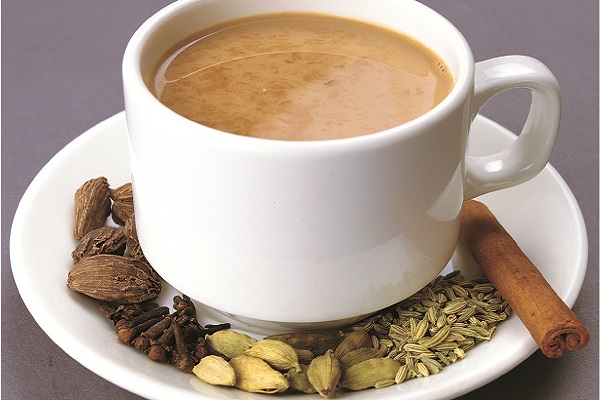
Every morning I, or occasionally my wife, start off the day by making tea. Specifically chai tea. As an aside the word chai means “tea” in Hindi. In my dad’s language of Punjabi it would be cha. So in a way saying chai tea is like saying “tea tea” which makes no sense, but I am starting with the familiar, but I usually just say chai. I am half Punjabi and should say “cha” but communicating my caffeinated beverage of choice gets more difficult if I am used to saying cha.
So first thing in the morning I wash the pot, if it is not washed already, and measure out the amount of tea I want to make. Usually about 4 mug fulls of water. I put the water on the stove and turn the burner on. As the water heats up I add an equal number of heaping teaspoons of loose Yellow Label Lipton tea. Then I take some green cardamom pods, whole cloves, fennel seeds, black pepper corns, and piece of cinnamon stick and put it all in a big stone mortar, and then take the heavy stone pestle and grind the spices and add it to the pot of water with tea in it. Once the water boils for a few minutes I add the milk. Whole milk, because chai without enough milk fat in it is wasted chai. 🙂 I add enough milk until the color looks right, and then I add a little bit of honey to sweeten it slightly. After the tea comes to a boil, I turn the burner off and pour the tea through a sieve leaving the spices and loose tea behind. Drinking that first sip of hot tea in the morning is a glorious feeling. Not only does it wake me up, but the taste which mixes the slight bitterness of black tea, the rich silkiness of milk, a blend of distinct spices, and a hint of sweetness from the honey has a solidness, a wholeness to it that I can’t quite describe. It feels like home to me as invokes many memories of growing up drinking tea with my family. At that time in my life I usually didn’t have morning tea, but late afternoon tea with my parents when they come from work. I introduced it to my wife when we met and she fell in love with it, and it is now as important to her as it is to me, and so it is now a shared pleasure. And on mornings when I haven’t had a lot of sleep, I may find making the tea to be a bit of a chore but that first sip in the morning makes me feel like I have the strength to face the day. The making and drinking of chai is a ritual for me. I think my only one. If I’m away from home I miss it and genuinely get excited for that first cup of chai when I get back.
We all have our rituals. In many ways I feel like rituals are like beliefs, they are like habits, they are repeated actions and thus forge neural pathways in our brain which when activated release dopamine. I think we need ritual in our lives to a certain extent. A repeated activity that simply brings emotional comfort should never be seen as a bad thing. Of course the way ritual can feel so solid and tangible can also be dangerous. As I wrote out my ritual for making chai and how it makes me feel I think to myself how I could never be vegan. But perhaps I should be vegan. There are many positive scientific and ethical arguments for being vegan. This clash is at the heart of how are beliefs or our rituals impact how we rationalize away good arguments in favor of those practices and beliefs we hold dear.
I think it’s also important to recognize that the tangible feelings those rituals give us are therefore an illusion. I remember when I was about 16 a friend of my mother’s, who was Greek Orthodox and cut hair in her home was giving me a haircut and talking about an upcoming Easter celebration. They were big meat eaters, especially lamb, but she announced to me that on Good Friday they don’t eat meat. She said “I don’t know, but not eating meat, makes me feel closer to God.” I found this to be such a strange statement, because I really felt like buddying up to God should really be more about helping people than whether or not you eat meat on Good Friday. It struck me at that moment how ritual influences our emotional state. And while I think we can afford some fantasy in our lives, when we get mired in ritual it is very much like an addiction. Ritual is like a drug for which we trade a certain euphoria we get by performing the ritual instead of actions that might be more productive to the lives of ourselves and others. The oft used example is quite true, that going to church every Sunday does not make you a good Christian. Many religious movements begin as an offshoot of other religions that seem to dogmatically get lost in ritual over more pragmatic practices that actually produce. Sikhism is a good example of this. This religion developed out of need to rise up from the oppression of the Mogul Empire in India at a time when the Hindus simply bore the oppression and turned to ritual and prayer for help instead of doing something themselves. Of course as the religion aged it too has become more mired in ritual as well, even though it began as a rebellion against it.
To see how easy we can get caught up in ritual the following text appears below the picture above at the website for this image. While I’d say that there is some hint that you should be doing good things in your life, I think words like these make it too easy for people to think they can bypass practical applications of a positive spirituality over performing rituals:
“A ritual is a formula which is meant to dovetail our consciousness to the supreme consciousness of God. The whole purpose of a spiritual ritual is transformation of the heart – from selfish passions to a spirit of selfless service to others, from arrogance to humility and from envy to having the power to appreciate others. If this transformation doesn’t take place in our heart, to create good character, personal integrity and ultimately love for God, then these rituals are all a waste of time.
The value of a ritual is to the extent we please God. Its not the ritual but the content of what our consciousness puts into that ritual. The real essence of all spiritual practices is to purify our heart and awaken the innate love of God. If our rituals are performed with that aim in mind, that ritual, like a vehicle, will help to transport our consciousness to the supreme destination. There is the analogy of a package. If you give a gift which has beautiful decorations outside but a horrible gift inside, the one who receives it will not be happy. The content of the package is all important. So our motivation for doing the ritual is all important, otherwise its just a ritual. So if we have the proper motivation to perform the ritual then it will have a tremendous substance. What is that substance? We access the empowerment and the mercy of the Lord. Thus by giving our heart to the Lord through that ritual, then that becomes the true content of the ritual.
In the beginning of our spiritual life we follow rituals for our purification. When there is proper philosophy and service behind it, it can awaken love of God. It is a way to express our intent to love God, to serve and please Him. So when we have the right enthusiasm and intent, then the ritual becomes something very deeply spiritual. If it is done under the proper guidance and with the right purpose, it purifies our heart and motivations and gradually real genuine spiritual experience awakens from within.” – Radhanath Swami
It seems that it is human nature to gravitate towards ritual. They make us feel good. They are comforting and safe. But like all things moderation is important. Introspection and reflection on these rituals is important. And some rituals are wholly harmful in practice and simply are inexcusable to allow them to continue. Maybe we simply need to make doing good in the world a ritual instead. 🙂
Feel free to share some of your rituals and how likely you are willing to give them up! 🙂
I’ve loved mangoes ever since I can remember. For me they are by far the tastiest fruit out there. Love probably isn’t the right word, but it’s the best I can do. I remember when I was young boy, my dad would cut up fruit for us to eat on Sunday mornings, and it was a real treat when mangoes would be in season. He would spend a lot of time cutting, and end up eating little. Very often I would eat an entire big mango in a sitting, and as the last piece was given to me I would express some faux-guilt about eating it all and my dad would look at me and say “don’t worry son, I’ve eaten so many mangoes in my life that you could never catch up to me anyway” and happily give me the last piece. He did grow up in India and I am sure he did have a lot of mangoes. Maybe to him it was like an apple. But I don’t know, if I had mangoes as readily available as apples I don’t think I would crave them any less. As I got into my teens, still every bit a mango fiend, and thought about someday sharing mangoes with my child I questioned my ability to be so generous. I mean sure I’d share, but give all of it to him? That’s not possible.
So here I am a parent and mangoes are in season and my son just loves them. And I am happy to say I know exactly how my dad must have felt. It makes me so happy to see that joy of being able to taste sweet, juicy, and wonderful fruit. I cut away, and feed him as many slices as he wants. I feel grateful that I am able to give him his heart’s desire in the form of fruit (knowing that such fruit would be a luxury for many families) and I even think to myself how many mangoes I’ve had in my life, and maybe it’s not as many as my dad, but I’m happy to let my son try and catch up. His joy is so much better than a mango.
It’s easy to get caught up in giving our kid the things we didn’t have when we were children, but thus far it seems a far more spiritually fulfilling experience to share with my son the things I did have that brought me joy, because I know what it feels like, and I can connect with him in a way that I couldn’t by simply giving him something I didn’t have. And if we feel positive about the people we are now, maybe those things you missed out on aren’t quite as important in the end.
Dedicated to my toddler who I am watching for the 3rd day in a row on my own. For the first time. Mothers are awesome, but being a dad should be talked about a lot more.
“Get out of the bath!” Child is speaking gibberish. “Do you want to get out of the bath?” Gibberish continues. I guess he doesn’t want to get out of the bath.
I’ve reverted to an early civilization barter and trade system. “If you eat two more pieces of cucumber you will get ice cream. Two, just these two. Look they aren’t even that big”.
“If you don’t brush your teeth, your teeth will hurt and fall out. Do you want that?” Child responds “Yeah”.
“Yes, you can press the button!” I say it excitedly, he gets excited. It’s a great moment. But then daddy forgets and presses the button instinctively. Child goes “Waaaaaaaaaaaaahhhhh! Me! Me! Me!”. “OMG I’m sorry daddy forgot. No I am not bringing the elevator down again so you can press the button. “Waaaaaahhhhh”.
“You just spilled chocolate milk everywhere…lets get out of those clothes.” Spill cleaned up. New clothes are put on…first sip…more chocolate milk on the clothes. Seriously?
I was thinking we always love how we sound when we sing in the shower. His voice just babbling words as he plays with his bath toys is so meditative. These little sounds reverberate and are so peaceful.
“It’s been a good 6 weeks since he peed his pants, that’s really good for his age, so it was bound to happen on my watch.
I just spent 15 minutes doing some pretty sweet Charlie Chaplin moves to much delight and applause. Charlie Chaplin was in pretty good shape I have to say. It is at this moment I also realize that I will most definitely tire of doing it before he is tired of seeing it. Laughter will become tears. But even so, the laughter is worth it.
I look in awe as he just eats 3 whole oranges one after another. He definitely won’t get scurvy on my watch.
So you’re just going to eat the rice and the noodles and nothing else? Glad I spent 20 bucks on Chinese food.
The most important thing to tell everyone about his trip with daddy to the zoo was that there were no giraffes. Admittedly it was also the thing he was most excited to be seeing after it was announced he’d be going to the zoo. Still it was an hour there and an hour back, we could start a little more positively.
He’s having a sort of drunken low fade into sleep tonight. Like he did when he was about a year old. He’s be sweet and affection and babbling to himself in fits of drunken light-heartedness.
I say “I love you” and he says “I do too”. That’s the first time he’s said that to me.
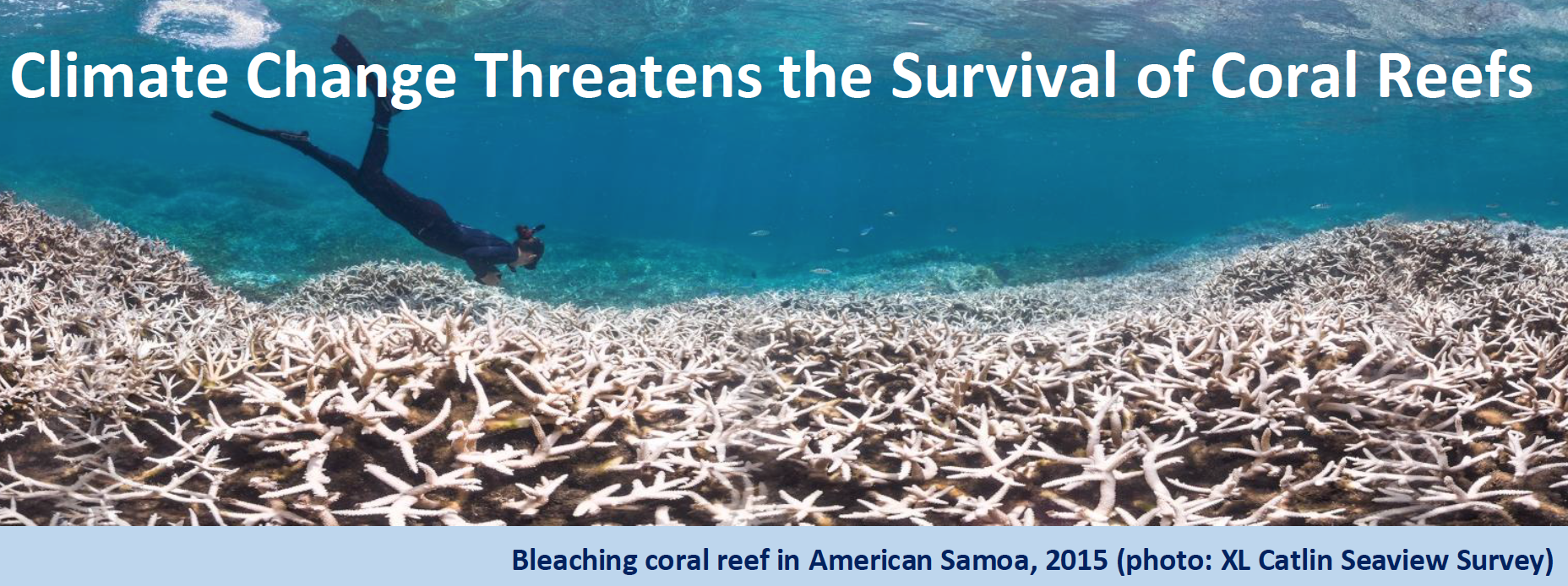
I was listening to one of my favorite podcasts called The Hidden Brain on NPR and they were talking about the climate change situation in a great episode called Losing Alaska. Basically they were saying that scientific arguments have little merit anymore in talking about climate change. I would have to say that I agree. As someone who holds a Ph.D. in the Atmospheric Sciences I can most certainly say that few people that I have debated with on the subject truly understand the problem scientifically and I don’t claim to be the smartest person in the world, this is simply the truth. My field is applied math and physics. Not only that, the climate system is complex.it Involves interdisciplinary knowledge as well in chemistry, oceanography and geology. To change someone’s mind from a scientific point of view, it would take a lot of study and learning. Now you may be saying, wait I accept man-made climate change, and it it’s pretty obvious. Well I would argue that you don’t really understand it, but it’s easier for you to accept because it already fits in with your ideology. And I don’t say that to be demeaning, especially I don’t think it’s necessarily a bad ideology to have. Specifically the one in which we recognize that something is very complex and we don’t have years to study it on our own so maybe I should listen to what experts are saying. Much like we tend to believe our doctor when they tell us we have cancer as opposed to learning the requisite knowledge we need in order to test ourselves.
Instead of a Heavenly Father, maybe a Mother Earth isn’t a bad person to start worshiping.
But more to the point it really does come down to our personal ideology whether we accept the science, because let’s face it the science is telling us some pretty harsh things. Not only is the Earth in a lot of trouble, but we actually might be responsible for it all. And in order to combat the problem we are causing we are going to have to give up a great deal. Transitioning away from a fuel source we heavily depend on will require large shifts in business and industry affecting the jobs of many. And of course such a transition cannot be made overnight, but even at a moderate pace will require a cultural change at a rate faster than many of us would have a hard time adjusting too. That of course does not make it any less compulsory. Interestingly this podcast made the argument that we all are capable of great sacrifices at times of war or crises, and that dealing with man-made climate change requires an approach that is used by religion rather than one that is used by science. I find myself having a hard time disagreeing. While I would love to live in a society where science had a much more powerful influence on changing minds ultimately it does seem that we need to change minds at an emotional level over an intellectual one (which is to me what the podcast suggested by saying a “religious approach”).
In that vein, I wanted to address some of the main arguments I see used by climate change deniers, which tend to be more ideologically based instead of arguments that attack the scientific data on the subject. They are more dangerous to me, because they seem reasonable. They seem irrefutable. This is not the case.
Science had been wrong before, why should we trust scientists?
The Geocentric Universe
This is quite true. Scientists have been wrong before. In fact progress is actually built on that very premise. But notice the word “progress”. It always strikes me as strange that people overlook this aspect of science. Much like we learn from our own mistakes and grow and get better as people, this is how science works as well. So we do get things wrong, but we also get a lot of things right. Your daily lives in this modern world are a living result of that. From the car you drive to the device in which you are punching out your arguments. Now you could be right that someday we will discover that we were all wrong about this, but if we do, it will not because we were willfully trying to mislead people, but rather a new discovery has allowed us to view the world in a different way thus disproving our theory. So unless you’ve got that said discovery I can guarantee you that our assessment about the state of the climate system is based on the best available knowledge we have about how it works. And personally I see no shame in acting in the best interest of all on this planet based on what we know of it.
Finally, just because you don’t trust science or want to focus on the things it got wrong makes it your problem, and not science’s problem. To refute climate change science on those grounds is to commit the genetic fallacy. Directly address the assertions being made by those advocating the position in terms of their conclusions analysis of their data. That is really your only option. To explain it more simply “Al Gore is a democrat, and I hate democrats. Al Gore gives evidence for why man-made climate change is happening, but since he is a democrat, he must be wrong.” That’s not how it works. Sorry.
Scientists are just doing it for the money. IPCC is corrupt. Liberal media…
This argument is the same as the genetic fallacy because it is again an attempt to discredit to the reliability of the source to simply argue away what the source has to say. I’ll admit that in such instances I will use the same fallacious argument back, because, quite honestly two can play that game, and I can play it better. Let’s say all of us scientists are ego driven money-grubbing bastards. My options are renewable energy companies and liberal governments, or oil companies. Hmmm…I wonder who has more money. Not only that with all the other scientists clearly in the wrong camp, all that sweet oil money could be mine (as it was for Wei-Hock Soon) as there are even less people to share it with.
In terms of fame, the fallacious argument made by deniers fall even shorter. If I had definitive proof that all the other scientists were wrong. I would be the one who was famous. I’d be on all the news programs, giving talks around the world on a sweet oil company payroll, and even the liberal media would have me on their shows even to abuse me while I valiantly stuck to my guns with the full conviction that I was doing my science right. I would be the hero of deniers everywhere.
Sometimes even fallacious arguments are hardly worth the effort.
The climate has changed before when humans weren’t around. It’s natural.
This is the first part of an argument constantly used. It’s also known in logic as a type of naturalistic fallacy. Just because something can happen naturally, doesn’t mean it can’t happen unnaturally. Do floods happen naturally? Sure. Can floods also happen because of human activities? Absolutely. Natural selection happens in evolution. But you know what also happens? “Unnatural selection”. The fruits and vegetables we eat, the dogs and cats we have as pets, and the horses we ride are all examples of this. The same thing can happen with or without intention.
We cannot have an impact on something as big as the Earth.
The ecosystem formerly known as rain forest.
This argument is made without any substantiation at all. It is often also used by people who are trying not to be religious but would rather take the James Inhofe argument that God controls the climate! Of course examples of how we have changed climate locally can be found all over through the building of structures like dams on rivers, cutting down forests and poor farming practices. In terms of the climate change issue specifically this person does a pretty nice break down of looking at how the amount of carbon we produce can quite easily explain the increase in carbon since pre-industrial levels. There is no reason to believe that we couldn’t have such a global impact. In fact that argument always seems to me a way of insulting or discrediting scientists again because it’s a pretty important question to answer before we would even start putting out evidence about climate change. I mean if the amount of carbon we produce paled in comparison to the amount of increase we’ve seen then I am not sure how the scientific consensus could be developed in the first place. It’s like when people say, the warming is being caused by the sun, and I think to myself “Oh my…we scientists all forgot to take into account the sun. I better make a few calls. Can’t believe we missed that one!”.
The Earth will survive. We’ve had major disasters before and life persists. Whatever is going to happen is going to happen.
This is the most insidious arguments, because it’s not fallacious at all in a logical sense. However it is apathetic and immoral. A lot of times people will say things like…”we’re just another species. Whatever we do is natural, and whatever happens will happens.”
Let’s say you are an emergency manager who works at a national park in a mountainous area. The weather is starting to warm and there has been heavy rains in the mountains and typically when such rains occur, especially in combination with some ice jams in the water flash flooding occurs. It’s not a guarantee, but likely. A town at the foot of the mountain in which the river runs through is going to get flooded, people could easily die if they are not warned. This is a natural event, it was going to happen whether humans are around are not do you warn them?
I think most people would answer that they would. To me arguing that doing nothing is the only option we have because the Earth is just going to do is thing is tantamount to doing nothing in this example, and simply letting people die. Many people who accept the fact that the climate is changing but don’t think man is responsible still must accept the consequences to this warming. Some of the one’s we are more sure of are:
Rising sea levels drowning coastal populations and increased damages and deaths from coastal hazards such as tropical storms and tsunamis
Increased heat waves and droughts
Increases in extreme weather events as climate patterns shift
Increased severity of extreme weather events.
What’s more is that these types of things will adversely impact the most vulnerable of the worlds population. People who are in poverty. People who depend on subsistence farming. When local hazards happen communities do make sacrifices, and do look for solutions, through re-zoning laws, construction improvements, and other engineering solutions to try and make the world safer and have less loss of life. So even if man has nothing do with the problem it doesn’t mean that we don’t have a responsibility to act to come up with a solution.
One can be logically sound but be ethically and morally irresponsible. Ignoring what experts are saying, making sweeping and unsubstantiated statements that there is nothing we can do, that it’s just nature, and the Earth will be fine is really the same as having the power to do something to save lives and not doing it. And this is why I agree that the conversation about climate change has to shift away from science and facts and be more about compassion, about love for our fellow human beings, valuing equality so that we all have the same chance to adapt and survive the changing climate, and about taking responsibility for the home that sustains us all. These are important values regardless of what is causing the climate to change and these are things we can address and even already have some solutions for. Of course I know that is even overly idealistic to think that such a solution of addressing people on an emotional level might work. Hell it’s difficult to find a religion that unanimously agrees poverty is something we should do something about. I feel pretty bleak in general about us actually doing something about climate change. It requires people to move beyond nationalism, beyond their own religious beliefs and worldview, which tend to not be very worldly at all. Maybe we can’t win against the forces of nature, but it sure would nice if we could overcome the forces that divide us as a species. We can try. Maybe in the end it really is easier to move mountains.


 But they do, do the job. At the end of the day isn’t that all that matters? Perhaps, but if laying down your life, whatever your initial intentions were make you a person with courage then such courage should also be bestowed on all people who have dangerous jobs. And there are such jobs even though they in no way are protecting other people. People who are loggers, fishers, and roofers come in the top 3. Here is a list of the top 20 most dangerous professions per capita (Police come in at 15). We also must then laud all those who lay their life down for a cause. This then includes your rebels, your gangs, your suicide bombers. This people also risk their life, sometimes end their lives for a cause they believe in. I think we can agree that this is not the type of person we want to elevate to nobility. Of course it is the values they hold, the values they fight for, the goodness that they protect. So if we can’t guarantee the motivations of all people who don the uniform, if there are more dangerous professions, and if what makes someone is a hero is the values they represent, it seems to me like “laying down one’s life” isn’t an overly relevant reason to elevate one to a position of automatic respect.
 I want to thank you for running a clean campaign. You made it clear right from the beginning that you had a message and that you wanted to talk about the issues. You didn’t attack your opponents with meaningless minutia, but gave fair and substantive criticism of their political positions, policies and plans. It’s easy to get disappointed by the election process when it seems like slinging mud at each other is something that has to be done if you want to get elected. When it seems like pandering has to be part of the process. You generated so much support by being an honest politician and simply talking about the problems that you would have to face for the job you hoped to be elected for. I hope that you will be an inspiration for politicians in the future, because we quite simply need more who run their campaign the way you have.






 model of a politician. While my heart tells me yes, I know it’s only because I agree with him. In the end, for many, it’s still a hard thing to do if you disagree with his ideas. As I wrote


 Cloak Unfurled