The Moral of the Story

I was ‘talking’ with a fellow blogger who is a nurse, and as I am a meteorologist we were trying to figure out who had it worse.  Was it more annoying to deal with the “climate change deniers” or the “anti-vaxxers”.   I agreed his was more annoying, because while human induced climate changed is well-evidenced it is always going to receive a lot of political blowback in a fossil fuel dependent world and it is both a complex and new problem facing us.  Vaccinations on the other hand have worked so well and have eradicated disease so completely that people don’t remember why they even get them and instead have invented dangers to receiving them because they can no longer see the purpose.    It’s as routine as opening your mouth and saying “Ahhh”.  People don’t really question that, but it doesn’t inject anything into you and is sort of hard to get upset about, but I think when some medical advancement has been around so long and so successful we forget the reason and just see it as possibly something that isn’t necessary.

This led me to wonder if the same thing wasn’t true for how we understand morals.  One of the common things you hear from atheists is that many theists are under the impression that we do not have a moral and ethical code.  That such thing is not possible if we don’t have God and some supernatural system of punishment and reward.  I remember my mom, who is Christian, telling me at some point that our sense of right and wrong must come from God or else where would we get it from?  The general answer is easy of course, we are taught them by our parents and others.  We have authority figures that tell us what is right and what is wrong (even though you can convince a child that things that are wrong are actually write, like prejudice and intolerance).  The point is if as children we seem to get our morality from the authority figures in our life, perhaps it’s not surprising that many people, especially those who have no qualms about relying on the “rightness” of authority, that morality comes from what many consider the ultimate authority, God.  But it seems obvious to me that morality can easily be derived through scientific investigation.  Morality though has been around well before the scientific method, but humans have been around for a long enough time that we’ve been living a social experiment of morality and have simply been learning.  At one time the things we take as obvious might not have been overtly obvious, even though I think some of the big ones we could figure out rather quickly as they would not be a beneficial for survival.  Just like we stopped questioning why vaccines are important, perhaps we stopped questioning why certain immoral acts are wrong, such that people assume that it all must have come from some other plane of existence.

Some morals are certainly cross-cultural, like physical and sexual harm to other people’s children.  This one would be a pretty obvious natural (perhaps genetic) trait because our survival does depend on the survival of the next generation.  Anything that threatens that would be considered immoral.  Unfortunately in many places physically or psychologically hurting your own child is not seen as wrong.  It wasn’t so long ago here that, unless something got really severe, you were hardly considered in the wrong for disciplining your child with a belt or the back of your hand.  Some people still adopt that attitude unfortunately in North America, and it can be worse in other countries.  Regardless though we generally do go to ridiculous (and perhaps psychologically detrimental) lengths to protect children.  In general though killing is not quite viewed the same way.  Many think it’s okay to kill criminals (apparently it sometimes doesn’t even matter the crime…resisting arrest is enough), and killing in war is not only tolerated, but often cheered about.   For some time killing your wife in a crime of passion was often considered justifiable.  And many civilizations have committed genocide in our past and that has gone unpunished.   So even of the most basic commandments “thou shall not kill” isn’t clear cut, so this obvious sense of right and wrong we are supposed to get from God looks pretty muddy.  And if we are worried about some sort of eternal punishment system it’s amazing the ways we can justify killing when we need to dodge that one.

But let’s look at it from the perspective of “unlawful killing” which is why modern translations say “murder” instead of kill in the 10 commandments.  Thus we already have human law deciding what killing is lawful and unlawful.  This is not an overly divine commandment already.  We know that before civilization we roamed in smallish hunter gatherer bands.  Maybe a few hundred people at most.  This was a time before Christianity, before the 10 commandments, so let’s assume this group doesn’t know right from wrong.  Like a small town, in these small groups, you knew everyone.  Surviving in the wild is not easy and everybody had a role to play, and everybody shared and worked together.  Studies of hunter-gatherer tribes today show them to be rather egalitarian in compared with much of civilized society so let’s look at this as a group that gets along.  So we have a group of a few 100 people, and because they have no God to tell them between right and wrong they think murder might be just something that’s okay to do.  What would be the results of a few people that decided to commit a murder every once in awhile:

  1. Population decline and lack of genetic diversity – We could at the very least learn that there is a murder rate that is not healthy for the survival of the group. Through cooperation, life was made easier, but the group gets smaller, things get harder. Population can only increase so fast. So at the very least, if murder is okay, we can’t do it too often.
  2. Loss of those with specialized or exceptional skill. While daily tasks required teamwork there would have been certain people with more extraordinary skill. A tribe may also only have one person who does a particular job. Murder could reduce the chance for survival if such people are killed.
  3. Growing fear and distrust. If people are being murdered, people are less likely to cooperative. Some people will simply be scared they will be next and be more cautious and protective. Some people will be angry at the loss of their child, brother, sister, etc. This will cause others to fight back. There may be false accusations, which builds more anger and distrust.
  4. They are diminishing their own chance for survival. Once a murderer is discovered, those that committed the murders may find themselves a victim.

Now there are probably even more things that could be listed as to why murdering would not be a good idea, the least of which that we are by definition a social species for whom survival depends on our being in a group, and being able to work well in that group.  It simply isn’t in our nature to murder our own, and there is a lot of good reasons why murder would not be a good idea.  However when it comes to other groups, all bets are off.  We may be xenophobic due to bad experiences with other groups before, or simply be xenophobic because someone who we don’t know simply isn’t somebody we can implicitly trust, and thus we can justify killing others that are not part of our society.  This is why war is not against the law, but murder is.  We can do similar thought experiments with many other basic things that cause harm, like stealing, or any action that causes harm both physically and emotionally.   But even if it was not in our nature, this social experiment has been going on for some time and it seems quite reasonable to assume that even if there was not a morality inherent in us through birth, if at the very least we have a driving force to survive then many of the morals we have today would result through experience and observation and concluding how to survive better.

As a population we continue to adjust.  Different groups share moral truths just as they would share any other type of knowledge.  And so perhaps much of what we consider right and wrong is handed to us without that rediscovering process, but you can still see the impact of people doing the right thing and wrong thing today.  Because even though I think that on average humans are more moral in civilized society today than in the earlier days of civilization, we still have a ways to go.  People who are doing good and bad things are not of one particular faith or philosophy.  If you have compassion and care about how you make others feel, you will discover yourself how to behave in a way that’s more positive everyday as you grow and learn also.  It is the scientist in us that helps us become more moral.  If anything, the Bible demonstrates this more completely as the old testament has very much an eye-for-an-eye mentality, but the new testament is very much about forgiveness, redemption, and compassion.  Even God seemed to find a more moral way of dealing with enemies. Thus I don’t think it’s surprising that morality should progress in the same way that science does.

 

Headlong

Well between being a dad and a professor, blogging has taken a backseat.  This of course doesn’t stop the ideas from flowing, so I just thought I’d get at least one of them out even though I’m having to wake up at 5:30 am to do it!

My blog post is once again inspired by my son.  One of the things my son likes to do is drink, whatever we might be drinking, from our glasses.  I find myself enjoying this quite a bit, because it’s clear that he wants to do things like we do.  At times he will often try picking up our glasses and try to drink from them, with of course disastrous results, but his drive to be like us is clearly strong.  The reason why I enjoy this so much though is because there is something wonderful just being around someone who is clear is striving each day to be more than they are.  You might say, well of course babies/children strive to be more than they are, because they have to grow and develop those basic cognitive and locomotive skills.  So I know I’m not saying anything groundbreaking, but it made me reflect on a number of things that I think have meaning at any age, and gave me some important reminders as I move forward in life both as an individual and parent.

As I was reflecting on this last night it occurred to me the importance of failure.  While, as parents we marvel at our child’s successes I wonder how often we think of their failures.  If I really start to think about it I know that every achievement of my

From http://www.wholeheartedleaders.com

son is built on the back of many more failures.  Whether it was a failure sit up, stand up, walk, or clutch an object in his hands, these activities failed numerous times before he was able to master them in any meaningful way.  And it occurred to me that if you are not failing at anything right now, you quite simply are not growing.  In these early stages of life the failure to success ratio is high.  My son is constantly reaching in ways that exceed his grasp, but is undeterred by failure and this is something I find wonderful and inspiring.  While he still needs help sipping from a drinking glass because he cannot lift it up to his lips in a controlled way on his own, I know that he will get it.   Sometimes I wonder if I slow his progress by helping him though.  He’d probably learn a lot faster if I let him fail more often, but of course the amount of spills I’d have to clean would be a drain on my time and resources.  It takes away from other things that I could be doing which would be important for parenting or important for myself.  And of course in some cases these failures might be detrimental to him as well.  We need fluids, and if we are constantly spilling ours then we aren’t getting the sustenance we need.  This is, of course, one of the things we must balance in life.  Doing an activity that we’ll fail at is an energy cost, and thus we must have energy in excess to afford to fail.  Growth implies risk, and risks can be costly.  That doesn’t change the fact that without taking risks we tend to stagnate.

Dhyan_box
Sometimes my son even enjoys falling. 🙂

So what deters us from this completely necessary quality of risk?  Since risk involves the uses of resources and energy, there are environmental factors that simply put limits on the risks we can take.  The beautiful thing about children (and often scary at times) is that they think nothing of the risks they take.  No matter how many times he fell trying to walk, or get down from the sofa or bed, he still did it.  As we grow and become aware of more things we learn restraint.  If I lived in one of many places in Africa where clean drinking water is scarce, one of the things I would make dead sure of is that I didn’t leave a glass of drinking water within in reach of my son, because drinking water is precious and we could ill afford to have any spilled.  So the risks we are willing to take or let others take are governed by the energy and resources (or the perceived energy and resources) we have available to us.  I think this is something we forget.  It is very common in the world to denigrate the poor and criticize them for not lifting themselves out of their poverty.  Since risk leads to growth, and risk is at least partly a function of the security of energy and resources in our lives, those that have limited resources simply cannot achieve as much as those of us with privilege can achieve.  While there are always remarkable stories of people crossing that boundary, on average a person who starts off with more will always have the potential of achieving more.  Therefore we’d be well served to stop judging those in poverty and that they require our compassion to help raise them up.  Should I wish to let my son fail at drinking water from a drinking glass I have the resources to supply him with endless amounts of water.  It seems that the path to a better society comes from those of us who have an excess in resources finding a way to create an environment for those in need to have some minimum level of security so that they feel safe to take risks.

Our inability to take risks can also be impacted by our memories of failures.  There comes a point where feelings of failure can be somewhat traumatic.  It can make us not want to try something again.  I have postulated, not sure if it’s true, that one of the reasons why babies don’t form a lot of memories is because if they did they might be scared to take risks.  This is something that a young child absolutely has to do just to be able to master basic movement and communication skills.  My son has fallen hard at times, and after a few minutes he is back trying the same thing again.  This short term memory seems a blessing at this age but it won’t last forever.  Of course if we reflect on failure we would see that it is teaching us something, and that we probably should worry about failure a lot less than we do.  If you’ve tried something a number of times and still failed, well maybe the lesson to be learned is to not do that activity anymore.  That in of itself can be a success.  Learning about what you can’t do, moves you in a different direction to try things that you have a better chance of succeeding.  If energy and resources are finite then there is wisdom in not continuing in an activity once we realize that it is beyond us.  This means the only truly detrimental failure is the failure to never try.

dhyan_cutlery
My son, failing to use cutlery in any meaningful way. 🙂


It’s easy once you get to the age of 40 to play it safe.  Likely your life is already full of failure and it’s simple to say “enough is enough” and just survive.  I was joking yesterday with my wife, given the extremely fast rate my son is figuring out how to use an iPad (and believe me we don’t give him a lot of access) that maybe that’s why kids always have to figure out technology for their parents, because once you have kids it’s easier to stop learning and let them (who learn things much faster and easier than you) do it for you.  Ultimately this is not the type of person I want to be.  I want to continue to grow, and over the last couple of months I’ve realized there are numerous areas of personal growth that I want to achieve and while I may like myself, to rest on my laurels would also be a mistake.  I watch my son attempt tasks that are beyond his abilities and must remind myself that I must never stop trying to push my limits, and to take chances doing things that have a high chance of failure.  It’s surprising how cautious we become as we age.  It seems that perhaps the real secret to staying young is to maintain at least a shred of fearlessness and at least an ounce of self-confidence that defies what we think we know of ourselves.   I must also remember to turn my parental instincts in a way that supports experiences of failure for my son.  I’m not saying that I would intentionally cause him to fail, but only to remember that loving my son is not about preventing him from ever failing, but rather allowing him to fail, and stepping in at the right time to help him learn the most from his failures.  So smile at your failures.  They got you this far, and here’s to hoping you have many more.

Equality, I Spoke The Word As If A Wedding Vow

Recently I’ve been thinking about the word “equality” and what it really means. I always think that when you are thinking about word and are unsure what it means a good place to start is the dictionary.  But that didn’t help much because the major definition simply says “the state of being equal” or defines equality in terms of mathematics. I think most of who think equality is important would define it in terms of equal status, equal rights, and equal opportunities.  Such equality might be easy to legislate, but it is not easily found.

The interesting question to me is why equality is something that some people thing is important and others don’t. Part of the reason is that many simply don’t see other people as equal.  And most troubling are those who see someone as inherently unequal simply due gender or race.  It seems to me that those who fight for equality and who believe that equality is important in a society don’t see inequality as inherent, but rather a product of environment.

Equality, like freedom may be a difficult ideal to obtain, but it seems to me the true inequality in this world is between those who think we can attain it and those who think inequality is inherent for whatever reason. And so I wonder, what is the common bond between people in both those groups of people?  Since race and gender have nothing to do with how smart you are, your physical abilities, your potential to be successful, or your ability to show love and kindness, why are there people who think that race and gender automatically pre-determines such things?  Children carry no inherent sense of inequality in regards to race and gender, so where does it come from?  What trait oh of humanity leads people to adopt the idea that one person is less than another?  When does it start to develop?  Is it a desire for power? A fear that in balancing the equation that for one group of people to rise up, that we must then relinquish some power and come down?  Maybe equality isn’t something we can attain, but maybe we can at least see everybody as valuable if not equal.  To be honest, the fact that we are all equal regardless of race or gender seems so obvious to me that I find it vexing that anybody should think any other way, so I am interested in hearing thoughts from others.

How Our Will Is Not So Free – Part I

For any of you who are foolish enough to read my blog you are used to a lot of rambling.  I can’t promise this will be too different, but I would like to be a little formal and have an actual thesis for this post.  I have posted my thoughts about free will in respect to religion, but even if one is not religious the idea

From http://www.brandonragle.com

that we have free will is extremely pervasive and I think it is ultimately a not necessarily helpful concept to believe in.  The choices that we think people have are an illusion and we tend to instead judge others because people do not make choices that we would make.  It prevents us from really helping those who are violent, disturbed, hurting, depressed, etc.  It has us believe that there are people who are inherently evil allowing us to dehumanize them and cast them aside, when instead they might simply have brain abnormalities, be traumatized, influenced by people as messed up as they are, or simply lost and confused in a world that is beyond them and behave desperately.  I think it also acts to separate us from nature and is a great source of human conceit.  Free will is not something we ascribe to plants or animals and thus also gives us the illusion that we lie in a place above all else.  Whether you believe that the supernatural has imparted us this blessing of greatness or you think that evolution is a pyramid in which humans rest on top, both these notions are ultimately dangerous because they allow us to justify great atrocities against nature as we continue to satisfy our own self-importance.

In the first 8 months of watching my son grow it is clear that free will is not something he was born with.  He started out simply crying when he was hurting, uncomfortable or hungry, and sleeping when he was sleepy.  Not a lot of free will going on there.  As I watch him change, I see him simply become aware of more things.  When he first could see our cats, not surprisingly he was curious and wanted to touch them.  Now that he’s been outside he asks to go outside (well not in words).  Now that he realizes the comfort of being held he asks to be held.  He also mimics.  He sees us eating something and he wants to eat it.  He sees us using a remote, our phones, computers, and he desperately wants to use those too (or rather put them in his mouth).

Before I formally begin my argument for the absence of free will I want to put an excellent quote from an article I read some time ago from the New Yorker which has had a large influence on my thoughts in trying to understand why we are the way we are and where this sense of self comes from that I blogged about some time ago.

I believe we inherit a great river of knowledge, a flow of patterns coming from many sources. The information that comes from deep in the evolutionary past we call genetics. The information passed along from hundreds of years ago we call culture. The information passed along from decades ago we call family, and the information offered months ago we call education. But it is all information that flows through us. The brain is adapted to the river of knowledge and exists only as a creature in that river. Our thoughts are profoundly molded by this long historic flow, and none of us exists, self-made, in isolation from it.”

From http://www.eugenecascadescoast.org

The reason I want you to keep this in mind, because not only does it support the argument I am going to make (doesn’t of course make the statement true), but most importantly I want to reveal to you that just because I don’t think we have free will, doesn’t mean that I don’t find life absolutely amazing.  The idea expressed in this passage speaks to me in a way I cannot fully express, but I find this idea beautiful.  It tells me that we are product of processes that function over many different scales of time.  From what we learn each day, to what nature has molded us into over millions of years.  We can extend even further and look at the billions of years of evolution which has produced us , and we can go back further to old stars dying and being the seeds for our own sun and solar system which allowed one fortunate planet to even allow life to evolve.  So the fact I may not be quite as in control of the process is hardly depressing.  In fact it removes a lot of the pressure if anything.  I can simply marvel at all that has taken place for me to sit here and write these thoughts out today back to the beginning of time.  It is humbling, inspiring, and magnificent.

I shall now let you pause a bit before going on to the next blog post, because going back to the beginning of time is something that requires some deep reflection. 🙂

Returning Your ticket

Let’s say you are on a big cruise ship. Over 6,000 men, women, and children are on board.  This cruise ship promises to take you to paradise and it’s not a lie either. A place where everybody is happy, nothing bad ever happens, and everybody gets along in love and friendship.  Children are laughing and smiling and running around.  Nobody

From http://www.freefitnesstips.co.uk

is hungry or hurting.  Everybody lives in harmony.  There was no charge to even be one of the passengers.  You’re on for free and who wouldn’t pass up such an opportunity.

As you are making your way to paradise, the captain announces that due to some unknown structural defects that they need to get rid of about 100 passengers or the boat will sink.  Fortunately there are an equal amount of bad criminals who have done some bad things and don’t really deserve paradise on board and the captain knows who they are and asks everybody else to throw those people overboard.  Would you still want to be on that boat?  Keep in mind that by even looking the other way, you are an accessory.  But many people, I think, given the promise of such a wonderful destination they could make it work for their conscience.

Now rewind the scenario and the same announcement comes on and says we need to unload 100 passengers or we all sink, and paradise will never be reached.  It’s only 100 people and still some 6,000 people will get to go to paradise.  But everybody wants to go so nobody volunteers.  People get tense and some people start deciding for themselves who might be bad or good, who might be too old to survive the journey and thus can justify getting rid of them.   Would you still want to be on the boat?  Again doing nothing to help still makes you an accessory.  In this scenario, not that the group who stays must develop some sort of justification for why those people will have to die.  Judging them without evidence, making assumptions, perhaps developing a philosophy that gets people to volunteer, convincing the more gullible of passengers that they will get to paradise anyway by making the sacrifice (even though they don’t know that to be the case, no matter how strongly they believe it to be so).

Let’s rewind again except this time the captain announces that his good friend the Grim Reaper will be coming around and taking the lives of 100 people at random.  It

From http://wiki.urbandead.com

could be your child, your friend, your wife.  Slowly everybody watches 100 people keel over without knowing why they had to die.  Would you still want to be on that boat?  If you stayed, what justification would you come up with to be okay with those deaths?

Let’s rewind one more time.  Instead of the Grim Reaper, the captain announces that everybody will be restrained while a psychopathic killer, wrought by the same person who made the paradise, will be coming around to kill 100 random people.  Having little control over his actions and lack of moral center, he will beat, rape, and torture these people before he kills them.  Many or all of these people are innocent.  Most importantly some are children. Young children, perhaps even babies.  Children in their innocence and purity must be physically and sexually abused in order to reach this paradise.  Would you still want to be on the boat?  What justification would you invent to be okay with this if you stayed?

In one the most influential books to me was The Brothers Karamazov by Fyodor Dostoevsky.  In that book one of the Brothers Ivan is having a conversation with his younger brother Alyosha in a chapter I believe called “Revolution”.  Ivan is an atheist and a collector of news stories around Russia of atrocities committed against children.  He questions the religious harmony that Christianity offers (I do not single out Christianity here, only relaying the religion that was used in the book).  We are all supposed to follow The Bible and follow its moral teachings.  The goal being that we will all come to know God on Earth and secure our place in Heaven afterwards.  But we are also supposedly given free will and thus some do not follow.  This allows for the possibility of great harm to innocent children: abuse, rape, torture, death (not even counting all the natural/accidental causes that take the lives of children).  Ivan claims that if this is the price of harmony then he would like to “respectfully return his ticket” to the Creator.

In reading that passage, I could not help but agree with Ivan.  Being a father now only reinforces that idea more.    If there is a Creator who is omnipotent and decides what happens to all His creation and that there is a reward of Heaven for those who are good, then I submit that this existence is simply not worth the price given all the suffering that does and has taken place already to get there.   There are of course many other atrocities that happen to adults, that make it not worth the price either, but it is especially hard when I think of the harm that comes to children.  The logic of a Creator who commands us to act according to His moral guidelines in order to achieve some post material existence paradise at the expense of harm to innocent people, simply does not add up.  It’s not enough for me to say that “God works in mysterious ways” or that “no one can know the mind of God”.  It’s not enough for me to know that God has taken the innocent up to Heaven either.  Because what is the point of this existence if they had to suffer here?  And for the life of me I really don’t understand why that can be enough of an explanation for anyone else.  I’m open to any and all explanations as to why the tears of a suffering child are worth this paradise?

A Little Respect

From http://masalamommas.com

In a conversation with a good friend who was born and raised in India, we had one of those east vs. west discussions.  I think it’s natural to always defend the values of where you were raised to a certain degree, for me I was raised in the west, but had an Indian father and thus spent time with many Indian friends and relatives as well as having been to India a couple times so I’d like to believe that I can look at both sides objectively and see the best and worst of both worlds.

This particular discussion was about family values.  My friend argued about the lack of family values here in the west, specifically the lack of respect for one’s

parents.  I think even a lot of parents here might support her claim.  In India there is a lot more respect for parents and the elderly in general.  Before evaluating whether or not such statements are even true, let’s perhaps breakdown some factors that might be important in the different attitudes of children in the west vs. east.  (Note here in the east I will be focusing about India, but India does share similar values with other countries in Asia towards family and parenting, and for the west mostly U.S.A and Canada).

In the west we might attribute a lack of respect to the following:

  • Both parents working meaning less time to spend, discipline, and guide children
  • In the west there is a general rejection towards authority, government, and hierarchy
  • High divorce rate
  • Highly valuing individualism over collectivism
  • A tendency to be more mobile and not living very close to family
  • A long history of a strong economy allowing for greater financial independence at advanced ages

In the east we might attribute greater respect to the following

  • Relatively low divorce rate because of the emphasis towards arranged marriage, binding families and resources over an emphasis on romantic love
  • Like many nations that have had historically high poverty rates (although India is an economic powerhouse now) have created a system in which there was simply no plan for the elderly to be taken care of should they become unable to take care of themselves. Thus grown children are expected to take care of their parents financially when they can no longer work.
  • High population density and again the historically weaker economy means people are less likely to leave the area near where their parents live
  • Less job opportunities for women historically and thus allowing many women to remain at home giving more time for discipline and guidance. This also reduces the amount of retirement money that would come into a home when the parents are older

I am sure there are probably others, but honestly I feel like a weaker economy historically and a lack of social security and retirement plans for older people has created a system over time that required closer family unity.

But regardless of the reason let’s take a look at whether or not it is actually true whether or not there is an actual difference of respect.  First of all I have never actually seen a study that proves this is true.  Certainly there are many studies that talk about the differences in behavior culturally between young and old, or parents and their children.  However none of those studies really measure respect.  The dictionary defines respect as the following:

“A feeling of deep admiration for someone or something elicited by their abilities, qualities, or achievements”

It seems to me the first error in this discussion is that maybe we aren’t talking about respect, but duty, or obligation.  I guess it could be respect if say “abilities” involves the ability to parent a child, but that’s a bit of a stretch, given that even a weak ability in raising a child can get one to adulthood.  So respect seems to be something different and it is not clear whether there is a difference between east and west. A soldier in the military can follow the orders of a superior out of duty, but still not respect that superior.

I have known numerous Indian children who were given little freedom in choosing what they wanted to be, who they can marry, how they want to marry, etc.  Well I’m not saying they obeyed purely out of duty, because clearly there is love there as well,  but I do know some children who resented their parents for taking advantage of that sense of duty and love to set them on a course in life that they did not want.  It’s somewhat questionable to me how much respect there was.   They often did what they were told even though they were unhappy about it.  Parents in the east would do well to recognize that their kids are not simply extensions of themselves but individuals.

On the other hand, parenting is not really easy.  It’s easy to doubt yourself and your actions.  A lot of times you might just default to what your parents did to

From http://blogspot.com

you instead of really adopting a practice you are not comfortable with.  Raising kids takes time, energy, and resources.  Kids growing up in western culture would do well to remember that and appreciate more often the sacrifices and difficulties associated with raising them.  However, does not listening to your parents indicate a lack of respect for them? If we value individuality as a nation, isn’t likely that your child is simply expressing that individuality.  This can be hard when you see them making mistakes, especially the same ones we made.  But isn’t that how we also learned some important lessons.  Again, just because a kid chooses to ignore your advice and do their own thing, doesn’t mean there is a lack of respect, it just means they feel more compelled to exercise their own judgment right or wrong and see where it leads them.

Whether it’s duty or respect, I asked myself after the conversation with my friend, why did I have a child?  Was it so I could raise somebody who would listen

From http://www.childandfamilymentalhealth.com

to everything I had to say about what to do in the world?  Was it so I could instantly have someone who respected me regardless of my flaws, weaknesses, and the way that I treated him/her?  The answer of course is no, but what is absolutely wonderful about the parent – child relationship is that it begins with love.  There is an implicit trust and affection built in, and so we only have to think how best to foster and grow that love from the simple biological relationship to the complex relationship that binds any two people together.  As I watch my son grow I can already see his sense of self forming, and I know it will only get stronger with time.  It seems that we always have to remember that respect runs both ways with our children and I hope I have the wisdom to know when to let him express his individuality even if it runs against my better judgment and my need to remain his protector.  Being able to let go is also a quality worthy of respect and it seems to make some sense that as children grow the qualities that they admire in you and others change.  I hope that I will be able to grow along with him and adapt to his changing needs and desires while remaining an ever present part of his life.

While there are differences between east vs. west parent – child relationship I don’t think any one of those is a better way of doing things.  Respect is always earned and I think it is best earned when a parent demonstrate an ability to understand what their children are going through and by constantly being there for their child.  I think this is what builds a lasting respect between parent and child.


It’s a mistake

Over my recent vacation to Canada to introduce our new baby to family we had one of those frightening moments.  He was sitting next to me on the sofa as I was watching him play with a toy.  Thus far he had been a pretty stationary baby.  He was starting to move more and I was paying more attention to him so he didn’t fall.  My aunt asked me a question and I turned my head and just like that I hear people yell out and I turned my head back to see him dive onto the floor, landing head first, his head bending backwards.  I picked up quickly and held him close, his cry was different.  My wife then grabbed him from me, not because she was mad at me (I think) but just her own motherly need to hold him.  I was on the verge of tears.  My head was swimming with thoughts that I had broken his spine and he’d be paralyzed or that I had caused some other brain damage…perhaps even fatal.  Thankfully he was fine, although if he gets a B in math class I’m sure I’ll feel responsible.

In reflection I thought about how quickly such horrible tragedies can happen.  What if the fall had been a bit harder?  Hit a different part of the head?  At times, life seems to be a matter of fractions of seconds and millimeters (inches for my American friends). It made me think about some recent stories I read about parents who have lost their children.   Earlier this year a bookcase killed a 3 year old girl as she tried to climb it and it tipped over killing her.  These kinds of things happen often enough now that we should be more aware, but there are literally a lot of possible dangers out there and I am not sure it’s possible to prepare for every one of them.   Very recently, footage at a London train station showed a baby carriage blowing onto the tracks as the parents stopped to help someone with their bags.  Fortunately the mother was able to get the carriage off the tracks in time, but the stroller literally gets turned by the gust of wind caused by the approaching train and quickly ends up on the tracks.   There is nothing remarkably different about these two events other than some fortune in spotting the trouble before it was too late.  I am sure there are many more parents who have been fortunate that a similar accident has not killed the child only injured them.  Or perhaps they caught the impending accident in time by catching something before it fell or moving the child out of harm’s way.  Perhaps when the child was a little younger and lighter, or the bookcase a little heavier they saw it teeter a bit and said “Hey, I should secure that.”  The positive outcome is most often the outcome.   Children can take more bumps and bruises than we think, and tears are often temporary.  No child dies from crying no matter how much we don’t want to see those tears.  But we simply can’t predict or foresee all possible dangers.

These two incidents and the one I experienced are good examples of how habit influences our lives.  We often get used to routine and what we consider as usual that we don’t take into account the unexpected.  After 7 months of my son not trying to roll off the couch you come to sort of expect that it won’t happen, even if that seems stupid in hindsight.  I am sure the parents who lost their daughter to the falling shelves, never thought she would try to climb it, or never had seen her try before.  I’m sure all of us who are regular train travelers are well aware of the gust of wind that rushes ahead of a train, especially in an enclosed station.  How many of us might think about how that wind might push a stroller?

The routine can even lead to more unfathomable mistakes.  Such as not realizing your child is in the car seat behind you and leaving them in a hot car for hours.  If you are a parent or just a compassionate person it takes just a second to imagine what the infant must have gone through.  There is no way your mind can take you through that slow death.  You will hit a wall before it gets really terrible and all you know is that unspeakable darkness comes after.

These incidents unfortunately also end up serving as a reminder of the lack of compassion that is so visible in society today.  The comments that people make to these parents are truly horrifying.  Scores of “perfect parents” who think they’ve done everything right and would never make the mistakes these parents did.  These perfect parents are calling for the gallows instead of realizing that the person you are criticizing is in a massive amount of pain.  If it could be displayed as a physical wound it would be a chest wound to the heart with the patient ending up in the intensive care unit in critical condition.   And how “perfect” are these parents anyway? Have these parents never had their kid fall? Driven over the speed limit with their kid?  Driven in a busy city with their kid?  Have they never lost their kid in a crowd?  Have their kid’s sweaty hand slip from their grip in a dangerous situation?  Did they never have to watch their kid after having a couple of drinks, perhaps affecting their judgment or reaction time?  There are more possibly dangerous scenarios than I can list, and the fact that nothing ever happened to them during that time is the only reason they are not one of these tragic stories.

Now don’t get me wrong.  There are terrible parents out there.  There are parents who do unspeakably horrible things to their children, or who are just irresponsible and are neglectful to their children causing them great harm, mentally, physically, and sometimes fatally.  It is actually the harm to children that led me away from the idea of their being a loving deity out there, but perhaps that is a post for another time.  The point is that the death of a child is always a horrible thing regardless of how it happens and so it is understandable that we would get angry.  That feeling, however, does not give us the right to lash out at other people in pain.  We all make mistakes, and many of them go unnoticed because nothing bad ever comes close to happening while we are making them.  You want to get angry, direct that energy into something useful; education, better safety standards, helping others.

These perfect parents, even if it were possible often sound like the kind of parent who hovers over their kid, never letting them play just because they might get a bruised knee and keeping them so far from danger that they are more likely to get brought down by the simplest things in their adult life because they’ve never had to cope on their own.  And here’s the rub – as parents we must walk that thin line between protecting our children and giving our children the freedom to overcome their own obstacles in life.  Children need to face fear, and they need to solve their own problems and make mistakes while doing it.  Children also need their parents to be good people, and not just good guardians.  The London couple helping out somebody with their baggage is a great act of kindness that kids need to see.  If you think that you are a positive individual who is a good role model for your children then part of you must continue to be the person you’ve always been.  Kids may take over your life, but you are not your kids.  You have your own identity and, again, if you value yourself then part of being a good parent is just being what you think is a good human being (good luck in getting an agreement on that anytime soon).

Finally, I want to quickly express my concern for the trend in wanting to criminalize every parent for these mistakes.  All the details of the case rarely get reported and unless you are intimately involved in the case you really don’t know the truth.  Furthermore, even though many parents do not face criminal charges thankfully for these horrific mistakes, some do simply because they don’t have what society considers having a “good character”.   Maybe you occasionally do some marijuana, maybe you flirt a little with other girls or had an affair. Maybe you just aren’t a rich white person.

All I can tell you is that had my son truly been severely injured or killed in his fall, I can guarantee you that no prison would have walls stronger than the one I would have built for myself.  Nothing you could say would be harsher than what I would be telling myself.  I will guarantee you that you do not love your child any more than I do and though your negative judgment would be despicable, I would still never wish on you such pain in my anguish.  So if you can’t direct your anger and sadness to the loss of a sweet child into something helpful at the very least remember the golden rule, which I hope you are teaching your children, “If you don’t have something nice to say, don’t say it at all.”

Helpless

From http://deviantart.net

My baby is not much of a crier.  So when he does cry it feels a bit worrying.  Of course a baby will have different cries.  Sometimes those differences are subtle and they change a bit as they grow day by day.  There is one for wanting a dry diaper, one for hungriness, one for loneliness and just wanting to be held, and there is a whiny one for a toy they can’t reach (so you give it to them and they become bored 30 seconds later but then want another one!).  But there is one cry that seems very different to me.  This is the one in which they are in pain or misery: maybe teething, gastric discomfort, sleep deprived and tired, perhaps an ear infection.  Whatever it is as a parent you will know this cry.  They wail at the top of their lungs.  They are inconsolable.  There is no reasoning with them because there is no way you can communicate with them except to simply hold them and hope your warmth and love eventually calms the down.

There is a helplessness to babies, especially before they can understand language well and before they can move on their own that draws us towards them, that pierces our heart so deeply that we move almost unconsciously to try and take care of them.  But that cry of pain is a helpless cry for which there is no immediate solution.  You must simply bear it and simply wish each and every moment that such cries will stop.  Hopefully it is just a matter of the pain passing, the medicine working,  sleep arriving, or whatever it is (because sometimes you just don’t know) stopping so that that helpless and desperate cry will stop.  And I have to admit that the first time I experienced this cry when I was alone and I didn’t want to bother my wife who was getting some much needed time out with a friend, I despaired and felt helpless myself.  Not knowing what to do.  Of course this is part of what all babies go through and it’s not traumatizing for them, it’s just life.  Nevertheless it brought tears to my eyes and feeling like a terrible father for not being able to take my son’s pain away.  In that moment I felt utterly helpless as he wailed and wailed in my arms.

As I was able to let my mind catch up to my emotions it occurred to me how fortunate I was to have medicine, how fortunate I was to have a 911 to call, or a pediatrician that has a 24 hour answering service, or just people in my life in general to turn to.  Sometimes it just takes the reminder even that all of this is just normal and that everything will be fine.  Then I started thinking about all the mothers out there in the world who must listen to that cry for which there is no help.  There is no medicine.  There is no spouse.  Maybe they are just desperately tired after a long day of work and could use their child’s smile to life their spirits, but instead the baby is sick and wails into the night.  I started thinking about all the babies whose cries go unheard.  Helpless as they are and even through their tears there are no arms to hold them.  I have to admit I cried again, but it’s probably worth all our time to take a moment to remember this.

From http://images.fineartamerica.com

It is a sad reality though that “helpless” is not only something we all feel, but is sometimes the actual state of things.  How many times have you felt helpless in your life?  I’m sure there have been plenty.  We might have felt helpless against a bully at school, a loved one dying from a terminal disease, helpless against the abuse of a parent or guardian, helpless because there is nobody to go to when we are in trouble, or helpless against a traumatic event, accident or natural disaster through no fault of our own.  Maybe you have a loved one with an addiction.  Whether a child, sibling, parent, or friend.  In such cases no amount of help will do much good unless they want it, and the feeling of helplessness mounts.

There are certain realities that are hard to face.  Perhaps even harder than facing death.  As we grow we feel more powerful, we feel like there is more we can do to affect change, help ourselves and help others, but in the end we are always subject to forces outside our realm of influence.  Life is a mixture of experiences both in and out of our control.  Recognizing the difference between the two seems, to me, a lifelong struggle.  All we can do I guess is to continue to love and care – about ourselves and others, and hope that feelings of helplessness will pass quickly for all who walk on this earth.

Let the Children Play

An idea had been running around in my head that, like oft times before, has required the harmony of 3 separate melodies that on the surface seem disparate and maybe even discordant:

  • Watching the behavior of my child as he grows
  • University politics
  • Interacting with some wonderful people at a wedding I went to recently

The idea is that we might all still actually be children.  Of course this isn’t altogether too radical of an idea, but it seems to me that we too often separate “the child” from “the adult” and it has been observation that perhaps the distinction between the two is somewhat arbitrary or at least highly subjective, depending on your definition of the two categories.

From http://www.kidspot.com.au

It has been a disappointing realization in a lot of ways that when I look at the behavior of some of the professionals at the university that their behavior is not too professional.  Perhaps I simply expected more out of a number of people with advanced degrees, but of course it is not different from any other workplace.  There are people that are petty, there are people that throw tantrums when they don’t get their way, there are people that are petulant, there are people that lie in order to not take responsibility, there are bullies who try to boss the other people around, and there are people who think the world is ending because in a metaphorical sense they’ve dropped their ice cream cone.  These qualities all seem quite understandable for a child to have.  Since they are still unsure of how the world works and how to properly interact with others we expect these behaviors in young people and as parents help correct this behavior.  But much to my surprise these behaviors are not something everybody grows out of and just as we think these behaviors will get us what we want as a child, there are many who see them as valid ways to act as adults.  I suspect that it does sometimes work or else they might change.  It’s simply unfortunate that they don’t see that there are other behaviors that a higher chance of success, but perhaps more importantly, lead to a better personal sense of well-being and happiness.

At a wedding this past weekend I met some wonderful people who are just easy to be around and a couple of them talked about how they felt like they’ve never really grown up.  I often feel that

From http://www.coulourbox.com

way too, but unlike the negative child behaviors I discussed previously these people demonstrated those things we love to see in children.  There were people who had a child-like wonder and fascination with the world, loved to play and be silly, were made happy by the simple things in life, loved to pretend for fun,  and took joy in just making you laugh or smile.

Now I may have overstated the idea a bit that we are just big children, but I think that there is definitely a child inside all of us and it might be worth asking the question “What child is inside of me?”  Is it the child that makes us others marvel and smile, or is it the child that drains other people’s energy, stresses them out or makes people just want to run away screaming?  As I watch my child grow it’s clear that behavior is not simply a result of innocence or naivety.  It’s clear that sometimes he just wants to play and sometimes he just wants to let out a yell so we look his way and pay attention to him.  As one grows and gains knowledge of the world, it doesn’t seem like any loss of innocence precludes any child-like behavior.

Sometimes in the face of the weight of the world a little time out for playing is probably the best way to maintain some sanity and gain one’s strength to keep pushing forward.  Sometimes when what you know seems sad, perhaps it’s time to learn about something else, or go some place new so your eyes can open with wonder.  Sometimes when you’re not smiling, do something nice for someone else and make them smile and see how much better you feel.  I think it’s important to carry with us the best part of childhood always, and I hope that as my child grows I can help him hold on to those beautiful qualities that give me such joy to watch now.


The Perfect Blog Post

From http://www.allposters.com

A concept that has fascinated me for some time is that of perfection.  People will say something is perfect, but what does that really mean?  If we look at the dictionary definition we see that perfect means having no mistakes and flaws or completely correct and accurate.  But all of these words have some subjectivity to them.  Few people agree on what a mistake or flaw is.  And is anything completely correct and accurate?  If something can be, we often find that there is disagreement here also.

It seems to me that perfection is ultimately an ideal that everybody holds, but that nobody really agrees on.  In this way I find it very similar to the concept of God.  And many people say God is perfect and so the analogy is even stronger in that respect.  Nobody can really agree on the nature of God and everybody holds a slightly different view of what God wants and how He/She behaves.    In addition to the fact that I believe it is not up to the atheist to disprove the existence of God (but up to the theist to prove the existence of God), it seems also a fruitless task to disprove something which is not clearly defined.  Perfection seems to me exactly like this.  If perfection is an ideal and what is ideal is subjective to the person holding the ideal then perfection as a concept maybe limited in value to all but the individual.  Which means just like you shouldn’t be trying to enforce your vision of God on anybody else, perhaps we should also not be so adamant that others share our view of perfection.

Can we truly experience a shared value of perfection?  Many have tried to define a perfect system of government, a perfect society or

From http://dancearchives.net

civilization, a perfect self, but it is unclear that everybody agrees with those ideals, and many times they seem so implausible to reach that it seems that they will simply be rejected because some feel they are not rooted in reality.  But I think those that try to come up with these “universal” ideas of perfection do believe they are obtainable, at least in some distant future.  I hold similar ideals as I am sure all you do as well.  It seems to me though that we define this conceptual perfection beyond the present, but feel that the goal of perfection is not so far away that we can eventually reach it.  Science might give us some better clues as to what some perfect state might be, but to do so we would have to be sure we knew absolutely all the variables.  And we are far, far away from that and it seems likely we will never be at a state in which we know everything about the universe.

The next question then is, well what if we really do reach some state of perfection?  I wonder if we can simply be content and happy in the long term, before we are really start thinking about how things could be even better.  This seems true at an individual level or even if we do have some shared value of what perfection is.  Unless we knew everything (highly unlikely) it seems like we would always be searching for more and that perfection is not possible.

Finally I think then it is worth asking the question, are such ideals like perfection a good thing?  If it is a goal we can never reach does it prevent us from being content and happy in life?  The answer is maybe.  I think if you accept that perfection is some point on the horizon that you can move towards but never reach (or at least not reach easily or quickly) then you might instead to learn to appreciate the journey you take to get there.  If on the other hand you believe the perfect state is actually reachable in a tangible way and you don’t get there, then this can leave one frustrated, disappointed and unhappy.

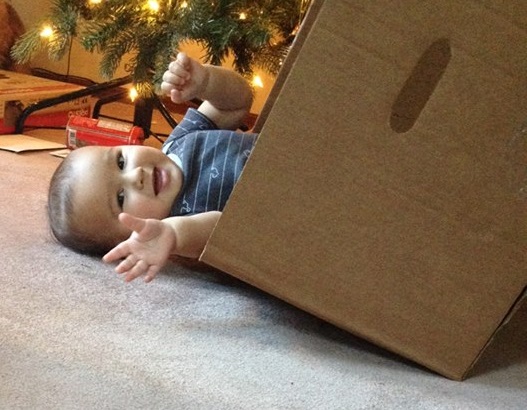
While I ponder about perfection frequently, the most recent inspiration was looking at my son.  He seems perfect.  He has no mistakes or IMG_7532flaws.  He will make mistakes and he will have flaws however.  Thus I began to wonder if maybe, even as a concept, perfection doesn’t exist.  It’s just something we believe in but have no evidence of.  Because he is who he is, and while we will try to nurture him positively into the world, everything about his life will be different than mine and who he ends up as will be who he is supposed to be.  He is supposed to make mistakes and have flaws.  Thus he is in accordance with his nature.  As we all are.  Our nature is to change, to grow, and be imperfect.  In the end perhaps we are all according to our nature, and maybe that is what perfection really is.  The good news is, nobody is saying you have to like it.

I think it is very important, however, that we have these lofty concepts, and that we continue to dream of better ways to live life, because it could be that in our imaginings we do end up moving towards some better future.  I think as long as we remain humble about our dreams of perfection and be willing to modify and change our ideals when life presents us with new information then the concept of perfection can have meaningful purpose.