The Passion of Compassion

So just a little prelude to this post.  This is an attempt at a little short story.  I hesitate to call it that, because in many ways it is a small bit that was inspired by the writing of one of my followers Hariod Brawn who definitely has an amazing skill at writing.  It is a response to his post called the Ambit of Ambition.  I was about to write a comment about it, and then decided maybe I could be a little more creative in my response and write my comment in the form of a similar story.  His excellent piece made me think about how we define ambition and success in our lives.  As a society these words often refer to economic gain or fame based on notoriety.  But by their definition they don’t need to be.  Can we not measure our success differently?  Can we have ambition for compassion or other values that bring goodness to the world?  With those questions I will say no more and allow you to contemplate an alternate universe. 🙂  Thank you for taking the time to read.


Terry was certain he didn’t deserve it, but even as he touched the glossy cover of Fortune 500 magazine he turned his gaze inward and gave a slight smile.  Gratitude washed over him and for a few moments he decided to let the ebbing tide take him away.  Perhaps it’s no crime to be proud of oneself, as long as you remember just how blessed you actually are.  His wife of 20 years now, sat beside him, a beaming smile that darkness could never hold dominion over and nods reassuringly.  With the timidity of child who approaches a horse, sugar cube in hand, he leafs through the pages until he sees his picture and the article written in his honor.  While he had always striven for more, to have made this magazine was more success than one could ask for.  Tears welled up a little as the 5-page article gave homage to a life so full, that accolades never seemed necessary.

He barely got past the first paragraph talking about how he had a food drive for the local food bank while he was in middle school, when he paused and remembered the very first experience that had motivated him to be the man he was today.  He was 6 years old and was walking back with his mother after a trip to the laundromat.  He remembered how it felt like an eternity that day doing laundry, especially since he become very hungry.  Mustering the full crankiness, a 6-year-old can offer when his stomach is growling, he insisted on the way home that she get him a soft pretzel from the stand near the laundromat, even though it was only a 10 minute walk him.  Mom had told him that she would make him a peanut butter and jelly sandwich when she got home, but the smell from the stand had been wafting in to the laundromat for some time.  While he generally loved the smell of clothes coming out the drier, his hunger mixed with the fact that somebody had spilled a whole lot of laundry detergent near them made him eager to follow that scent coming from the outdoors.  He remembered how palpable the smell was as if he was being led by the nose.  He knew his parents couldn’t treat him often, but he really wanted that pretzel.
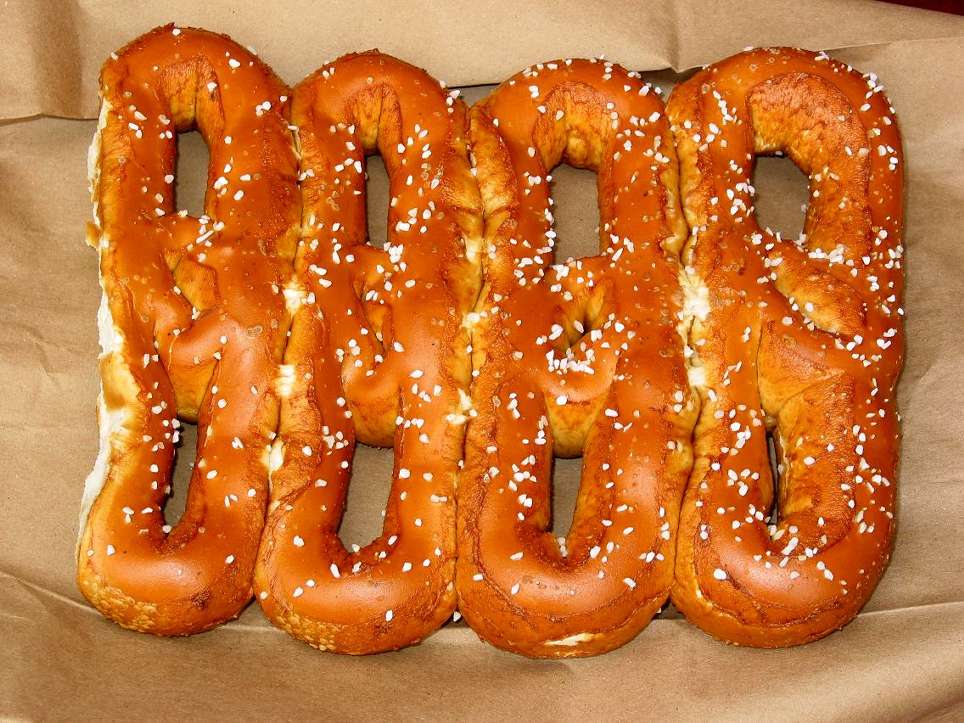
He had easily defeated his mother with a series of quality pouts and big hugs and a look upwards at mommy with eyes that would make a puppy knew it had been out-cuted.  Then as he walked away and held the warm chewy pretzel in his hands he heard the shaking of a paper cup and the clinking of change. He looked up and saw a face that just caught him.  To this day he could bring to mind details about that face that he could not, on a whim, recall about others he had known better and for longer.  There was the bushy beard.  Grey had taken over the area of the chin and seemed to extend outwards in ripples of diminishing intensity to the rest of the hairy fac.  His skin was the color of milk chocolate, but had the tough but yielding look of old leather that made him think of his mother’s handbag.  He looked at other people with a smile and wishing people a pleasant day.  There was a sincerity that he had not seen in many others save for his own parents.  Terry stopped in his tracks and watched the man.  Forced to stop too, his mother, after already losing one battle, asked him what was wrong.  Her voice had the impatience that only a mother, carrying a full laundry bag and still many chores left in the day, deserves.  He had wanted to know what that man was doing and why was he standing there.  His mother explained that he was homeless and was asking for money from other people so he could buy food and beverage as he was likely thirsty and hungry.  It was spring, but the day was dreary and cool, and the man was wearing a lot of clothes, but most of them fraying and with holes or rips here or there.  Even on his parents satisfactory but tight budget he knew clothes would normally be replaced before such a state of disrepair.  He remembered the man suddenly looked at him with a wide smile and he looked back into those eyes.  There was a brightness to them that just made your day better to have them look at you, and all around his eyes were countless lines from years of hard living.  He looked older than any man he had ever seen at the time, even though he suspected that this man wasn’t as old as his Grandpa Greg or Grandpa Paul.  And in some ways those lines framing the eyes, made those bright eyes all the sadder, because Terry couldn’t understand how the world could be so cruel in the face of kindness.  As the warmth of the pretzel radiated outward from his hand, he could suddenly feel his hunger fade.

He held out his hand and said “Hi, my name is Terry, would you like this pretzel?”

His mom stood with jaw slowly giving way to gravity.

The man introduced himself, and told Terry his name was Jim and thanked him heartily for his gift as he was quite hungry.  Terry gave him a solid 6-year-old handshake, Jim’s fingertips cold as ice, while the other hands exchanged the pretzel.  Jim had turned to his mother and said “You have a fine boy there.”

His mom simply said “Thank you.  Yes I do.”  A confirmation of something she needed no other person to tell her was true, though you could still tell she was glad to hear it. Terry felt much more warmth now than the hot pretzel in his hand provided, and the joy at making that man happy was a feeling he never felt before.  It’s like he realized that not all joy was the same, and that there is a joy out there that is more fulfilling than unwrapping presents on Christmas morning.  When he got home he had a wonderful peanut butter and jelly sandwich, and the biggest glass of chocolate milk his mother had ever given him.

As Terry continued to read the article about him, it recounted many of the sources for his nomination.  It was hard to believe that 500 people had written personal testimonies to his kindness, his generosity, his friendship, and his compassion.  He joked to himself that he had it is easy.  When you are good with your hands, it’s much easier to lend one.  It was his best friends and business partners who had done the legwork to find all these people to write letters.  He felt an extreme sense of gratitude for having such friends.  It was around games of Dungeons & Dragons that they came up with the idea to start a carpentry business.  Which then grew into a business that flipped houses.  After the first year they had enough money to hire a few employees, and this allowed his friend Jonathan to do less carpentry and work more on the business end of things.  According to the article his employees had put together a letter of testimony as well.  As the company took a little less time, he started to do pro bono work with Habitat for Humanity, and for people in his neighborhood.  When he met his wife at age 32, his company had grown to where he had 10 full time workers and this allowed Terry to pull back a little so he could start a family.  He wished his daughter could have been here right now to share this moment with him, but she was away at college for architecture.  She shared his passion for building and had even a keener eye for design and making things look beautiful. Apparently she had also written a letter talking about what an attentive and hardworking father he was.

The article couldn’t name everybody, but there was a letter from a former science teacher who was nearly fired for being a gay.  A plea perhaps he was only able to win at a schoolboard meeting because of the goodwill his company had in this small and fairly conservative town.   There was testimony from the director of the local Vo-Tech where he taught classes, and took many of the students on to gain experience helping him with projects.  Some of those students also wrote letters of support.

After a while it had become too much for him to read anymore, and too indulgent to wonder who all might have taken the time and effort to support him.  Maybe he was too humble, but he also knew that none of his success was his alone.  Where would he be without the support and love of his parents?  It was their kind and generous nature that drove his own ambitions.  How could he have had the successful business he had without the loyalty and trustworthiness of his friends?  Ones that shared a similar vision for life, and whose enthusiasm and work ethic were matched by extreme talent for business and carpentry.  And all these people he had helped to over the year had come at the expense of time he couldn’t spend with others.  His wife and daughter had been so patient and understanding to know what drove him, and while they had never once expressed any wish to have him around more, he knew that at times they must have missed him.  Any one of the 500 people, he was sure, gave as much to him as he did to them. He turned to his wife and said “I must get a list of the people who wrote in, so I can write them back and thank them.”

She looked at him with eyes that knew him so well and just laughed.  “All in good time my darling.  Tonight you are resting on your laurels and I have made reservations.  Now good put on something nice.  You get an evening that’s just about you.”

Resigned, he got up and walked towards his room and tried to push his uneasiness to the back of his mind.  He stopped and started to turn sure he would have a good argument in all this, but his wife had followed him, expecting such ridiculous tactics and said “Go on!” and gave him a playful push on the back into their room.

He was resolute that he’d pay for dinner.

It All Hangs in the Balance

One of the problems I revisit regularly in my mind is the one of individualism versus collectivism.  It has been brought back to my mind as I finally concluded reading Isaac Asimov’s Foundation series. His final two books in the series look at the idea of having individual consciousness or a more global consciousness which is inspired by the Gaia hypothesis, in which humans participate in self-regulating consciousness cooperatively with each other and all other life to create a state of perfect balance.  Asimov too struggles with the loss of individuality in favor of the common good.  Asimov seemed to be in favor of the latter, although I believe he tried to argue that a global consciousness doesn’t mean there is no individuality only that at times we must put that aside for the greater good.

The United States is a highly individualistic nation and it’s no surprise why so many nations with throngs of people forced to conform into a faceless, impoverished mass would envy the American way of life and freedom.  It occurred to me that many of the debates I seem to have about politics and ways of life are often have, at the heart, the issue of the greater good (collectivism) vs. individual freedom.  I guess it seems that I also side with the collectivist philosophy, but I also recognize the value of individuality to make that collective dynamic and adaptive to a changing understanding of our universe.  Whether it’s capitalism versus socialism, gun rights, globalism vs nationalism, justice and law, these debates often rest on arguments on what benefits the greater good and how much freedom we should have as individuals.  There is a balance to be had, and most critically thinking people I know agree on this, even if we disagree where that balance should be.

Freedom in itself is a strange concept because it doesn’t seem possible in the absolute as a social species.  How free am I to make any of my decisions? I should be free to buy my own clothes, but what if those clothes are made in a sweatshop?  But what if, even that meager wage allows people to live instead of starve, or at least a few more are able to break from that impoverished life.  When I simply provide for my family I make a thousand decisions that can impact positively and negatively others in the world, and though it may seem like I am living a quiet life causing no harm this may not be necessarily true, even if that harm is indirect.  How much does my lack of struggle in life come at the expense of someone who must struggle more?  It’s easy to ignore that which is not in front of your face and that which does not feel like part of your community.

Our species is a social one, and there is no getting around it.  Regardless of whether we are shaped as a hunter-gatherer society or “civilization” everybody has a role and can play a part.  And even if age or some accident in life, or a random birth defect we even have the ability to carry that small fragment of population along with us, and even find a way to find a use for them, even if that use is only to increase our capacity to have compassion.  As a result whatever values we hold will shape who we are as a species.  Too strong of a value on individualism over the greater good could leave us with vast degrees of inequality, decreased value on cooperation, and dysfunction in the ecosystem.  Too much emphasis on the collective can lead to greater conformity, loss of diversity of thought and ideas, and thus stagnation from individual growth and growth as a society.  The question becomes how can we promote individuality while at the same time convince people to work together and be in harmony with their environment?

If we remove humans from the Earth we would find a very self-sustaining organism.  Barring some large collision with an asteroid, life would persist until the sun went nova.  However it would be a mistake to think that there was a global consciousness such as described by the Gaia hypothesis.  I think it’s always a bit of a myth that other organisms live in balance with nature, whereas humans do not.  If you studied population dynamics in school you perhaps learned about cycles of rabbit and wolf populations.  The wolf is not conscious of the fact that it must conserve how many rabbits it eats or that it should hold off on having babies this year because if all the wolves in an area increase in population there will suddenly be a rabbit population in starve.  It thrives according to the food it can gets, and if can no longer get food, it starves, and there are less wolves, allowing the rabbit population to rebound.  Rabbits that evolve better evasion skills pass on their genes, and wolves with better hunting skills pass on theirs. And the population of both rabbits and wolves oscillates about an equilibrium, an average value that both populations of rabbits and wolves do not know they are maintaining.  One of the values of our intelligence should be that we can discover these equilibriums and we are best adapted at maintaining it.  We always haven’t been conscious of our place in the ecosystem, but we are now, and understanding more all the time.  It’s not surprising we could be so destructive, but as we learn more we also have the ability to extremely great stewards.

Annotation of the PREDATORS-PREY Relationship

Of course Asimov’s Gaia world, just as proposed by Lovelock, is likely a pipe dream in reality, because in his idea there was a collective consciousness that made decisions only in proportion to maintaining balance.  Such a reality for humans would mean that we would have all make sensible decisions about how many children to have, what to eat, and how to live peaceably in our environment.  But what’s interesting to me is that we also see examples of this in our human histories.  Many groups that ended up on islands learned how to conserve rather well.  Spacing out how often and how many children we had, techniques at preserving and storing food, techniques for domesticating plants and animals were all attempts to have ample food supplies for harsh seasons and changes in the environment.  But like any form of life, when abundance is presence, there is no thought to be conservative in terms of population.  We became masters of farming and population exploded as we began to be able to seemingly provide ourselves with food at will.  As it turns out we were only fooling ourselves, because our powers were still not limitless, although it made sense how it might seem so in the short term.

What I do see when I look at humanity is a potential for a march towards that ideal of global consciousness.  We may never truly have a global consciousness with each other and all life on the planet, but what we do have is empathy.  We have the ability to be conscious of the damage we do to our environment and other life, and what the long term impacts of that damage will be.   We have the ability to recognize that we might all be different pieces in a puzzle, but that we have equal value to the whole.  Just like each piece has uniqueness and is still integral to the puzzle, we can maintain our individuality while also recognizing what we are all a part of.  In this sense there would be no difference to an actual global consciousness and all acting in a way as if there was one.  We have a long way to go, but I believe it all begins with humility and compassion, and acceptance of the idea that all humans are part of the same tribe, the same community, the same species, and that we all have value.

The Shame Spiral

Shame is the topic today.  I’ve decided though that I want practice being more creative with my writing.  While I enjoy writing out my thoughts in essay form, and many of you have been kind of enough to appreciate it as well, variety is the spice of life, and I need to practice more variety of expression.  Especially I still have this dream of one day writing some sort of work of fiction, and so I need to practice wordcraft and storytelling more.  And I venture it to such an area, I risk making myself more vulnerable as I express a part of myself I am less confidence in my ability to express.  The connection between vulnerability and shame was brought to my attention this week through a wonderful TED talk. This culture of shaming,

especially through social media has been on my mind a lot over the past year or so, since I saw an excellent interview on the Daily Show with Jon Ronson.  An article on the book he has published is here.  So I shall let the talk and the article do the intellectual speaking for me, and I will instead put forth this poem on the subject.  In my head this poetry would be expressed as a rap, or rather a dialogue between two rappers.  In my head are a lot of the songs from the musical Hamilton which I am sure had somewhat of influence on my mode of expression. lol  Also, fear not, in my head I also know I have the least amount of street cred to be rapping.  🙂

I’m not a lynch mob, I’m just here all alone,
Reading about things that I don’t condone,
Concerning people I’ve never really known,
And shaming them from behind my telephone

You’re fat, you’re ugly, and you’re a fool,
You’re so fucking dumb, didn’t you go to school?
Are you even dimly aware of the newest rule?
Exposing what you are, makes me look cool.

You see, I’ve made the world a better place,
By showing you don’t belong in the human race
I got no time to check the facts of your case,
You can try to efface, but mistakes won’t erase

Each like I get invigorates me,
And helps me hide my vulnerability,
I don’t make mistakes, you want civility?
It’s curt, but your hurt’s not my responsibility.

A million views, the shares have swirled,
Filled with mocking laughter, insults hurled,
I’m a link in this chain of shame that’s unfurled,
A virtual crowd that’s crushing your world

Do you like what I said, do you feel remorse,
Do you feel bad enough to correct your course?
I scream and scream until my voice is hoarse,
Shame is my game, I’m a dangerous force.

But what if you’ve not made anything better?
Addicted to shaming, bound by a fetter,
You’re just another follower, not a jet-setter,
Passing judgment on others letter by letter

Shame never informs, has little to tell,
Gives you nothing to build, and nothing to sell,
There’s no way it will ever serve you well,
Don’t be a part of that shaming carousel.

Was that 8 second verdict more than it seemed?
Shame them to goodness, is that what you schemed?
They’d learn their lesson, is this what you dreamed?
Do you think that’s how souls are really redeemed?

Instead you put a hole in the soul of those that you shame,
Anger, isolation, depression just fan the flame,
Of violence and hurt, now you’re partly to blame,
Should you make a mistake, do you deserve the same?

We need to focus on things that make us whole,
Don’t stride to divide, and stop being a troll,
Kindness and charity, let that be your goal,
Be a model of compassion, let that be your role

So you see with such ease we’re blind to the pain,
That we cause for momentary emotional gain,
In a world filled with hurt it’s so hard to stay sane,
Shaming doesn’t help, we’ve got to refrain

I speak from experience, I know how you feel,
To stare at the screen and think it’s all real,
But what part of the heart do your actions reveal?
Forsaking personal growth for mass appeal.

Oppose what is wrong, but don’t dehumanize,
Know your own imperfections, try to empathize,
Keep on yearning for learning and you’ll grow to be wise,
Add joy to the world and watch your spirit rise

You Know It Just Ain’t Easy

There are a lot of things in this world…perhaps brought about by humans, but nevertheless exist at least as part of our lives.  They are important things, things we fight for, things we live for.  I’m speaking of things like freedom, justice, love, spirituality, loyalty, equality, truth, and there are probably others that I’m not thinking of right now.  These things often give rise to a lot of disagreements in terms of what they mean, they often lack a specific definition, and very much depends on one’s perspective based on the family, culture, society in which we were raised.

But they do. And maybe sometimes they should.

All of these things are core to who we are as a species and have the ability to impact our own personal happiness and sense of well-being, as well as how we treat each other and all life in general.  All of these things can also be extremely frustrating because of how different we view them.  Ever tried to love someone who wasn’t all that impressed with the way you did it? Ever had someone question your loyalty even when you thought your behavior expressed loyalty?  Ever fought for some group’s freedom, but have the very same group question the way in which you fight for that freedom or even claim that you weren’t helping but making things worse?  Ever believe something was very important to spiritual health only to be told by someone else that it was irrelevant?  The truth is that that all of these things are really really complex, regardless of how simple and natural it might feel to you.  These things are often very dynamic, leaving us with moral and ethical conflicts over time, sometimes changing our views slowly or rapidly as we experience new things.  They are often tied strongly to our emotions and sometimes seem beyond reason, they are just how we feel.  It also tends to be not very satisfying to be alone with our perspectives.  We seek connection to those who share similar perspectives and points of view.  I would say all this is good, and that our perspective should change over time.  We should be seriously considering other points of view and striving towards some sort of universal truth about these things even if we never actually reach it in our lifetime.  Because if we can nail down these things it is the benefit of all.

However there is another core part of who we are as a species.  We don’t like things that are hard to define.  We like to organize, we would prefer things to be simple.  Simple is less costly, it gives us more time for other things.  We spend less time sitting their thinking when we need to make sure we’re safe, getting resources to survive.  It’s very evolutionary. When things are actually hard, when they are not quite within our grasp, that’s when the real trap springs.  Our need for organization, categorization, and simplicity begins to create rules.  It begins to create rituals.  Rules and rituals are easy.  I’m not saying that we haven’t created some convoluted rules and rituals, but they are easy because we know that when we follow them the conclusion is guaranteed.  At least that’s the way we tend to think.  They give us the intangible in tangible form.  They turn things that are dynamic into the static.  It takes things that might take a lifetime to learn into an instant discovery.  For those with a penchant for defaulting to authority, it is a Godsend. Literally.  And while it might be natural for us to do these things, it is a complete disservice to these lofty ideals and values we live and die for.  And maybe it’s not even a bad thing that we try to create a system that fits these things, but when we reduce it to the system alone things usually turn out badly.  Love has to be more than just placing a ring on someone’s finger.  Justice has to be more than just an immutable punishment for an immutable law.  Whenever we think we’ve reached a state of equality or discovered a truth, we must still question and test instead of resting on our laurels.

The Geocentric Theory. One of the best examples of human fallibility and seeing connections in nature.

I think that we have developed a very good “way of knowing” with the scientific method. It is demonstrably the best way of knowing we have so far.  It takes very little effort to look around the world and see that the best way is not only not the only way in which people come to know things, and it is often by no means obvious.  I mean it’s not to say we don’t start off life as little infants constantly testing and trying to understand our world through observations, but we do often make mistakes in trying to understand the world around us.  Mostly related to our tendency to find patterns that done’t exist.  Our senses often deceive us because we evolved for life in a small geographic environment, with a small group of people, and that is often what matters the most.  As “ways of knowing” get better and more effective, it reveals our fallibility.  It tells us we aren’t as smart as we think we are, and that we might not be doing things as well as we could.  Even as a scientist, who feels like I know my way of thinking is a more reliable one, it can often not feel like enough in a world with so much suffering and when so many need help quickly.  It is not realistic to simply wait for people to come around to a better way of looking at things.  As much as I like to philosophize “ways of knowing” we must also remember that such things are not so easily divorced from “ways of feeling”.

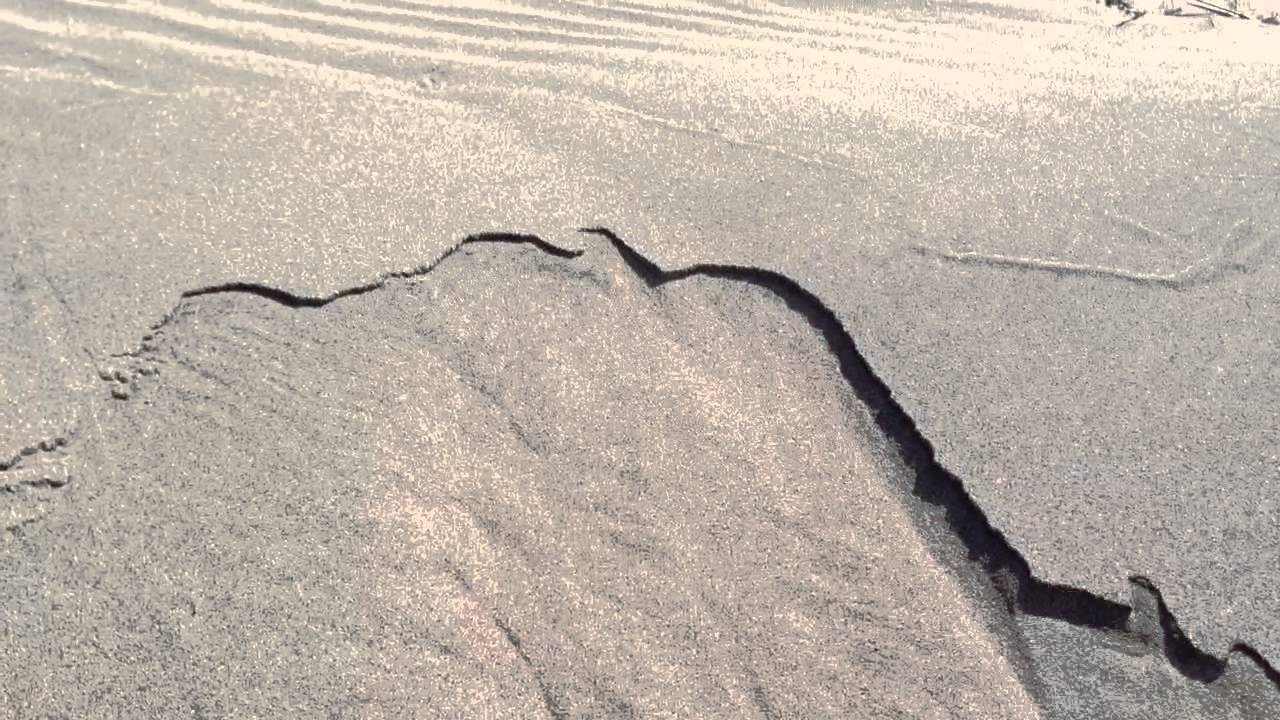
Collapse after angle of repose is exceeded

History tells us that change comes through slow increments like weathering and erosion and also through suddenness of revolution, yet in both cases forcing it doesn’t necessarily help matters.  It’s like life is like a slope of sand which slowly over time, grain by grain is deposited on a slope until we reach some critical mass beyond the angle of repose and the weight of the sand causes a sudden change in the landscape.  With no real way to predict which grain of sand will cause it all to shift and give way.  It’s like we all have to really try to do better, while at the same time just watch it all happen as if we aren’t even a part of the story.

So what is the answer to seeing eye to eye on these very important values?  I don’t know.  I think the best we can do is accept that things change, and that nothing is settled.  We can still try to create rules, as long as we are not a slave to them.  We can try to make things tangible, as long we accept that those rituals are empty without a lifetime of effort.  One thing we can say for certain is that life would lose far too much flavor if it all could be settled so easily.  We must accept that life is hard in large part because it simply can’t be done alone. And while I might be an idealist thinking that we might someday reach at least some level of harmony among all humanity, I see no harm in striving towards that.  What we have to gain, I think, is too great to just give up and say “It can never happen”.  As I always say, there is much more in this world that we all have in common than what drives us apart.

What Makes A Good Human?: Curiosity

If you’ve been reading so far, you might not be convinced with vigilance or play as being important and that love does not conquer all.  As I said, my goal here is not to make any one quality more important than the other, and I hope with this topic I will convince you that life isn’t all about love.

As natural as our capacity to love, is our inherent curiosity about the world.  If you’ve had children, and hopefully paid attention to them, one of the first things you will notice about them is how curious they are.  From simply being curious about who you are when they start seeing 6 inches beyond their face, to be curious about what this thing called a hand is, to starting to interact and test objects out as they begin to grasp them.  They want to explore, they experiment with sounds, they like to watch things fall, taste different things, and they learn by watching you and then imitating.  Curiosity is learning.  The reason why I call this curiosity over learning is that when you say learning people tend to think of book learning or school learning, but learning is far more than that.  And sadly in my experience our education system today tends to squash a child’s natural curiosity in favor of more directed learning for the purposes of getting funding for the school and for you to supposedly get a good paying job.  I remember one time I gave a talk on tornado safety to a group of 2nd graders, I did not even get to start my presentation before a bunch of little hands went up to ask questions.  A lot of them were nonsensical but I loved it all, because it was clear that they were curious and questions seemed to just burst out of them.  In retrospect I was simply not prepared for that level of curiosity.  At the university level I can go through an entire lecture without 1 in a 100 students raising their hand to ask a question about how things work.  Curiosity is an important natural trait that  forces us to ask questions to ourselves and others.  As a society we need to make sure we foster this trait and not suppress it.

As a professor I have been in school for almost my entire life either as a student or a teacher; 37/41 years to be exact.  Obviously I love it, because I love to learn, but I’m not so institutionalized to believe that this is where I’ve done the entirety of my learning.  Now I know there are all sorts of great texts and books written about learning and how we learn, but I don’t want to expound too much on things you can read elsewhere, but I’d rather focus on why learning is important and the different ways we can feed our curiosity.

One important type of learning is purely experiential.  This is the type of learning that leads to wisdom.  Regardless of how much knowledge you accumulate in your head until you actually apply it, you can only understand it really in a theoretical way.  By actively experiencing something through our senses  And of course we can continue this sort of learning throughout our lives through doing.  Whether through learning different hands on skills, trying new foods and cooking new recipes, learning to play an instrument and listening to new music, and traveling.

Now I’d like to spend a little bit more time on traveling.  Certainly traveling to things like museums or traveling to any sort of wonder of nature can be a learning experience.  It can be very fulfilling in the additional for the additional sensory input you gain,  but in some ways is very similar to book learning.  I speak very personally here, but I believe traveling to places different from your everyday world is a very important learning experience. Traveling to a different country is the best way to understand what different societies, cultures and people are like.  There is learning about people of different faiths, different values, and different perspectives.  Curiosity drives us to explore the world, and the world has more to teach you than you think.

In my blog post about love in this series, I talked about how empathy needs to be fed.  Empathy can be broken up into two categories (as illustrated by this great video) into affective empathy and cognitive empathy.  Affective empathy is the compassion we feel when we observe the suffering from another.  Cognitive empathy however is the empathy we gain through learning about others, putting ourselves in their situation, and trying to see something from their perspective.  Something the world could surely use more of.  It is this type of empathy that we can develop through being curious about others regardless of whether they are close to home or far away.  The important thing is to try and know a diverse group of people.   If we can understand someone else’s troubles, pains, and/or suffering, even without going through it ourselves, we are more likely to want to help raise those people up than to allow a situation to continue that harms them.  Many times we are responsible for that harm without even realizing it.  I find it interesting how many politicians change their stance on homosexuality upon finding out that their son or daughter has come out as gay.  The more we intimately know someone the less likely we are to do any action that causes them harm.  How our actions cause harm is the basis of morality.  Thus, actively learning about others makes for a more moral society.

Curiosity also allows us to build our intellect.  For most of us we have done this formally for many years.  Intellectual pursuits, with the exception of those with a clear goal of what they want to achieve in life, often don’t seem to have much value in our day to day lives.  The oft heard complaint, “when am I ever going to use this” speaks to this disconnect between what we learn and what use every day.  Given the wide variety of interests amongst individuals it is unlikely that any one person will feel that everything they are learning has value.  The learning of knowledge, however, is always teaching you one important lesson.  And that’s how to learn.  The more you learn, the more easily you will be able to learn new things.  Humanity has been around for a long time.  It would be nearly impossible to determine a set of knowledge that was important for everybody.  It may also be true that the purpose of school is also to introduce you to things that you don’t know anything about, but might be important to you, that might inspire you and turn into a passion.  The large accumulation of knowledge through human history also means that most of the first things you will learn our foundational and must be built upon to realize their application and use.  Thus diligence plays an important role in learning.

In terms of what knowledge you should learn, in general a breadth of knowledge is best.  Regardless of what your passion might be, it is clear for a democracy to truly be successful it requires people to be knowledgeable about a wide range of issues. But even beyond its value in politics, life is never really about one thing.  One of the ways that you connect with people you meet is by having the knowledge to understand the basics of their interests which would allow you to ask better questions.  When we let our curious nature, then people notice the genuine interest you have for the knowledge base that they have which makes people feel closer and may cause them to become curious about you.  Many academic fields are focusing on interdisciplinary research, because as knowledge has advanced we see how many other areas of study the problems we face include.  For instance take a look at something like climate change.  The scientific basis itself requires knowledge of physics, meteorology, geology, oceanography, geography, biology, and statistics.  Then if we want to act on the issue of climate change we need to understand things like economics, communications, commerce, law, education, emergency management, etc.  Of course one can’t know everything about everything, but that doesn’t mean you can’t try. 🙂

Is there a dark side to curiosity? I honestly don’t see much of a downside to always being curious.  The only thing that comes to mind is the expanded ego that might come from knowing a lot of things in comparison with others.  The battle against such conceit is dealt with in the next post in this series.

The most important thing to remember is that time spent learning is never wasted and you should never stop.  There are a variety ways we can learn, there is a multitude of people and knowledge to learn from, and it is the best way to continue to grow in an ever changing world.  Being curious is a perfectly natural drive from the day we are born and it requires only an effort of maintenance than an effort in development.  Adults I meet who have that same thirst for knowledge as those 7 year olds in the 2nd grade are always some of the most thoughtful, and enjoyable people to be around.  The best part of traveling on that road of knowledge is that single roads branch in many directions and you never know where you might end up.

What Makes A Good Human?: Love

My second quality for what makes a good human comes as no surprise to anyone.  Who doesn’t like love?  Who doesn’t want love?  Is this a quality I really have to try at? Is this something that I have to be vigilant about?  The word love tends to conjure up images romance and being in love.  But anybody who has thought about love for any length of time knows that romantic love is really just one aspect of love.  In fact I would argue that your ability to romantically love someone has little to do (at least in a direct sense) with your ability to be a good human.  We all have the capacity for love and this wonderful human trait gives rise to many of other ideals and qualities that make the world a better place.

If you’ve tried to define love before, most likely you’ve had difficulty.  Music, poetry, art have all had their attempts, and one could argue that through the medium of the arts one might be more successful. Love, like art, is often open to some degree of interpretation and means different things to different people.  While neuroscience has made a lot of headway in look at love and attachment as a biological drive, I want to go back to older Socratic definition of love that separates love into four categories.

  1. Eros – Romantic love
  2. Storge – Familial love
  3. Philia – “Brotherly love”, or the love between friends
  4. Agape – Love of humanity

So in terms of having the quality of love, I assert that every one of these is important to both ourselves and others on a variety of scales.  Think how much happiness all these types of love can bring, both in loving others and feeling that love towards you.  Now from a biological level storge, and philia are shown to both to be important drives in our brain, with eros still up for debate, but at the very least eros is a secondary drive that helps give us the attachment and friendship to a possible mate.  And it is our capacity to love that I believe gives us agape as an emergent property that can extend to all humanity.  It should also be noted that most of us learn first about love from the familial love.  How our parents love each other and love us.  This, perhaps, makes storge the most important in giving us a healthy sense of what loving each other is really about.  And since loving is learned, it should also be noted that there are those who adopt and raise children that are not their own that do wonderful jobs, so the biological connection of family need not be there for familial love to be shown to children.  In fact one of the strongest cross-cultural morals we have is protecting children from harm, so it’s not surprising that love and bonding can occur between adults and children who are not their own.

Love, at least to me, is the best cure we have for suffering, whether it is suffering from sickness, poverty, fear, depression or any other situation that causes harm and pain.  When you love you have a desire to stop another’s suffering.  Thus love leads us to both compassion and empathy.  Ultimately I find that our capacity to love motivates us to do so in the best way we know how.  I would also argue that love without feelings of compassion and empathy is pointless.  It’s insincere and unhealthy and can sometimes be destructive, because then you are just loving for your own sake and not because you truly care about the other person.  Perhaps that really isn’t love at all.

Now love as a verb can be tricky.  Above I said “the best way we know how” and this can often lead to honest attempts at love that are ineffective.  Sometimes loving someone is staying close, sometimes loving someone means to let them go, sometimes loving someone is being tough and unyielding.  At this point I’d rather not get into a discussion about how best to love, because when we talk about all the other qualities that will be discussed in this series, I believe the answers about how best to love someone reveal themselves. So knowing how best to love someone is another part of what makes love so difficult to define. However, I believe that love is love, it’s just that the ways in which we can experience love, show love and give love are far too numerous to list.

Biologically we are a social species that operates on reciprocal altruism.  Love is therefore the primary way in which we build attachments to each other for our long term survival, both for reproduction and bonding.  Thus the idea that there is no unselfish act is somewhat true as a whole.  However, we are not always so shallow that we expect kindness to be repaid right away, In general if we love, and show kindness and caring to others they will hopefully love us and thus want to do the same for us when we are in need.  In a broader sense, our ability to love tells us that we survive better when we cooperate, and your motivation for cooperation is increased by the love you feel for those in your group.

The downside of reciprocal altruism is that it makes love mostly beneficial for those in your immediate circle.  Loving humanity as a whole becomes a somewhat abstract extension of our ability to love those closest to us.  Showing love to humanity may involve acts of charity, but how do we know that we are helping?  We are used to having love returned when we show it, so how does humanity give back to us?  Trying to better humanity as a whole is also an extremely slow process. The impact you may have may not be felt until beyond your lifetime. The problems of humanity are large and it takes great momentum to affect change that no individual person can do on their own.  Even great people like Gandhi And Martin Luther King, Jr. needed the support of the people.  In this way acts of kindness and charity for the greater good may be the most unselfish acts other than it give you a sense of well-being and happiness.  But just because loving humanity as a whole is more abstract, and can feel like we are just adding a drop to the ocean, it does not excuse us from the fact that it is more moral for us to love humanity.  To move from the abstract to the tangible one has to remember that empathy and compassion also have an intellectual side that must be fed.  I will address this more in another part of the series, but for now remember the following:

  • All humans are of the same species.
  • The biggest factor in why you are what you are has much more to do with where you were born and the circumstances you were born in than any inherent ability you have (or think you have).
  • Any race or gender put into the same set of circumstances will produce similar outcomes.

Therefore when we feel empathy for those suffering that we can see, feel, hear, etc it takes little imagination to determine that even those beyond our senses suffer in the same way and that doing something to alleviate the suffering of others is the moral thing to do.  One of the chief ways to morally justify inflicting pain and suffering on others is to dehumanize them.  Getting people to believe that another group of people are not of the same species lessens our empathy, therefore, logically, dehumanizing is immoral.

If love has a darker side it is only perhaps to let it envelop you to the point of not paying attention to anything else.  The oft portrayed young couple in TV shows or movies who give no thought to other things claiming they can “live off love” are ridiculed for a reason.  We’d like to believe that John Lennon was right and that “love is all you need”, but anybody past about 30 years of age knows that’s a crock.  The world can be a shitty place, and love can be hard to muster at times, and so life has to be full of other things as well that are fulfilling and happy.  Love can also be unhealthy when we direct it towards inanimate objects.  We’ve all met people who love money too much, their car, sports teams, drugs, other material goods, etc.  While love shouldn’t be predicated on whether it can be returned, it should at least have the potential to be returned.  Pouring love into things that cannot feel your love, or return your love might be okay for a light hobby, but should never take a backseat to the suffering of the living. Perhaps the common theme to the darker side of love is obsession.  Obsessions usually don’t serve one well in the long run.

It could easily be argued that love is the most important of any virtue, and given how much of our lives are spent looking for it, maintaining it, and grieving over it, it’s probably true.  Nevertheless I hope to convince you with this series that there is more to life than love and there are many things we can do to be better at love.  I encourage you all to celebrate love and show love as often as you can, and keep striving to diversify the ways in which you add love to the world.

Isolation in a crowded world

I have been reading a lot of Isaac Asimov lately.  I am not sure if all lovers of science fiction would love Isaac Asimov, but if you are interested in the human condition I think Asimov would be your thing.  His understanding of human nature is phenomenal and his writing of the future seems to me more of a commentary on who we are as a people and what we are capable of then attempt to be some sort of prognosticator of the future.  To me that

From http://www.media.tumblr.com

is the best part of good science fiction and I am sure it is to many as well.

One of his books that really got me thinking was The Naked Sun which is part of his Robot Series.  In it he paints a picture of a planet called Solaria that has been colonized by Earth and is similar in size to Earth but has only 20,000 people.  The people are very spread out having vast estates that are similar in size to something like Delaware.  In this future people have robots and especially on Solaria where the ratio is around 10,000 to 1 for every human.  Robots do everything.  Build all the houses, maintain the grounds, cook the food, and basically tend to every human need.  It is a world without human contact, where even sex becomes mechanical and only for the purposes of breeding.  And that breeding is only selective because they always maintain the population at exactly 20,000.

Earth on the other hand is crowded with everybody living in cities and all cities at populations of 10 million or more.  While human touch is still a part of everyday life, there are many social conventions that act to keep people’s privacy intact.  Not overly different from today’s city life really.

Both societies seemed very plausible in the way they developed and I started to think of how we might be trending in a direction of isolation whether it is an isolation in which we are surrounded by others or a physical isolation in which human contact in unnecessary or unwanted.  We know from studies of anthropology that we started off in hunter-gatherer groups; a society in which we were dependent on each other for survival.  Survival was a result of the coordination of each member’s skill set applied with extreme vigilance.   As we have developed civilization, larger populations, and new technologies, life has essentially become easier for some of us, and quite a bit harder for a lot of other people.  The disparity in standard of living makes the culture of the “haves” admirable to the “have nots”. It seems, at least in this country, that many spend a lot of time reducing the value of the poor, on whose backs our comfort is maintained.  It seems to me though that the culture of the “haves” is not necessarily one to admire, and is perhaps not beneficial for our health.

In the house I grew up in, my parents knew most of the people on our street.  Perhaps not well, but knew their names, and a few of our neighbors they did know well.  I know there are some neighborhoods where people remain very close, but think there is a lot more distrust towards neighbors today than there was in the past.  I know the names of two people on my block and that’s it.  As I write this article to post it on my blog I am reminded that while it may touch the lives of others, perhaps many of them I will not meet.  I will not shake their hands, not see their smile, not hear their laughter, not embrace in warmth and friendship.  Like the people of Solaria a large percentage of my interactions are not face to face.  Is it simply because these types of interactions are not part of the mental grammar in which I was raised or are we moving towards a world in which physical interaction is less and less necessary?

And the truth is that if I wanted I really don’t need to rely on anyone if I so chose to except for in very impersonal and indirect ways.  I can still conduct

my business, get groceries, get a car fixed etc, but don’t really need to get to “know” any of them and certainly no need to touch them or for them to touch me.  You can do most of your shopping on-line and have things brought to your door.  Banking and paying bills can be done on-line.  As a professor I could even be a solely on-line teacher.  And while I would still be reliant on society, my need to actively engage in it is not necessary.  Of course, that is not to say I couldn’t be a good person and give money to charities, I’d still be paying taxes, I may even be a fantastic teacher who can write well enough and give interesting exercises that will expand the minds of others.  The question is, is that the kind of future we want to be.  Clearly what I’ve outlined is a lot of personal choice, but it seems that this is a trend amongst those who are as privileged as me and worse yet it seems that this type of lifestyle is almost admired.

For those who do know me, you know I’m not a technophobe and I don’t think technology is evil, but I do think it is worth stopping and thinking about the lives we lead and whether we are going in a direction we want to be going, not only as an individual but as a species.  Is it simply not part of our

From http://www.stupidman.com

mental grammar to be surrounded by millions, making cities a place of almost fighting against the idea of community due to sensory overload in comparison to smaller and more rural communities?  Do we have specific social traits that come from millions of years of evolution such that we do ourselves harm as we become less and less reliant on the close proximity of our fellow man?  Or do we simply adjust easily to the times and simply find happiness where we find it?  What seems clear is that many of our prejudices and distrust comes from a lack of familiarity and empathy with struggles and hardships of others.  In some ways the power of the internet and new technologies bring us so much closer in an informational way, but less so in a physical way.  Does learning about someone’s struggle from a distance build the level of compassion necessary to help them in any meaningful way?  Or is it something that I can just say I care about, disseminate the information to others and then move on to the next interesting tidbit of information.

If I had something important to say, I should be glad that it could so easily reach a million people or even more.  But is it better to reach a million people without my smile, a friendly tone of voice and warm embrace?  Or do I change the world more through the interaction with a few hundred people that I meet while volunteering at a soup kitchen?  I guess Isaac Asimov’s writing made me worry that despite global warming the world might be getting colder.  It made me pause and wonder whether we may be trending towards more separation and isolation and thus towards less empathy and more apathy.

For me I will keep working on it, try to find the right balance.  I have now spent too much time in the digital world and I will now go spend time with the family. 🙂