

When you go over to the “other side”, meaning Trump supporter central it’s eerie. I look at the conversations and it looks like a mirror image of the type of discussions I have. It isn’t full of anger or racist messages, but simply full of the same style of criticism, and sarcasm that one would see on my side. People are civil and casual as they discuss what they consider liberal/democratic points of view. I am not saying that I agree with what they are saying just that it’s like looking in on another world that’s just like ours, but more like the universe in the classic Star Trek episode Mirror, Mirror.
I find this alarming because it means we almost can’t be further apart if you watch the conversation happening on social media. I hope that social media isn’t a good representation, but if it is, I do understand why many worry about the breakdown in conversation in our society. Even more concerning is the fact that it is very much like looking into a world that is built on fictions. Once the fictions are accepted as true, the rest appears rational and logical. In this way it’s very much like religion in which the unknown premise, that there is a God, is accepted as true a priori and the rest follows.
As much as I pride myself on my analytical skills, knowledge of the scientific method, and ability to think logically, when you see millions of people operating on a totally different set of assumptions it does make you question your sanity. Because it is possible that me and my friends are the ones living in the delusion. So, who has the better grip on reality? Are there elements of truth in both worlds and that we really need to look at a composite of those worlds? Who is qualified to be an arbiter of this? Is there anybody we can trust or believe to look at both sides objectively and determine what is real?
I base much of my morality on the simple idea of cooperation. We are a social species; we bond with others through reciprocal altruism (i.e. the golden rule) and we survive better because we work together. Which side violates this more? The problem is a bit of a numbers game. We can easily see how in an 8-person rowing team, one person acting in discord is noticeable. We can that person is certainly not coordinating efforts with others. In a tribe of a few hundred, discord will also stand out likely from a survival standpoint. However, we are millions of people. We are in discord and this impacts how we function as a nation, but not as a species. A million racists can all work together to solve problems, grow food, and propagate the species just as well as a million people who oppose racism. And what about building bridges to the other side of the political aisle? Is there one side of the aisle who is better at doing that? Right now, I would argue that there isn’t. If kindness is what connects us to people, then we need a lot more kindness that what it seems like what is currently out there, from both sides of the political spectrum. Thus, at an evolutionary level we can determine truth, because the truth is both sides can survive. Perhaps one side is happier than the other, but survival doesn’t have to be happy.
In the end I must look at bigger concepts like empathy, compassion, and humility. None of these things necessarily make one universe more real than another, but they matter if we are going to someday be a unified human race working to improve the well-being of all life on this planet. If the other universe is the real one, it is one that separates people into groups, it is based in non-existent fears, categorizing and stereotyping groups, and limiting their rights. It seems to me that they are far too often making the mistake of believing their rights being limited when most of the time it’s just privileges being lost to those people who were previously oppressed and exploited. If I’m wrong and my reality is illusory, I feel like I’ve at least tried to:
- see women as equals
- see race as a social construct
- appreciate science and how the best tool we have for knowing works
- try and be mindful of the words we use and the jokes we make because being considerate of feelings are important
- that learning and growing is important
- to have a society where we take care of each other better
These values seem good to me. I can’t shake it. In my understanding of liberalism, that’s the philosophy I see shaping my political values. Conservatism, at least represented by society today does not demonstrate these values. While I do think it’s important to be cautious and measured in moving forward the very idea that things are great the way they are and never change is ludicrous to me. Change is inevitable. As a species we continue to learn to try to ensure the safety and health of more and more of our people. We’ve fought and died for it. With time I do believe we’ve done a better job of giving more people a chance to flourish and having more people live that would have died a 100 years ago or more. Our story is one of change.
![CONSERVATISM QUOTES [PAGE - 4] | A-Z Quotes](https://www.azquotes.com/picture-quotes/quote-conservatism-is-only-as-good-as-what-it-conserves-friedrich-august-von-hayek-65-6-0647.jpg) Perhaps it is human nature for those who fear change to battle those who welcome it. I like to frame that struggle as the battle between comfort and risk. Both have their merits and perhaps arguing about it is the only way to reach a compromise, to find a way to move us forward where everybody gets to come along. It seems once again a numbers game. If we were our hunter-gatherer selves, we would all know each other and how many shades of difference in worldview could we have from one another. However, when you’re talking about billions of people the perspectives vary greatly. And even if some of those perspectives are based on fundamentally unsound principles, when it’s all you’ve known it’s hard to even know that the boundaries that shaped your life can be broken at all. But there is some element of truth in everybody’s story and we’ve really got to do a better job of preserving the essence of someone’s lived life that can instruct, that can be beautiful, and/or weep at the tragedy that unfolded on them.
Perhaps it is human nature for those who fear change to battle those who welcome it. I like to frame that struggle as the battle between comfort and risk. Both have their merits and perhaps arguing about it is the only way to reach a compromise, to find a way to move us forward where everybody gets to come along. It seems once again a numbers game. If we were our hunter-gatherer selves, we would all know each other and how many shades of difference in worldview could we have from one another. However, when you’re talking about billions of people the perspectives vary greatly. And even if some of those perspectives are based on fundamentally unsound principles, when it’s all you’ve known it’s hard to even know that the boundaries that shaped your life can be broken at all. But there is some element of truth in everybody’s story and we’ve really got to do a better job of preserving the essence of someone’s lived life that can instruct, that can be beautiful, and/or weep at the tragedy that unfolded on them.
In the end we live in a time of vast inequality with numbers of people living in abject poverty that we can’t even fathom. But every time we get a glimpse into that well of inequality we all know that there are some on this planet who have more wealth than they can possible spend, while children literally die of starvation. I’ve heard from economists who pay attention to history that capitalism helped raise people out of poverty. I’m not going to dispute that. However, at the risk of sounding cynical, I worry that even though less people (as a percentage of global population) live in abject poverty than in the past, our drive to give people the barest of wealth to get by is not because capitalism cares about people, but because capitalism realized that more people means more labor and more consumers.  Capitalism was never an ethical system, it is an engine to generate wealth and nothing more. We better come up with answer to what all this wealth is for, because capitalism is moving on without human labor. Automation is coming. More wealth will be generated by corporations and the need for labor decreases. Eventually the system has to collapse in on itself because if people have nothing to do they will not have any money to buy things. The narcissism of greed is our real enemy. I think there are people on both sides of the aisle who feel they don’t have value and what they do has no value. The people with the money want you to believe that some other group is to blame. Some group who’s just trying to live their life and hope that things stay secure enough so they can raise a family and have a little fun along the way.
I’m trying to be my optimistic self during these times, but it’s a great challenge. I don’t know the answer to how we can come together, but I do know if we don’t start being a lot kinder to each other it’s never going to happen.

 One thing that is fairly obvious among humans is that we don’t like uncertainty. To say that we don’t know something is to highlight ignorance. It’s the highest level of uncertainty we can reveal. Even us ego driven academics are often chided for weighing in on every issue, and it’s a stereotype that is not unfounded. But as every good teacher will tell you there is a lot of value of telling your students that you don’t know. Now maybe some students idolize your intellect and saying you don’t know might shatter the pedestal they put you on, but if they truly care about the pursuit of knowledge they should be lauding you for having the humility and honesty for saying “I don’t know”. No one can know everything, even in their own field. And it’s a moment to teach your students about how one goes about finding the answer to a particular question, and that you never really stop learning or being a student.
 The one thing that I think religion and science have in common is that they are both representative of our desire to know things and our uncomfortability with uncertainty. There are always things we don’t know. Sometimes big things like why is there a universe at all? Or, how did life begin? Many of the questions we’ve had over the years have been explained by the supernatural, only to have that debunked through scientific investigation. Refusing to leave things unexplained we have, in human history, always had those who claimed magic is real and that supernatural forces act with intent. But can we call supernatural explanations an explanations? It answers what, and sometimes who and when, but rarely how and why. It also seems to me that such explanations never really factor into things we are closer to understanding. For instance, we still have questions about lightning, but this is something that we also understand a lot about. We don’t say, “Alright we don’t know exactly how charge separation happens in a cloud, so therefore God.” We have enough of a physical understanding of the situation to know there are some details we haven’t worked out, but that it’s an explainable, natural phenomena. In ancient China, well before we understood anything about lightning, people believed that lightning was caused by supernatural forces and it would strike down people who were disrespectful to their parents. It’s as good an “explanation” as anything when you know nothing perhaps, but that’s a big problem. Such explanations are a dime a dozen, you could say “No! Lightning strikes people who are dishonest with their spouses”, “It’s pixies in the clouds, angry at humans for taking their home to make their village”, “It’s punishment for an entire civilization for their sinful nature”, “It’s an electric elk called Simon”. Things that promote magic as real render the investigation of scientific laws and principles useless. What value would understanding these things if such rules are ignored by the supernatural and the whim of a believer? People often want answers so badly they don’t care about the process.
 This is where science differs from religion. Science seeks to explain and is much more about the process of investigation than the answer. Obviously that is the endpoint of a particular question, but how you arrive at that destination is at least as important, if not more important than the destination itself. Science seeks to explain through premises that are verifiable and analyzing available data before arriving at a conclusion. This conclusion then must be reliable as a starting point for new questions to be answered successfully, and this conclusion must be reachable by others independently. And because we don’t always have or know what relevant data is to answer a particular question, we can’t guarantee that any conclusion is 100% right. We can only determine the most correct answer given a certain set of information.
 People say that history is also a way to know what’s true, but such people who say that don’t truly understand what good historical scholarship involves, or the reliability of such conclusions. Historians know that any one source of historical knowledge can be biased, so the more data (sources) about a historical event the more sure the conclusion. But even then there still may be cultural bias, or differences in the way historical events were recorded at different times in our history. The lexicon of a particular language was less complex than now and thus we can sometimes only guess at the true meaning of a particular text. We can also support historical claims with archaeological evidence. Apologists that I’ve debated with love to cite the truth of a historical event in the Bible, but saying a historical event happened doesn’t mean the rest of a particular text is reliable. We can’t say that because City A existed as described in the Bible, thus the resurrection happened. This would be like saying well Mel Gibson’s movie Apocalypto must be all factual history because there was a tribe called the Incas. The Bible is a mixture of ordinary and extraordinary claims, and given that it was written by people who were aware of history and the norms of their time it would foolish to expect all of it to be fiction. Unless we have some unaltered video footage we still can’t know anything for sure. Video footage of Kennedy’s assassination tells us that he was assassinated and where the assassination took place. It doesn’t tell us who did it, or why? That had to be investigated and evidence collected. And despite the many conspiracy theories out there, the one thing that nobody says is that God sent down a bullet to kill Kennedy. The laws of physics were obeyed. Somebody fired a gun and that bullet traveled as it should towards its target.
 The most important value perhaps of admitting “I don’t know” is that this means that it elicits curiosity and investigation. Having an answer, even if it cannot be tested, can often close off an avenue of investigation that might have otherwise been taken. If you ask me a question about the atmosphere and I give you an answer, you may simply believe me, based on my authority as an atmospheric science professor. If I’m right the fact that you don’t investigate for yourself costs you nothing. Yet if I think I know, or am afraid to look dumb and pretend to know my answer can prevent you from finding the actual answer, and now you may act on false information in the future. The reality is that there is too little time in our lives to investigate everything. Some things we do have to just believe. Having an answer is comforting. Believing in the supernatural can be comforting. That which is comforting doesn’t necessarily equate to truth, it is aesthetics. Aesthetics are important, but we shouldn’t expect everyone to share our aesthetic preferences.
 Finally it is often the case that apologists will also use uncertainty as a means of positing that all answers are thus equally valid in the absence of evidence. Sometimes this is true, but certainly there are some explanations that have a higher probability of being true than others. If a tornado doesn’t hit your house one answer to why, could be that God spared your house. But this is highly improbable given how much the dynamics and the thermodynamics of the atmosphere influence storm motion. Provided we could get sufficient measurements of the atmosphere, we would have a better explanation as to why the storm took one path and not the other.

 The technological save for mankind her argues is the computer. This is not a new idea, and in fact I wrote about this a little


 with that person’s arm, but in the short term, not doing a motion that causes you pain might be wise. We should be able to simultaneously talk about short term solutions to protect ourselves, while also addressing bigger issues that increase equality and safety for all people rendering this short term acts of caution more irrelevant over time.
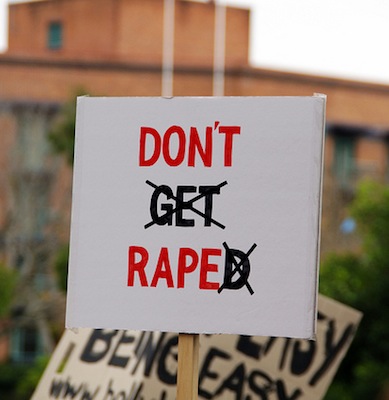 deserves to be raped. A guy drinks too much at a party? Well clearly he didn’t really mean to rape her, he just had too many beers and didn’t know what he was doing. Let’s just sentence him to talk about the dangers of drinking. It’s a huge problem and women have a right to absolutely tired of it. Goldberg could have said what she said in a much better way that made it clear who the bad actor was in this situation.


 what could one do about it? The microscope was not invented until 1590. It’s not that humans didn’t try to combat this reasonable fear, but in the absence of being able to know what germs, viruses, and infections were at that microscopic level, truly doing something about that fear would have been hard to do. The boon that farming brought would have easily given us a blind spot as to what might be the source of problems. When I really read the entirety of the Leviticus in the Bible it was clear to me that this was how we went about combating reasonable fears. Practical advice (for the time) mixed with storytelling. Science is really also about building a narrative for why things happen the way they do, and how to go about solving those problems. I do think narratives, and stories, are important for contextualizing fears. So we can say “Alright well here is a thing that I fear, and here is why it happens, and now I can start taking steps to avoid these things.” The problem being that when you have the wrong explanation, you can expend a great deal of energy and not really solve the problem, even if you do conquer your fear. To the local follower of some divine word, it must have been a great surprise to the one who believed and did as they were told that disease still ended their lives. Leaving those alive to suspect that the only reason the person died couldn’t be because they had an incorrect narrative for the fear, but that the person who died wasn’t following the narrative correctly or worse yet rejected the narrative secretly.


 Cloak Unfurled