What Makes A Good Human?: An Introduction

If you read the title you are probably wondering, who am I to write prologues, or preludes, or introductions?  What’s all this about?  Your blogs are only marginally interesting to begin with, why should I read anything doesn’t really tell me anything?  All fair questions, and the best answer I can come up with is that, good things come to those who wait.  Of course it’s also true that sometimes good things come to people in an instant, but this is not one of those occasions.

A fellow blogger I met when I first started my blog asked me what I was my goal in having a blog, because clearly it’s not all for yourself or you wouldn’t be putting your writing on the internet.  I knew the answer at the time, but was modest about saying it aloud, and I guess I still am, but ultimately I do want to inspire people.  Inspiration is an interesting topic in itself, something worth having a blog post about someday, but the truth is I don’t know that anybody could say how to inspire others.  It’s something you can’t really predict.  Sure there are ways you can communicate more effectively, more enthusiastically.  Inspiring someone through written word I think is more difficult than face to face, and I am not sure that my writing is that good yet.  But I believe inspiration comes also through expressing ideas and asking questions and that is the route I have taken.  Given the number of followers I have that read my blog I can tell that my writing is limited in how it has impacted others, and that’s okay.  Ultimately some of the blogs I enjoy following the most are ones that have a nice sense of community, and it would be nice to get to that point and just have a handful of people that regularly comment and read my blogs who have interesting things to say and interesting and well thought out points of view.  I think I’m moving closer to that as I have met some wonderfully intelligent and thoughtful bloggers over the past couple of years.  But that doesn’t mean that the blog  isn’t also for me.  It is also where I can explore, where I can get my thoughts out and help me sort out things in my own mind.  So while I hope the things I write mean something to others, I am also happy in the way that it helps me grow and learn.

My next series of blogs, which this is an introduction for, are what I consider to be the essential qualities of a good human.  These qualities that I am going to write about represent a culmination of years of thought on the matter.  So while it might seem overly bold, and though there may be disagreements, these are not qualities I have arrived at quickly or arbitrarily.  I make no claims that such a list may not change as I continue to learn and grow, and I have also, through careful thought, tried to condense it to as small a list as possible.  Not because that is necessarily important, but because over the course of my life I have come to see connections between certain qualities and realized that perhaps such qualities might exist under a much larger umbrella.  These qualities have been alluded to in my writing before and blogging thus far has helped crystallize ideas in my mind.   I also don’t make the claim either that these are overly original either, but I hope to make people think about these qualities in a slightly different way, specifically to try to broaden one’s views of this quality as very often people have a very narrow definition.

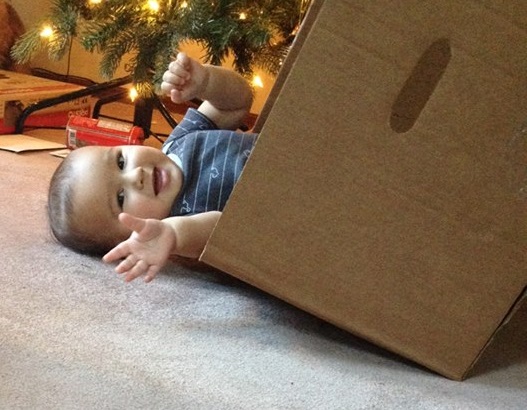
I like to have pictures in my blog posts, but really couldn’t think of any. I’m Canadian though and there will be 7 qualities. Boom.

One of my first posts when I started my blog discussed the dangers of categorization.  We are species who constantly makes poor correlations as a result of our tendency to make Type I errors, which is to find patterns and connections where none exist.  As I have also written before I grew up in two cultures being biracial and this helped me see from an early age that the innate goodness of a human being had little to do with religion or culture and yet these are characteristics that we seem to tie to goodness or badness most often.  And of course as I grew older I have seen even more judgments of character based on gender, class, job, education, etc.  It might be natural that we make these poor assumptions simply because we are bound to make determinations about a person’s quality based on the people we know throughout our lifetimes.  I have often observed that most prejudice of any kind comes from a lack of exposure to diversity, not because of it.   If I were to say something positive about myself, it’s that I do always try to look for the goodness in all people. As a result I have never shied away from getting to know somebody from a different walk of life because it seems the more people I get to know, the more I am convinced that they way we separate ourselves from others is false and ultimately harmful.  In that vein I have thought a lot about what are the qualities that good people have in all those different walks of life I have encountered.  This, in addition to what I’ve learned through my education has led to me to conclude that there are 7 things that we must all have.  The fact that 7 became the number has me already a little worried that I’m not right, because the number 7 is full of romance, but try as I might I couldn’t think of any more or any less, so I’m just going to go with it.

Finally I just want to emphasize that all these qualities I will blog about over the coming months are equally important.  So much so that missing even one of these qualities can be problematic.  While the degree to which each of us has these qualities may depend on the individual I believe that all are qualities we must demonstrate and develop every day.  There were times that I thought there was a ranking to these qualities, but now I am not so sure.   Anyway, enough of this introductory business.  I shall end this by thanking you for reading this and my blog and hope to hear your thoughts in the coming months as I complete this series of posts.

It’s All Projection

There are sometimes things that you know, but you don’t spend a lot of time talking about them, and a recent Facebook post gave me a kick in the butt to remind me that sometimes the things that seem passive and harmless may not be the case.  The type of projection I am talking about here is not the psychological one (which I also find fascinating), but still important.  The Facebook post that inspired this blog post was one in which we are shown the true size of Africa.  I knew about this many before as it is the starting part of the only Michael Crichton book I ever read, Congo.  Then someone posted this clip from the show The West Wing and I thought this would be a great discussion starter.  The clip argues that the Mercator projection of the world, which is what we are used to seeing should be replaced in every school room with Peter’s projection world map.  And I think they are absolutely right.  Because the Mercator projection not only messes with our sense of size  of land masses, but also the Earth’s orientation. It impacts what we consider top and bottom, up and down, big and small.  The result being that the way we think the world looks can have and impact on how we treat countries near the center of the map which are vaster than we think, and that have populations greater than we think.

The Mercator projection

For those of you non-clip watching the fact is that the Mercator projection greatly exaggerations land masses near the polar region, and put’s Germany (where Mercator was from) at the map center.  As the clip explains one of the most obvious comparisons is the size of Greenland compared to Africa.  On the Mercator projection they look almost the same, but Africa is actually 14 times bigger in land area.

Peter’s projection

Now what we have above is Peter’s Projection.  It is going to look really strange to you.  Now keep in mind there is still some distortion here and there always will be when you try to map a sphere onto a rectangle, but this one is more accurate.  How you ask?  Well essentially what the Mercator projection does is that it attempts to preserve straight lines for purposes of explorers by sea.  In order to do this the area to which land is projected on must increase as you move towards the polar regions since the map essentially assumes the Earth is a cylinder and of course it is a sphere.  The result is something that is not a true representation of size, but is accurate for purposes of navigation.

Greenland vs. Africa

In reality of course, lines of longitude converge at the pole, the size of 1 degree longitude by a 1 degree latitude grid gets smaller as we approach the polar region.  Peter’s projection takes this into account.  On a spherical Earth grids are not rectangles or squares, but trapezoids (technically curved rectangles and trapezoids since the Earth’s surface is curved), with those trapezoids getting smaller and smaller, and both the Mercator and Peter’s distorts those trapezoids into rectangles.  However, what makes Peter’s projection a more accurate view of the world is that Peter’s projection preserves the geometric area of those progressively smaller trapezoids.  If you’re reading this and looking at Peter’s projection you are thinking to yourself that it’s absolutely wrong, and that this can’t be accurate.  This is because the Mercator projection with north being up is so ingrained in us that it’s hard for us to think of it in a different way.  But it should be noted that Peter’s projection is still a distortion as well.  Particular as it makes the shape of the land area more elongated at the equators and the polar regions.  So even though the relative size is more accurate, it isn’t necessarily the best for learning the true shape of things.  Something that the Mercator projection does allow.

Now, do I believe that global inequality derives solely from our distorted view of the world geographically?  Of course not, but it could be a factor.  But more importantly it is something we can absolutely, and easily get right.  And isn’t it better to see the world for what it is than what is most convenient?  Maybe class rooms of the future will just use holographic globes to teach geography.  In the end a 3-D globe is the only true map of the world.

To blow your mind even more I will leave you with a map of the world that we might be looking at had civilization begin in the southern hemisphere.  The universe is three dimensional and there is no up and down.  It’s all a matter of convention.

A map of Earth could just as arbitrarily be presented in this way. How does it make YOU feel? 🙂

Science…not Science

I read a couple of troubling articles today about some forensic techniques that were used by the FBI that were used as evidence in criminal cases and were sold by the FBI as reliable techniques, but as it turns out were not the case.  Those articles can be found here, and here.

In a horrible fit of madness I looked at some of the comments, and of course there are plenty of conspiracy people there, but what was more interesting is how many people thought that this was confirmation that scientific consensus doesn’t mean anything, or how science is unreliable, and many of these people were clearly conservatives who are climate change deniers.  It annoys me to see science and logic so misunderstood, so I thought I just write down a few thoughts.

First of all it’s important to remember that one case of science being misused is not evidence that all science can’t be trusted.

Second, this is not a case of science being misused.  The science was correct the entire time, it’s the FBI that lied about the science.  Whether it was the forensics people themselves who misrepresented the science or lead investigator in charge of the case is unclear, but it was actually objective scientific investigation that showed the corruption of the FBI.  There were actually peer-reviewed publications that demonstrated the lack of reliability of these techniques, just as there are 1000’s and 1000’s of peer-reviewed journal articles that establish the truth of human-induced climate change and this is much different than someone having the truth in a journal article, but then lying about it in terms of how that knowledge is applied.

Third, you could call what the FBI is doing bad science, but you can also see how easily that bad science was uncovered by the recent investigation.  However when it comes to climate change, even their own scientists agree about the evidence for human-induced climate change.  The party just refuses to listen.

More careful investigation of this exposure of the FBI’s techniques is  not an indictment of science, but rather something that reveals it’s value at uncovering bias.


The Moral of the Story

I was ‘talking’ with a fellow blogger who is a nurse, and as I am a meteorologist we were trying to figure out who had it worse.  Was it more annoying to deal with the “climate change deniers” or the “anti-vaxxers”.   I agreed his was more annoying, because while human induced climate changed is well-evidenced it is always going to receive a lot of political blowback in a fossil fuel dependent world and it is both a complex and new problem facing us.  Vaccinations on the other hand have worked so well and have eradicated disease so completely that people don’t remember why they even get them and instead have invented dangers to receiving them because they can no longer see the purpose.    It’s as routine as opening your mouth and saying “Ahhh”.  People don’t really question that, but it doesn’t inject anything into you and is sort of hard to get upset about, but I think when some medical advancement has been around so long and so successful we forget the reason and just see it as possibly something that isn’t necessary.

This led me to wonder if the same thing wasn’t true for how we understand morals.  One of the common things you hear from atheists is that many theists are under the impression that we do not have a moral and ethical code.  That such thing is not possible if we don’t have God and some supernatural system of punishment and reward.  I remember my mom, who is Christian, telling me at some point that our sense of right and wrong must come from God or else where would we get it from?  The general answer is easy of course, we are taught them by our parents and others.  We have authority figures that tell us what is right and what is wrong (even though you can convince a child that things that are wrong are actually write, like prejudice and intolerance).  The point is if as children we seem to get our morality from the authority figures in our life, perhaps it’s not surprising that many people, especially those who have no qualms about relying on the “rightness” of authority, that morality comes from what many consider the ultimate authority, God.  But it seems obvious to me that morality can easily be derived through scientific investigation.  Morality though has been around well before the scientific method, but humans have been around for a long enough time that we’ve been living a social experiment of morality and have simply been learning.  At one time the things we take as obvious might not have been overtly obvious, even though I think some of the big ones we could figure out rather quickly as they would not be a beneficial for survival.  Just like we stopped questioning why vaccines are important, perhaps we stopped questioning why certain immoral acts are wrong, such that people assume that it all must have come from some other plane of existence.

Some morals are certainly cross-cultural, like physical and sexual harm to other people’s children.  This one would be a pretty obvious natural (perhaps genetic) trait because our survival does depend on the survival of the next generation.  Anything that threatens that would be considered immoral.  Unfortunately in many places physically or psychologically hurting your own child is not seen as wrong.  It wasn’t so long ago here that, unless something got really severe, you were hardly considered in the wrong for disciplining your child with a belt or the back of your hand.  Some people still adopt that attitude unfortunately in North America, and it can be worse in other countries.  Regardless though we generally do go to ridiculous (and perhaps psychologically detrimental) lengths to protect children.  In general though killing is not quite viewed the same way.  Many think it’s okay to kill criminals (apparently it sometimes doesn’t even matter the crime…resisting arrest is enough), and killing in war is not only tolerated, but often cheered about.   For some time killing your wife in a crime of passion was often considered justifiable.  And many civilizations have committed genocide in our past and that has gone unpunished.   So even of the most basic commandments “thou shall not kill” isn’t clear cut, so this obvious sense of right and wrong we are supposed to get from God looks pretty muddy.  And if we are worried about some sort of eternal punishment system it’s amazing the ways we can justify killing when we need to dodge that one.

But let’s look at it from the perspective of “unlawful killing” which is why modern translations say “murder” instead of kill in the 10 commandments.  Thus we already have human law deciding what killing is lawful and unlawful.  This is not an overly divine commandment already.  We know that before civilization we roamed in smallish hunter gatherer bands.  Maybe a few hundred people at most.  This was a time before Christianity, before the 10 commandments, so let’s assume this group doesn’t know right from wrong.  Like a small town, in these small groups, you knew everyone.  Surviving in the wild is not easy and everybody had a role to play, and everybody shared and worked together.  Studies of hunter-gatherer tribes today show them to be rather egalitarian in compared with much of civilized society so let’s look at this as a group that gets along.  So we have a group of a few 100 people, and because they have no God to tell them between right and wrong they think murder might be just something that’s okay to do.  What would be the results of a few people that decided to commit a murder every once in awhile:

  1. Population decline and lack of genetic diversity – We could at the very least learn that there is a murder rate that is not healthy for the survival of the group. Through cooperation, life was made easier, but the group gets smaller, things get harder. Population can only increase so fast. So at the very least, if murder is okay, we can’t do it too often.
  2. Loss of those with specialized or exceptional skill. While daily tasks required teamwork there would have been certain people with more extraordinary skill. A tribe may also only have one person who does a particular job. Murder could reduce the chance for survival if such people are killed.
  3. Growing fear and distrust. If people are being murdered, people are less likely to cooperative. Some people will simply be scared they will be next and be more cautious and protective. Some people will be angry at the loss of their child, brother, sister, etc. This will cause others to fight back. There may be false accusations, which builds more anger and distrust.
  4. They are diminishing their own chance for survival. Once a murderer is discovered, those that committed the murders may find themselves a victim.

Now there are probably even more things that could be listed as to why murdering would not be a good idea, the least of which that we are by definition a social species for whom survival depends on our being in a group, and being able to work well in that group.  It simply isn’t in our nature to murder our own, and there is a lot of good reasons why murder would not be a good idea.  However when it comes to other groups, all bets are off.  We may be xenophobic due to bad experiences with other groups before, or simply be xenophobic because someone who we don’t know simply isn’t somebody we can implicitly trust, and thus we can justify killing others that are not part of our society.  This is why war is not against the law, but murder is.  We can do similar thought experiments with many other basic things that cause harm, like stealing, or any action that causes harm both physically and emotionally.   But even if it was not in our nature, this social experiment has been going on for some time and it seems quite reasonable to assume that even if there was not a morality inherent in us through birth, if at the very least we have a driving force to survive then many of the morals we have today would result through experience and observation and concluding how to survive better.

As a population we continue to adjust.  Different groups share moral truths just as they would share any other type of knowledge.  And so perhaps much of what we consider right and wrong is handed to us without that rediscovering process, but you can still see the impact of people doing the right thing and wrong thing today.  Because even though I think that on average humans are more moral in civilized society today than in the earlier days of civilization, we still have a ways to go.  People who are doing good and bad things are not of one particular faith or philosophy.  If you have compassion and care about how you make others feel, you will discover yourself how to behave in a way that’s more positive everyday as you grow and learn also.  It is the scientist in us that helps us become more moral.  If anything, the Bible demonstrates this more completely as the old testament has very much an eye-for-an-eye mentality, but the new testament is very much about forgiveness, redemption, and compassion.  Even God seemed to find a more moral way of dealing with enemies. Thus I don’t think it’s surprising that morality should progress in the same way that science does.


Tin Foil Hats

Hey, Travis, when everybody is out to get you, paranoid is just good thinking!

– Dr. Johnny Fever


If there is one group of people that I despise arguing with, it is conspiracy theorists.  I find it even more frustrating than debating someone with strong religious convictions.  Maybe it’s just because I can sympathize better with people with strong religious beliefs because I have been exposed to religion and have had family who have strong religious beliefs.  Now both types of people are belief driven and in many ways there is no difference at least in terms of how neural pathways are formed and how the impact of reinforcing those neural pathways impacts the brain, but there is something about conspiracy theorists that seems more concerning.  Maybe this is true only for religious fundamentalists in the west.  In other areas of the world I would fear religious fundamentalists much more, but maybe it’s because with religion the crux of the debate falls to the supernatural and with the supernatural there is no way to disprove it.  For those who have faith it’s tangible and real and this is what governs their thinking.  A lot of times if you bring into the realm of the real world you can often find common ground and agree on things, even if you disagree on the mechanism.  In fact I’m pretty sure I’d be less surprised if someone found actual evidence of the existence of God than some of the conspiracy theories that some people believe in as being real.

When it comes to conspiracy theorists, the troubling part to me is that all of what they believe is easily disprovable.  There are no supernatural forces at work; it’s a conspiracy that involves this plane of existence.  It’s physical and tangible in a very real sense.  We can actually settle the debate.  With God, you’re never going to settle it, because God cannot be disproven in a strictly logical sense (of course that’s because for something to exist the onus for proof is on those that would assert its existence).

I was talking to a colleague recently who is a geologist.  He had told me before that his father was very conservative and does not think evolution is real.  More than not accepting the scientific evidence he has invented a conspiracy theory in which all fossils are fabricated and made in a factory somewhere and then scientists plant them around the world so that they pretend they have evidence.  It just blew my mind when he told me.  The amount of fossils we have is enormous and the time and energy to make all of those, plant them all over the world, all so that we could tell a false narrative about the origins of life are astronomical for me to even wrap my head around it.  Of course I’ve heard the general theme before that evolution is just a conspiracy to try and disprove the Bible and I literally don’t understand.

As an atmospheric scientist of course the one I deal with the most is the conspiracy associated with global warming.   Thousands and thousands of scientists all banding together trying to get greedy off that alternative energy money and trying to destroy the poor fossil fuel companies who apparently are struggling to make ends meet.  Debates usually go something like this:

Me. “As somebody who studies this and understands how the atmosphere works…” I list a lot of hard evidence, and explain how the greenhouse effect works.

CT (Conspiracy Theorist)  Evidence ignored and the grand retort is “But other people are experts too and they disagree”.

Me. Thinking, ohh they want to try to take that right now  “Actually not really, few people who deny climate change are actually atmospheric scientists, and none of them have been able to publish any scientifically sound papers in peer-reviewed journals on the subject.  Such scientist’s research is always funded by oil companies.”

CT:  “That’s because the journals are controlled by the IPCC and they prevent any contrary evidence from getting published.”

Me: *bangs head*

The back and forths are usually longer, but this was just a glimpse. One thing I have noticed that is common with all these debates is that they never address any scientific evidence you present directly.  So in retrospect, debate is a bad word.  They have no defense on the workings of antigens, the physics behind the greenhouse effect, or the random mutations of genes.  There is always some larger organization involved pulling the strings, shadow networks, cover-ups, secret e-mails, vast sums of money involved.  They post links to sites that reference other articles written by someone with equally little knowledge of what they are talking about.  There are vague references to events that never happen, or if they did happen there is no way to prove that they happened.   And why do these conspiracy theories always involve the government or scientists?

Governments are for the most part, simply incompetent.  The level of organization they need to have to pull some of the shit off that people give them credit for is truly astounding.   The really corrupt ones are so obviously corrupt and drunk on power there is no need of secrecy they do it right in front of your face.  And of course I know many scientists.  They are some of the finest people I know: curious, intelligent, and for the most part noble and compassionate.   Corrupt scientists are few and far between and are easily exposed because scientists believe that what they are doing is valuable and important and have zero tolerance for those that would make a mockery of the scientific process and allow bad science to flourish.

Now certainly you might say at this point, while we have never proven the existence of a supernatural deity, there have been conspiracies.  To that, I say most definitely and in fact that’s what makes conspiracies relatively short-lived and small.  Because people are generally good and if there is some conspiracy that is causing harm to people, and lying to people it’s not long before somebody’s conscience gets the better of them and they get the message out.  In fact, this would seem to put a natural limit into how large a conspiracy can grow.  Once it gets too big or too harmful, whistleblowers will come out of the woodwork.  And there will be tangible evidence of this conspiracy and unsubstantiated hypotheses are no longer necessary.

I have decided that I need to stop engaging such people.  But it’s hard, because there some of the conspiracy theories, if allowed to spread, can cause real harm.  Like ones related to climate change or vaccinations and then I find it hard to keep quiet because lives are literally at stake.  Ultimately it feels like people who purport conspiracy theories enjoy the attention, the feeling of importance that they are part of the minority and they get it and everybody else has been duped.  Perhaps it’s just ego.  Perhaps it’s just pure and utter fear of a world they don’t understand. Perhaps it’s just people wanting to believe in something do badly that they will invent anything to rationalize that belief.  I don’t know.  I’d be curious to learn how some of my other readers deal with conspiracy theorists.


Note:  A study was conducted to determine whether Tin Foil Hats really protect your thoughts being read.  Turns out it makes it worse.  At least that’s what “physics” tells us. (That’s the punch line if you don’t want to read the article).

The 4th Age of Sand

As I have immersed myself more into the world of social media, commenting on articles, the blogosphere there’s a very real attraction to it for me.  I like putting ideas out there, I like being social, meeting people I never would have met.  Overall I’m very positive about the way we communicate.  Douglas Adams in a wonderful speech he gave (transcript here) talked about how humanity has made enormous leaps via, what he calls, the four ages of sand.  Sand being made of silicon he outlines the 4 ages as:

1) Using silicon to make glass for the telescope

2) Using silicon to make glass for the microscope

These two allowed us to see the macro and micro universe around us.

3) The silicon chip.  Computers with their ability to do many calculations quickly allowed us to model the process of how things work.

4) Silicon for fiber optics in the communication age.

From http://www.cbstelephone.com

Although of course at the time of the speech we didn’t use satellite as much as we do today, but there are still a lot of computer chips involved in those!  The point is that Douglas Adams saw the power of being able to communicate with people remotely as a powerful tool.

Yet when we look at this great age where the world is being connected we tend to get overwhelmed by stories of social media addiction, the loss of time spent in the physical world, face to face communication, and some often harmful interaction.

It is this last one that is on my mind right now.  I watched the interview recently with Jon Ronson on The Daily Show and he has a new book where he talks about internet shaming.  One of the people he focuses on in his book is Justine Sacco.  You may remember her, she was the one who made a joke tweet on her way to South Africa from Heathrow and from only having 170 followers to a landslide of people waiting to lambaste her at the end of her flight.  His book looks at the history of shaming and what it means in todays day and age.  He wrote a good piece in the New York Times if you don’t want to read the book.  It’s a great article, long, but most definitely worth a read.

After years of using digital media for communication there are many challenges to overcome.  I think that ultimately when you write things that people are going to read, you have to be a great writer.  Without our physical gestures and voice intonation it’s easy for meaning to get lost.  It’s easy for a joke to sound serious.  It’s easy for well meaning advice or information to sound condescending.  It’s easy for sincerity to be taken as sarcasm.  But I was thinking that good writers are not so unambiguous and we pick up things like sarcasm and sincerity better.  Maybe when we communicate through writing we need to think about how we say it more deeply before we do so.  I think part of the illusion lies in the fact that we think we are actually having a conversation and try to type out things like we are, but in fact communicating through writing is not very much like a face to face conversation at all.  Justine Sacco’s life was destroyed for making a joke to her few twitter followers, poking fun at white privilege and walked out of a plane into an absolute hellscape of a virtual mob who wanted her to hang.  Someone on twitter was even there to take her picture as she walked off the plane.

This story also reminded me of recent events concerning the pizzeria owners who said they wouldn’t cater a gay wedding.  A friend of mine linked me an article about how we really don’t benefit from publicly shaming those owners regardless of how discriminatory and prejudiced their views might be.  Seeing that those bigots had over $800,000 raised in their name infuriated me and I could feel the anger rise in me and wanted to join the mob of people shaming the for their views.  Luckily it occurred to me that being upset and shaming bigots doesn’t really change anything and that it would be better to put goodness into the world instead and decided to set up a fundraising account for an LGBT youth group in Indiana that does a lot of good work in schools and for young members of the LGBT community.

It’s amazing how easily we can succumb to being part of “the mob” through digital media.  I’ve been caught up in it and I am sure many who read this have as well.  When you reflect on it, it’s an empty feeling though.  You get to feel bold for being part of

From http://www.killyourdarlingsjournal.com

a righteous fight, and yet remain anonymous in that sea of virtual people calling out for someone’s blood.  This is the other facet of the age of the internet is that posting comments behind the veil of a computer screen, or smart phone screen is that we feel protected and thus we say and do things we wouldn’t normally do.  Everybody is familiar with “trolls” and the divisiveness they cause with their comments.  In the end best advice really is “don’t feed the trolls”, but someone always does and arguments ensue.  I know for me the internet allows me to be bolder than I am perhaps in real life and while sometimes I think it helps me gain some additional confidence in myself, more often I just use the internet as a shield to give compliments and say things I am too shy to say in person.  Too often I also find myself assuming a more negative intention in the comments of others because the internet is full of people saying things that I don’t think they would say to your face.  It’s kind of like how drinking affects people.  Some people become open and honest in a kind way, others become belligerent and mean.  For me I feel that it’s something I have improved on and need to keep improving to be the man on the internet that I am in real life.

I am not down on the communication age, I just feel like we’ve invented an important bit of technology that we haven’t figured

from http://harvardpolitics.com

out how to use to the best of its ability yet.  I think that there are a lot of important ways that the internet can be used that our too valuable to ignore.  We can learn about issues all over the world that can foster our love of humanity and can help us see that we do truly live in a global community.  Social media was used to organize a revolution in Egypt to overthrow a terrible dictator (sorry Egypt it hasn’t gotten much better), when in the past there would have been no easy way to send the message to everybody simply through a land line.  Social media has been used to bring things to the light that would have caused more harm.  A video of cop shooting a man in the back, racist chants from a sorority in Oklahoma, a video of a NFL football player knocking out his wife (not really about exposing the football player, but how it helped exposed how the NFL organization tried to cover up evidence they had about the incident) are examples of how the sharing of certain information has value.  But I think we owe it to ourselves to try and take ourselves away from the mob mentality.  What if Justine Sacco had made her joke to your face.  Even if you weren’t clear that it was a joke would have you ran down the halls calling her a racist?  You probably would have just removed yourself from her social circle, but you could have also taken her aside and turned it into a teachable moment about why her joke might not be found as funny, or asked follow up questions to understand her intention.  Shaming is a terrible thing and how many of us have made jokes or comments we regret?  How many times have we been wrong in our attitude or thinking and needed a chance to learn from our mistakes to come out better on the other side?  Doesn’t everybody deserve that chance?  Is it necessary to traumatize somebody for a few thoughtless words?  Let’s instead try turn negatives into positives.  Let’s try to teach instead of shame.  Let’s try to understand instead of judge.  I am no saint in this area, but I’m going to keep trying, because the benefits of this communication age I think are enormous.  It is our disconnection from each other that leads to fear and mistrust I believe, and we can know and understand so many more people and issues today than we could 30 years ago and I truly believe that the power of the internet can lead to a new golden age for humanity.


The Right Way To Answer

Instead of just getting upset and complaining I have decided to be proactive. I recently posted about the Indiana business owners who openly admitted to not wanting to serve gay people and received $500,000 dollars in donations. While such support for hateful attitudes upsets me, I have decided the best way to answer this was to try and match that by raising money in an equal amount and support a local organization in Indiana who is trying to make things better for the LGBQT community. So I started a charity fundraiser page. While a goal of $500,000 may be ambitious, and perhaps other people had the same idea, even if I raise only the money I have donated to start things off, then at least I am doing something positive I figure.

So I’m asking that you please give what you can and share this message on social media, blog sites, personal webpages, and/or e-mail.  If finances won’t allow for a donation at this time, I hope you can still pass this post along and ask your friends to donate if they can. Thank you all for loving!  Below is the link for donating:

https://www.justgive.org/matchinghatewithlove

Ideally Though

I’ve been doing a lot of thinking about a particular issue in this world and I think made an important and worthwhile change of view.  It’s not really a complete 180˚ turn, but I am asking questions in a different way, and feel like I am becoming more grounded about the issue.  That issue is for a later post, because in trying to understand my change of heart, because I feel like my original stance is not wrong.  After some soul searching I’ve come to the conclusion that the problem was that I was being too idealistic and it has lead me to think about ideals, and how we can sometimes get caught up in them and that it’s not always that helpful.

So what is an ideal?  We all have them.  We’ve all known people that are overly idealistic and while those people can be enjoyable to be around and make for engaging conversation, sometimes such people can appear a little naïve.  I may be one of those kinds of people at times.  The dictionary defines “ideal” as person or thing regarded as perfect, or a standard of perfection, a principle to be aimed at.  I realized that the reason ideals can get us in trouble is because they do involve some personal vision of perfection.  I have written about perfection before and how it can be an unhealthy concept since a) we all have different ideas of perfection and b) to my knowledge perfection has never been reached, so do expectations of perfection do us a disservice?  I believe at times they can.

If by definition an ideal represents some state of perfection, one that either cannot be reached, or cannot be reached easily or quickly being dogmatic about your ideals can lead to rigidity in thinking, it can also put you in a “future mindset” too easily when problems exist in the here and now.  For example you may hold the ideal that war is pointless, unnecessary and we should all live in peace.  I love it, and I’m on board.  But unfortunately there is war.  And while I do believe that we may someday get to a place where we find better ways to resolve conflicts than through war, it’s not clear that will happen anytime soon, and there is always the possibility that war may always exist, despite how obvious alternate solutions might be.  So given that there is war, we can’t get caught up in an ideal of world peace that we forget to treat soldiers humanely who have been injured physically and emotionally and give them the medical and psychological treatment they need during, and after their service. Hell even the immutable physical law, the Ideal Gas Law which describes the relationship between pressure, temperature, and volume of a gas doesn’t really exist.  The law describes how a gas would behave under ideal conditions.  Ideal conditions that while we can get close to we have been unable to reach.  So it’s important to remember that ideals are just that, and not in anyway a truth we can find in the present.

From http://meetville.com

There are many fine and lofty ideals out there.  It’s easy to just start thinking, I wish the world could just see things my way and it would be a better place, but that isn’t likely to happen.  But I don’t think ideals are a waste of time.  The part of the definition of an ideal that I like the most is it being something to aim at.  Ideals are like far away targets and it’s easy to imagine yourself hitting the target, but instead we should simply see it as a direction to head and not worry so much about whether we get there.  Focus on the journey and pay attention to what is actually happening.  It could be that solutions in the present don’t necessarily conform to your ideals but they are the right thing to do for the time that you live in.

Headlong

Well between being a dad and a professor, blogging has taken a backseat.  This of course doesn’t stop the ideas from flowing, so I just thought I’d get at least one of them out even though I’m having to wake up at 5:30 am to do it!

My blog post is once again inspired by my son.  One of the things my son likes to do is drink, whatever we might be drinking, from our glasses.  I find myself enjoying this quite a bit, because it’s clear that he wants to do things like we do.  At times he will often try picking up our glasses and try to drink from them, with of course disastrous results, but his drive to be like us is clearly strong.  The reason why I enjoy this so much though is because there is something wonderful just being around someone who is clear is striving each day to be more than they are.  You might say, well of course babies/children strive to be more than they are, because they have to grow and develop those basic cognitive and locomotive skills.  So I know I’m not saying anything groundbreaking, but it made me reflect on a number of things that I think have meaning at any age, and gave me some important reminders as I move forward in life both as an individual and parent.

As I was reflecting on this last night it occurred to me the importance of failure.  While, as parents we marvel at our child’s successes I wonder how often we think of their failures.  If I really start to think about it I know that every achievement of my

From http://www.wholeheartedleaders.com

son is built on the back of many more failures.  Whether it was a failure sit up, stand up, walk, or clutch an object in his hands, these activities failed numerous times before he was able to master them in any meaningful way.  And it occurred to me that if you are not failing at anything right now, you quite simply are not growing.  In these early stages of life the failure to success ratio is high.  My son is constantly reaching in ways that exceed his grasp, but is undeterred by failure and this is something I find wonderful and inspiring.  While he still needs help sipping from a drinking glass because he cannot lift it up to his lips in a controlled way on his own, I know that he will get it.   Sometimes I wonder if I slow his progress by helping him though.  He’d probably learn a lot faster if I let him fail more often, but of course the amount of spills I’d have to clean would be a drain on my time and resources.  It takes away from other things that I could be doing which would be important for parenting or important for myself.  And of course in some cases these failures might be detrimental to him as well.  We need fluids, and if we are constantly spilling ours then we aren’t getting the sustenance we need.  This is, of course, one of the things we must balance in life.  Doing an activity that we’ll fail at is an energy cost, and thus we must have energy in excess to afford to fail.  Growth implies risk, and risks can be costly.  That doesn’t change the fact that without taking risks we tend to stagnate.

Dhyan_box
Sometimes my son even enjoys falling. 🙂

So what deters us from this completely necessary quality of risk?  Since risk involves the uses of resources and energy, there are environmental factors that simply put limits on the risks we can take.  The beautiful thing about children (and often scary at times) is that they think nothing of the risks they take.  No matter how many times he fell trying to walk, or get down from the sofa or bed, he still did it.  As we grow and become aware of more things we learn restraint.  If I lived in one of many places in Africa where clean drinking water is scarce, one of the things I would make dead sure of is that I didn’t leave a glass of drinking water within in reach of my son, because drinking water is precious and we could ill afford to have any spilled.  So the risks we are willing to take or let others take are governed by the energy and resources (or the perceived energy and resources) we have available to us.  I think this is something we forget.  It is very common in the world to denigrate the poor and criticize them for not lifting themselves out of their poverty.  Since risk leads to growth, and risk is at least partly a function of the security of energy and resources in our lives, those that have limited resources simply cannot achieve as much as those of us with privilege can achieve.  While there are always remarkable stories of people crossing that boundary, on average a person who starts off with more will always have the potential of achieving more.  Therefore we’d be well served to stop judging those in poverty and that they require our compassion to help raise them up.  Should I wish to let my son fail at drinking water from a drinking glass I have the resources to supply him with endless amounts of water.  It seems that the path to a better society comes from those of us who have an excess in resources finding a way to create an environment for those in need to have some minimum level of security so that they feel safe to take risks.

Our inability to take risks can also be impacted by our memories of failures.  There comes a point where feelings of failure can be somewhat traumatic.  It can make us not want to try something again.  I have postulated, not sure if it’s true, that one of the reasons why babies don’t form a lot of memories is because if they did they might be scared to take risks.  This is something that a young child absolutely has to do just to be able to master basic movement and communication skills.  My son has fallen hard at times, and after a few minutes he is back trying the same thing again.  This short term memory seems a blessing at this age but it won’t last forever.  Of course if we reflect on failure we would see that it is teaching us something, and that we probably should worry about failure a lot less than we do.  If you’ve tried something a number of times and still failed, well maybe the lesson to be learned is to not do that activity anymore.  That in of itself can be a success.  Learning about what you can’t do, moves you in a different direction to try things that you have a better chance of succeeding.  If energy and resources are finite then there is wisdom in not continuing in an activity once we realize that it is beyond us.  This means the only truly detrimental failure is the failure to never try.

dhyan_cutlery
My son, failing to use cutlery in any meaningful way. 🙂


It’s easy once you get to the age of 40 to play it safe.  Likely your life is already full of failure and it’s simple to say “enough is enough” and just survive.  I was joking yesterday with my wife, given the extremely fast rate my son is figuring out how to use an iPad (and believe me we don’t give him a lot of access) that maybe that’s why kids always have to figure out technology for their parents, because once you have kids it’s easier to stop learning and let them (who learn things much faster and easier than you) do it for you.  Ultimately this is not the type of person I want to be.  I want to continue to grow, and over the last couple of months I’ve realized there are numerous areas of personal growth that I want to achieve and while I may like myself, to rest on my laurels would also be a mistake.  I watch my son attempt tasks that are beyond his abilities and must remind myself that I must never stop trying to push my limits, and to take chances doing things that have a high chance of failure.  It’s surprising how cautious we become as we age.  It seems that perhaps the real secret to staying young is to maintain at least a shred of fearlessness and at least an ounce of self-confidence that defies what we think we know of ourselves.   I must also remember to turn my parental instincts in a way that supports experiences of failure for my son.  I’m not saying that I would intentionally cause him to fail, but only to remember that loving my son is not about preventing him from ever failing, but rather allowing him to fail, and stepping in at the right time to help him learn the most from his failures.  So smile at your failures.  They got you this far, and here’s to hoping you have many more.

The Cost of War

I was reading a little note in history this morning that sparked my thinking.  It was the story of how Washington D.C. was born; a place that didn’t belong to any state, and was federally controlled.  Apparently it all started because of unpaid bills; particularly because a large majority of the soldiers in the revolutionary war never got paid.  In one military camp in 1777

From http://house.gov

George Washington (a general at the time) wrote that more than a quarter of the 10,000 men stationed there were suffering from malnutrition and did not even have shoes.  Not surprisingly they died.  The stories of how much the soldiers from the revolutionary war suffered are startling really.  Many of them used their own money initially because they weren’t getting paid and by the end of the war many were destitute and sometimes in debt themselves.  Once discharged from the army many of them faced debtors prison.  So a group of soldiers from Pennsylvania mutinied and marched to Philadelphia to demand their wages from congress.  The state of Pennsylvania refused to use the state militia to defend congress and sided with the mutineers.  The mutineers joined with troops in Philadelphia and surrounded Independence Hall 400 strong demanding their wages.  Though angry they never opened fire or killed anyone.  Congress refused to submit to them, considered them dishonorable and instead congress simply fled.  Eventually they decided that they wanted congress to convene in a place that did not have to depend on the states for their safety.  Thus Washington, D.C. was born.

In addition to finding this historical fact interesting, it made me realize that we haven’t changed a whole lot in regards to our attitude towards those who fight for us.  Although I am a pacifist, I am also compassionate.  I wrote a blog post before about how I don’t really understand why anyone would choose to have someone else tell them who they should kill, that doesn’t mean I think soldiers deserve to be treated inhumanely.  And the fight for independence from an oppressive state is a just cause to fight.  But I look at the 40 years of history and see how soldiers were treated after Vietnam and after our most recent and ongoing conflicts and it is clear that there is a fundamental disregard towards the soldiery who do make great sacrifices.  And don’t get me wrong, I am not one to believe that all military are heroes or that there aren’t people who aren’t heroic in other walks of life.  This disregard I speak of is not the rhetoric of clueless hippies who would spit on a veteran or jeer at them and call them killers, but I am talking about the disregard from those who would get them to fight and yet not suffer the same fate that many of the soldiers go through.   Soldiers going without proper nutrition, proper equipment, proper medical care after or during their service should be the shame of any civilized nation (and don’t worry I’m sure the U.S. is not alone in the treatment of soldiers).

Although not a shocker it really hit home, that with but a few exceptions, politicians are the true cowards.  Whether the conflict be just or not, they move the soldiery like pawns to where they want and then, fight the battles that they deem important (whether supported by the general public, or sometimes they lie to the general public to justify the conflict) while never depriving themselves of any of their needs.  I think back to those congressmen fleeing Philadelphia, never having to worry about their pay, their nutritional needs, despite the debt they had racked up for the fledgling country.  And nothing has changed since the country’s inception, including the fact that we still rack up massive amounts of debt for these military ventures.  John Fogerty’s song “Fortunate Son” is an excellent reminder about how even the children of those in congress were protected from going to war, while those that are poor are considered expendable and cannot get out of the draft.  I will never understand how

PTSD just one of the many injuries sustained by veterans during war, and one that is most often ignored historically.

those we elected to serve the people enjoy so many more privileges than those who they send to fight the wars that they deem necessary.  Maybe that’s why I have such a hard time understanding why someone would join the military because who wants to fight for a group of politicians, who for the most part demonstrate less honor and nobility than they expect you to have as you kill for your country?  Why should one sacrifice their one existence on this Earth for somebody who is unwilling to do the same, but is happy enough to send you to fight their battle?  Either way it seems to me that we should be taking care of our veterans properly.  Those politicians who treat the soldiers like pawns are easily replaced.  In fact that’s kind of the point of democracy is that politicians can and eventually will be replaced for one reason or another and the country will go on.  Thus there is no additional value to their life than is there is to the soldiers and vets.  And on a final note, let’s do something about the large amount of poverty, income inequality, weakening education system and deteriorating infrastructure so that those soldiers can at the very least feel like they fought for something.  I am not taking sides politically, I think the issue of taking care of those who need it the most is one that crosses party lines.  I am exhausted watching politicians speak rhetoric, distort the truth, outright lie, and play games while the world burns around them only to see them get pay raises, most of their expenses paid, receive kickbacks from lobbying groups and essentially walk away from Washington far richer than when they walked in.  So you can be mad at the Michael Moores or the Seth Rogens for their comments about the military (of course those comments are misinterpreted) but the ones that truly don’t really care about those that fight their battles for them are in Washington, D.C.  – the city built to absolve themselves of responsibility to their military.