More than Words

The discussion of free speech has once again risen up after the Charlie Hebdo massacre.  For some interesting reads please take a look at this article on the Ethics of Free Speech and this article that presents a Muslim’s perspective on the situation.  Many of the ideas in these articles are important and so I wanted to throw them out first so that I don’t repeat their points too much.  If you’re too lazy to read them (I barely had time to write blog posts anymore so I understand)though I’ll list some important points that are guiding my thoughts right now:

  • How do we decide what freedom actually means?

    From http://bearingdrift.com
  • The argument for freedom of speech often gets turned into a “Those who want that freedom” and “those that don’t”. This is a false dichotomy because generally the disagreement lies where along a spectrum of “Freedom” we must draw the line on free speech.
  • Is freedom of speech always a good thing?
  • Words have power

When the news broke about what happened in France on January 7th, I have to say my reaction was not one of surprise.  Muslim extremists are nothing new, and given the anger that was sparked when Danish cartoonists depicted the prophet Mohammed in their publication, I just wasn’t surprised.

Now this not to say that I didn’t think it was a terrible tragedy.  Of course it is.  I don’t want anyone to think that my position is that those at Charlie Hebdo got what was coming to them. There is a difference between not being surprised and thinking such an act of violence against them was deserved.  There is no question that these Islamic extremists have got it wrong.  They don’t understand their faith, they will fail in achieving whatever dream world they want to live in, and they will simply cause more harm to others and themselves with time.   I can say that with certainty, in the long run, they will fail to get what they want and it is clear that all good people should and do oppose their aims.

Before looking at Charlie Hebdo let’s take a closer look at this whole cartoon depiction of Mohammed stuff.   Perhaps by putting things into context you will understand why I was not shocked to find that this happened.  First, we can agree that killing somebody over such a thing as a cartoon, no matter how offensive,

From the South Park Wiki. The picture of Mohamed was available, but I chose to show Buddha instead. I’m okay with that. 🙂

is ridiculous.  That being said it is not unreasonable for someone to be offended when their religion is ridiculed.  People do it all the time, they just don’t go all the way to killing somebody.  I am sure there are many other moderate and peaceful Muslims who were offended by Charlie Hebdo or the Danish cartoons previously.  And of course some number close to 100% of them never killed anybody over it.  Satire, comedy and comic depictions of religious figures is not new, but it is relatively new.  Such things quickly got you killed in Europe not so long ago if you tried to ridicule Christianity or religious leaders.  And while I believe the world as a whole, on average, progresses forward in terms of morality and reason, there are pockets of people going in reverse. As an example, I find it interesting that prior to 9/11 there was no outcry about a South Park season 5 episode in which various deities from other religions banded together to save the day.  I guess Mohammed was not ridiculed but still a cartoon is a cartoon.  This episode was even available after 9/11 for a number of years and has only recently been pulled.  I guess it was off the radar for awhile and perhaps South Park Studios didn’t want to take the chance anymore.  The point is that the backlash against Islam post 9/11 seems to have had a more polarizing impact on Islam and the west, such that those who wish to do us harm have looked for more reasons to do so.  Therefore, it seems to me, those who perpetrated the attack on Charlie Hebdo would have likely found another target had they not been drawing cartoons, but their doing so simply added them to a list of possible targets.  Crazy people generally don’t have good reasons to cause such harm, so should we be surprised that in a country with a lot of Islam vs French tension, where a magazine is ridiculing Islam that this simply puts them on the radar of the crazy people?  Personally I don’t think so.

Now let’s get back to freedom of speech.  We can also agree that it’s important, but just because you have the freedom to say something that doesn’t mean you should.  If you’re wife asked you if she looked fat in something, then you would have the freedom to tell her the honest truth, but I think you know how well that will work out for you.  Also having freedom doesn’t necessarily mean that there aren’t consequences for exercising that freedom, and law may have very little to do with it.  In truth, I have the freedom to go and kill somebody.  But there are consequences to that action.  Those consequences may simply be a fear of getting caught, more often than not though it is our own moral center that prevents us from doing such a thing.  We may even have a good reason to do so, but I also think about what my friends and family would think about me, how I would provide for my child, the times I would miss with my family, etc.  We are free to do a lot of things when you think about it, but our choice to act on those freedoms must be weighed against the consequences of our actions.

One of the Charlie Hebdo satirists said “We can’t live in a country without freedom of speech. I prefer to die than to live like a rat” in regards to whether he was

From http://www.beheadingboredom.com

worried about angering Muslim extremists.  While I can feel a certain amount of respect for someone who lives by their convictions, I do wonder about the value of that conviction.  Of course, the chance of dying from a terrorist attack in the west is extremely small, and perhaps if he knew that there was even a 10% chance of being a target of Muslim extremists, he might not have been so sure of himself.  I am also opposed to religious extremism (or really any kind of extremism) but if I am going to have convictions on the matter that are worth dying for, satirical cartoons seem like a strange way for me to take a stand.  If we want to defeat extremism, are satirical cartoons helping the situation?  I doubt if any extremist has looked at one of their cartoons and said to his fellow crazy Jihadists “Hey guys…you know what…I didn’t get it before but this cartoon has really shown me we’re being ridiculous.  Let’s just relax and maybe talk to some more moderate imams about interpreting the scripture in the Koran more carefully”.  Furthermore it seems one of the best way to quash Islamic extremists is actually by having most of the Muslims who are more moderate on your side.  Doing something that most Muslims find offensive, might not anger them into attacking you, but it doesn’t exactly win their hearts.  Therefore if anybody thinks that drawing satirical cartoons of Mohammed is in any way taking a stand against Islamic extremists then you are quite simply wrong.  It does nothing but divide people.  At best, those who appreciate the cartoons are a group of secular intellectuals who appreciate the wit and who already agree with the points you are making.  At worst, those who appreciate the cartoons are bigots wishing to eradicate all Muslims from their country.  The point is, such cartoons aren’t helping and are most likely making things worse.

What people seem to forget is that 1) being right isn’t always the most important thing, and that 2) even if you want to be right there are multiple ways to make your point.  Richard Dawkins is right about a lot of things, and yet many people, even humanists, atheists, and agnostics think he’s an asshole.  In thinking about these cartoons, I was reminded about my confrontation with the gay bashing fundamentalist Christians who came to our campus.  I asked the main guy point blank “Even if you are absolutely 100% right do you think that your offending and insulting them is going to convince them to your point of view?”  He was sure that they were going to hell and so he felt that what he was doing was the strongest most direct way to get them to change their sinful ways.  Anybody else of course can see that such anger and unkindness would never win the hearts of those they intend to save.  The only people who are supporting them are those who already agree with them.  So even though Islamic extremists are crazy, they don’t understand their faith, they cause harm, and their actions will ultimately cause them to fail to achieve their over arching aim, how we expose the extremists for what they are is just as important.  Being martyrs is one of those possibilities, but the freedom to draw cartoons of the prophet Mohamed just seems like a silly way to make that stand.

From http://thebilzerianreport.com

Freedom of speech is an extremely important one to a free society.  Speech has the power to sway.  As it sways it can raise the consciousness, inspire, and lift men and women to more.  However, speech also has the power to divide, misinform, offend, anger, and mislead.  To quote Uncle Ben Parker “With great power, comes great responsibility”.   I don’t wish for any government to censor publications like Charlie Hebdo.  Taking away freedoms doesn’t help the situation either, and is never an answer to terrorism (i.e. The Patriot Act). Nevertheless, no matter how “in the right” we think we might be, let us also think about how we communicate our message.  Freedom of speech is an important one to fight for, but there are many other good things to fight for and so it’s important to not get so lost in one fight that we start to lose the others.

A Change Will Do You Good

From http://ohiomarketingstudents.com

A friend of mine asked me a few months ago “What are your weaknesses?”  After mulling it over for a couple of minutes, to be honest, I couldn’t think of any.  Now don’t start thinking I’m a smug bastard, I know for a fact that I am far from perfect.  Then I thought, well I am not quite sure what my strengths are either.  I guess the way I have to come to view myself is a work in progress.  It seems to me that trying to determine what strengths and weaknesses are is tricky business.  I might say that I worry too much, but at some level worry brings about a level of awareness that might help you act or reach a solution.  Worrying too much is obviously a problem though as it can be draining and waste time.  Not worrying at all, might also be dangerous as it may make you apathetic to important things.  I used to be a huge worrier, but I always looked at it as a quality that was part of a spectrum from too much worry, to not worrying at all, and that there was a healthy balance in there.  So it wasn’t so much that worrying was a weakness but that I had to find an appropriate way of using that “worry” towards being constructive and not destructive.  And I always felt that worrying was better than apathy.   To me, all strengths and weakness are not an either, or, but rather qualities that lie on a continuum between two extremes and thus any weakness may have some important qualities that we simply need to foster more.

If I say that my strength is kindness, does it mean I don’t have room to grow?  Does it mean that I couldn’t be more kind?  I have never been one to simply rest on laurels as I think it is important to strive each day to be more than we are (provided we are lucky enough to live in an environment where we have such an opportunity and are not fighting for basic subsistence needs like so many in this world).  Our strengths might manifest themselves in different ways.  While I may be kind, how I show that kindness may not be the right way for that particular situation.  Sometimes “tough love” is the best way to deal with a particular situation.  Some people respond to a stricter approach, drawing definite boundaries.  Some people respond better to you when you are sensitive, soft-spoken and supportive.  Some people might respond to both depending on the situation.  It takes time and experience to gain the wisdom to know how best to be kind to those around you.  Should I say it is a fault or a weakness when I show kindness in a way that makes sense to me, but is not received as such to the other person?  Or should I simply reflect and say, “I am glad my heart was in the right place, but I need to do better.”  And what if the person you are showing kindness to, feels grateful, but isn’t good at showing it?  As I’ve mentioned before, one of the amazing parts about life is that we never know how we may impact others.  Someone might be angry or frustrated with you in the moment, but only realize the kindness you showed years later.

In the end I would say that my greatest strength is that I feel I value good things like happiness, learning, compassion, self-reflection, equality, a strong work ethic, and humility, and that my weakness is that I am incomplete in demonstrating those qualities to a capacity I am completely comfortable with.  And that I may not be aware of the importance of other character traits that might make me and this world a better place.  And I accept that not only will this “weakness” never go away, but it might also be the very thing that allows me to become stronger, wiser, and appreciative of life in new ways all the time.  And so, in what might be a somewhat ironic way, the parts of me that I will not change, are the various things that allow me to change.  After all, why would I want to be the exact same person all my life, as if that were even possible? 🙂

Hero Worship

I know this post will be very unpopular with some people I know, but I write it not as someone who means to offend, but simply as someone who wrestles with ethical principles all the time and this is a subject I’ve though a lot about.  I guess I was inspired to share my feelings about this after reading an article that talked about the dangers of automatically associating heroism with anybody who is in the military.  I’ve written about heroes before and how there are a lot of people in this world worthy of being called a hero, but most people don’t know about.  In this country it seems that if you’ve joined the military and are deployed you are a hero; plain and simple.  In fact usually when someone joins the service they are automatically seen as honorable and brave.  Adopting any attitude that is in opposition to glorifying the soldier is seen as treasonous by many.   The only narrative we are allowed to accept is one that paints the recruit as someone who nobly has joined to serve their country and defend American freedom (this turns out to not be the reason, most people join the military).  To think otherwise, it means you don’t appreciate the fact that soldiers died for your freedom.  You are ungrateful and you don’t understand the cost of being free.  I’ve always taken offense to this generalization, and it seems to me that many people who say things like this experience nationalism in the same way that the devout experience religion.

It’s not that I don’t think it takes a lot of guts to join the military, knowing that one day you may be placed in a situation in which people are trying to kill you.  In the middle of combat it is either kill or be killed and to come out of such a situation alive requires

From http://www.motherjones.com

some pretty good team skills and awareness in an extremely stressful situation.  There is certainly something to applaud and be amazed by such people.  Many of us perhaps would not be able to face such an extreme situation.  The question is, does that quality mean that this is their only defining quality of character?  And do we not have the right to complain about the context in which these soldiers are placed to take part in this very dangerous combat?  People often criticize us peace-lovers if we don’t support the war, and say we are not supporting the troops.  But I can think of no better way of supporting the troops than wanting them home and safe and not fighting in a conflict for which we have no business being part of.  If your child wants to do something that could get them killed, for which you don’t think there is any valid reason for them to be doing, if you don’t want them to do that are you being unsupportive?  Perhaps you just value their life more.  And when you don’t support a war, many consider you unpatriotic.  Most of those people have no problem criticizing Obama and his policies, so why is it unpatriotic to criticize a decision to go to war?

Often, of course, these things come down to your point of view.  If the act of joining the military and the willingness to put yourself in harm’s way automatically makes you a hero, and a brave and honorable person, then every member of the military anywhere must also have such qualities.  It may even include rebel forces, or terrorists.  Such people believe in their cause just as much as anybody in the military.  In some way this would make war even more horrible if the most brave and honorable of men and women are always being killed, it seems to me a terrible way to solve a problem.  The

From http://www.theatlantic.com

problem is that we tend not to see just any soldier is honorable, but only the ones that fight for us, our allies, or causes that we agree with.  To say that a Nazi soldier was as honorable as any allied soldier would not go over well.  And of course in order to justify killing the “enemy” we must dehumanize and make them less than they are.  When they kill civilians they are the scum of the earth, and when we do it, it’s an accident in the course of an honorable fight.  Was every Nazi a Jew-hating genocidal maniac?  That seems unlikely.  Many were perhaps simply fighting because they had been recruited, because they wanted to provide for their family, because the country was destitute at the time and thought the fight was a cause that could improve the German standard of living.  There are likely many other reasons, but how easy would it be to kill someone if he was no different than you, but just happened to live in a different country?

In Henry V, one of the well-known scenes from the play involves King Henry disguising himself as a common soldier and walking through his troops on the eve of a big battle.  His troops are tired, sick and will be outnumbered the following day.  At one point the King questions one of his men about whether or not they should trust the king, that

From http://www.empireonline.com

what if his reasons for this fight are unjust and is just leading them all to slaughter.  A soldier gets angry at this and says that he fights for King and country and that if the King’s reasons be unjust that that is a crime he will have to answer for when he dies and that it is something for the King’s conscious to deal with, and not the soldiers.  This seems to be the ultra-nationalistic mentality that many in this country subscribe to.  If there is an afterlife then perhaps this is true, but even if there is some supernatural judge up their making us answer for our crimes, does that morally justify leading men to their slaughter even if their loyalty leads them to be willing to do so (although at least in King Henry’s time the King fought along side his men instead of sitting thousands of miles away)?  Just because someone is willing to die for you, should they?  Is it not even more morally wrong to take advantage of that loyalty for an unjust cause?  It seems that context is important.  When it comes to killing shouldn’t we need more than simply, “this is just what our government wants, so we have to do it”?  Shouldn’t we make absolutely sure that our cause is just?  Shouldn’t we also really make sure that other means of solving conflict aren’t a better option?

For the most part, honor and courage being automatically associated with the military mystifies me for a couple of reasons.  First I find it very uncomfortable to surrender my choice about what causes I fight for.  Would I have enlisted to fight Nazi’s in WWII.  I think that’s likely especially given what they were doing in concentration camps.  But would I have happily then gone to Korea 5 years later?  Absolutely not.  And while I realize on some level a military probably wouldn’t work if we got to pick and choose which conflicts we wanted to fight in, when it comes to pointing a gun and killing somebody else I think I should believe in that cause, not do it because someone else believes in the cause.  I want to live a moral life.  The Nuremberg trials even set the international legal precedent that “just following orders” cannot be used as a defense for committing atrocities and absolving guilt, but only lessening the sentence.  I simply don’t want to be put in a position where I am asked to fight and kill others unless I think it is the best and only course of action.  I don’t find any honor in simply killing or dying for someone else’s cause.

WilliamPurves
My grandfather

Secondly, many people will question your lack of courage when you say you don’t want to be a soldier, or say at least that a soldier has more courage.  I’d like to say that I am not afraid of dying for a cause I believe in.  Dying is a pretty easy thing to do after all.  Many people have done it, and you only have to do it once.  What I am afraid of is killing.  My grandfather fought in WWII.  He didn’t talk about it much and I admired the courage it takes to get through such a terrible conflict in which so many, including his brother, were killed.  I never asked him how many people he killed though. He was a good man.  It was hard to imagine him killing, and if I were to guess, I think he is the type like many who would have carried the weight of those he killed.  Even in a cause he believed in.  He would have wondered, “what kind of man was it that I killed?  In different circumstances could we not have been friends, shared a shot of scotch whiskey and kept each other laughing all night?”  I know such questions would plague me.  I know the average person loves his/her family, is kind to his/her neighbors and would help those in need.  And perhaps it is come to the mind of many in the military, “Perhaps that soldier’s leaders have taught him/her dehumanize me in the same way I had been taught to dehumanize them.”  Maybe they have doubts.  I certainly would.  Like, what if my bullet misses and hits some civilian or my own comrade?  What if we were told to attack the wrong target and it was a school instead of a military hideout?  If I choose an action that could end my own life, that is my choice, but ending someone else’s life is another matter altogether.  From a psychological point of view, one could easily argue that putting yourself into a situation in which you give up your right to choose the causes you fight for, and are willing to kill people you really don’t have a problem with, can be seen as mentally unsound as opposed to a decision filled with honor and courage.

In the end, I can’t subscribe to the idea that those who join the military are the best example of bravery and honor.  There are people in the military who have done terrible things.  Rape in the military is a huge issue right now.  Where is the honor there?  Of course we want our military to be honorable, and there are many who are.  But there are also many honorable people in different facets of society.  If we are going to celebrate heroism let us not only do it for the glorification of war.  There are many people who have courage and face difficulties and adversity everyday.  Sometimes it takes more courage to live than to die.  Let us at least bestow the label of honor, courage and heroism to wherever it applies and not apply it blindly.  Such things prevent us from having honest conversations about important issues concerning conflict, war and violence.  I bear no ill will towards soldier, and appreciate the sacrifices that they go through.  Particularly because I know many of them did not join the military because they wanted to fight in a war.  And maybe I don’t understand or am a coward, but personally I’m glad that we have found better ways to deal with conflicts and that there are a smaller percentage of people dying in wars today than in our past.  It gives me hope for the future.

Do I have to vote?

Let me start by saying that I think voting in a democracy is important.  I never realized its importance when I was younger but as I’ve grown to learn and care more about the importance of governance (notice I didn’t say politics) the more driven I am to vote.  I am finally eligible for citizenship in the U.S. and will become a citizen before the next Presidential election.

Part of learning more about politics and governance has also left me pretty dissatisfied with the choices I have in our political system.  At the national and for most major positions at the state level you have two

A study by two political scientists at Northwestern University. (From http://media.chicagomag.com)

parties to choose from.  As if two philosophies had a chance of representing over 300 million people.  Washington right now is broken as there is no working together to pass laws that will help people.  A frightening statistic I just recently read said that public opinion has no correlation to the passing of laws right now in this country.  This would seem to be an odd thing to find in a democracy where our vote is supposed to represent the will of the people.  It would seem that the people do not control the government.

The media has also highlighted races between candidates where one seems completely incompetent and idiotic, while the other is a happy combination of bigot and religious that you can’t imagine either candidate being someone you’d want in office.  Is it then okay to not vote in that situation?  Is it always more ethical to vote for the lesser of two evils than to not vote at all?

So let’s say you believe government is broken and/or the two party system is broken, and you have terrible candidates to choose from and you wish to let the powers at be know that this is unacceptable, does not voting said that message?  Now a scholar may look at the level of apathy and say, wow nobody really has faith in our government or political system and so that’s why nobody is voting.  But of course that may be right, but it also may be wrong. There are other possible reasons for apathy.  One is that you are person who thinks everything is just rosy and so you really don’t care who is in power.  Or like many, you can’t afford to miss a day’s work to go an vote with everybody else.  Ultimately those in power though won’t really care as long as they are re-elected they just need at least somebody to vote in order for a candidate to be chosen.  Perhaps if everyone refused to vote that might make a difference, but that’s unlikely to happen.

So “not voting” isn’t really effective.  So what might be effective?  One possibility is that you could run for office yourself.  Of course you are likely to get “out-moneyed” by any of the two established parties, but you could still run.  The Tea Party movement, as misguided as they all are, was grass roots, and grass roots movements can grow into something big.  When they got big enough to try and make an impact in government, they got absorbed by one of the established parties and as a result it’s actually weakened the identity of the Tea Party and the Republican Party.  It should have remained its own party.  Anyway, that’s besides the point. The point is that a difference can be made even if you start from the ground up.  But maybe you’d like some encouragement that your movement might be successful.  This brings us to the second possibility of how you can protest and that’s simply to vote.  You don’t have to vote for Democrat or Republican.  You can vote for another party, you can even write in a candidate.  If the amount of people who seem dissatisfied with congress actually didn’t vote for the established two parties many would realize that there is actual need for some other party to establish themselves and that there are a bunch of people who are not apathetic about the process but actually really care, but think that the current two party system or current set of people we have to choose from are unacceptable.  So the answer is still to vote, but don’t feel like you have to vote D or R.  The right to vote means you have the right to vote for who you want and who represents your views.  You don’t have to always vote for one party, you don’t have to feel like you have to just vote for the other guy, because the current guy wasn’t great.  So your research, get informed, and vote for somebody you think will do the job well and represents your views.

The only true way to waste your vote is by not voting. Because if the current system of government is truly broken, then doing nothing changes nothing.  And remember that voting is only one way in which your voice can be heard, so don’t forget that caring doesn’t need to only happen at election time.

Equality, I Spoke The Word As If A Wedding Vow

Recently I’ve been thinking about the word “equality” and what it really means. I always think that when you are thinking about word and are unsure what it means a good place to start is the dictionary.  But that didn’t help much because the major definition simply says “the state of being equal” or defines equality in terms of mathematics. I think most of who think equality is important would define it in terms of equal status, equal rights, and equal opportunities.  Such equality might be easy to legislate, but it is not easily found.

The interesting question to me is why equality is something that some people thing is important and others don’t. Part of the reason is that many simply don’t see other people as equal.  And most troubling are those who see someone as inherently unequal simply due gender or race.  It seems to me that those who fight for equality and who believe that equality is important in a society don’t see inequality as inherent, but rather a product of environment.

Equality, like freedom may be a difficult ideal to obtain, but it seems to me the true inequality in this world is between those who think we can attain it and those who think inequality is inherent for whatever reason. And so I wonder, what is the common bond between people in both those groups of people?  Since race and gender have nothing to do with how smart you are, your physical abilities, your potential to be successful, or your ability to show love and kindness, why are there people who think that race and gender automatically pre-determines such things?  Children carry no inherent sense of inequality in regards to race and gender, so where does it come from?  What trait oh of humanity leads people to adopt the idea that one person is less than another?  When does it start to develop?  Is it a desire for power? A fear that in balancing the equation that for one group of people to rise up, that we must then relinquish some power and come down?  Maybe equality isn’t something we can attain, but maybe we can at least see everybody as valuable if not equal.  To be honest, the fact that we are all equal regardless of race or gender seems so obvious to me that I find it vexing that anybody should think any other way, so I am interested in hearing thoughts from others.

He Blinded Me With Science

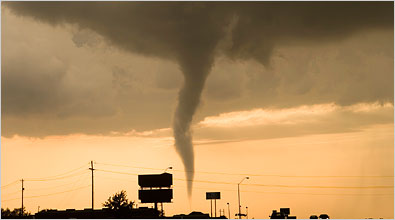
As a meteorologist and scientist I am very familiar with many pseudoscience arguments and websites like creation science, new age science, anti-climate change arguments, and all the conspiracy theories that go along with it.  My colleague recently turned me on to a little gem of a website.  Somebody has ‘solved’ tornadoes.  I hope you click on the site.  Not only will the guy who owns this WordPress website be excited that he has so many hits, but you will immediately be able to tell that this person isn’t playing with a full deck.  At first I laughed a lot as I read it, but the more I read it, the more I actually started to be impressed.  Now don’t get me wrong, it’s not that I’m impressed with the actual ideas here, they are completely wrong, but I was impressed with how much time and thought this person has gone into thinking about the problem.  I don’t want to post any individual blog posts linked here, because I really don’t care to have this person start harassing me, but if you go through a number of them you’ll see that he has talked to some real experts in the field (although it’s unclear about whether he has e-mailed them or actually talked to them personally), he has posts where he has retracted some of his statements and then explained why he retracted them.  He has designed experiments to test his hypothesis as well.  In fact I’m a bit jealous that this guy actually has more blog followers than me.  Did I say jealous?  I meant frightened.  Anyway, what I thought what was really interesting is that here is a very unique belief system which has blossomed into something rather complex.  One that to my knowledge nobody else really believes (at least not yet, or at least I hope not yet) and yet bears much similarity to existing belief systems.  So I thought it might be interesting to deconstruct it a little and see what we get.

At the heart of every belief system is at least one premise that is accepted as true, without being supported by any empirical observations.  Once this is accepted as

From http://www.nc-climate.ncsu.edu

true, much can be built from it.  For instance many religious belief systems accept as fact that there is a God and goes on from there.  Many times of course there are several faulty premises.  It could be that they stem from an original, but it’s hard to say.  Let’s take a look at the one’s that seem to this gentleman’s starting point

Premise 1:  The jet stream is a conscious entity that is thirsty for water and thus tornadoes are a result of the jet stream needing to suck up water.  I guess that makes a tornado a giant straw.

Premise 2:  Moisture is the most important factor in determining density differences in buoyant air. (Actually it’s temperature).

Premise 3:  Meteorology is a cult, and meteorologist simply believe in old and outdated arguments that have never been proved experimentally.

From this all sorts of things are possible.   If you were to accept the first two things as truth you would come up with a very different scenario for how and why thunderstorms and tornadoes form.  The 3rd premise is what then allows him to never have to rethink the first two.  People who could argue intelligently with him and are more knowledgeable are meteorologists and since they are part of a belief based cult they can’t possibly be correct or unbiased.

Another important part of a belief system is the inequality in standards the proponents of the belief system must live up to in comparison to non-believers.  For

From http://static01.nyt.com

instance, those against gay marriage will expect everyone to respect their right to be legally bound in holy matrimony, but do not have to respect the rights of homosexuals.  As is often the case pseudoscience literature like this, the expectation of other is to provide rigorous proof, yet no such proof is given by this gentleman as he espouses his hypothesis about how and why tornadoes form.   At its root I feel this comes from a lack of humility.  To be so sure you are right about something that you are beyond the need for evidence, and that you are beyond the ability of anybody (regarding their experience and expertise) to change your mind is to be so prideful that even Donald Trump would be impressed.  It is also a sad state to be in.  As I’ve argued before since reinforcing beliefs releases dopamine in the brain, over time as the neural pathways become so entrenched into a belief, this person literally will become ill to consider anything else.  The stronger the argument you make, the less likely you will get anywhere.

So what’s the harm in all of this?  Perhaps very little since there is a certain amount of crazy that even the most clueless about the subject won’t buy into.  Nevertheless there is at least enough science jargon on his website that people who are not educated about the issue may think there is controversy and conspiracy.  Just like many who are not educated about climate change think the same way.  There was at least one commenter who reblogged one of his articles saying it was an interesting “new theory”.  I wanted to also introduce this website and blog post as a lead in to a discussion of the age of information (or misinformation) that we live in.  This person has self-published a book for sale on amazon and has done a lot of writing on this subject.  If he had a little bit of money and/or web savvy he could make his site one of the top hits on google when people search for information about tornadoes.  Critical thinking skills are even more important today than they were before the internet to be able to navigate the flood of information that we are faced with on any one subject area.  Anyway, keep well everyone and stay away from thirsty jet streams!

Do you really want to hurt me?

I have always been interested in how the emotions we feel translate into behaviors actions.  One of the things I have always wondered about is why feelings of hurt make us want to hurt others.  Now I don’t want to over-generalize, but I think all of us, at some point in our lives, have felt hurt to the point that if we didn’t lash out at another person, we have really thought long and hard about it.  I am not talking as much about physical pain here, although there certainly is an instinct to obviously fight back at times physically.  I am talking more about feelings of hurt at the emotional level.  Sometimes we have inflicted pain upon those closest to us and people we love.  Such things never lessen the pain, and tend to only make it worse since we are, in general, compassionate beings who know that we’ve inflicted pain upon others.  This usually just adds guilt in with the emotional pain we are already experiencing.  The question becomes why do we think it, and why do we do it?  As usual I don’t really have any answers, but will just explore some possibilities.

While it’s true that perhaps we do end up being strengthened by the hurt we feel, there is a period of time where it doesn’t feel that way.

The first thing that comes to mind is that it is sort of a primitive survival mechanism.  If you’ve ever felt really hurt by someone’s actions towards you, you know that it takes a toll on you physically.  Our emotions are a product of the release of various hormones and other chemicals in our body, and so a certain emotional state can have a strong effect on our physical systems.  Thus we can actually feel like we are in a fight for our life and the only way to win is by defeating the threat that has impacted us so strongly at the emotional level.  This can also be done on a larger scale.  Governments can (and have) play up threats to one’s existence and way of life, and dehumanize the enemy to rile up many people into an emotional state where they want to lash out at the threat.  It seems clear that feeling threatened on an emotional level, by making it feel personal, making you feel fear, can incite one to fight back.  The simplest answer is very often the right one, so perhaps feeling hurt simply makes us feel threatened so fighting back feels necessary to our survival.


Of course what it doesn’t explain is why we might inflict pain on those that we care about.  When unknown

enemy or someone you don’t really care for who has hurt you or who you believe is hurting you, it almost makes sense to want to hurt them back.  But if you’ve ever lashed out at your spouse or partner in anger, at your child (either physically or verbally), it almost seems counter-intuitive that this would ever be a solution to alleviating your own feelings of hurt.  Sometimes those that we lash out at, aren’t even the ones that have hurt us, and so it seems even more strange that we should have such behavior.  On a more personal level, it seems to me that in my life when I experience a lot of hurt I often feel like I’m in the dark.  Perhaps that is not necessarily the best analogy, but what I’m getting at is that the solution for making oneself feel better is not clear.  So perhaps that’s why I equate it to being in the dark, because when you are in the dark it is difficult to find a way out.  Depending on the depth of the pain we may start to panic and fear sets in, so we get desperate.   We want the pain to end, and get out of that darkness so bad that we claw, and scramble, and we try to move quickly.  But like any fast movement in the dark we don’t know what we are grabbing at, we don’t know what we are reaching for and we hit all sorts of things along the way, hurting others and ourselves.  Flailing in the dark is never going to be best solution over keeping calm and thinking our way out of that dark palce.


Delving deeper I wonder if there isn’t something uniquely human about this quality that goes beyond some

From http://www.verybestquotes.com

sort of animalistic behavior and is perhaps darker, even if it isn’t necessarily malicious.  When I’ve felt really hurt by someone, it’s easy feel like you don’t matter to them.   Just like I said it is counter-intuitive to hurt people we care about, so when you feel hurt by someone who cares about you, it’s easy to arrive at the conclusion that they don’t care about you anymore; that they are indifferent.  I think apathy is one of the toughest emotions to have to deal with.  When you feel like nobody is paying attention to you, it’s easy to get depressed, and more often than not we react in a way that tries to get us noticed. Usually in not the most healthy way either.  The feelings of hurt may have us thinking that the world is so indifferent to us that our existence does not matter.  Many suicide attempts are simply cries for help from people that do not feel “noticed”.  In some way I think we’d rather somebody hated us than were indifferent to us.  And so it seems sometimes lashing out at someone may simply be a mechanism for being noticed.  If someone is angry at you, it means you matter.  It means that they can at least feel some emotion for you even if it is a negative one.  To reach that point though it is truly sad, because what we usually want is love and compassion, and when we become so desperate that the opposite becomes the next best thing, perhaps then we truly are in the dark.


The real problem is that I don’t know a good way out of this behavior.  There are all sorts of clichés and memes, and self-help books that tell us that harming others is never a bona fide way of alleviating our feelings of hurt, but nevertheless we seem to drift towards hurting others who hurt us.  Most of the time we just hurt people in a moment and then we quickly realize what we’ve done and apologize.  Sometimes we feel justified in hurting others for the short-term satisfaction it brings, even though it doesn’t end our suffering over the long-term.  When I look at war torn countries, where so many people have lost loved ones, and you wonder how can they alleviate the hurt that they feel without continuing a cycle of violence and feelings of hatred?  I wonder if this just isn’t a darker part of who we are, and the only thing we can really do for ourselves is to be aware of it, and hope that in the moment we can focus on what will eventually lead to true happiness in the long-term instead of just hurting others, especially those we care about, even if they’ve inflicted pain on us.  Maybe they are just as in the dark as we are.

How Our Will Is Not So Free – Part II

In Part I, I hoped to get you into a relaxed frame of mind as you consider the possibility about the existence of free will.  That perhaps our subscribing to free will is more trouble than it’s worth and that life can be no less wonderful without it.  So here is the way that I like to look at our ability to make choices.

In a previous blog post I talked about the fortunes of life perhaps depending on the choice between Pepsi and Coke, so let’s stick with soda (or pop if you

from http://createmeaning.com

prefer) to start our little thought experiment.  Let’s say you live in a world in which there is only one beverage you know about, and that beverage is Coke.  When you are thirsty and you need something to drink, there is no decision to make it is going to be Coke.  Free will does not enter into the decision.

Now this is not particularly realistic.  So let’s add a choice like Pepsi into the mix.  They taste different, but both can quench your thirst.  Which one do you choose?  Well let’s see what might go into making a decision.  You are at the store that sells the only two beverages that are available and which one do you choose?  Likely your choice will come down to statistical probability.  If you absolutely had no preference, your decision would simply be random.  Over the course of your life you would probably have picked Coke 50% of the time and Pepsi 50% of the time, provided you had a choice.  Nothing in your life that you have learned has caused you to lean one way or another, there are only two choices, and thus your choice is limited and can be simply equated to flipping a coin.

You might say at this point, wait, I can choose to pick Coke or Pepsi more often.  Okay then, but why would you?  What particular reason would you have for choosing one over the other?  This question is particularly devilish so I’ll get back to it later.  As for now, you have no reason to choose one more than another, and so quite simply you wouldn’t; it’s a flip of the coin, which isn’t free will.  Generally people don’t do anything without a reason.

Now let’s throw in a reason.  Your mother who you revere and think is wonderful always brought you a special souvenir coke when she’d go away somewhere, and so drinking Coke sometimes reminds of that warm feeling.  This is an influence that impacts your decision making. All of a sudden your preference for Coke perhaps goes to 60% (40% Pepsi) because when you’re thinking about your mom you’re in a mood for Coke, taking away from it always being a completely random decision.   Now since Coke is a little less sweet, perhaps your blood doesn’t react well to too much sugar, a genetic trait running in your family, and you can’t tolerate Pepsi as often and all of a sudden you’re at 75% Coke, 25% Pepsi.  Then you find that the makers of Coke are a little more efficient at running their business and are able to have more sales on their product.  As someone who is money conscious all of sudden you are buying Coke 85% of the time, Pepsi 15%. A really hot girl or guy is in the Coke commercial – 90%/10%.  Finally your Dad is a mean person who beat you as a child and he always drank Pepsi.  All of a sudden you are only drinking Coke again.  Your choices are a function of the things that influence you.

For every answer there is a question.  You’re money conscious, but where does that come from? Perhaps your father despite being abusive was very disciplined with money and so you gained that skill from him.   What if you decide that you aren’t going to let your father’s action impact your decisions and

From http://crenshawcomm.com

get a Pepsi out of spite.  Great, but what would cause you to be so defiant and rebellious.  Perhaps your mother showed that trait.  Perhaps you were inspired by Martin Luther King, Jr. that you learned about in school.  Perhaps you were inspired by the movie Braveheart.  There may be many possible influences, the point is that you believe that defiance is a positive way of dealing with such childhood trauma and that idea had to come from somewhere.  Many people do not have such boldness.  Perhaps that is not a weakness, perhaps they just feel the best way to cope is for them to completely dissociate themselves with their Pepsi drinking dad as way of staying stress free and peaceful.  They learned this from a self-help book that they read on letting go of the past.

Now going back to an earlier question, what prevents you from just preferring one drink over another for no reason?  People seem to do things for no reason all the time, and I would have to agree.  But doing something for the hell of it is also a trait.  There are people who will never be like that all their lives.  Some people say, I’m just going to be a Coke drinker even though I like both of them well enough, because hey why not, I’m a wild and crazy guy, and I just want to be on team Coke.  Where does this spontaneous side come from?  An aunt you love and revere whose always taking chances and is a thrill seeker?  A friend you went to college with who just loved to be spontaneous?  But if your spontaneous next year you might just be on Team Pepsi.

The reasons for our decisions are so varied and complex that such a breakdown for why we make the decision we do is not always clear, but it is clear that we are conditioned by multiple influences over different scales of time to reach those decisions.  Your choice of beverage might really be something like this:

Coke 70% – Tastes better, grew up with it, family drank Coke

Trying something new 10% – Your mom always encouraged you to try new things and that variety is important so you aren’t afraid to take a chance when something catches your eye

Dr. Pepper 10% – You also like the taste and it reminds you of your years in grad school when you and your friends used to always take a break from studies and get a Dr. Pepper

RC Cola 5% – They were out of Coke, you wanted a cola and you hate Pepsi

Tolerable Beverages 5% – when your favorite choices aren’t available you can tolerate maybe an Orange Crush, Fanta, or Root Beer because it’s better than any of the other choices you’ve been given.

And then finally you might have a special category of beverage you’d hate and never choose unless you had been in the desert a real long time and had no other choice.

In our minds we think about all the things we have drank and see them all as choices and feel like we are consciously making the choice with our free will, but the truth is that we are conditioned into those choices and if we really thought about it, we usually do get a Coke, and the other beverages are choices but low probability ones.

Can our lives really be predicted so easily?  Our decisions already pre-determined? The answer, of course, is “no”, because life is full of unexpected events.  Even if everything that occurs is deterministic you are an incredibly small part of everything and cannot follow the chain of events. And perhaps your penchant for trying new things leads you to a beverage you love more than Coke.  Perhaps you fall in love with a girl who loves Dr. Pepper and that becomes your preferred drink since you both like it and it’s something you can share.

From http://dilbert.com

Life is full of events that we don’t know are coming and it is those intersections that throw us out of our comfort zones and give us new experiences that shift the probabilities and possibilities of choices we can make in any given situation.  Whether you are open or closed to new situations also depends on the various things that can influence us as human beings.  We are animals born with a unique mixture of genes, in a part of the world we had no choice in, raised by people who we had no choice over, while our senses feed us information every day we exist to a brain that has been conditioned over millions of years to process all that information amazingly well and do its best to help us survive.  Yet most things we will never know or understand fully, closing off an entire range of possibilities that we might choose from.  And so what if we are not consciously making our choices?  We are a complex mixture of nature and nurture and in such a symphony who wants to pick out a single note from a single instrument.  Just sit back and enjoy the music.

How Our Will Is Not So Free – Part I

For any of you who are foolish enough to read my blog you are used to a lot of rambling.  I can’t promise this will be too different, but I would like to be a little formal and have an actual thesis for this post.  I have posted my thoughts about free will in respect to religion, but even if one is not religious the idea

From http://www.brandonragle.com

that we have free will is extremely pervasive and I think it is ultimately a not necessarily helpful concept to believe in.  The choices that we think people have are an illusion and we tend to instead judge others because people do not make choices that we would make.  It prevents us from really helping those who are violent, disturbed, hurting, depressed, etc.  It has us believe that there are people who are inherently evil allowing us to dehumanize them and cast them aside, when instead they might simply have brain abnormalities, be traumatized, influenced by people as messed up as they are, or simply lost and confused in a world that is beyond them and behave desperately.  I think it also acts to separate us from nature and is a great source of human conceit.  Free will is not something we ascribe to plants or animals and thus also gives us the illusion that we lie in a place above all else.  Whether you believe that the supernatural has imparted us this blessing of greatness or you think that evolution is a pyramid in which humans rest on top, both these notions are ultimately dangerous because they allow us to justify great atrocities against nature as we continue to satisfy our own self-importance.

In the first 8 months of watching my son grow it is clear that free will is not something he was born with.  He started out simply crying when he was hurting, uncomfortable or hungry, and sleeping when he was sleepy.  Not a lot of free will going on there.  As I watch him change, I see him simply become aware of more things.  When he first could see our cats, not surprisingly he was curious and wanted to touch them.  Now that he’s been outside he asks to go outside (well not in words).  Now that he realizes the comfort of being held he asks to be held.  He also mimics.  He sees us eating something and he wants to eat it.  He sees us using a remote, our phones, computers, and he desperately wants to use those too (or rather put them in his mouth).

Before I formally begin my argument for the absence of free will I want to put an excellent quote from an article I read some time ago from the New Yorker which has had a large influence on my thoughts in trying to understand why we are the way we are and where this sense of self comes from that I blogged about some time ago.

I believe we inherit a great river of knowledge, a flow of patterns coming from many sources. The information that comes from deep in the evolutionary past we call genetics. The information passed along from hundreds of years ago we call culture. The information passed along from decades ago we call family, and the information offered months ago we call education. But it is all information that flows through us. The brain is adapted to the river of knowledge and exists only as a creature in that river. Our thoughts are profoundly molded by this long historic flow, and none of us exists, self-made, in isolation from it.”

From http://www.eugenecascadescoast.org

The reason I want you to keep this in mind, because not only does it support the argument I am going to make (doesn’t of course make the statement true), but most importantly I want to reveal to you that just because I don’t think we have free will, doesn’t mean that I don’t find life absolutely amazing.  The idea expressed in this passage speaks to me in a way I cannot fully express, but I find this idea beautiful.  It tells me that we are product of processes that function over many different scales of time.  From what we learn each day, to what nature has molded us into over millions of years.  We can extend even further and look at the billions of years of evolution which has produced us , and we can go back further to old stars dying and being the seeds for our own sun and solar system which allowed one fortunate planet to even allow life to evolve.  So the fact I may not be quite as in control of the process is hardly depressing.  In fact it removes a lot of the pressure if anything.  I can simply marvel at all that has taken place for me to sit here and write these thoughts out today back to the beginning of time.  It is humbling, inspiring, and magnificent.

I shall now let you pause a bit before going on to the next blog post, because going back to the beginning of time is something that requires some deep reflection. 🙂

Expectations

First you waited, then I waited
I might be waiting a long time,
I hate long waits
But there is something worse
That’s having expectations
Expecting is like having fun,
Without even doing anything,
But what else can you expect with love?
Just be happy in the moment?
It sounds good on paper,
I’m not going to lie to you,
In fact I tried it and it’s true,
Love is so much better,
When you’re focusing on the moment,
You can really…get to know love that way,
In fact it’s so good you want it to stay,
And to never ever go away,
Somewhere deep inside though,
We know. Nothing. Is. Permanent.
 
But sticky problems have solutions,
Every good heist needs an inside man,
“Our designs are top notch,
You won’t find them anywhere else,
They almost seem made for you”
Says my fortune teller inside me,
Maybe that’s what psychics are,
People who enjoy building dreams so much,
That they want to do it for others,
The drama queen in all of us,
The irony of it all is,
I don’t believe in psychics,
The moment is all that matters,
If you care about the future,
But the right way is so hard,
And the wrong path has better scenery,
There are so many things to look at,
You won’t notice falling off the cliff,
Well at least until you land.
 
That’s not a good moment,
But then again…what else did you expect?