Feeling the Bern, Taking a Stand, and Zealotry

Bernie Sanders is my guy.  He is a true politician no question and to see he is without strategy would be incorrect, but that strategy I think is an honorable one.  He is trying to have important conversation about real problems that are impacting this country.  He puts forth solutions to those problems.  They are from the perspective of democratic socialism.  As a Canadian I adore democratic socialism, but I can tolerate people having different points of view on the matter.  There are those who have different political ideas.  I would love to see more politicians like Bernie Sanders coming from different sides of the political spectrum.  Actually they exist in the likes of candidates like Gary Johnson and Jill Stein but for a large part, well you know what kind of candidates we got this election cycle – panderers, double-talkers, hypocrites, liars, and those who are ethically questionable at best.  It’s a real problem.  Should we all fall in love with, what I think is at least a good model of a politician.  While my heart tells me yes, I know it’s only because I agree with him.  In the end, for many, it’s still a hard thing to do if you disagree with his ideas.  As I wrote before, among his qualities, ideas and principles I admire is that he tries to be inclusive.  He has reached out to evangelicals, he has spoken in some very conservative areas that some democrats dare not go, and he has even tried to empathize and connect with Trump supporters.

So why should such a man have supporters who are much more extreme than the man himself?  As I’ve watched his message reach people and move people there is no question that he is reaching many people on both an intellectual level and an emotional level.  Ultimately, Bernie like any politicians does play to people’s emotions too.  And there is nothing wrong with that.  While I do think he also have some very intellectual things to say, he knows that to move a large group of people in favor of your ideas it isn’t all going to be done with logical arguments.  It’s going to have to start with emotion.  Many of the things that Bernie Sanders talks about are things you should be mad about, are things you should worry, are things you should be passionate about.  But as I’ve watched people “feeling the bern” over the course of his primary run it’s been interesting to see how many Bernie supporters have become very similar to Trump supporters.   I know I am going to get backlash for saying that.  But many pundits, writers, and just people in general have noted how much anger one gets any time there is criticism of Bernie.  First I’d like to say that I’m not criticizing Bernie, I’m criticizing a portion of supporters who worry me a little bit.  Now let me also qualify when I say “like Trump supporters” I am not saying that you’re racist, misogynist, or stupid.  It should also be noted that such a generalization of Trump supporters is not that helpful, but I am speaking in terms of stereotypes intentionally.  What I mean by “like Trump supporters” is quite simply zealotry.  A zealot is a dangerous thing, regardless of how righteous the cause.  You can be 100% right about something and still be a dangerous person.  If you’re in a state where you cannot be reasoned with or compromise, if you’re in a state where you are willing to go to any length for your cause, if you are in a state where someone is quite simply for you or against you just because they disagree with a portion of your argument, that’s a dangerous place to be and it can be extremely destructive.

I have seen the emergence of the Bernie or Bust movement and I honestly find that movement a little troubling.  People have chosen to take their stand.  Taking a stand at times is very important, but I think we need to ask ourselves, whenever we take that stand, “what do we hope to gain?”, “what is the best way to make my stand?”  and “what are the consequences of taking that stand?”  I truly believe that Trump is an extremely dangerous man to have as president.  His policies, if enacted jeopardize religious freedom, increase the suffering for the poor, minorities, and women. Refusing to vote Democrat carries that consequence.  Are we ready to hand over the judiciary branch to the conservative platform?  Refusing to vote Democrat carries that consequence.  And there are a lot of important issues that get decided by the Supreme Court as we have seen over the past decade.  We know how important the supreme court has been for issues like gay marriage, the ability for public teachers to unionize, gerrymandering, affirmative action and health care. And who knows what decisions might get overturned.  Roe vs. Wade?  Marriage equality?  I am not trying to convince you through fear but only ask that we all carry these ideas in our heads and understand the full weight of our decision.  Also can we not make changes even if Bernie doesn’t get elected?  Can we support more grass roots candidates for the legislative branch?  At the municipal or state level?  Can we do a better job of participating in mid-term elections?  Does the DNC really think they need to make changes when most establishment politicians are already rich, and even when not in the majority still enjoy a great deal of wealth and power? Again maybe Bernie or Bust is the best call right now, but I see less and less reasoning and weighing of the evidence by Bernie supporters as this primary comes to a close and it looks like Bernie will not be the choice to run as president for the Democratic Party.  So again I only ask that we carefully weigh the pros and cons of sticking by our guns at all costs.  Bernie was never going to be our savior.  At best he is sowing the seeds of some positive change and if he became president we could see those seeds grow a little bit more, but we would still be a long way from seeing the flowers bloom.

Bernie_Sanders

There may come in a day where a large majority of us are happy with a more democratic socialist way of life, and today is not the day.  And I’m not trying to just single out Bernie Sanders fans here, it just seems interesting that what started as one of the most thoughtful, passionate, and intellectual movements and devolved into something that it should not in a country that has real problems and needs to work together to solve them.  Continuing on a path of divisiveness and stereotyping the other side doesn’t lead to revolution, it leads to civil war, and I’d rather take a peaceful piecemeal progression towards a better way of life than a bloody one, which by the way, in the end, your side might actually lose.  The idea behind a democracy is not one of…”hey we won…suck it you losers who disagree.” Whoever become President becomes leader of the country, of which, regardless of our political views, we are all citizens and have the right to be treated with humanity and civility by that leader.  We also must demonstrate that towards each other.  Does attacking Trump supporters really teach them a lesson, sway them towards reason or a better way of government?  The most important quality, to me, of Bernie Sanders besides his ideas is his principles for inclusion.  If we truly support Bernie Sanders, I think we must carry that torch more than any other if this country is going to reverse our decline in quality of life and heal a nation which continues to grow ever more divided.
The Ritualistic Human

Every morning I, or occasionally my wife, start off the day by making tea.  Specifically chai tea.  As an aside the word chai means “tea” in Hindi.  In my dad’s language of Punjabi it would be cha.  So in a way saying chai tea is like saying “tea tea” which makes no sense, but I am starting with the familiar, but I usually just say chai.  I am half Punjabi and should say “cha” but communicating my caffeinated beverage of choice gets more difficult if I am used to saying cha.

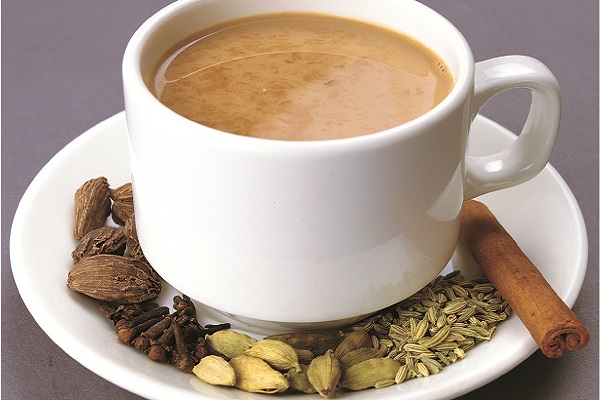
chaiSo first thing in the morning I wash the pot, if it is not washed already, and measure out the amount of tea I want to make.  Usually about 4 mug fulls of water.  I put the water on the stove and turn the burner on.  As the water heats up I add an equal number of heaping teaspoons of loose Yellow Label Lipton tea.  Then I take some green cardamom pods, whole cloves, fennel seeds, black pepper corns, and piece of cinnamon stick and put it all in a big stone mortar, and then take the heavy stone pestle and grind the spices and add it to the pot of water with tea in it.  Once the water boils for a few minutes I add the milk.  Whole milk, because chai without enough milk fat in it is wasted chai. 🙂  I add enough milk until the color looks right, and then I add a little bit of honey to sweeten it slightly.  After the tea comes to a boil, I turn the burner off and pour the tea through a sieve leaving the spices and loose tea behind.  Drinking that first sip of hot tea in the morning is a glorious feeling.  Not only does it wake me up, but the taste which mixes the slight bitterness of black tea, the rich silkiness of milk, a blend of distinct spices, and a hint of sweetness from the honey has a solidness, a wholeness to it that I can’t quite describe.  It feels like home to me as invokes many memories of growing up drinking tea with my family.  At that time in my life I usually didn’t have morning tea, but late afternoon tea with my parents when they come from work.  I introduced it to my wife when we met and she fell in love with it, and it is now as important to her as it is to me, and so it is now a shared pleasure.  And on mornings when I haven’t had a lot of sleep, I may find making the tea to be a bit of a chore but that first sip in the morning makes me feel like I have the strength to face the day.  The making and drinking of chai is a ritual for me.  I think my only one.  If I’m away from home I miss it and genuinely get excited for that first cup of chai when I get back.

We all have our rituals.  In many ways I feel like rituals are like beliefs, they are like habits, they are repeated actions and thus forge neural pathways in our brain which when activated release dopamine.  I think we need ritual in our lives to a certain extent.  A repeated activity that simply brings emotional comfort should never be seen as a bad thing.  Of course the way ritual can feel so solid and tangible can also be dangerous.  As I wrote out my ritual for making chai and how it makes me feel I think to myself how I could never be vegan.  But perhaps I should be vegan.  There are many positive scientific and ethical arguments for being vegan.  This clash is at the heart of how are beliefs or our rituals impact how we rationalize away good arguments in favor of those practices and beliefs we hold dear.

I think it’s also important to recognize that the tangible feelings those rituals give us are therefore an illusion.  I remember when I was about 16 a friend of my mother’s, who was Greek Orthodox and cut hair in her home was giving me a haircut and talking about an upcoming Easter celebration.  They were big meat eaters, especially lamb, but she announced to me that on Good Friday they don’t eat meat.  She said “I don’t know, but not eating meat, makes me feel closer to God.”  I found this to be such a strange statement, because I really felt like buddying up to God should really be more about helping people than whether or not you eat meat on Good Friday.  It struck me at that moment how ritual influences our emotional state.  And while I think we can afford some fantasy in our lives, when we get mired in ritual it is very much like an addiction. Ritual is like a drug for which we trade a certain euphoria we get by performing the ritual instead of actions that might be more productive to the lives of ourselves and others.  The oft used example is quite true, that going to church every Sunday does not make you a good Christian.  Many religious movements begin as an offshoot of other religions that seem to dogmatically get lost in ritual over more pragmatic practices that actually produce.  Sikhism is a good example of this.  This religion developed out of need to rise up from the oppression of the Mogul Empire in India at a time when the Hindus simply bore the oppression and turned to ritual and prayer for help instead of doing something themselves.  Of course as the religion aged it too has become more mired in ritual as well, even though it began as a rebellion against it.

ritual

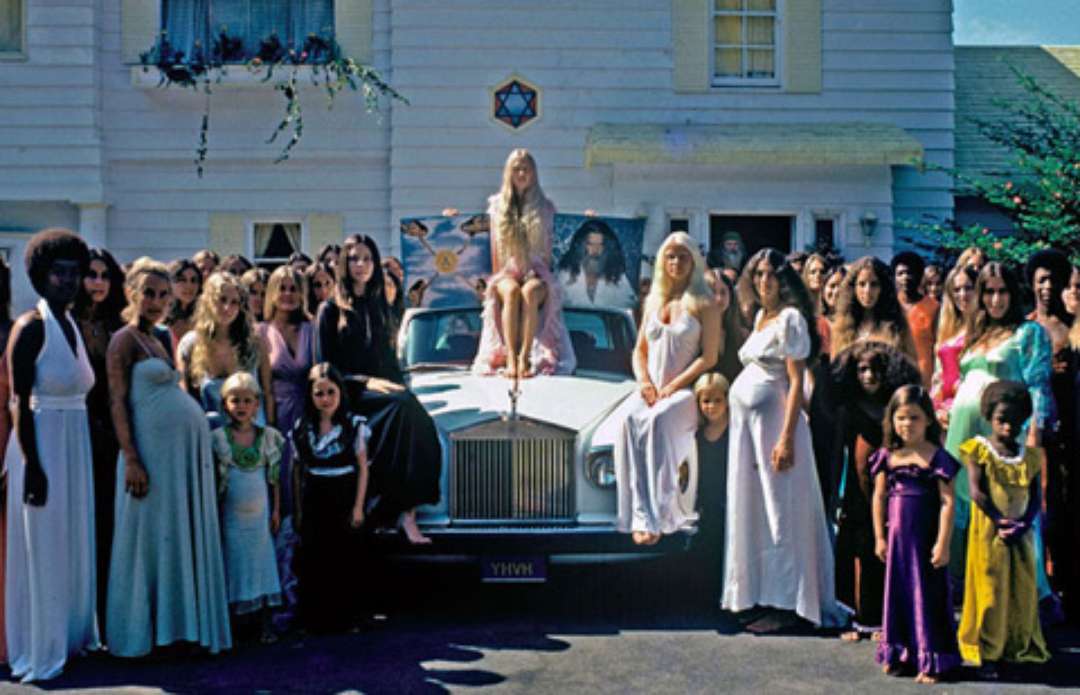
To see how easy we can get caught up in ritual the following text appears below the picture above at the website for this image.  While I’d say that there is some hint that you should be doing good things in your life, I think words like these make it too easy for people to think they can bypass practical applications of a positive spirituality over performing rituals:

“A ritual is a formula which is meant to dovetail our consciousness to the supreme consciousness of God. The whole purpose of a spiritual ritual is transformation of the heart – from selfish passions to a spirit of selfless service to others, from arrogance to humility and from envy to having the power to appreciate others. If this transformation doesn’t take place in our heart, to create good character, personal integrity and ultimately love for God, then these rituals are all a waste of time.

The value of a ritual is to the extent we please God. Its not the ritual but the content of what our consciousness puts into that ritual. The real essence of all spiritual practices is to purify our heart and awaken the innate love of God. If our rituals are performed with that aim in mind, that ritual, like a vehicle, will help to transport our consciousness to the supreme destination. There is the analogy of a package. If you give a gift which has beautiful decorations outside but a horrible gift inside, the one who receives it will not be happy. The content of the package is all important. So our motivation for doing the ritual is all important, otherwise its just a ritual. So if we have the proper motivation to perform the ritual then it will have a tremendous substance. What is that substance? We access the empowerment and the mercy of the Lord. Thus by giving our heart to the Lord through that ritual, then that becomes the true content of the ritual.

In the beginning of our spiritual life we follow rituals for our purification. When there is proper philosophy and service behind it, it can awaken love of God. It is a way to express our intent to love God, to serve and please Him. So when we have the right enthusiasm and intent, then the ritual becomes something very deeply spiritual. If it is done under the proper guidance and with the right purpose, it purifies our heart and motivations and gradually real genuine spiritual experience awakens from within.” – Radhanath Swami

It seems that it is human nature to gravitate towards ritual.  They make us feel good.  They are comforting and safe.  But like all things moderation is important.  Introspection and reflection on these rituals is important.  And some rituals are wholly harmful in practice and simply are inexcusable to allow them to continue.  Maybe we simply need to make doing good in the world a ritual instead. 🙂

Feel free to share some of your rituals and how likely you are willing to give them up! 🙂

Mango

IMG_20160401_191926 (1)I’ve loved mangoes ever since I can remember.  For me they are by far the tastiest fruit out there.  Love probably isn’t the right word, but it’s the best I can do.  I remember when I was young boy, my dad would cut up fruit for us to eat on Sunday mornings, and it was a real treat when mangoes would be in season.  He would spend a lot of time cutting, and end up eating little.  Very often I would eat an entire big mango in a sitting, and as the last piece was given to me I would express some faux-guilt about eating it all and my dad would look at me and say “don’t worry son, I’ve eaten so many mangoes in my life that you could never catch up to me anyway” and happily give me the last piece.  He did grow up in India and I am sure he did have a lot of mangoes.  Maybe to him it was like an apple.  But I don’t know, if I had mangoes as readily available as apples I don’t think I would crave them any less.  As I got into my teens, still every bit a mango fiend, and thought about someday sharing mangoes with my child I questioned my ability to be so generous.  I mean sure I’d share, but give all of it to him?  That’s not possible.

So here I am a parent and mangoes are in season and my son just loves them.  And I am happy to say I know exactly how my dad must have felt.  It makes me so happy to see that joy of being able to taste sweet, juicy, and wonderful fruit.  I cut away, and feed him as many slices as he wants.  I feel grateful that I am able to give him his heart’s desire in the form of fruit (knowing that such fruit would be a luxury for many families) and I even think to myself how many mangoes I’ve had in my life, and maybe it’s not as many as my dad, but I’m happy to let my son try and catch up.  His joy is so much better than a mango.

IMG_20160513_093359It’s easy to get caught up in giving our kid the things we didn’t have when we were children, but thus far it seems a far more spiritually fulfilling experience to share with my son the things I did have that brought me joy, because I know what it feels like, and I can connect with him in a way that I couldn’t by simply giving him something I didn’t have.  And if we feel positive about the people we are now, maybe those things you missed out on aren’t quite as important in the end.

Shepherding the Earth: Fallacies That May Destroy Us All

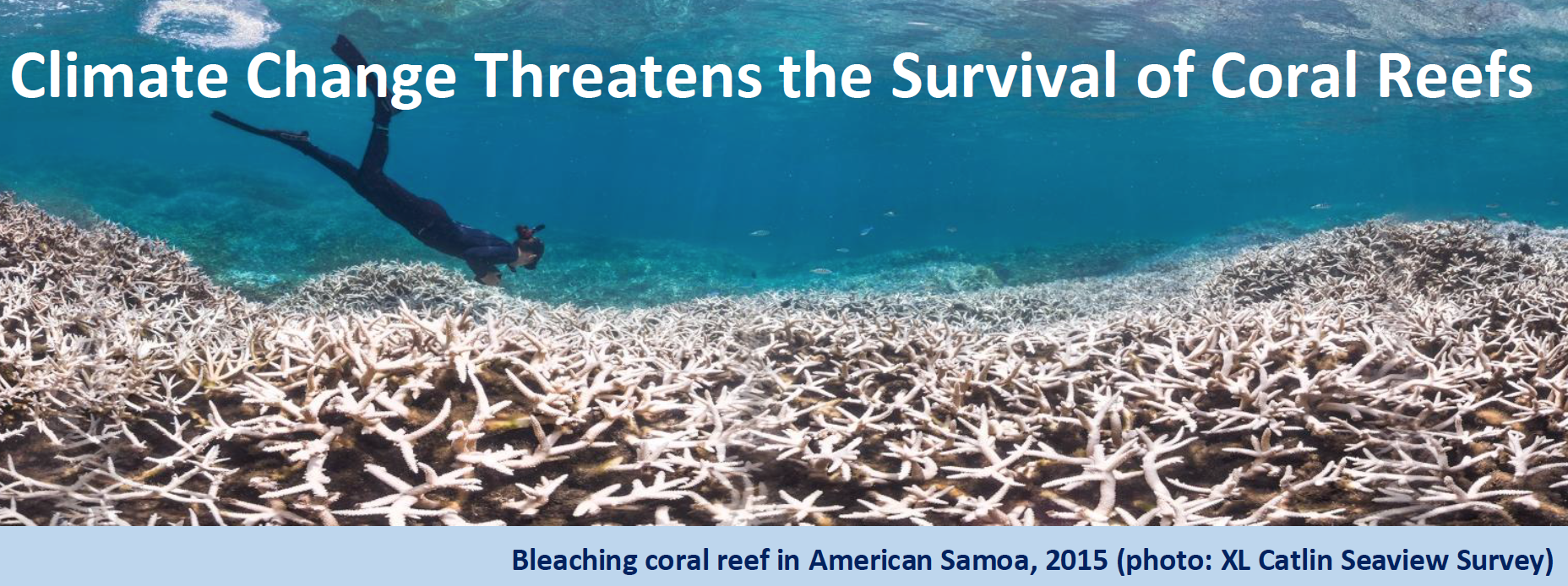
I was listening to one of my favorite podcasts called The Hidden Brain on NPR and they were talking about the climate change situation in a great episode called Losing Alaska.  Basically they were saying that scientific arguments have little merit anymore in talking about climate change.  I would have to say that I agree.  As WhiteEarthWhite EarthAlaskaMuirGlacierDisappearingFast194120040001Asomeone who holds a Ph.D. in the Atmospheric Sciences I can most certainly say that few people that I have debated with on the subject truly understand the problem scientifically and I don’t claim to be the smartest person in the world, this is simply the truth.  My field is applied math and physics.  Not only that, the climate system is complex.it   Involves interdisciplinary knowledge as well in chemistry, oceanography and geology.  To change someone’s mind from a scientific point of view, it would take a lot of study and learning.  Now you may be saying, wait I accept man-made climate change, and it it’s pretty obvious.  Well I would argue that you don’t really understand it, but it’s easier for you to accept because it already fits in with your ideology.  And I don’t say that to be demeaning, especially I don’t think it’s necessarily a bad ideology to have.  Specifically the one in which we recognize that something is very complex and we don’t have years to study it on our own so maybe I should listen to what experts are saying.  Much like we tend to believe our doctor when they tell us we have cancer as opposed to learning the requisite knowledge we need in order to test ourselves.

Instead of a Heavenly Father, maybe a Mother Earth isn’t a bad person to start worshiping.

But more to the point it really does come down to our personal ideology whether we accept the science, because let’s face it the science is telling us some pretty harsh things.  Not only is the Earth in a lot of trouble, but we actually might be responsible for it all.  And in order to combat the problem we are causing we are going to have to give up a great deal.  Transitioning away from a fuel source we heavily depend on will require large shifts in business and industry affecting the jobs of many.  And of course such a transition cannot be made overnight, but even at a moderate pace will require a cultural change at a rate faster than many of us would have a hard time adjusting too.  That of course does not make it any less compulsory.  Interestingly this podcast made the argument that we all are capable of great sacrifices at times of war or crises, and that dealing with man-made climate change requires an approach that is used by religion rather than one that is used by science.  I find myself having a hard time disagreeing.  While I would love to live in a society where science had a much more powerful influence on changing minds ultimately it does seem that we need to change minds at an emotional level over an intellectual one (which is to me what the podcast suggested by saying a “religious approach”).

In that vein, I wanted to address some of the main arguments I see used by climate change deniers, which tend to be more ideologically based instead of arguments that attack the scientific data on the subject.  They are more dangerous to me, because they seem reasonable.  They seem irrefutable.  This is not the case.

Science had been wrong before, why should we trust scientists?

                          The Geocentric Universe

This is quite true.  Scientists have been wrong before.  In fact progress is actually built on that very premise.  But notice the word “progress”.  It always strikes me as strange that people overlook this aspect of science.  Much like we learn from our own mistakes and grow and get better as people, this is how science works as well.  So we do get things wrong, but we also get a lot of things right.  Your daily lives in this modern world are a living result of that.  From the car you drive to the device in which you are punching out your arguments.  Now you could be right that someday we will discover that we were all wrong about this, but if we do, it will not because we were willfully trying to mislead people, but rather a new discovery has allowed us to view the world in a different way thus disproving our theory.  So unless you’ve got that said discovery I can guarantee you that our assessment about the state of the climate system is based on the best available knowledge we have about how it works.  And personally I see no shame in acting in the best interest of all on this planet based on what we know of it.

Finally, just because you don’t trust science or want to focus on the things it got wrong makes it your problem, and not science’s problem.  To refute climate change science on those grounds is to commit the genetic fallacy.  Directly address the assertions being made by those advocating the position in terms of their conclusions analysis of their data.  That is really your only option.  To explain it more simply “Al Gore is a democrat, and I hate democrats.  Al Gore gives evidence for why man-made climate change is happening, but since he is a democrat, he must be wrong.”  That’s not how it works.  Sorry.

Scientists are just doing it for the money. IPCC is corrupt.  Liberal media…

This argument is the same as the genetic fallacy because it is again an attempt to discredit to the reliability of the source to simply argue away what the source has to say.  I’ll admit that in such instances I will use the same fallacious argument back, because, quite honestly two can play that game, and I can play it better.  Let’s say all of us scientists are ego driven money-grubbing bastards.  My options are renewable energy companies and liberal governments, or oil companies.  Hmmm…I wonder who has more money.  Not only that with all the other scientists clearly in the wrong camp, all that sweet oil money could be mine (as it was for Wei-Hock Soon) as there are even less people to share it with.

In terms of fame, the fallacious argument made by deniers fall even shorter.  If I had definitive proof that all the other scientists were wrong.  I would be the one who was famous.  I’d be on all the news programs, giving talks around the world on a sweet oil company payroll, and even the liberal media would have me on their shows even to abuse me while I valiantly stuck to my guns with the full conviction that I was doing my science right.  I would be the hero of deniers everywhere.

Sometimes even fallacious arguments are hardly worth the effort.

The climate has changed before when humans weren’t around.  It’s natural.

7wG9WakThis is the first part of an argument constantly used.  It’s also known in logic as a type of naturalistic fallacy.  Just because something can happen naturally, doesn’t mean it can’t happen unnaturally.  Do floods happen naturally?  Sure.  Can floods also happen because of human activities?  Absolutely.  Natural selection happens in evolution.  But you know what also happens?  “Unnatural selection”.  The fruits and vegetables we eat, the dogs and cats we have as pets, and the horses we ride are all examples of this.   The same thing can happen with or without intention.

We cannot have an impact on something as big as the Earth.

                                                       The ecosystem formerly known as rain forest.

This argument is made without any substantiation at all.  It is often also used by people who are trying not to be religious but would rather take the James Inhofe argument that God controls the climate!  Of course examples of how we have changed climate locally can be found all over through the building of structures like dams on rivers, cutting down forests and poor farming practices.  In terms of the climate change issue specifically this person does a pretty nice break down of looking at how the amount of carbon we produce can quite easily explain the increase in carbon since pre-industrial levels.  There is no reason to believe that we couldn’t have such a global impact.  In fact that argument always seems to me a way of insulting or discrediting scientists again because it’s a pretty important question to answer before we would even start putting out evidence about climate change.  I mean if the amount of carbon we produce paled in comparison to the amount of increase we’ve seen then I am not sure how the scientific consensus could be developed in the first place.  It’s like when people say, the warming is being caused by the sun, and I think to myself “Oh my…we scientists all forgot to take into account the sun.  I better make a few calls.  Can’t believe we missed that one!”.

The Earth will survive.  We’ve had major disasters before and life persists.  Whatever is going to happen is going to happen.

This is the most insidious arguments, because it’s not fallacious at all in a logical sense.  However it is apathetic and immoral.  A lot of times people will say things like…”we’re just another species.  Whatever we do is natural, and whatever happens will happens.”

Let’s say you are an emergency manager who works at a national park in a mountainous area.  The weather is starting to warm and there has been heavy rains in the mountains and typically when such rains occur, especially in combination with some ice jams in the water flash flooding occurs.  It’s not a guarantee, but likely.   A town at the foot of the mountain in which the river runs through is going to get flooded, people could easily die if they are not warned.  This is a natural event, it was going to happen whether humans are around are not do you warn them?

I think most people would answer that they would.  To me arguing that doing nothing is the only option we have because the Earth is just going to do is thing is tantamount to doing nothing in this example, and simply letting people die.  Many people who accept the fact that the climate is changing but don’t think man is responsible still must accept the consequences to this warming.  Some of the one’s we are more sure of are:

  1. Rising sea levels drowning coastal populations and increased damages and deaths from coastal hazards such as tropical storms and tsunamis
  2. Increased heat waves and droughts
  3. Increases in extreme weather events as climate patterns shift
  4. Increased severity of extreme weather events.

What’s more is that these types of things will adversely impact the most vulnerable of the worlds population.  People who are in poverty.  People who depend on subsistence farming.  When local hazards happen communities do make sacrifices, and do look for solutions, through re-zoning laws, construction improvements, and other engineering solutions to try and make the world safer and have less loss of life.  So even if man has nothing do with the problem it doesn’t mean that we don’t have a responsibility to act to come up with a solution.

One can be logically sound but be ethically and morally irresponsible.  Ignoring what experts are saying, making sweeping and unsubstantiated statements that there is nothing we can do, that it’s just nature, and the Earth will be fine is really the same as having the power to do something to save lives and not doing it.  And this is why I agree that the conversation about climate change has to shift away from science and facts and be more about compassion, about love for our fellow human beings, valuing equality so that we all have the same chance to adapt and survive the changing climate, and about taking responsibility for the home that sustains us all.  These are important values regardless of what is causing the climate to change and these are things we can address and even already have some solutions for.  Of course I know that is even overly idealistic to think that such a solution of addressing people on an emotional level might work.  Hell it’s difficult to find a religion that unanimously agrees poverty is something we should do something about. I feel pretty bleak in general about us actually doing something about climate change.  It requires people to move beyond nationalism, beyond their own religious beliefs and worldview, which tend to not be very worldly at all.  Maybe we can’t win against the forces of nature, but it sure would nice if we could overcome the forces that divide us as a species.  We can try.  Maybe in the end it really is easier to move mountains.

Feeding Yourself to the Lions

Recently I read a blog by a transgender woman who wrote her post as an open letter to conservative blogger Matt Walsh, making some well-reasoned arguments against some fairly narrow minded views expressed by him in his blog towards transgender people being mentally ill and against the teachings of Christ.  I hit like on her post and went on my merry way.  I was surprised to find that in seeing my “like” she checked out my blog and left a comment on one of the posts where I discussed religion and atheism and left a polite comment, but made sure that the first comment she left was how she wished I could know God the way she did.  I checked out her blog and it made me rather sad, because it seems a lot of what she writes is the typical self-debasement so typical in evangelical communities and she basically justifies her own struggles and flaws being born a woman in a man’s body as a punishment for original sin, and that God is really loving and has done so much but she is the one at fault. She is the failure.  She is imperfect.  Victoria over at Victoria Neuronotes wrote about this topic recently.

Believe me, I’m not criticizing this woman, because I can’t even fathom the difficulties that someone like her must face in a world that has so little tolerance beyond the black and white world they see.  I imagine given such difficult struggles trying to find something that will give you the strength to fight, the strength to make some sense out of it all is strong.  What I don’t understand is how one reaches for a religion or continues to follow a religion that is the very same one that has prevented her from growing up to be free to be who she is.  It is the same question that I have for many African-Americans who are Christian and don’t seem to have be bothered by the fact that this very religion was the one that was used to justify them as slaves, as being inferior, segregating them from whites, preventing them from marrying someone who was white and the history of white Christians using their religion to oppress African-Americans continue to this day.

Look, I know the “No True Scotsman” argument is coming and we all know that’s a fallacy, so let’s put that aside.  We all know there are loving verses in the Bible and disturbingly evil verses is well and everybody cherry picks the one’s they want to prove they are the true Christian.  I’m not making an argument against God either, because I can see oppressed groups rallying around a spiritually uplifting philosophy.  But why the very one that oppressed them?  Why not choose Buddhism, or Hinduism, or one of many other choices out there?

I mentioned in a comment on a blog post from Sirius Bizinus recently that it seems we should question the validity of a system of beliefs that produces people from extremely kind, compassionate, and generous to derisive, judgmental, and unfeeling as a questionable system.  That perhaps goodness has it’s source elsewhere than, at the very least, the religion that has essentially made your life a living hell.  For me the psychology of such things is hard for me to grasp.  Is it because they want to turn something that was bad to them into something positive?  Is it a way to directly challenge those who oppress them with the same tool they use to do the oppression?  Like an atheist arguing with a Christian by quoting bible verses to show how their attitudes are not very Christ-like, But even so does that mean that one must actually be a member of that religion to challenge it effectively?  That doesn’t seem like it should be the case, but maybe it is.

What are your thoughts?

True Grit

I was listening to an interesting podcast about grit, based on the research by Angela Duckworth.  If you prefer to read a shorter article about her work you can do that here, or listen to a short TED talk she gave about it you can do that here.  I’ve talked before about the value of perseverance and why it is beneficial in my series about what I think makes a good human.  In that series I tried to also perhaps point out where these strengths could have negative results.  How we can perhaps go too far, or how their might be darker side to it.  The podcast brought this idea into the forefront of my thoughts again because they talked about how grit might actually be drawback if we continue to try at something that we are not likely to achieve we waste our energy.  We can become obsessive, and not know when to give up.  This is more commonly known as stubbornness.  What was really interesting to me was what they said in the final few seconds of the podcast which was that grit and stubbornness are really just the same thing, given different names based on the outcome achieved.  If one is successful they had grit, if one was not, they were stubborn.

Sadly,  failure is often dependent on effort too!

This then gave rise to a couple of additional thoughts.  One was to wonder what other qualities fall under a similar category, where they are one in the same just depending on the outcome? The second thought I had was a bit of sadness about how easily our strengths can become our weaknesses.  But then I thought, perhaps this idea we have about strengths vs. weaknesses is really an incorrect way to look at ourselves.  Because we can certainly say that a world in which no person had any grit would be a much different one and one that I believe would be much sadder and without flavor.  So we absolutely need these qualities and the consequence of such virtues is simply that we will not always succeed.  And so we find ourselves, once again, on the topic of risk.

This one is pretty true. However someone with a natural extra helping of strength, skill, intelligence often has more potential. Damn you Neil Degrasse Tyson!

When we see that star athlete, or master carpenter at work, or a genius who has invented some technological marvel, it can be easy to be an awe, and focus on a talent that must lie within giving them an almost divine like quality in their ability.  We see the end result and we don’t think about the years of practice. We often see the person who made it to the Olympics or the professional league, but not all the ones who failed to make it.  We don’t see the less than impressive or faulty works the carpenter built before he mastered his techniques.  We don’t see all the failed ideas and failed attempts associated with the process of creation and invention. History remembers the genius of Newton’s discovery in regards to gravitation, calculus, and his laws of motion.  Few except those who really study his life know how obsessed he was in the field of alchemy, which was of course a big waste of time.  Few know how much time he wasted searching for hidden patterns in scripture.  Also, as the podcast points out that many people don’t enjoy the periods of grim determination and practice it takes to perfect their craft, whatever it may be, at least not in the typical definition of fun.  It’s clear that idea that we may master something or have success can drive us forward through the less than savory hours and hours of effort it takes to achieve one’s goals, but in the end we don’t know whether our goals will be achieved.  So grit also means that we are taking a risk, because we could spend all that time and energy, and still fail in the end.

Unless quitting gives you more time to pursue something else that you are far better at and thus a higher chance of success!

Of course the easy answer is to say, focus on the journey, nobody is perfect.  I’d like to believe I am that type of person as I often tout the value of perseverance when I think about the effort it took to get a PhD which seemed less about my intelligence and more about grit.  At the same time, had I failed in the end, how much would I still be touting all that grit and determination?  It seems harder to celebrate the process that got you there without getting positive results.  I do feel that is what we must always try to do, because if did always focus on the end result we’re likely to be in a constant state of depression!  And perhaps the only real weakness is an inability to learn from our mistakes.  In the end that’s all we can really do, because there is value in the process, and most things that we think are our weaknesses might actually be our strengths with the wrong shade of intensity and it is only in reflecting on our behaviors and the outcomes can we gain the knowledge about how to use those strengths more wisely in the future.  Even then we will still be taking risks, but perhaps with a higher probability of success.  The final problem being that we are also terrible at assessing probabilities.  Of course if we always did things based on the odds, we also might never try anything, and yet it can be easily argued that much of our progress as a species is the story of overcoming low probabilities of success through grit and determination.

In the end, it seems to be a truth (perhaps even one with a capital T) that we are always bound to make mistakes and have failures.  The good news is that if making mistakes happens to everyone then there really is nothing wrong with us as long as we continue to strive to be more than we are, and strive to make this a world where everybody has that same opportunity.

Under Pressure

I’ve been away from blogging for a little while as work became quite busy and stressful as I was given a project that normally would take several months to prepare for and was given two and half weeks.  I’m not complaining though, I am still very fortunate to have the job that I do, and in the end it was a very rewarding outcome.  I had to organize a Science Olympiad tournament for 40 regional high schools and middle schools and it ended up going very well.  I didn’t actually have to do this task, but if I didn’t a lot of kids would have been hurt, and a lot of teachers very angry and so it really wasn’t something that I took any time to consider, I just knew it had to be done, and I did it because it was the right thing to do.

It got me thinking a lot about stress on how much it affects our behavior.  It cost me my spring break and I was bitter about that.  In that time I was also certainly less attentive to others in my life.  I was more moody, snapped a little more than I probably should have at people that I care about and had a lot of trouble sleeping.  The guilt of snapping at people at being less attentive to others, and lack of sleep are positive feedbacks which worsen your condition.  I am fortunate that it was only a rough few weeks.  I am fortunate to even have a spring break. I am fortunate that even though the semester still has lots of work left in it, there will be summer holidays starting in early May.  There are people who face what I face, every single day of the year, with additional stresses associated with finances that I do not face.  When I reflect on how irrational I might be in times of stress I think about the cumulative effect such things must have some people.  How hard they might struggle to find a way out, who they might time to blame their stress on, and wonder what things they might rely on to find peace.  It makes a lot of irrationality in the world understandable.

At the same time it makes you really question why it has to be that way.  We have the resources to feed everybody, we have the knowledge and ability to give good health care to everyone.  We know a lot about the universe and how to give people quality education, and we know the things that make people truly fulfilled and happy.  We know a lot about our own imperfections and biases so that we can avoid the pitfalls of our flaws.  We know better ways to correct deviant behavior, we know better ways to reduce the possibility of criminal and violent behavior, and we know better ways to raise.  We may not know everything, but we know better.  “Civilized” society seems so counter to how we operate as humans that somedays I really question whether or not it is all worth it.  Even though we might live longer on average than our hunter gatherer predecessors, and can avoid many of the deaths from natural disasters that our predecessors could not, sometimes I do wonder whether or not it was all worth it, and whether or not we shouldn’t all still be climbing trees to pick fruit.  And yeah maybe it would be sad to lose a few people to drought, or malaria, but so much death nowadays seems to be preventable and avoidable.  The destruction in Belgium and Turkey recently really makes one question whether all this is worth it.  Has any of this civilization experiment increased happiness?  Benefitted the home we call Earth?  Given our evolution as a species perhaps this trajectory was unavoidable, but it feels so much easier to accept deaths caused by the pitfalls of living in the wild over seeing death occur from senseless acts of violence that will never lead to any gain, or seeing children die from hunger while not very far away somebody sits on a fortune of money and resources they do not even need.

Alright, I know this is not very cheery and I am not helping much to increase human happiness either, but I think many people share these thoughts.  I of course do believe that this trajectory of civilization was to avoid human suffering and nobody really imagined the consequences we are facing now.  Maybe these are the growing pains we must go through.  I hope that our intelligence is great enough to get us out in the end.  Perhaps the real shame is that our lifetimes are still too short to be able to see the end result of all this suffering.  I wonder if a 13th century scholar who watched people die from plague after plague, and endless crusades and wars, could visit us now if he would actually be impressed with our moral progress.  Maybe what we have now is further than he or she ever dreamed.  Maybe they would remind me to consider myself lucky that I live in such times and that now that they have seen the change possible over the long march of time that there was every reason to continue to have hope and strive for more.  And if there is one thing that I know for sure is that nothing has ever been made better by despair.  And if I want a world in which people do not live in despair and have reason to be hopeful then I must lead by example, even if I only touch a handful of people in my world.  Who knows how far the ripples of our impact will travel through time.

You Know It Just Ain’t Easy

There are a lot of things in this world…perhaps brought about by humans, but nevertheless exist at least as part of our lives.  They are important things, things we fight for, things we live for.  I’m speaking of things like freedom, justice, love, spirituality, loyalty, equality, truth, and there are probably others that I’m not thinking of right now.  These things often give rise to a lot of disagreements in terms of what they mean, they often lack a specific definition, and very much depends on one’s perspective based on the family, culture, society in which we were raised.

But they do. And maybe sometimes they should.

All of these things are core to who we are as a species and have the ability to impact our own personal happiness and sense of well-being, as well as how we treat each other and all life in general.  All of these things can also be extremely frustrating because of how different we view them.  Ever tried to love someone who wasn’t all that impressed with the way you did it? Ever had someone question your loyalty even when you thought your behavior expressed loyalty?  Ever fought for some group’s freedom, but have the very same group question the way in which you fight for that freedom or even claim that you weren’t helping but making things worse?  Ever believe something was very important to spiritual health only to be told by someone else that it was irrelevant?  The truth is that that all of these things are really really complex, regardless of how simple and natural it might feel to you.  These things are often very dynamic, leaving us with moral and ethical conflicts over time, sometimes changing our views slowly or rapidly as we experience new things.  They are often tied strongly to our emotions and sometimes seem beyond reason, they are just how we feel.  It also tends to be not very satisfying to be alone with our perspectives.  We seek connection to those who share similar perspectives and points of view.  I would say all this is good, and that our perspective should change over time.  We should be seriously considering other points of view and striving towards some sort of universal truth about these things even if we never actually reach it in our lifetime.  Because if we can nail down these things it is the benefit of all.

However there is another core part of who we are as a species.  We don’t like things that are hard to define.  We like to organize, we would prefer things to be simple.  Simple is less costly, it gives us more time for other things.  We spend less time sitting their thinking when we need to make sure we’re safe, getting resources to survive.  It’s very evolutionary. When things are actually hard, when they are not quite within our grasp, that’s when the real trap springs.  Our need for organization, categorization, and simplicity begins to create rules.  It begins to create rituals.  Rules and rituals are easy.  I’m not saying that we haven’t created some convoluted rules and rituals, but they are easy because we know that when we follow them the conclusion is guaranteed.  At least that’s the way we tend to think.  They give us the intangible in tangible form.  They turn things that are dynamic into the static.  It takes things that might take a lifetime to learn into an instant discovery.  For those with a penchant for defaulting to authority, it is a Godsend. Literally.  And while it might be natural for us to do these things, it is a complete disservice to these lofty ideals and values we live and die for.  And maybe it’s not even a bad thing that we try to create a system that fits these things, but when we reduce it to the system alone things usually turn out badly.  Love has to be more than just placing a ring on someone’s finger.  Justice has to be more than just an immutable punishment for an immutable law.  Whenever we think we’ve reached a state of equality or discovered a truth, we must still question and test instead of resting on our laurels.

The Geocentric Theory. One of the best examples of human fallibility and seeing connections in nature.

I think that we have developed a very good “way of knowing” with the scientific method. It is demonstrably the best way of knowing we have so far.  It takes very little effort to look around the world and see that the best way is not only not the only way in which people come to know things, and it is often by no means obvious.  I mean it’s not to say we don’t start off life as little infants constantly testing and trying to understand our world through observations, but we do often make mistakes in trying to understand the world around us.  Mostly related to our tendency to find patterns that done’t exist.  Our senses often deceive us because we evolved for life in a small geographic environment, with a small group of people, and that is often what matters the most.  As “ways of knowing” get better and more effective, it reveals our fallibility.  It tells us we aren’t as smart as we think we are, and that we might not be doing things as well as we could.  Even as a scientist, who feels like I know my way of thinking is a more reliable one, it can often not feel like enough in a world with so much suffering and when so many need help quickly.  It is not realistic to simply wait for people to come around to a better way of looking at things.  As much as I like to philosophize “ways of knowing” we must also remember that such things are not so easily divorced from “ways of feeling”.

Collapse after angle of repose is exceeded

History tells us that change comes through slow increments like weathering and erosion and also through suddenness of revolution, yet in both cases forcing it doesn’t necessarily help matters.  It’s like life is like a slope of sand which slowly over time, grain by grain is deposited on a slope until we reach some critical mass beyond the angle of repose and the weight of the sand causes a sudden change in the landscape.  With no real way to predict which grain of sand will cause it all to shift and give way.  It’s like we all have to really try to do better, while at the same time just watch it all happen as if we aren’t even a part of the story.

So what is the answer to seeing eye to eye on these very important values?  I don’t know.  I think the best we can do is accept that things change, and that nothing is settled.  We can still try to create rules, as long as we are not a slave to them.  We can try to make things tangible, as long we accept that those rituals are empty without a lifetime of effort.  One thing we can say for certain is that life would lose far too much flavor if it all could be settled so easily.  We must accept that life is hard in large part because it simply can’t be done alone. And while I might be an idealist thinking that we might someday reach at least some level of harmony among all humanity, I see no harm in striving towards that.  What we have to gain, I think, is too great to just give up and say “It can never happen”.  As I always say, there is much more in this world that we all have in common than what drives us apart.

Life, the Universe, and Everything

“And then, one Thursday, nearly two thousand years after one man had been nailed to a tree for saying how great it would be to be nice to people for a change, a girl sitting on her own in a small café in Rickmansworth suddenly realized what it was that had been going wrong all this time, and she finally knew how the world could be made a good and happy place. This time it was right, it would work, and no one would have to get nailed to anything.”

Douglas Adams, The Hitchhiker’s Guide to the Galaxy

It is today my 42nd birthday and I decided this would be a good year to reflect.  Why 42, why not 40 like any other normal person with a penchant for round numbers?  According Douglas Adams’ Hitchhikers Guide to the Galaxy series a supercomputer was asked to come up with the answer to Life, the Universe, and Everything and 42 was that answer.  So I am at the age which is the answer, but of course if you read the series you know that while the answer was determined a more powerful supercomputer had to be created to determine the question (which turned out to be the planet Earth).  So 42 seems like a great age to think about answers and questions.

This is also the year that I often joked would be when I started my own cult.  This was supposed to be easy as I was going to have a good portion of Twitter followers, find myself a good compound with fertile soil and enjoy the good life.  Extra wives would have been optional.  It’s weird how as I get older there seems to be more of a drive to keep life simple and surround yourself by like minded people.  Anyway, Twitter really doesn’t suit me, for as you can see, I don’t say many things in 140 words or less so my followers are few, and I think life is better that way, and also I’m not a very proficient gardener, so I’m probably better off living close to the farmer’s market.  So here I am, nobody famous and nobody to follow, and a mini essay of reflection is probably more suited to greater personalities, but hey, it’s the age of information and I have a blog, so why not write? 🙂

Life

I think what makes being a teenager so difficult is that this is the time in your life when you start to self-actualize a lot more and really think about the future.  It’s a terrible thing really, because you are also still young enough where you really don’t know shit.  I remember thinking a lot about the type of person I wanted to be.  My dad was (and still is) an alcoholic and as a teenager I knew that I didn’t want to be like my dad.  Kids respond to those who are consistently there for them, and my mom was that person.  Of course I’ve come to realize many positives about my dad as well, but as a kid I knew that whatever way my dad was, wasn’t working.  My mom was loving, supporting, nurturing, and always there.  At the time I never really looked at my mom and dad’s personalities as related gender, but more as what are the behaviors that lead to increased happiness and that bring increased happiness to others.  I am sure it did in many ways shape why I’ve always felt more free to be myself more in front of women than men, and why I look beyond arbitrary categorizations of people and simply try to stick to values that bring happiness.

I also remember thinking that I was not the person I wanted to be.  I felt like I was this amazing person who was trapped inside myself. Inside a shell that I needed to break out of.  I know now that there is a certain element of being a child of an alcoholic that makes us more fearful of self-expression because of how we internalize our parents’ addiction, but I think teenagers can simply be apprehensive about inserting themselves in the world no matter how much they want to.  I know I am a person who leans toward safety over risk, and that was one of the things I wanted to get better at as I got older which was to be bold.  It’s still the quality I struggle with the most, but I’m proud to say that the vision I had for myself at around the age of 16 isn’t far off the mark.  The compliment that I have received several times and means the most to me is when people tell me that they can tell immediately the type of person that I am because I am so open and.  It is the part I like about myself the most especially because I think life is too short to pretend with people.   I am proud that I have reached a point in life where I am comfortable in my own skin, and it is something that has always seemed like a necessary way to be, but I in no way want to imply that I have go there solely on my own.

Another thing I worried about when I was young was that I wasn’t original.  I felt like everything I was, was copied from somebody else.  I didn’t have any original ideas, I wasn’t creative.  As I was thinking about what to write in this post yesterday I was wondering if I should say that the meaning of life is “theft”.  We are born as absolutely blanks and while genetics may texture our canvas to a certain respect we are painted on by the many people we come to know in life, our culture and society also paints broad brushes over us too.  Of course theft isn’t really the right word.  People and society paint things upon us and we have little say in that.  And in most other cases it is people who in my life who have given, and I have taken, and I would like to believe that with time I have been better about showing my gratitude.  It would not be until a certain Star Trek: The Next Generation Episode that I felt better about my lack of originality.  Here Captain Picard comments on the emotionless android Data’s violin playing.

PICARD: The good doctor was kind enough to provide me with a recording of your concert. Your performance shows feeling.
DATA: As I have recently reminded others, sir, I have no feeling.
PICARD: It’s hard to believe. Your playing is quite beautiful.
DATA: Strictly speaking, sir, it is not my playing. It is a precise imitation of the techniques of Jascha Heifetz and Trenka Bronken.
PICARD: Is there nothing of Data in what I’m hearing? You see, you chose the violinists. Heifetz and Bronken have radically different styles, different techniques, yet you combined them successfully.
DATA: I suppose I have learned to be creative, sir, when necessary.
PICARD: Mister Data, I look forward to your next concert.

So yes, I now feel original, thanks to lines written by somebody else.  Star Trek has actually taught me quite a bit now that I think about it. 🙂 Life is also full of irony and paradoxes enough to make you scratch your head for a lifetime.  In the end though, isn’t this what we really are…a product of others, both biologically and environmentally with a unique level of proportions such that we are originals? What I really mean to say about all this is that I feel really grateful to all those who have given and for what I have taken.  I have taken the best of you to the very heart of me and a result carry you everywhere.  Some I’ve not seen or talked to in some time, some it may have only been a brief time in which we knew each other, or perhaps were not even very close friends, but I saw what was good in you, I smiled at it, and celebrated it and let it course through my arteries.  I am thankful for all the love, the friendship, the inspiration, the memories, the lessons taught, and yes even the criticism and in some cases hurt.  I am unique and original because of all of you and there is no other way I’d rather be.

The Universe

Growing older also means growing more aware as you continue to experience and learn in life.  As someone who is strongly committed to learning as awareness grows so does the burden of that knowledge.  It is only in the most recent years that I have truly understood the expression ignorance is bliss.  However, it is also important to remember that your own bliss is of little value to anybody else but yourself, and we are a social species.  As I’ve learned I continued to have more awe for this amazing universe we live in, uncovering the darkness that shrouds knowledge also means discovering the horrors, the malice, the pain, and the suffering.  It is all the worse when you are one of the lucky ones to have things far better than so many.  It makes you question the very right to feel happy.  And when it comes down to it, it makes me feel bad just complain about how heavy the thoughts are sometimes, because I am so fortunate to just have to think about it and not actually experience the hardships so many bear.  I am fortunate that I can put those thoughts to the side at times. However, I also know there is no denying it either.  And I know that just feeling sad and depressed all the time would be debilitating so there is nothing for it but to do something about it. I am not helpless under this weight although sometimes it can feel that way.  So I try, and I let myself feel happiness for all the beauty that exists as well.  There is much to fight against in this world, but I feel if we forget what we’re fighting for, it’s easy to get lost in the darkness.

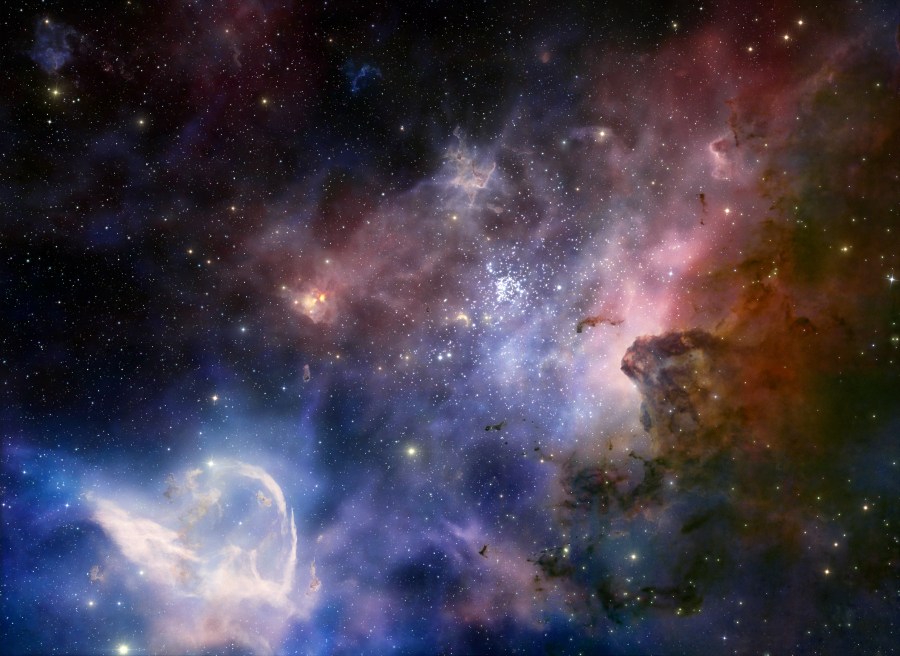
The cosmic glow of the Carina Nebula as seen in a stunning 3D reconstruction in Hidden Universe, released in IMAX® theatres and giant-screen cinemas around the globe and produced by the Australian production company December Media in association with Film Victoria, Swinburne University of Technology, MacGillivray Freeman Films and ESO. The Carina Nebula contains two of the most massive and luminous stars in our galaxy, the Milky Way. The original image was taken by ESO's Very Large Telescope.

I believe that it is this mixture of awe-inspiring beauty and soul-draining horror that drives us.  I think we can’t help but feel small in the face of it.  Some try to conquer it by building belief systems that explain it all, some try to chip away at the answer slowly through careful investigation, and some just turn to vices to distract themselves and to numb themselves.  However, from what I’ve seen, the true winners in this world are always the ones who accept how small they are in the face of it all.  It’s bigger than any one individual and it’s the one thing we all have in common.  It is enough to make you just sit there and think “Why can’t we just all get along? It really does seem so simple to just be nice to each other.  Nobody has to get nailed to anything.

As I look forward the things on the horizon are amazing.  Just as there are things in my young life I never thought possible but exist now, I know there are many unknown wonders that await me for the rest of my life.  I like being this age and knowing all the things that I know.  Wisdom comes to you without even knowing it, and I like it. I admit that I am not a big fan of leaving this existence.  I see us getting closer to things like unlocking the mysteries of aging, replacing organs, interfacing the computer to the brain and I wonder if in the not too distant future we might have a choice to live far longer than we do to do.  I am jealous quite frankly.  As someone who embraces change and has seen how changes occur over time spans far greater than our human lives I would like to experience it.  I want to choose when I want to leave this existence and have a shot at deepening that well of wisdom beyond this short time on Earth.  When I think of all the change that has occurred over 1000 years, 10,000 years and so on…I wonder what it would be like to see it…what perspective that would give you…how you would look at the universe differently.  I suppose such a chance will not happen, but I keep the dream alive only because it is at times helpful to remember that we are not only small in terms of the vastness of space, but also the vastness of time.  I can’t be expected to figure it all out, and that’s okay.

And Everything

Mommy_DhyanThere isn’t much more to say here.  Of course there is more to life I suppose, but it’s amazing how important some people become so that even the other things seem to tendril out from it.   I know that there are no guarantees in life, but that’s why living in the moment is so important. I am lucky that I have a life where I can take care of them just as much as they take care of me. The fact that our love can put some things at the center of our life, at the center of our universe, is amazing  What more could I want?  I do have everything.

Creeps and Cat Calls

catcallsI posted the above graphic on my Facebook page the other day and it elicited a good bit of discussion.  I had started writing a response to someone’s comment and it was getting a bit long so I thought I would turn it into a blog post since it goes to the very roots of how I became a feminist.  Actually I would rather say “how I began my journey to become a feminist” because I don’t know if I truly am yet.  It takes a lot of time to overcome social conditioning in a world tilted against half of the population.

It wasn’t until the age of 23 that I had really fallen in love and had what I considered my first serious relationship.  Her name was Anna (well still is) and she was just a wonderful human being.  She announced to me early on that she was a feminist and studied gender sociology.  The word feminist at that time, and even still today, had a negative connotation and I was not unaware of it, but I’ve always been one to go beyond the label to know the quality of the person, but one can’t help but have the only ideas that you know about feminists in your brain, even though I knew that there was no reason for men and women to be treated differently, and so I had no problem having her teach me more.  The fact that she was crazy about me made me feel pretty good about myself because it meant that I wasn’t like other guys and that there had to be some spark of equality in me that made her feel safe.  She taught me a lot of things, but it’s interesting how academic it can all feel.  Not that I don’t take academic research seriously, or even feel a certain level of outrage, but sometimes things don’t hit home until you really see it and it becomes personal.

We were both grad students at the University of Oklahoma and while I had roommates she had her own place and our relationship got to the point where I was spending most nights there.  One night we were fast asleep in bed, when the phone rang, which was next to her bed.  It woke me slightly and I heard her pick up the phone and say “Hello?” A few seconds passed and she once again said “Hello?”. And then after a few more seconds she yelled “Oh my God!” and hung up the phone.  When I asked her what was wrong she said it was a guy on the other end of the phone and he asked her to keep talking so he could masturbate to her voice.  It was an incident so befuddling to me that I almost couldn’t process it in the moment.  I know I held her, but I don’t think at the time I could truly understand how it made her feel.  However, I did know at the moment that something was wrong.  Something was fundamentally wrong in the world.  This was not the first time she had experienced something like this.  And it was by far not a rare experience for women in general.

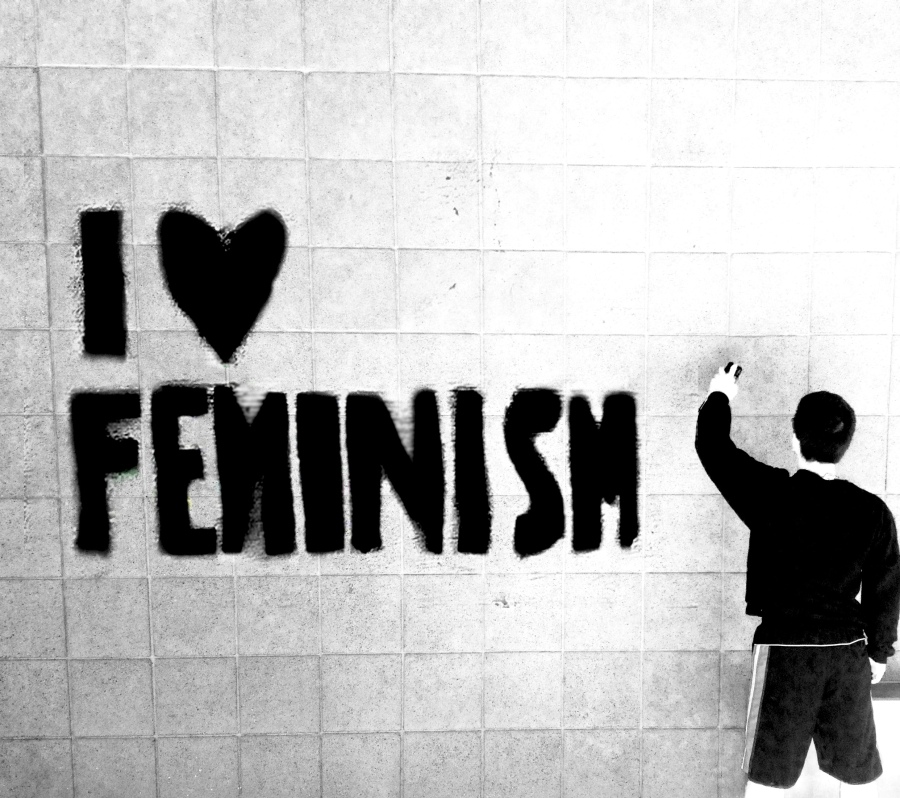
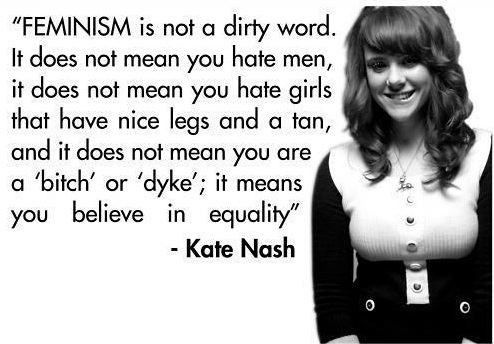
kate-nash-quote-feminismFeminism has come far, fighting a lot of the big and obvious things that have been suppressing women in our society, but the undercurrent of misogyny remains.  I realized the day after that night time phone call that there were simply certain things in this world that I would never have to face.  While laws had been passed to protect women, to give them better opportunities for jobs, better pay, a wider variety of careers, there were certain things that I would never feel.  I would never be cat called, and I would never have some creepy person calling me in the middle of the night using me for purposes of masturbation, and I would never have a guy honk at me because I of the clothes I was wearing.  It would be easy to be glib here and say as guys we would love all these things, but it’s a position of privilege to feel this way because I could enjoy the fantasy and then once it’s over I would go back to being a man.  Someone who isn’t judged based on the most superficial qualities about myself.  No one would really question my morals for wanting to be sexy or liking sex.  No one would criticize me if I wanted to be more modest.  I would never have to deal with a date who seemed nice, but felt that if he was going to pay for dinner I had to put out.  That he had a right to my body at a certain point, and that being physically weaker I might not be able to fight him off.  I would never have to face the humiliation afterward when my body, when my very personhood was violated and reported the rape that so many women have faced by having the finger pointed at me.  What was I wearing?  Did I have any alcohol?  Did I lead him on?  Did I invite him into my home?  None of these things are permission for rape.  And so like so many women I might also make the decision to not say anything.  Just suck it up and move on so as not to invite criticism and judgment, and possible even more violence at the hands of the person who raped me.

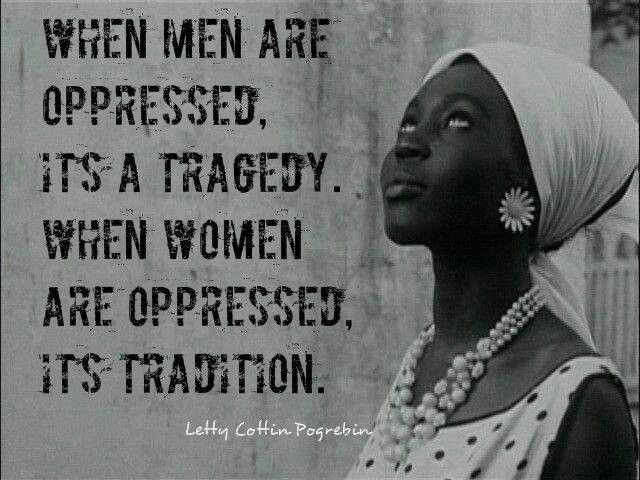
traditionThese incidents are not rare.  They are not spread out sparsely across the multitude of women.  They are common, there is no hiding from them, they happen every day.  It is the totality of all these things a woman has to face.  This oppression and disregard is sometimes more obvious and sometimes less so, but they are ever present.  Is it any wonder that many women begin to think the worst of men?  Find it hard to trust them?  Find it hard to trust themselves when it comes to even telling one of the good ones from the bad ones.  At times I have been one of those men who complained about women not appreciating a nice guy.  I was wrong to do so, because even if I am nice, given what so many women have gone through, my compassion should always have been at the fore.  And if all this isn’t sad enough, it’s important to remember that this is one of the countries where women can consider themselves having it good compared to many places.

Look, I’m not blind that there are issues that negatively impact men as well, but the issues men face aren’t even close.  I also find that as we actually truly start to value those things that we consider feminine those culturally narrow definitions of masculinity also begin to fade.  While I may not know yet whether I am the feminist I want to be, I know that the fight for equality is everybody’s responsibility and that it lifts us all to a better position morally, ethically, and spiritually.  The only way for everyone to have power is through equality.  Power combined with inequality means that someone is losing.  And women have been losing for far too long.