Of Myths and Monsters

The Minotaur seems very nice
A little rough
Around polished edges
Intelligent
This comes from being two people
Animals?
Detached because he’s misunderstood
Misunderstood because he’s detached
But you can set the man free from bull
He’s a gentle beast after all
Right?
Tear down those four walls
Ring placed hopeful on hairy hands
And suddenly you’ll be a-mazed
It’s not four walls
And you’re inside

In fabled tales of old
The story’s often told
How Theseus searched for Minotaur to slay
But you’re no hero
He’ll bring your will to zero
And in that maze you’ll stay

It’s all in your mind
But I think you’ll find
Your hope is never-ending
Which way to go
You’ll think you know
With your wind and all your wending

Illusion of choice
Suppression of voice
He’s there to block your way
If you do the math
And find another path
He’s sure to make you pay

Well wrong IS wrong
Also right is wrong
Lost and listless
Crawling on hands and knees
Questioning
Every decision you’ve made
Never pleasing his taurine form

You must be a bad person
You must not know how to love
You must be unlovable
You will never escape

And why do you deserve freedom?
It’s his labyrinthine home
Or you’ll always be alone

Sacrifice and appease
Then get on your knees
Or the Minotaur will rage
If you cause displeasure
He’ll use violent measures
Deadening ends within his cage

No straight lines
You’ll look for a sign
And cry out to the skies above
But if there is a God
Who observes you plod
He’s not one made from love

In truth your only sin
Was to open the door and let him in
And offer him your heart
But he’s had you pegged
In his morass you’re dragged
He’s been bending you from the start

What cosmic justice cares about us?
Kindness may be a virtue
The king of all
But why should souls
Who are manifest
Of love and compassion
Be prey to the most monstrous of humans?

If this be divine law or decree
Said Consciousness can keep it
Leave us alone
The heartbreak is too much for us mortals
Do You not hear women weeping?
Does not the sound of pleas
From the kindest among us
Trapped forever in mindless mazes
Shake the very foundation of heaven?

Let Kingdoms fall into the sea
Set love and kindness free

Free Will and Changing Your Mind

There was a very good question posed to Sam Harris on his podcast which was:

“If free will is an illusion, why are intentions morally relevant?”

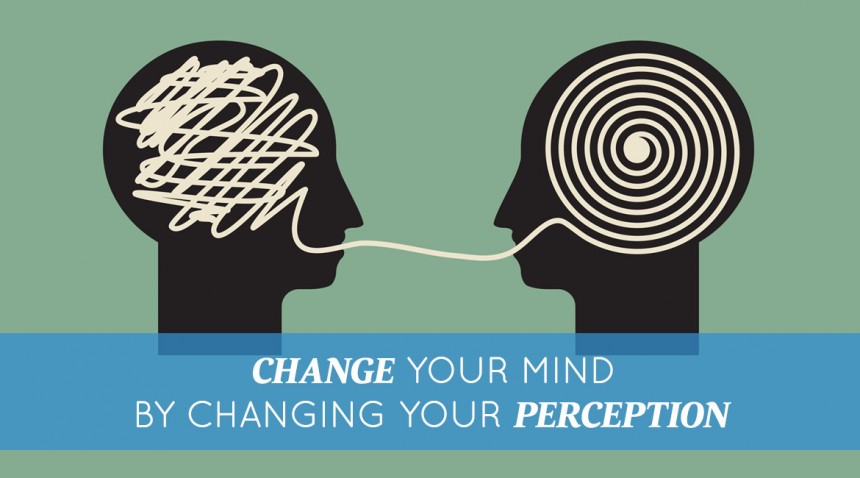
Sam Harris’ answer was very good, but I wanted to throw in my own answer as well.  This also brought to the fore questions I have been asking for years and has led me on a path to learn about the brain and cognitive science: “How effectively can we change our own minds about things?  And what is the manner in which we can change our mind?”  Now perhaps to some, the question posed to Sam Harris doesn’t seem related, but I think there is a very important connection here.

Whether or not you agree that free will is an illusion or not, isn’t something I want to debate with right now.  I haven’t heard a compelling reason in favor of the idea of free will in some time.  I think what the more interest question is to understand why people are against the idea of free will being an illusion.  Sure you could argue that religion is part of that reason, but even secular people are uncomfortable with the idea.  The question posed to Sam Harris says it all.  If there is no free will, how is anybody responsible for their actions?

The word responsible is the word that doesn’t belong here, and this is what most people seem to miss.  This has important consequences for our justice system.  So then why do intentions matter?  The reason why intentions matter is because of what it says about your brain.  Let’s say I’m driving and I accidentally hit a cyclist, what does this say about me as a person?  I may be careless on the road.  Maybe I need to take some more driver training classes.  Maybe I need glasses.  Maybe if I’ve gotten into numerous accidents it means I probably shouldn’t drive any more.   What if I feel genuine remorse for what I’ve done?  Doesn’t that say something about how my brain works as well?  Do I belong in jail?  I don’t think so.  But if on the other hand I see that cyclist and get a sinister grin on my face and speed up and mow that cyclist down, what does this say about me?  It says that I am a person who takes joy about causing harm to others.  I might not feel remorse…maybe I do…but there would be something troubling about my mind that speaks to what future actions I am likely to take.  What if I know the cyclist and hate the person and that’s why I mow them down?  This also says something troubling about future actions I might make.  Because who might be the next person I hate, and what might I do to them?

I have talked about the idea of “personal responsibility” before and as I write this post it becomes even clearer why that phrase confuses me.  Having a party centered around personal responsibility seems to be an even bigger mistake.  We are a social species and it’s easy to say we are responsible for ourselves, but I don’t think that’s really the case.  It is the environment which shapes the individual and we have laws in large part not to control individual behaviors but to protect society.  It seems to me that it is we as a society, as other people in a person’s life that intervene to impact someone’s behavior.  And when a person does change their behavior it is a response to what society values, or through some personal experience in interacting with society or their environment that changes one’s mind.  If I am going around running people down with my car, whether accidentally, or on purpose, it is society that in some way says hey you can’t be doing that and finds an appropriate way to make me less of a danger.  If I take it upon myself to make changes, it is because of some emotional reaction to what I’ve done that is the impetus for change.  Rather than a decision to change, my body, my mind doesn’t want to feel a certain way and thus pushes me in a direction to not feel that way again.  My consciousness of that motivation is what gives me the illusion of free will.

Change in an individual seems to be a result not of an individual’s decisions, but rather the environmental context in which we live.  If society hasn’t shaped us to be more receptive to changing our mind, it is actively intervening to try and convince us to reform our views.  Sometimes successfully, sometimes not.  It seems that there is no real reason for me to want to change my mind about anything when I think about it.  I mean if what I believe has kept me alive so far, to be of an age to reproduce and raise children to a sufficient age so they can reproduce then what I believe must be pretty reasonable.  Now for a social species it could be that what I believe is very counter to surviving well with the people around me.  But as long as I generally believe what the “group” believes I’ll probably be alright.  Whether those beliefs are true or not makes no difference.  It really doesn’t even make a difference if they are harmful, providing that harm doesn’t lead to any consequences that would significantly reduce my chances to reproduce.

As we realize the global society that we live in, and that more and more of us are infringing on each other cultural and intellectual space, as we become more acutely aware of the harm of certain beliefs and values, not just in our community but over the entirety of the planet, I feel it’s important we start asking how can we all get along?  What values should this global community have?  What differences can we afford to maintain and still get diversity?  Does diversity’s value diminish over time if we hope for unity among humankind?  And given how difficult it seems to be to change one’s mind, what are some beliefs we could have that would provide a backdrop to growth for a better future where less humans suffer, and well being is increased?  It is this last question I want to explore a bit more in future posts.  I think tied to this is the area of human emotion which I have become more intrigued with of late.  I think that our emotional and reasoning side are more tied together than we think and that without emotions, at least for humans, growth isn’t possible.

The Scales of Justice

I recently watched this clip from Last Week Tonight with John Oliver about public defenders.  It is not a slam against public defenders, but rather a criticism of a system in which anywhere from 60-90% of people arrested cannot afford lawyers and rely on public defenders, but there are just far too many of them for public defenders to do their job adequately.  This leaves many defendants with less than adequate representation.  As a result over 90% of cases by public defenders end in plea bargains, even when the people aren’t guilty.  That’s a quick summary, but watching the clip is well worth the time and speaks for itself.

And I started to think about the entire philosophy of justice we have in this country and got really sad about it all.  It would be one thing if we had a beautiful ideal and we were continually striving towards it, but it seems that there is enough of a portion of this country that feel justice is working fine, and that if you are in a position to be arrested than you simply have some sort of punishment coming your way.  The system is rigged from the police procedures that target low income people knowing that many can’t afford to fight back and will pay fines whether they were really guilty or not, to the court system which puts low income people at a severe disadvantage, to the prison system which profits from long jail sentences for minimal crimes.  And once they are in there, opportunities are so low once they get out.  As President Obama said, we have 5% of the world’s population, but 25% of the world’s prison population and compared to other western nations with similar standards of living we are one of the least safe nations.  The violent crime rate is down 40% from what it was in 1980 and yet prison populations have increased by over 400%.  Something is definitely not right.

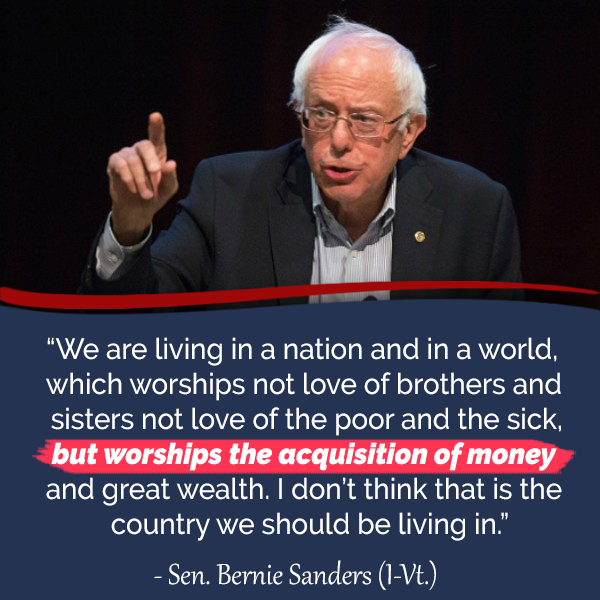
Bernie_memeAnd my question really is why is it this way?  As poverty continues to grow in this country why do we continue to punish the most impoverished of our people for simply being in poverty?  I’m not saying that there aren’t people who commit crimes and that we should just let it happen, but when you look at the environment and challenges they face, those who criticize rarely have experienced such adversity.  Sure there is always a small portion who rise out of poverty but for the most part the poor are simply exploited for their labor or for their money.  On average, we don’t give them a living wage, we don’t give them access to equal education, we don’t give them equal access to quality health care, and we don’t give them equal access to healthy and affordable food options.

But they all deserve it right?  Making those bad decisions when they had so many good decisions open to them.  Do we not have a responsibility to raise the less fortunate up?  Do we just leave those who haven’t had the opportunities we had to languish and justify it with the idea it’s their fault they are in this position?  What about forgiveness?  What about compassion? How can we paint such a large population of our country with just one color and ignore the tapestry of lives that exist there?  As the top income earners continue to suck away the wealth of the bottom 99% why do we turn our attention downwards, kicking those at the bottom instead of shaking the tree more to let the fruit fall to the ground?  Some people in this country act like if we just eliminated the poor the country would be a better place, but in fact it would be chaos and nothing would remain.  No soldiers to fight our wars, no workers to pick our food, serve our food, work in retail, and all the other jobs we don’t even notice get done everyday.  And even if the void could be filled, the capitalist policies our country function on would simply shift more of us down to the bottom, while the rich keep benefiting.

Welcome to an economy built on consumerism and profit.  To answer the real question why, one simply has to follow the money.  It is to the benefit of the rich to keep the population of a large portion of the country poor.  Because there is only so far wealth can grow, it is finite and if the populous has more, they have less.  Life, liberty, and happiness for all citizens of this country take a backseat when money is involved.

I know this post was ranty and I try to put more logical discourse, but just sometimes you just look at these large systems that are so difficult to change when you are just one person and see millions upon millions of people being impacted by a system that is simply not there to help them, and in the long run doesn’t help the rest of us either.  I made a resolution with myself about a year ago then when I moved strongly by something emotionally I need to not just complain but do something positive, even if it’s just donate some money to a worthwhile charity.  Although perhaps on the periphery of the central theme of this post, there is something that I have been sort of procrastinating getting involved in for some time and I am happy to say I am procrastinating no longer.  I have decided to be a CASA volunteer which is a wonderful program where the volunteer acts as an advocate for a neglected or abused child in court until the system finds them a good and safe home.  Incarceration is a strong possibility for children who grow up in broken homes and maybe helping in this way I can help a few kids stay out of the prison system in this country.

Crime and Punishment

On Dec. 17th, Ethan Couch, age 16, was sentenced to 10 years of rehabilitation after admitted to driving drunk and killing four people.  The reason for his light sentence according to the judge was that the defense successfully proved that he suffered from affluenza.

If you clicked on the Wikipedia link I provided for this condition (a condition which doesn’t even pass my spell check), I think that one could conclude that if someone was suffering from this condition, this could certainly impact their decision process greatly and make them likely to be reckless and careless.

Now I am a strong supporter of psychological treatment and the impacts our parents have on our development and decision-making processes.  We over-incarcerate far too much in this country and I am especially for providing our young with psychological treatment over incarceration because study after study shows how the earlier we recognize a behavior (whether due to a traumatic event or crappy parents) we can correct that behavior.

Ethan is a rich, white kid.  Worst-case scenario his parents are selfish assholes who spent little time with him, who enjoyed the privilege that money has given them.  They probably flouted laws themselves knowing that as an upstanding member of the community they probably wouldn’t get too many speeding tickets if pulled over, and even if they did they could pay any fine.  Remembering, I’m sure, to mention to the cop that they might have a talk with some politician of theirs who is a friend and talk about possibly reducing the budget of the police force after a generous donation to that politician’s re-election campaign. When you have ridiculous sums of cash, the law is always on your side.  After 16 years of seeing such behavior and without your parents giving you the time a day, I would say that your sense of right and wrong would be screwed up.  Your attachment to reality would also be screwed up, because you literally don’t understand how most of the world lives when the only other people you know are also filthy rich.  So I support the idea that it is at least possible that bad, extremely rich parents can screw up their kid so badly that he would do something so terrible.  I mean there was no intent to kill here, but this is always the danger of drinking and driving, and punishments are often quite harsh for most people.  Now most people are outraged by the judge’s verdict of affluenza, and for good reason.  I am among one of those outraged, but perhaps for slightly different reasons.

The case raises numerous philosophical questions for me.  At what age do we become blameless for the mistakes of our parents?  Should parents ever be made responsible for crimes their children commit?  How long does the psychological impacts of things that happen in our childhood last? How long can we use them as an excuse for poor decisions that we make?  A child that is raised to hate African-Americans will probably hate African-Americans, but will he ever commit a hate crime? Who knows, but if he did, would it be an acceptable excuse to use the fact that your parents taught you to hate as a defense?  If the kid committed the crime at 13, is that adult enough?  Would we still all be as outraged at the verdict?  What about traumatic events like sexual abuse or physical abuse?  These things have definitely been shown to do psychological damage for possibly the rest of one’s life.  It seems reasonable that if you reinforced from childhood that a certain behavior is acceptable, you will likely feel that way as an adult.  The condition of affluenza, however, is perhaps not as legitimate as one thinks, at least according to one of the co-producers of the 1997 PBS documentary on the subject.   As John de Graaf points out, that in a capitalistic, consumer based society such as ours, we may all suffer from this to a certain degree.  Furthermore he says it is not a psychological condition, but rather a societal criticism.  Affluenza is not a condition recognized by the American Psychological Association.

But let’s say that even if we accept that bad parenting seriously messed up this kid, a whole host of other questions come to mind.  How often can we use psychological conditions as a defense?  Are such rulings equally applied to all such cases?  If there is a psychological condition that can be contracted by rich kids, what psychological condition does poverty cause and can these not be made for their defense when they commit crimes?

The same judge gave a 14 year old African-American a much harsher sentence for a much lesser crime the previous year.  One only has to look at the amount of minorities and poor people in the prison system, who commited crimes that did not lead to anyone’s death, to be convinced that such defenses as affluenza or any other defense based on psychological damage in their upbringing has not been successful.  The impacts of poverty on children, in fact, is a far greater reason actually for “deviant” behavior as young adults and is actually well researched within the psychological community.  Ultimately this is why I am so enraged.  There is probably no greater slap in the face the legal system could give to the poor than this verdict.   A compassionate sentence is either deserved by all or by none.  Whether you think incarceration helps society or not, there cannot be any true justice when it does not apply equally to all citizens.    If prison isn’t the answer for Ethan Couch then at the very least he should be made to volunteer and live in an inner city neighborhood.  If society truly believed in his correction then he won’t receive the education he sorely needs which is compassion and understanding for how the rest of society lives, especially since he hasn’t been punished in a way that the rest of society is punished for similar crimes.  His parents are paying $450,000/year to go to this swanky facility in California.  I shudder to think how many lives could be made better with that money instead of teaching one kid a lesson that would perhaps be better taught in other ways.  There is nothing inherently more valuable about Ethan Couch than any other youth who has been sent to a juvenile detention center or jail.  As income disparity mounts every branch of our government still continues to help the smallest minority ; the rich.  How long can we live in this illusion that we are the best country when we incarcerate more people than those places we consider our enemy and backwards in thinking?  How long can we live in the illusion of trickledown economics?  How long can we live in the illusion of the American Dream that all you have to do is work hard and that dream will come true?  This case is as much about racism and inequality as the George Zimmerman case and it is even more of a reason to be outraged at where our country is headed.  Don’t confuse the meanings of money and value.  Nobody is better person just because they have money and it’s time the government and the justice system stopped acting like this was true.