Broken

I know a while back I posted a blog about public defenders and how it inspired me to be more proactive in my community and vowed to do some volunteer work that I had been putting off until the “right moment” in my life and just do it.  So in case you didn’t know I successfully completed the training and wanted to talk a little bit about my experience so far.  I guess there will be two separate parts here, one in regards to the system itself and one specifically about my case (which I can’t get too specific about).

What exactly am I doing?  Well I am a Court Appointed Special Advocate (or CASA).  This is a program that exists in many counties across the nation, and in certain cases of child neglect or abuse the judge assigns a CASA to the case.  My role is to interview the child, parents, foster care, child development specialists, doctors, teachers, etc and then try to compile a report for court hearings that happen every 3 months so that I can make specific recommendations for the child (or children I represent) in court.  I try to make recommendations in the best interest of the child.  This sometimes can be towards reunification with the parents (or parent) or sometimes away from the parents.  The key is to make those recommendations based on as much evidence as follows.
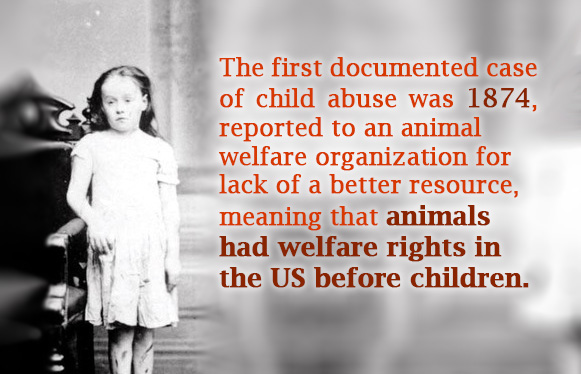
After my first training session one of the volunteers who I had sat next to, when we walked out of the session looked at each other and were thinking the same thing and he said to me before I could say to him “I can’t believe they have volunteers doing this.”  So if it seems unbelievable to you, this is one of the first things I learned:  We really don’t love children as much as we say we do.  The full-time workers of the program say that it’s even hard to get donations for abused and neglected children.  I came in with some pre-conceived notions about Child Protection Services or Child Youth Services taking away children from good parents and getting involved in the private lives of families unceremoniously most of those notions have melted away.  Children services have to act when a report is made, but for the most part I see them dealing with such reports that are unsubstantiated fairly.  That’s not to say that there isn’t mistakes made.  I also learned that it’s a civil service job, and there are no specialized qualifications to do it.  It doesn’t pay particularly well, workers are often overloaded with cases, and many just use it as a stepping stone to a better job, so there is high turnover, meaning that few of the workers are very experienced.  So mistakes are made, and there is some incompetence, but is this their fault or the fault of a system that isn’t treated as important as it should be?  Just like with public defenders, attorneys that are supposed to represent the children in court are also overloaded.  In our county there are 3 lawyers trying to represent 400 children.  It is not possible to do your job well under such circumstances. I’ve learned that despite bad things you hear sometimes about foster families most people who do foster care are phenomenal people and make a big emotional investment into children they may care for, for up to a year and half and will not get to keep them.  I can’t imagine going through that myself.  Many foster families do end up adopting the children for that very reason. I’ve learned that federal child protection laws didn’t happen until the 70’s and that the very first child abuse case was tried under animal protection laws.  The obsession over the rights of the unborn continue in this country while those that are born are overlooked.  I am convinced that if we put our compassion into making sure that every citizen was treated humanely, abortions would drop at an alarming rate.

The case I was assigned is a sad one, although perhaps by far not the worst.  And I guess it goes without saying that any case of child abuse or neglect will be a sad one.  I can’t describe the case in a high enough detail so that it could be recognized so I will simply give vague details which I am sure are not uncommon.  We have one child just over a year old, we have a father with a criminal past addicted to heroin.  We have a mother addicted to heroin who went into early labor while on heroin and had a newborn baby going through withdrawal symptoms for opiates.  A baby who would later die at the age of 8 months due to an accidental death.  We have parents who are not married.  We have parents who do not have their own home, their own phone number.  We have a mother who does not even have a job, and a father who is just trying to make ends meet.  Neither of them have enough money to support themselves let alone children.  There are many who may already be judging these parents, and I do not disagree that there is a reason that their children were taken away from them.  This is not a mistake.  This is not government overreach.  This is making sure a child has a safe environment to grow up in.  Addiction has taken them, and they cannot seem to get out of it.  They have made less and less visits over time with their remaining child, and at the last court hearing didn’t even show up.

abuse-stop-child-abuse-28564872-765-540-2But one of your jobs as a CASA is to gather information about the parents and part of that is a little bit of snooping on their Facebook profile.  When I saw pictures of the mother it was clear she was just a child.  Barely out of high school. She had pictures of her with her children.  There were smiles, and genuine happiness.  Pictures like any family might have and they were beautiful.  In notes taken by Child Youth Services workers there were noted about how the mother sincerely said how much she loved her son.  As a child of an addict myself it reminded me of my situation in a lot of ways, although heroin is a much harsher drug than alcohol, that there are two separate truths to the life of the addict.  As I look at the pictures I see the same love that I have in my pictures with my child.  I know they are filled with it at least at certain moments as much as I am.  But a portion of their life, thoughts, and physical actions are also governed by heroin.  Perhaps a bigger portion now.  And as I look at a picture of someone who is a child herself, and who has a mother who is also a heroin addict I have to admit that I cried and wondered what chance did she have but to follow down the same dark path.  Where does it end?  How do we break the chain?  Even as I have compassion for the innocent child to protect them from a life of having heroin addicted parents, who will have compassion for these parents?  Is there any hope for them?  Will they have their lives turned around?  Just 10 years ago the mother herself might have been a case for the courts if anybody had bothered to report the destructive actions of her mother.  There is an ocean of pain out there, and it feels like trying to tear down a mountain with a small rock hammer.  The only answer it seems is more hammers.  I have no idea how to convince people to pick one up.

There are 6 months left before the case comes to a close, likely too little time for the parents to get their act together enough to keep their remaining child.  There are already other family members willing to adopt and give the child a stable and happy home.  The child is just a few months older than my son.  Sweet with a beautiful laugh and I am glad that his odds for a better life have gone up, but I am certain his struggles are not over.  At some point he will wonder who his parents are.  He will have to wrestle with the idea of why he was abandoned by his parents and whether or not there was just something inherently wrong with him.  I hope that he is young enough now to not let thoughts override who he will grow up to be under his new adoptive parents. I hope he will forgive and know that he is his own man someday and is not destined to continue the cycle.  I hope he will know good love.

The War on the Poor

We have a lot of people living in poverty in this country and through various conversations on Facebook and on blogs you see a lot of arguments against providing a social safety net, raising the minimum wage, and helping them in general that I thought I would compile a list of my least favorite and most fallacious arguments I hear.

  1. I know some people that actually think the government owes them, doesn’t look for a job, and these people are just lazy freeloaders.  Throwing money at them just supports a dependency culture.

Some variant of this argument is often used so let’s dissect it.  Whenever you hear someone say “I know some people…” or “I know this person who…” this argument can already be dismissed based on being anecdotal and not necessarily a representation of how things are.  We all have our own experiences that shape our views, nobody is saying your own experience didn’t happen, only that you may not be understand your experience properly in the context of the bigger picture.  There is no question that some people cheat the system.  But this happens across the board at every level of society, and I would argue that the rich cheat the system by a far higher percentage rate than the poor, the only difference is that the rich can change the laws so what they are doing is legal.  They can afford better lawyers.  More importantly is that we do tend to focus on the negative, and this is what we tend to see.  There are so many poor in our country that even if 2% of the 50 million living in poverty in the U.S. were cheating the welfare system that still 1 million people and FOX news could run 100 stories a day focusing on a different cheater of the system and still not be done in a year, but that doesn’t really give you the reality of the situation.  What if there are a lot of people on welfare who are trying to get a job, or who actually work a job but it doesn’t pay well enough to make ends meet?  What if most people are actually embarrassed that they are on welfare and are trying to get out of it and don’t get very vocal about it.  Do the rest of our time really take the time to talk to all the poor and find out which ones are on welfare and are honestly trying to get out of their situation?  Nope.  And especially if the freeloaders anger us, not surprisingly we are going to take You-Pay-Taxes-So-the-Rich-Dont-Have-tospecial notes on those people and they are going to stick in our memory and support our views about wasted taxpayer money.  I have also yet to find anybody post some actual data on how many of these welfare freeloaders are.  They are always anecdotal.

I would agree that throwing money at the poor is not always the solution that we also need to do better to help people out of it so that they can support themselves, but the conversation always seems to be welfare, or not welfare.  There is a 3rd option and that is to improve welfare.  To say it doesn’t have value is an insult to many people who have depended on it when times were lean.  Not all people on welfare are on welfare for the rest of their lives.

And concerning the subject of wasting taxpayer money if we want to play the “I’m not supporting things I don’t like game” with my taxes, then I would also not like any of my taxpayers to go to foreign wars that I disagree with.  You pull your money out of the freeloader driven welfare system, and I will pull my money out of military spending, and I guarantee I will be much richer at the end of the day.

  1. I have never had to work a minimum wage job in my life. If you can’t live on minimum wage, go find a better job.  Ask for a raise.

Once again we have a point that rests on anecdotal experience.  I find these statements also come from white people.  I’m not saying their racist, but perhaps the people who hired you are, and preferential chose you.  That’s a light argument though, so let’s get a little deeper.

Let’s just look at it by the numbers.  In a capitalist society I think conservative and liberal alike we can say that businesses want to make money.  They will definitely maximize their profits by selling some product for the highest possible price that gives them a large base of customers, and they will try to cut costs on expenses.  People that work for them are part of those expenses.  So we would expect that just like there are always a very small amount of really rich people in the country, there are also going to be a lot of low paying jobs and then less and less jobs that are higher paying.  The more special skills you have, and this could simply being really strong and doing hard manual labor, trade skills, or this could be, being highly educated, you are of course are going to garner a higher wage.  The types of jobs available to the high school graduate are small.  You have a job at $7.25/hr and you want a better one, and of course a lot of people do.  You have to compete, and if that higher paying one doesn’t require a specific skill set then you have even more competition, quite simply not everyone can get it.  So just to say “Find another job” isn’t realistic.  Finally, how easy is it to find that new job when you are working 5 days a week and actually can’t search for jobs which are quite often only open during the times that you work?  How do you take time off from your job, unpaid, to go look for jobs?  How do you think your boss will react when you need to take an afternoon off to go to a job interview?  And if they don’t get the job, they’ve lost money just by taking those hours off.  Money they desperately need.

The immobility of the poor demonstrated by disasters like Katrina

More importantly many poor people have other issues to deal with than just finding that better job.  What if that job is another city?  Can they afford to move if they already have no money?  What if by moving they lose the support of family who can help reduce their costs by taking care of their kid(s) while at work?  Even a job in another part of the city may involve a long commute on public transportation which increases the time that they have to leave kids at daycare or a babysitter that increasing their expenses.  Finally, should we really expect other people to move away from friends and family for a better job, a decision many of us are not willing to make either?  Why is it so unreasonable for them to expect the minimum wage to be increased and keep pace with inflation, since it has not?

Well wanting the minimum wage raised, is actually asking for a raise.  Going back to the start of this argument, in a capitalist society why would a company raise the wage of a minimum wage worker if they didn’t have to, if they job had such a low skill they could just replace them with the next applicant?  What if by asking for a raise, the boss actually decided to terminate them or give them worse hours?  When you are barely surviving rocking the boat isn’t always the safest play either.

And raising the minimum wage will help greatly with reducing suffering.  While it’s probably best to raise the minimum wage incrementally, in general the idea that prices on everything would double is wholly untrue, since wages are only a portion of expenses for a business.  While $15/hour might be excessive, no study finds that when the minimum wage is raised to keep pace with inflation that this harms the economy. This article by the Department of Labor does a great job of discussing it and remember that when people actually have money to spend, this is good in a consumer driven economy.  All those people in poverty aren’t buying as much stuff as you think.

  1. People on welfare are buying steak, have smart phones, getting manicures, smoking, buying drugs, etc.

Nothing cheers me up more than a person of privilege who has been fortunate to have the luxuries of this world, whether through marrying someone with a great job, or being born into a middle-class or higher family, complaining about other people wanting those things too.

Let’s ignore the fact that people need a phone, and that smart phones are practically free, and that maybe spending more money on quality nutritious food is maybe a better idea than crappy food which is cheaper and leads to all sorts of health problems.  But let’s look at the psychology of poverty .  When you live paycheck to paycheck barely making ends meet, and have grown up in poverty, your ability to long term plan fades, and yes you tend to not save money depriving yourself of creature comforts, because your life is one in which appears to have no long terms solutions.  So why live for tomorrow, when you can live for today?

Income-InequalityIn my training for my volunteer work we had to try and make a budget based on what a family makes on two minimum wage jobs and it is a daunting task.  And of course there are many families that do try to save, but saving is hard to do when you’re poor.  If you don’t have access to public transport, you have to depend on  car.  And people live in poverty have to buy old cars that nobody else really wants, but they can get a good deal on them.  However, such cars need repairs frequently, and repairs cost.  Now you could say why don’t they get a better car that is more reliable.  Quite simply it costs more and they wouldn’t qualify for the loan.  This leads to, what I call, the “stay-in-poverty-feedback loop”.  What little money poor people often save goes to these types of expenses because they literal can’t afford better quality stuff.  Car repairs are just one example, but people in poverty often have to get home repairs more often, replace things like water heaters, furnaces, or air-conditioners more often, because poorer housing means people are getting used, cheaper, and/or older stuff in their home.  So even if they are able to put away a little money each month it often gets eaten in one fell swoop by these unexpected repairs.  And there are plenty of other big costs, like health care, which they often put off, even if they have insurance to save money on co-pays, but then this compound into a worse cost later, but remember how poverty doesn’t lend itself to long-term planning.  And if you have kids, there are even more emergencies that can come up.

On the topic of buying drugs, well I don’t see a lot of people asking that all employees receiving public money take such drug tests, only poor people.  Some how if poor people are doing drugs, that is more egregious than any other income bracket.  As it turns out though, the amount of drug abuse among those on welfare is staggering low. So low that the cost of testing everybody costs more taxpayer money than letting that small percentage of people have their drugs.  Not to mention that just cutting off their life support doesn’t actually work as a deterrent to doing drugs, just makes them resort to more desperate measures to obtain drugs likely causes more problems.  And throwing these horrible drug users in jail, just gives them a criminal record, making it harder for them to get a good job and get out of poverty.

 4. Why are they having babies if they can’t afford to raise them?

Well there are all sorts of reasons that people have children, and if we ignore the fact that there are many areas of the country that don’t have adequate sex education, women don’t have easy access to birth control, or that a woman might simply get pregnant because a man lied to her, or the birth control failed.  But let’s say that there are these terrible women out there who are having children as some sort of scam to get more free money.  I am sure such women exist.  Nevermind the fact that such women were likely raised by a similar mother, probably has little education and special skills and is certainly not mentally well to be making that decision, should we cut her off from that money?  Is this the way she will become a wonderful mother? Or will she literally be unable to cope, unable to keep up with all her new responsibilities?  More importantly it’s of little good to question whether she should have had children, she does have children.  These children are innocent, they’ve done nothing wrong, and so cutting off the mother also harms the children.  Where is the humanity in this?  If you’re pro-life then this must also be part of your consideration if you care about children.

  5.  Poor people need to be more personally responsible.

I’ve blogged about personal responsibility before, I don’t want to repeat all I’ve said there, but I think we can agree that one’s responsibility for themselves depends on the environment in which they were raised, such as level of education, family, friends, culture, etc.  And as I also stated in that post, when we look around we don’t see a lot of people being personally responsible.  Politicians rarely are.  Rich kids like Ethan Couch certainly don’t show a lot of personal responsibility and so even if you believe that personal responsibility comes down to the absolute free will to choose to be that way, it’s clear that a lack of personal responsibility is not a trait that only applies to the poor.  Should we say that rich people are allowed to lack personal responsibility, but poor people or not?  More importantly why aren’t we asking the question of personal responsibility to those that are extremely wealthy?  Is it personally responsible to have more wealth than you can spend in your lifetime.  Is it personally responsible to have more wealth than is required to meet your basic needs have plenty of luxuries and send your kids off to the best of colleges?  Is it personally responsible for corporations to ship jobs overseas just to make more money, while their fellow citizens now struggle to make ends meet?  Is it personally responsible to make that 5 billion in a year than the 2 billion you might make if you paid your employees a fair wage?  Is it personally responsible to not pay your fair share in taxes by hiding your wealth in off-shore accounts and other tax shelters?  For those who hold personal responsibility as the most important of virtues, can we not apply this attitude consistently across all economic classes?  Why are only the poor held to these standards of personal responsibility?

———————-

I know this is already a little TLDR, so I’ll be brief here.  In a line from the movie the Usual Suspects Kevin Spacey’s character says “The greatest trick the devil ever pulled is that he convinced the world he doesn’t exist.”  Well maybe there is an even greater trick.  Is it possible that those who are driven by greed in the acquisition of wealth and power have instead convinced you that the poor are the demons in our society?  That even though a majority of them work longer hours, take less vacation, receive poorer education, less nutritional options, worse health care, and less social mobility, somehow a good proportion of the wealthy have led you to believe they are the bane of your quality of life?  And so effective is this message that many of the poor are complicit in that oppression and vote into office the same people who have demonized them in society.  If trends continue as they do, with the exception of a small percentage of the population we all sink together so let’s stop making the poor our enemy.

I’m Expecting

Well if you thought the last post was about abortion or birth control, then you’ll think this one is about me being pregnant.  Life is strange. 🙂

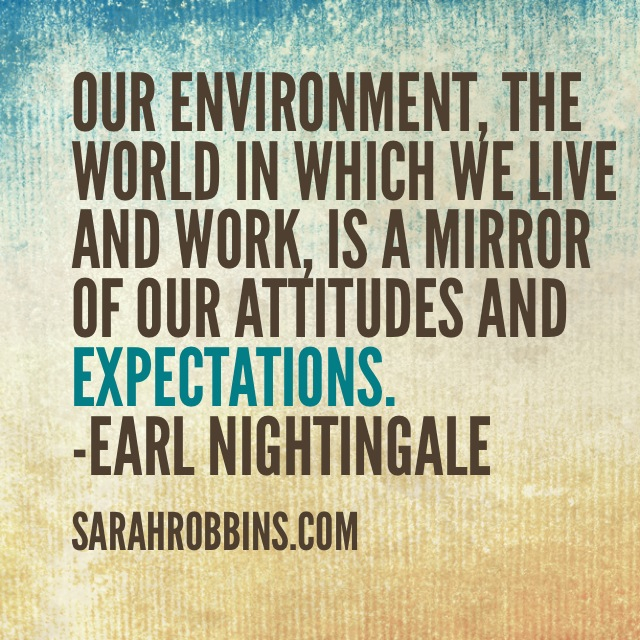
In my last post about how we make plans and goals I mentioned that one of the things we have to decide about our goals may have to be how realistic they actually are and this relates to expectations.  Lowering our expectations may make it easier to achieve our goals, but we may not then know how far we could have gone, while having expectations too high may leave one with feelings of disappointment.  Of course, as I also mentioned before, there may be other variables that we cannot predict that might lead one to not meet our goals, but very often we internalize our failures and can chastise ourselves for setting our sights too high.

My thinking about expectations was once again inspired by a podcast I listen to called Invisibilia on NPR.  In one episode titled “How to Become Batman” we hear the story of Daniel Kish who had both of his eyes remove due to a disease at 13 months, but can “see”.  He uses echolocation by making clicking noises.  As a result, he is able to ride his back in traffic, hike, cook, walk around and has an amazing ability to know the distances objects are from him through

his echolocation technique.  In his story he tells us about a kid from elementary school who joined his school from a school for the blind, and unlike Daniel this kid was helpless and had to be led around everywhere.  Daniel had developed his echolocation technique early and was already quite independent at a young age.  Daniel believes that one of the reasons that blind people can’t see is because nobody expects the too.  That if we raised our expectations that many blind children could develop this echolocation technique.  Daniel teaches children whose parents are interested but he says it’s a challenge because as Daniel says it takes a lot of trial and error and can get, well, bloody.  The point is that higher expectations are the best path to reaching higher heights.  Students who have high expectations for their students generally get students who do perform at a higher level, even if they don’t meet those expectations.  If you try to get an A in a class, you will generally do better in that class than any student who comes into the class just hoping they pass.  People often talk about self-fulfilling prophecies and this is a large part is how astrology works and how people come to validate the predictions of psychics is because once an idea is planted we often want it to become true and it does.  Students who say to me “they can’t do science” generally perform poorly.

Having high expectations has its downside however.  Having high expectations as a professor I think are good, but good pedagogy is also guiding the students towards a path that will reach those higher heights.  Without it, students can disengage quickly and not progress at all.  And of course feelings of disappointment, feelings that you did or will not meet the expectations of another can be a source of depression and anxiety.  How many times have we had high expectations in a movie only to be disappointed that it wasn’t all that good, whereas a movie we had low expectations for we are often pleased or pleasantly surprised when the movie is as good or better than we expected?  A good portion of our country feel that there is nothing we can do about criminals and so the best thing we can do is get a gun, in contrast to those who know that the murder rate can be smaller and that there is nothing wrong with having expectations that we as a society can reduce the rate of violent crime.  Given perhaps our propensity to focus on the negative, it is no small wonder that we often learn in life to lower our expectations or even develop apathy or pessimism as a way of avoiding grief, heartache, or anxiety.  Apathy in this case, to me, is an attempt to have no expectations, whereas pessimism is to always expect the negative outcome.  Personally I feel that apathy eventually leaves us to become emotionless, taking all the joy out of life at the expense just so we can avoid grief.  Pessimism, in my opinion, is almost worse because when the expectation is for things to be negative they generally are, and you are unlikely to ever be pleasantly surprise.  In fact many pessimistic people eventually turn into people that can find the bad in every good situation.  So while some can take it to extremes, there is at least a reason why we often lower our expectations in one situation or another.

So even though we know that higher expectations out of ourselves or others, lead to better results than lower expectations, why do we not always set our sights higher?  I have discussed before the conflict we all face between security and risk, and I believe this is part of that same conflict.  Lowering expectations can give us a better sense of security and in the end might would lead to on average more happiness.  High expectations on the other hand are a risk, but more often yield better results, even when we don’t meet those expectations.  Just recently I saw a very interesting short video shown below that asks the question, “Should we be pursuing happiness?”  Maybe happiness is overrated, maybe it’s not what really drives us.  In the video he talks about great scientists and artists who are ready to suffer for their work.  I have seen

myself some of the finest minds in my field spend little time with their spouse or children for the sake of discovering something new.  In the video Zizek talks about scientists who, even knowing they could die from radiation poisoning, still worked with radioactive materials because they set their sights on discovering something important.  Sometimes greatness comes at the expense of even their very lives.  I’m not saying we are all destined to be great, and I am not trying to imply that there isn’t value to happiness.  I think that some balance is part of good emotional health, and a clear mind, and we would likely be even more productive if we strove for a little more balance in life, but once again we see the value of risk and how it constantly pushes ourselves and society to become more.

So what is the answer to dealing with the disappointment of not meeting those expectations?  It seems that most advice, and indeed I had even trouble finding any positive quotations about expectations are to not have expectations or to lower them. My feeling is that if we are to maintain high expectations and avoid the pitfalls associated with them then it is a focus on the process.  To focus on where you’ve started and where you are now, as opposed to where you aren’t.  Try to remember that few people with lofty goals ever meet them, and very often getting close is still pretty amazing, because what you’ve learned along the way, not only a specific sense, but likely other important values like perseverance and courage will serve you well as you change directions or perhaps continue down the path you are on.  Likely there are plenty of things to be happy about and proud of even when you fall short.  In the end I feel there is more shame in stagnation over progress, unless you already in a utopia, but I haven’t met anybody like that before.  Happy New Year all!  Don’t be afraid of being bold with your resolutions.

Plan B

Don’t worry this one won’t be about abortion.  I was listening to an excellent podcast called The Hidden Brain recently and the subject was backup plans (episode 8).  It is worth listening to, but I’ll save you some time and summarize.  Basically the program discussed research that showed that people who have back up plans tend to not be as successful in their primary plan or “plan A”.  I have written blogs posts in the past that look at the value of taking risk versus staying safe, and so this subject caught my brain’s attention.  It seems to me that developing a backup plan is something that runs along the lines of playing it safe.  Yet by playing safe we might end up more likely not getting what we really want in life.  So what’s the right answer?  Is there a right answer?

First I began to wonder, why do we do we develop a primary goal to begin with?  The primary goal represents our own hopes and dreams and in theory represents what we really want out of life.  A primary goal should also lead us to a feeling of security while also maximizing our happiness.  At least that’s what we think.  It makes sense that without a backup plan our only choice would to be put ourselves entirely into making this goal work, persevere and never give up.  Having a plan B might make it difficult when things get hard.  With any goal that is hard to reach there are setbacks, frustrations, moments of doubt.  There is absolute value in being able to push through those times to reach one’s goal.

If our plan A is what will make us the happiest and the safest, why do we then come up with a plan B?  I often council my students to have backup plans when applying for graduate school, like picking a few schools with perhaps lower standards so that if they don’t get in to their top choices they will still have a graduate program to get into.  There is a lot about having a backup plan that seems prudent, and this, to me, is simply because we can’t know the future.  We don’t know all the variables.  A student with a 4.0 GPA may still not get into the graduate school of their choice, because it is unknown how many positions they will have open, whether they might opt for a student they know better because he/she came from their program, whether there aren’t other extracurricular experiences that might make one candidate more desirable than another than just GPA, or perhaps a student’s interests simply don’t match up with a professor who has a graduate student position available.  Now if a student could afford to put their life on hold, and didn’t have to worry about money, it might be a worthwhile tactic to keep applying to the same school you want each year until you get in.  The higher the risk of a primary goal, the more perseverance will likely pay off provided you actually have the skill.  The reality is that seldom do we have the ability to always stick with something long enough when we are in need of resources to be able to survive.  In addition to that an inability to understand all the variables that can lead us to success, we may also overestimate our own ability.  As a professor I have certainly come across many of these students also.  Having a backup plan is crucial when a primary plan is even less probably in achieving because the person has overestimated their own ability.  Of course it could also be that my ability to estimate somebody else’s ability may be incorrect as well.  Either way, I think there is an equal amount of positive arguments that could be made for having a backup plan.

I tried to think about whether I am person who makes backup plans or not.  I think that, in general I do not, although I would say part of the reason for that is that I am not sure I have had very specific primary goals.  I wanted to be a meteorologist and become a professor.  I guess I added some specificity to that over time, but I never really said, I have to live in a big city, or in a particular area, I have always tried to be realistic beforehand in what the uncertainties are, and so even though I never had a backup plan, I never set my sights particularly high.  Of course this one possible solution to living life by only having a plan A, and that is to make sure plan A isn’t really that hard to achieve.  This could also be seen to be a questionable strategy as having lowered expectations can also have its pitfalls and is something I would like to follow this post discussing in greater detail.
One study that was discussed in the podcast was one that found that students whose parents paid for their tuition did on average worse than students whose money came from other sources such as student loans or their own pockets.  This study concluded that the reason was simply that students whose parents paid for tuition weren’t as driven because they had nothing to lose, and the security of their parents in case school didn’t work out.  As a college professor I have certainly seen this ring through.  While there are some students who work so much to put themselves through school and thus as a result end up doing poorly because they have too little time to study, in general the students who perform better are ones who either pay for tuition themselves or who take loans out and know they will have to pay it back.  However I was one of those students whose parents paid my tuition.  My family was not wealthy and while the cost of tuition in Canada compared to the U.S. was less and I lived at home, my parents had put a little money away each month since my birth and that came to enough to put me through 4 years of college.  Unlike the results of the study,  I did fairly well at school, I felt the exact opposite of a lackadaisical attitude precisely because my parents were putting my through college.  It was not my money I was using.  I don’t really want to waste my own money either, but in the end it’s my money and I can live with it if I end up wasting some, but to waste somebody else’s hard earned money that they put away and did without many of the creature comforts themselves to give me brighter future…well this increased my sense of responsibility to do well in school.  I suppose I did have the security of staying at home until I figured out what I wanted to do with my life, I really had no backup plan but being a meteorologist and then eventually becoming a professor.  Regardless it doesn’t seem like in all cases having a safety net is necessarily counter to achieving what we want in life.  When I look at my own life, I know my parents taught me the value of money, even if it wasn’t my own, and more importantly I loved and respected them and would never want to disappoint them by doing poorly in school and throwing away their money. Maybe it’s because I knew that they didn’t have much money to spare that made me respect the fact that they were paying my tuition more.

I am not sure I can conclude anything concrete from all this as I am still in the exploration phase of this idea, but it seems to me that in the end maybe whether we have just a plan A, or both a plan A and plan B isn’t the most important thing.  Maybe what matters most are the values we are raised with.  One can still achieve a plan A, even with a plan B provided we recognize that plan A simply doesn’t get achieved without putting our full effort forward.  Maybe our default to a plan B is simply because we really didn’t want plan A enough.  I know plenty of students whose plan A was given to them by their parents and has very little to do with their own plans for themselves.

Are you the type of person who makes a plan B or do you usually just make a plan A?   I am interested in learning how your plans have worked out, so please feel free to leave a comment.

Who’s Better, Who’s Best

And so it begins. The dark side of parenting comes out and I was taken aback at my reaction.  A friend of mine shared with me a beautiful audio recording of her daughter reciting the alphabet.  It was the cutest thing ever and I enjoyed.  Her daughter is 3 months older and then I started to think to myself, my son is hardly saying any words.  I mean kids change fast, but he only has 3 months before he should be saying his ABC’s as well.  What if he doesn’t?  Am I bad parent? Is my kid not going to be very smart?

And it’s happened other times as well. When he shows interest in a particular thing, my mind starts to race.  He likes playing drums, he’s not even 2, what if he’s going to be this amazing drummer?  How awesome would that be?  Hey there is this kid on YouTube the same age as my son playing the drums and he is much better than my son.  Crap my son isn’t special!

Dhyan_hatSo I confess my mind has gone to such places, but before you start to lecture me I just want you to know that my anxiety passed as quickly as it came, but it makes you think why one would have such a reaction? Of course it’s a common stereotype, that parent living out their dreams through their child.  Or perhaps just as common, are the parents using their kid as a pawn to compete with other parents to show each other up to determine who is the better parent, because they have the better kid?  So I had to seriously contemplate whether I was this type of parent.  Where were these feelings of anxiety and competitiveness coming from?  Why is it important to me that my son be extraordinary in some way?

So dismissing the idea that I might be a crazy person I thought about this sort of biological reaction I had when my son was born,  for him to grow and get stronger. While it is important to enjoy the moment, I think it’s natural for a parent to want to see this growth in their child.  Self-reliance is ultimately our goal, even if at the same time it sucks so bad when they don’t need us anymore.  There are a lot of people in this world and so it seems also reasonable that we would have this drive for our children to be extraordinary at some particular thing or to have a natural talent that drives them in a particular direction.   It can be the easy ticket to self-reliance.  Rich or poor when they have some inherent gift to fall back on, it’s a feeling of security as a parent.  You may have heard the stereotype before that all Indian parents want their kids to become doctors.  A well deserved stereotype actually.  My uncle was one of those parents who wanted their children to become doctors.  The reason he gave for this was that doctors are never unemployed, they are always needed and thus his children are always assured in an income.  Being originally from India where there was no social safety net, where poverty was and still is fairly high, I can understand such a philosophy.  They were however well off and my cousins very well educated, they would be successful in anything they chose.  But as I see the places my own mind goes I understand the obsessive Indian parent constantly pushing their children towards medical school.  I of course never would force my own child into anything in particular, because in the end I can’t ignore the fact that my child is an autonomous being who needs to be free to make decisions for his self.

In the end, the right answer just seems to be to just remember to love, to encourage, and to teach them to learn well, wherever their interests lie. Teach them the value of determination, teach them the value of caring about what you are doing and taking pride in your own work.  Whether my son is extraordinary or not, he will always be extraordinary to me and that’s a gift in of itself.  I think it’s the hardest thing to know as a parent.  How do you make your child self-reliant?  There are so many avenues to that destination it’s easy to get lost.  Perhaps the best I can do is to trust in myself and my own self-reliance to do well in the moment and stop trying to worry and predict the future.

Diminishing the Hate

The divisive ideological culture that we have in the U.S. appears to be getting worse with time.  It’s been growing on my mind, that more than anything else this might be the biggest problem we face in this country.  Because that “other side” isn’t going to magically disappear, and the very serious problems we face in this country are only going to be solved through coming together and bridging the gap that separates us.  I’ll admit that I am at a loss at how to effectively do this, but one thing has caught my eye, that I think might help.

One thing is that I think we have to stop posting things on social media that are just negative sound bites of what politicians or what celebrities say.  I think just the absolute large exposure of hateful and/or negative messages legitimizes the hate more than it does make it go away.  And the exposure might get around to some people that might not normally have seen it and those people might say “Hey, I actually think this hateful message might be right and not hateful.”  More importantly the key is how do we diminish the impact of such messages, I think one of those things is to literally ignore it.  Some of these things are so ridiculous that we literally waste our time sharing it and trying to shame the message.  There is a blogger on patheos that I follow called the Friendly Atheist.  As well-meaning as he is, he often brings up ridiculous things that are being said by small time pastors in small communities in the south, and now all of a sudden people are seeing it all over who follow him.  Now most who would follow this blogger will be like yeah, this pastor is an idiot, but some people follow atheist bloggers to argue, and to show their followers the ridiculous stuff the “other side” is saying.  Now a story that might not have gone beyond a local community or anywhere is bring spread around the country.  That’s not good.

Now I know you are probably saying, “well it’s important that these terrible ideas are challenged, and thus we must say something!”.  I don’t mean to argue that we shouldn’t oppose such things, and so before I address this, I want to add one more thing that is also I think unhelpful and leads into what I think is a better way to oppose.  The inspiration for this post came from an article that a friend posted yesterday.  A very compassionate and comparing individual, and I am sure we all know such people and the article was titled “While Trump Spews Hate, These Muslims Just Raised $100,000 for San Bernardino Victims”.  Now compare this to this article “Muslims Raise Funds for Families of San Bernardino Victims”.  Can you spot the difference in the titles?  Not only that, nowhere in the second article do we see an attack on those who are prejudiced against Muslims.  Now you might say well shouldn’t a good article represents both sides?  Not necessarily, because this article is simply reporting a reaction by the Muslim community to help the victims.  This is objective reporting.  Now if there were Muslim communities that were cheering, than yes it would be important to report that too, but my point is that when you read the headline of the first article there is an attack on Trump and his supporters.  Those who support Trump will immediately have a physical reaction that will prevent them from effectively ingesting the good works done by the Muslim.  I have written about this before and this is sometimes referred to as the “backfire effect”.  Now I am not saying all hateful messages shouldn’t be addressed, but most sound bites are hardly substantive.  We make all sorts of rational arguments about why they are wrong, but the sound bite itself (which sometimes is even out of context) contains no substance and thus from a rebuttal standpoint requires little substance in return.  And when we post that message it makes those who might support that message simply feel attacked and thus less likely to listen to all your rational arguments.  But when hateful or negative messages are spread with substance, by all means a substantive response is important.  But maybe this is best addressed in an op-ed to your local paper, or a blog rather than Facebook or Twitter.

What I suggest is simply posting the positive message when you are outraged by something.  Don’t post an article about what some hateful pastor has said in a rural community in Alabama, but perhaps post an article about what more progressive pastors are saying that would lead to increased tolerance and inclusion.  Post the rational arguments instead of only posting them in response to something ridiculous that is said.  If what you consider to be a negative and/or hateful message has merit, force those who support it to make their own substantive arguments to rationalize it.  Force them to think.  What I find is that even if I agree with you, I might get angrier and such an emotional state does not help me either in terms of seeing us a group who has to work together and I feel more helpless at how divided we are, even if I do feel that my friends are on my side.

My thoughts here are not meant to be judgmental, but rather a call to action for others as well as myself because I know I have been guilty of this at times too.  It’s easy to let our outrage get the better of us.  There is a lot of it out there today.  But most people, I think, would rather get along with their fellow man and a friend than an enemy.  This is one thing we all have in common.  So the next time you get upset, think about how you can spread the rational and the positive, without spreading the anger, the outrage and the remarks that attack rather than inform.

Imitation and Approval

When I was 12 years old I went to Bible Camp.  It was my first time going to camp, going away for a week without having any parents, grandparents, aunts or uncles.  Luckily my second cousin went so I would know someone and that was probably the only reason I wasn’t too scared to go.  I am not sure why my mom chose to send me to a bible camp, but as a Christian I am sure she hoped that I was receive some good education about religion, the bible, etc.  When I was there I was eager to impress the counselors and leaders.  They had a bible verse a day and a contest at the end to give a free camp hat to anyone who could memorize all the verses.  I was the only who could do it.  I used to have a good memory.  Maybe I still do, I just can’t remember.  At camp they also talked a lot about prayer and how praying could help you get the things you wanted in life, as long as you were good and you really believed.  For me the idea of prayer was exciting because I thought maybe it could work to stop my dad’s drinking.  So I opened my heart and let Jesus Christ in.  The counselors were so happy.  All of them congratulated me.  They were so kind and so pleased with my decision.  After camp was over, I was so excited I had made the decision because I knew it was going to make others in my life so happy.  My mother, my grandmother, aunts and uncles.  And on top of that I was told that if I was good and really believed that my prayers would be answered.  I had many tangible reasons to be very happy about it all.  It had very little to do with heaven or hell, or some events on alternate planes of existence, but the way it made others in my life happy, and the way it might help my dad to stop drinking was very exciting.  Of course none of my praying made any difference to my dad drinking and in the end the excitement of my decision to let Jesus into my heart faded and it became clear how the entire belief system had any relevance to life if one of the things they touted the most didn’t work.  I believed as much as a 12 year old could.  But the fact that prayer doesn’t work is not really the subject on my mind, but rather that as I reflect I see how much of a child I really was.  I completely didn’t understand the complexities of the religion or the Bible.  I was clearly caught up more in the joy that the adults in my life felt by my decision rather than really grasping the importance of what a religion means to someone’s life.

Dhyan_forkandknife

It takes very little time with an infant/toddler to see how much they want to imitate others.  And while I am sure there is an evolutionary aspect to this, because obviously if we have survived as long as we have, it makes sense to copy our parents, but what is also clear is our reaction to that imitation.  Because when he successfully uses a fork, or successfully gets up on a chair by himself, climbs the stairs etc, there is much applause.  There is much excitement and happiness.  All in the house are happy and pleased at this ability to accomplish these tasks that move them closer and closer to adulthood.  Every child can’t wait to do things older people can do. They can’t wait to grow up.  As children we are always looking for the approval of our adults.  We may rebel when we don’t get it, but initially, we want to be noticed by those we look up to.  As children we are somewhat helpless and getting adults to like you and notice you, is a way to make sure that they take care of you, teach you, spend time with you.  If you can impress an adult then this is a bonding experience.  Something we all seek.

dhyan_laptopFor all my dad’s faults he was fairly adamant about choosing a religion as being a choice to make as an adult.  That children didn’t have the capacity to understand the decision and thus did not want my mother to influence as children.  This was not something my mother or Mennonite grandmother could really help doing, but it was certainly tempered compared to many other children and I am quite thankful for my dad in that, because it’s clear to me that he was right.  Even at the age of 12 I could not understand a religious belief system.  From my mother I may not have adopted her belief system, but I learned about her charity, her kindness, her compassion, her perseverance, and the fact that she is someone who likes to ask questions and research the answers.  As I watch my child grow I can see that it’s less important what I believe, but rather how I act.  These are the things that will shape him.  Brainwashing him into a certain set of beliefs seems pointless over my actions being moral.  My child was born an atheist and if he decides that he wants to pursue a belief system as a guide to live his life then it will be his own choice, not because I’ve prescribed a doctrine for him to follow.

With the idea of God being “our Father”, I sometimes wonder if God isn’t the ultimate helicopter parent.  A way for people to still constantly seek approval from a parent-like figure.  It seems somewhat unnatural to me now to maintain such an attitude into adulthood.  As children it makes sense to have this attitude, but as adults we are supposed to no longer be seeking approval and be the role models for our young.  I guess as social animals it’s easy for such hierarchies to remain.  The only problem is, if there is no God then all we’re really doing is trying to make a non-existent entity happy and a lot of difficult to interpret texts written by men on what God actually wants to be made happy.  That seems like a wholly unhealthy way to live life.

Social Media, Fear, Change and Love

It has been a rough past few days.  Even though I thought I had thinned my social media friends to a group of more reasonable people, you still end up seeing the most ridiculous comments come up under friends’ threads in regards to the Syrian refugee situation.  And still there are others that you feel obligated to keep as friends, but at this point I just feel like I can’t do it anymore.  While I feel that it is important to not isolate myself intellectually, what I see through social media does not present me with intellectual diversity, only differing opinions.  Opinions not based on any evidence, but simply fear and rhetoric.  Is it important for me to know that such viewpoints exist?  Sure.  But I know they exist now, and I think it’s time to be done with it.  Let’s face it.  Social media just isn’t the place to change anybody’s mind.  There was one person whose opinion I influenced in my entire 7 years or so on Facebook.  I remember it fondly.  It was a beautiful moment.  Perhaps I hoped I could relive that moment again somehow, but either I’m utterly awful and changing people’s mind, or social media just isn’t the place to do it.  Or maybe it’s both.  Either way the result is the same.  My sanity and well-being is more important, because being bombarded with the kind of people there are out there just drains me of my strength. And I’m not talking about ISIS.  I expect evil to exist, but I also expect us to fight that anyway we can.  Not just with guns, but with the most powerful weapon we have against hate and that is compassion and love.  And I just don’t see enough of it right now.

A lot of the impetus for this e-mail came from reading an article this morning here about fear.  Something I knew, but I reminder of how fruitless the battle is on social media is no matter how many studies or facts you post, ultimately what you are fighting is fear.  People who don’t want Syrian refugees are afraid.  Whether that fear is unfounded or not, this is the culture we live in.  Politicians (especially on the GOP side) and the media love to make people afraid.  People who are afraid are easier to control, the less likely they are to think critically, and the less likely they are to use reason to get them out of that state of fear.  I must ask myself the question then if engaging someone in an issue directly isn’t working, how do I make people less afraid?  I can find no way to easily do that on social media, so I’ve decided that ultimately maybe it’s better that if social media is going to be relaxing and enjoyable than I just need to make it a community that I want to be in.  I’ve thought about dropping Facebook altogether, but with family far and wide, and good friends I want to stay in touch with I know that’s not realistic, but maybe it’s my own weakness, or maybe it’s just age, but I can’t keep getting bombarded with bigotry and hatred every time a tragic event happens and we have the compassionate reaction continues to get treated as the worst idea ever.

To those of you who are afraid.  I wish I could take that fear away.  I wish I could help you realize that statistically, the real things you should be afraid of in this world have nothing do with refugees fleeing for their lives, black people, or gay people.  I wish I could convince you that nobody is coming for your guns, nobody is persecuting you for being Christian, nobody is turning your children autistic or trying to poison you with vaccines, and the anthropogenic climate change is a real problem and not a liberal agenda by scientists.  I wish I could convince you that most people really do want to help you and that most people want to simply enjoy the same feelings of freedom and safety that you have even if you do live in too much fear to really enjoy the life you’ve been given.

Many of you who live in fear, live in a land of what ifs.    I wish I could ask you to ask a different set of what ifs too.  What if things actually get better if we help people?  What if by embracing the unknown it becomes known and we aren’t so afraid anymore?  What if instead of creating more enemies, you gain more friends.  What if defeating an enemy is actually done through compassion than hate?  What if those people who you dehumanize are not that different from you?  What if the difference in whether the outcome of a situation is good or bad, depends mostly on your attitude and that you can make things better simply facing a situation with courage, love, and humility, instead of running and hiding?  And since history teaches that empires often crumble, what I really wish is that you seriously sit down and ask the question what if that destitute Syrian refugee who once had all the comfort in the world but who is destitute, scared and has lost friends, family, and love ones was you?  Really think about it.  Really think about what kindness would mean to you at that point.  Really think about how desperate you might be to even have a remote chance of feeding your children.

And finally to those whose concern for the homeless and impoverished in our own nation have come to the fore.  Assuming you are not just making excuses, then bravo.  We have a lot of people who suffer here too.  We have growing income inequality, a shrinking middle class.  We have a high cost of tuition that prevents many people from getting educated unless they start off life in a great deal of debt.  We have a lack of sex education, we have a lack of social support for families who need more maternity and paternity leave.  We have disparity in public education K-12, and many states that lack funding, accurate historical textbooks, and are forced to not teach strongly supported scientific theories like evolution, the big bang and anthropogenic climate change.  We have a corrupt political system that favors money over serving the people.  We have incarcerated far too much of our population for minor crimes, and a tilted justice system against minorities that prevent them achieving the equal status that law guarantees them.  We have spent vast sums of money on foreign wars that haven’t seemed to make us feel any safer, and have most likely bred more harm in the world than we have helped.  And if this compassion that is overflowing in your heart for your fellow man or woman here in the U.S. I encourage to fight for it every day, not just on days where we talk about Syrian refugees being let into the country.  I encourage you to always be politically active and vote for those people who can bring about the change we need to help our own people.  I even have a presidential candidate just for you. 🙂

You live in a country that over time has helped many impoverished people from other countries.  You have helped women, blacks, and LGBT’s become more equal and gain more freedom.  These are all things to be proud of.  Compassion requires perseverance as well, so don’t ever think you are done.

Technological Literacy

I’ve been thinking a lot about technology lately. There are times when I feel I have made it too big a part of my life.  While I tend to be positive about this new age we live in, as I’ve written before, there are times when I feel like I might not be made for it because it can get very draining.  I see too much of the compassionless banter in comments sections or Facebook threads; story after story of tragedy, injustice, or prejudice.  Then there are times when I miss it.  There are people I have good conversations with over the internet.  There are moments where I laugh, and there are plenty of moments when I learn something valuable, something important, and something that will make me a better person.  I think about my many friends, some who I have known in person and live far away from, and I can still keep in touch and follow their lives to a certain extent.  I care and wonder about them often and the internet gives me ways of staying in touch that would be harder without it.  Some friends, I have never even met in real life, yet all of who I enjoy learning from, getting to know better, and some who have become as close as any other friend in my life, always provide me with an enriching experience.  In some ways I feel like my life would be less for not having met them and am thankful I have this thing called the internet that has such long arms that I can reach across the world and hold on to people that seem amazing to me and when they reach back I know it’s the beginning of a wonderful relationship.

I’ve been listening to a podcast on NPR called Invisibilia and one episode on there is looking at how computers have changed our lives and how they might change our lives in the future. What’s interesting is that you find many people who have zero problem with the way computers and related technology (smart phones, tablets, Google glasses) have become a regular part of our lives and have made us better humans.  They are ready for the future and all the wonders it will bring.  One gentleman named Thad Sturner believes that in time humans will have interfaced with computers so completely that eventually we will all become essentially cybernetic.  Those that have lived more “integrated” lives claim that the technology has made them better in every way, from how well they do their job to more meaningful face to face interactions with other humans.

Still of course there are those who have a not so favorable view of it. It can be addictive like anything else, and often not in a healthy way.  The validation we often get when we post things on-line through likes and comments can often give us a dopamine release but doesn’t necessarily help us really solve problems we might have or understand issues that make us upset.  A study of Chinese tweets found that anger was the most common emotion expressed over social media, and the anonymity of the internet can cause many people to let out cruelty that they would never let out in a face to face situation.  However that anonymity can also allow people to participate in discussions and express themselves in positive ways, that they may be too shy to do face to face, or because of societal pressures that prevent them from expressing themselves in ways that they would wish.

Rather than spend a lot of time posting all the research about how social media and the internet has or can change us, what’s clear is that academically a lot of people are studying it. People find adverse effects and positive effects.  It seems to me that most of what gets posted are negative impacts of technology or that our choices are between using technology and dealing with the consequences or backing away from it because it is seen as an unhealthy source of stress, shame, or anger.  But perhaps the time has come where we shouldn’t be trying to fight technology.  Our children are going to be immersed in this world, and while there is no doubt that developmentally children need time away from the screen, they are still going to be using smart phones, and tablets, and computers regularly in their lives.  So what they really need from parents, teachers, and society is the simple acceptance of this fact and need to be taught what are the harmful and beneficial behaviors in this new world of the internet and social media.  They need to learn about better ways to communicate through this medium.  They need to be reminded that technology is always a tool to be used as a means to end, and not the end itself.  As a tool, the internet, computers, social media have a vast variety of uses some good and some bad; some enhancing our functions, some suppressing or adversely shaping our functions.   As parents of this next generation we must help our keeps be effective navigators in this digital world, not just literate in finding information and surfing the web, but navigating the emotions, the attitudes, the pitfalls, and the advantages of this world.  Just like being aware of cognitive biases helps us perceive the world in a better way.  Being more aware of the impacts of computers in our lives will help us utilize the technology better.  I would support modern research about the interaction between humans, computers, and social media being used to design a curricula to be taught to school children. Perhaps around middle school.  I think it’s become that important.

I had recently reblogged a couple of good ethics posts about robots and artificial intelligence and what challenges our future holds. This era is coming sooner or later and so it’s time we gave up the fight against these technologies and start using them in a more moral and impactful way.  I say this not in any kind of judgment either, but rather as one who struggles with this myself.  We need to gain the literacy and positive ethics with this technology so that as new technology develops with the potential to be more world changing, that we can don’t find ourselves behind the curve as we seem to be today on the more negative aspects.

I for one am making a vow that I am going to work to use technology in a way that enhances me  and my world instead of diminishing me and my world.

Tolerance

One of the common words that we hippie-type people like to use is the word tolerance.  We need to be more tolerant.  I said it myself in my last post, but based on a discussion on that post I decided that it was worth investigating this concept of tolerance.  While I think many people derived a theme of being more tolerant towards Muslims, what I really meant to look at is what are better and worse ways of dealing with a difficult situation.  I’ve come to realize that often when I use the word tolerance, the meaning I hold to it is different than others.  And so maybe what I am suggesting is not tolerance at all, but something else.

Ahirhsa refers to non-violence

What I think we can agree on, is that tolerance is definitely not something we should always be doing.  We live in a very PC culture where we are being told constantly to be tolerant, but tolerance can lead to passiveness, and there are some things we should not tolerate or be passive about.  One could say that being intolerant has led to many important social changes.  When laws are unjust being tolerant of them isn’t getting you very far.  Gandhi and Martin Luther King, Jr are good examples of historical figures who were not very tolerant and accomplished great things for their people in the march towards equality and self-determination.  But then I also thought about the importance of context.  If laws are unjust, if there is oppression, then it is these practices that are intolerant.  And shouldn’t we be intolerant to practices that are intolerant.  For instance, if black people are not allowed to sit in certain restaurants this would be an example of a system which is not tolerant towards different races.  White people would not tolerate a black person sitting next to them while eating.  Did black people owe it to white people to be tolerant of their practices so as to not make them feel uncomfortable?  Of course not.  On the other side we could point to Kim Davis.  She doesn’t agree with a law that allows gay people marry.  The law is just because it gives equal rights to people of different sexual orientation, and doesn’t infringe on anybody’s ability to practice their own religion.  Thus we would ask Kim Davis to be tolerant.  Of course, whether it is people not wanting blacks in their restaurant, or gay people to marry, what we are really saying to those people is “you’re wrong, get used to it”.  We’re saying, your “intolerance, will no longer be tolerated”.  And I believe this is fair and this is right, but there is a little bit of a subtext there that says “You really should change your mind and agree with us, because other ways life is going to be pretty annoying for you”.  And again, I’m not saying this isn’t fair, but to the other person they would easily say that we are the intolerant ones of their views and why do they have to show tolerance and we don’t?  The word “tolerance”, at least to me, is sort of a confusing word when you think about it.

So going back to the issue of “banning the burka”, if I say tolerance is prudent, what does that mean?  First I think it’s important to note that tolerance of an action and condoning that action are different.  But if you are really against something, being tolerant and thus passive can be seen as equal as condoning it.  I think there is some truth to that, but it’s important to remember that not all people would fight a battle in the same way. Some methods of fighting are more effective and/or cause less overall harm. Kim Davis’ beliefs may make her decide that she should not tolerate what she’s sees as an unjust law and she is welcome to fight it.  However there are better and worse ways to do such a thing, and the choice she has made is ultimately ineffective, and denies legal rights to fellow citizens.  The burka or niqab is a troubling practice.  Women have become so oppressed in some countries that many of them are even complicit with that oppression and would feel real spiritual pain by not following what they believe to be true regarding their value compared to men.  Should we tolerate such gender equality?  The answer once again is, of course not.  However should we be tolerant towards women wearing the burka?  Then I would say yes, but I would say that doesn’t mean we can’t do anything about it.  So maybe when we ask for tolerance, what we really mean is patience and careful thought.  Let’s not have knee-jerk reactions that are governed by our fears, but let’s take actions that are based on our love and compassion.  The fight for gender equality is really one about love and compassion.  Telling women that they have equal freedom and value as men in society is just that.  Freedom of religion is also one of love and compassion because it says to people that you are allowed to keep your beliefs and that the law will not dictate what you must believe.   No one else wants their beliefs infringed on so why should we pass laws that infringe on others? Of course that doesn’t mean that you can come into a country and expect that a belief structure that by design causes harm to another group will be easily tolerated, especially when that country has fought long and hard to try and erode the traditions you still hold on to.   At the same time, you may also expect that new laws shouldn’t be passed that specifically target you for doing what you were raised culturally to accept as normal.   I think it’s also important that when we oppose certain cultural practices that we consider immoral, that we don’t reject an entire a culture.  Cultural practices are not homogeneous and thus are not all bad or all good.  At the very least some practices may cause no harm at all and thus we should be tolerant of those.

What we are really after, therefore, is a way in which we can present a group of people who have morally unsound practices with a better way of living.  In the case of the severe oppression of women in some Islamic countries, a proactive way of doing this is to empower women.  Self-determination goes a much longer way in affecting change than oppressive laws.  And while it would be nice to have men on the same side, many will resist due to the fact that they will be losing a position of privilege in their society, but ultimately just as the fight for equality here in the U.S. has required the support of men, so will it need to be the case in Islam.  One possible way in which we can appeal to the rational in both men and women would be to offer education into the development of children.  This article was shared with me by Victoria over at VictoriaNeuronotes and discusses the important of babies being able to see facial expression in their mother.  From the article:

Teacher Maryam Khan, says: “Working with young children, so much is read just from facial expressions, you don’t have to speak to a child.

“If they can’t see your face, they don’t know what you’re thinking – a glare, a smile.”

Psychologists agree. “It’s particularly true for children under five because their communication is non-verbal, they’re much better at reading it than adults,” says Dr. Lewis. “If they’re denied these signals they become quite confused.”

If, when in public, the mother’s face is always covered, this has an adverse impact on a baby’s mood and reactions to situations.  The YouTube video below demonstrates this impact clearly.  And there may be other things that we can discuss with them such as the importance of sunlight to pregnant mothers and babies for Vitamin D.  Given that a love of children is cross-cultural and people generally want the best for children, this seems like a proactive way to change minds by connecting with men and women emotionally through the love they have their children, while presenting also a rational argument for the value of not covering your face.  What’s best is that is also reveals the best about us.  We aren’t trying to persecute anyone, we are showing another culture, our value of education, our shared love of children and wanting the best for them, and that what we want is a conversation and an exchange of ideas, not forcing a behavior through a punitive law.  It also shows another culture that we have humility.  That we too had practices that were not always beneficial and through the act of investigation and learning we have grown to become more loving and compassionate.

As I ponder more about the word tolerance, the more it seems like a word that isn’t overly descriptive.  Because within the idea of tolerance is an implication that one isn’t happy or supportive of a particular behavior and that in some cases, when a particular behavior is harmful we would rather do something about that behavior.  What it does not imply is a hasty reaction.  We can be patient and thoughtful, and act in away that is inclusive and not exclusive.  We can act in a way that is proactive and not adversarial.  In the end, I believe, such tactics are more successful.