Shepherding the Earth: Fallacies That May Destroy Us All

I was listening to one of my favorite podcasts called The Hidden Brain on NPR and they were talking about the climate change situation in a great episode called Losing Alaska.  Basically they were saying that scientific arguments have little merit anymore in talking about climate change.  I would have to say that I agree.  As WhiteEarthWhite EarthAlaskaMuirGlacierDisappearingFast194120040001Asomeone who holds a Ph.D. in the Atmospheric Sciences I can most certainly say that few people that I have debated with on the subject truly understand the problem scientifically and I don’t claim to be the smartest person in the world, this is simply the truth.  My field is applied math and physics.  Not only that, the climate system is complex.it   Involves interdisciplinary knowledge as well in chemistry, oceanography and geology.  To change someone’s mind from a scientific point of view, it would take a lot of study and learning.  Now you may be saying, wait I accept man-made climate change, and it it’s pretty obvious.  Well I would argue that you don’t really understand it, but it’s easier for you to accept because it already fits in with your ideology.  And I don’t say that to be demeaning, especially I don’t think it’s necessarily a bad ideology to have.  Specifically the one in which we recognize that something is very complex and we don’t have years to study it on our own so maybe I should listen to what experts are saying.  Much like we tend to believe our doctor when they tell us we have cancer as opposed to learning the requisite knowledge we need in order to test ourselves.

Instead of a Heavenly Father, maybe a Mother Earth isn’t a bad person to start worshiping.

But more to the point it really does come down to our personal ideology whether we accept the science, because let’s face it the science is telling us some pretty harsh things.  Not only is the Earth in a lot of trouble, but we actually might be responsible for it all.  And in order to combat the problem we are causing we are going to have to give up a great deal.  Transitioning away from a fuel source we heavily depend on will require large shifts in business and industry affecting the jobs of many.  And of course such a transition cannot be made overnight, but even at a moderate pace will require a cultural change at a rate faster than many of us would have a hard time adjusting too.  That of course does not make it any less compulsory.  Interestingly this podcast made the argument that we all are capable of great sacrifices at times of war or crises, and that dealing with man-made climate change requires an approach that is used by religion rather than one that is used by science.  I find myself having a hard time disagreeing.  While I would love to live in a society where science had a much more powerful influence on changing minds ultimately it does seem that we need to change minds at an emotional level over an intellectual one (which is to me what the podcast suggested by saying a “religious approach”).

In that vein, I wanted to address some of the main arguments I see used by climate change deniers, which tend to be more ideologically based instead of arguments that attack the scientific data on the subject.  They are more dangerous to me, because they seem reasonable.  They seem irrefutable.  This is not the case.

Science had been wrong before, why should we trust scientists?

                          The Geocentric Universe

This is quite true.  Scientists have been wrong before.  In fact progress is actually built on that very premise.  But notice the word “progress”.  It always strikes me as strange that people overlook this aspect of science.  Much like we learn from our own mistakes and grow and get better as people, this is how science works as well.  So we do get things wrong, but we also get a lot of things right.  Your daily lives in this modern world are a living result of that.  From the car you drive to the device in which you are punching out your arguments.  Now you could be right that someday we will discover that we were all wrong about this, but if we do, it will not because we were willfully trying to mislead people, but rather a new discovery has allowed us to view the world in a different way thus disproving our theory.  So unless you’ve got that said discovery I can guarantee you that our assessment about the state of the climate system is based on the best available knowledge we have about how it works.  And personally I see no shame in acting in the best interest of all on this planet based on what we know of it.

Finally, just because you don’t trust science or want to focus on the things it got wrong makes it your problem, and not science’s problem.  To refute climate change science on those grounds is to commit the genetic fallacy.  Directly address the assertions being made by those advocating the position in terms of their conclusions analysis of their data.  That is really your only option.  To explain it more simply “Al Gore is a democrat, and I hate democrats.  Al Gore gives evidence for why man-made climate change is happening, but since he is a democrat, he must be wrong.”  That’s not how it works.  Sorry.

Scientists are just doing it for the money. IPCC is corrupt.  Liberal media…

This argument is the same as the genetic fallacy because it is again an attempt to discredit to the reliability of the source to simply argue away what the source has to say.  I’ll admit that in such instances I will use the same fallacious argument back, because, quite honestly two can play that game, and I can play it better.  Let’s say all of us scientists are ego driven money-grubbing bastards.  My options are renewable energy companies and liberal governments, or oil companies.  Hmmm…I wonder who has more money.  Not only that with all the other scientists clearly in the wrong camp, all that sweet oil money could be mine (as it was for Wei-Hock Soon) as there are even less people to share it with.

In terms of fame, the fallacious argument made by deniers fall even shorter.  If I had definitive proof that all the other scientists were wrong.  I would be the one who was famous.  I’d be on all the news programs, giving talks around the world on a sweet oil company payroll, and even the liberal media would have me on their shows even to abuse me while I valiantly stuck to my guns with the full conviction that I was doing my science right.  I would be the hero of deniers everywhere.

Sometimes even fallacious arguments are hardly worth the effort.

The climate has changed before when humans weren’t around.  It’s natural.

7wG9WakThis is the first part of an argument constantly used.  It’s also known in logic as a type of naturalistic fallacy.  Just because something can happen naturally, doesn’t mean it can’t happen unnaturally.  Do floods happen naturally?  Sure.  Can floods also happen because of human activities?  Absolutely.  Natural selection happens in evolution.  But you know what also happens?  “Unnatural selection”.  The fruits and vegetables we eat, the dogs and cats we have as pets, and the horses we ride are all examples of this.   The same thing can happen with or without intention.

We cannot have an impact on something as big as the Earth.

                                                       The ecosystem formerly known as rain forest.

This argument is made without any substantiation at all.  It is often also used by people who are trying not to be religious but would rather take the James Inhofe argument that God controls the climate!  Of course examples of how we have changed climate locally can be found all over through the building of structures like dams on rivers, cutting down forests and poor farming practices.  In terms of the climate change issue specifically this person does a pretty nice break down of looking at how the amount of carbon we produce can quite easily explain the increase in carbon since pre-industrial levels.  There is no reason to believe that we couldn’t have such a global impact.  In fact that argument always seems to me a way of insulting or discrediting scientists again because it’s a pretty important question to answer before we would even start putting out evidence about climate change.  I mean if the amount of carbon we produce paled in comparison to the amount of increase we’ve seen then I am not sure how the scientific consensus could be developed in the first place.  It’s like when people say, the warming is being caused by the sun, and I think to myself “Oh my…we scientists all forgot to take into account the sun.  I better make a few calls.  Can’t believe we missed that one!”.

The Earth will survive.  We’ve had major disasters before and life persists.  Whatever is going to happen is going to happen.

This is the most insidious arguments, because it’s not fallacious at all in a logical sense.  However it is apathetic and immoral.  A lot of times people will say things like…”we’re just another species.  Whatever we do is natural, and whatever happens will happens.”

Let’s say you are an emergency manager who works at a national park in a mountainous area.  The weather is starting to warm and there has been heavy rains in the mountains and typically when such rains occur, especially in combination with some ice jams in the water flash flooding occurs.  It’s not a guarantee, but likely.   A town at the foot of the mountain in which the river runs through is going to get flooded, people could easily die if they are not warned.  This is a natural event, it was going to happen whether humans are around are not do you warn them?

I think most people would answer that they would.  To me arguing that doing nothing is the only option we have because the Earth is just going to do is thing is tantamount to doing nothing in this example, and simply letting people die.  Many people who accept the fact that the climate is changing but don’t think man is responsible still must accept the consequences to this warming.  Some of the one’s we are more sure of are:

  1. Rising sea levels drowning coastal populations and increased damages and deaths from coastal hazards such as tropical storms and tsunamis
  2. Increased heat waves and droughts
  3. Increases in extreme weather events as climate patterns shift
  4. Increased severity of extreme weather events.

What’s more is that these types of things will adversely impact the most vulnerable of the worlds population.  People who are in poverty.  People who depend on subsistence farming.  When local hazards happen communities do make sacrifices, and do look for solutions, through re-zoning laws, construction improvements, and other engineering solutions to try and make the world safer and have less loss of life.  So even if man has nothing do with the problem it doesn’t mean that we don’t have a responsibility to act to come up with a solution.
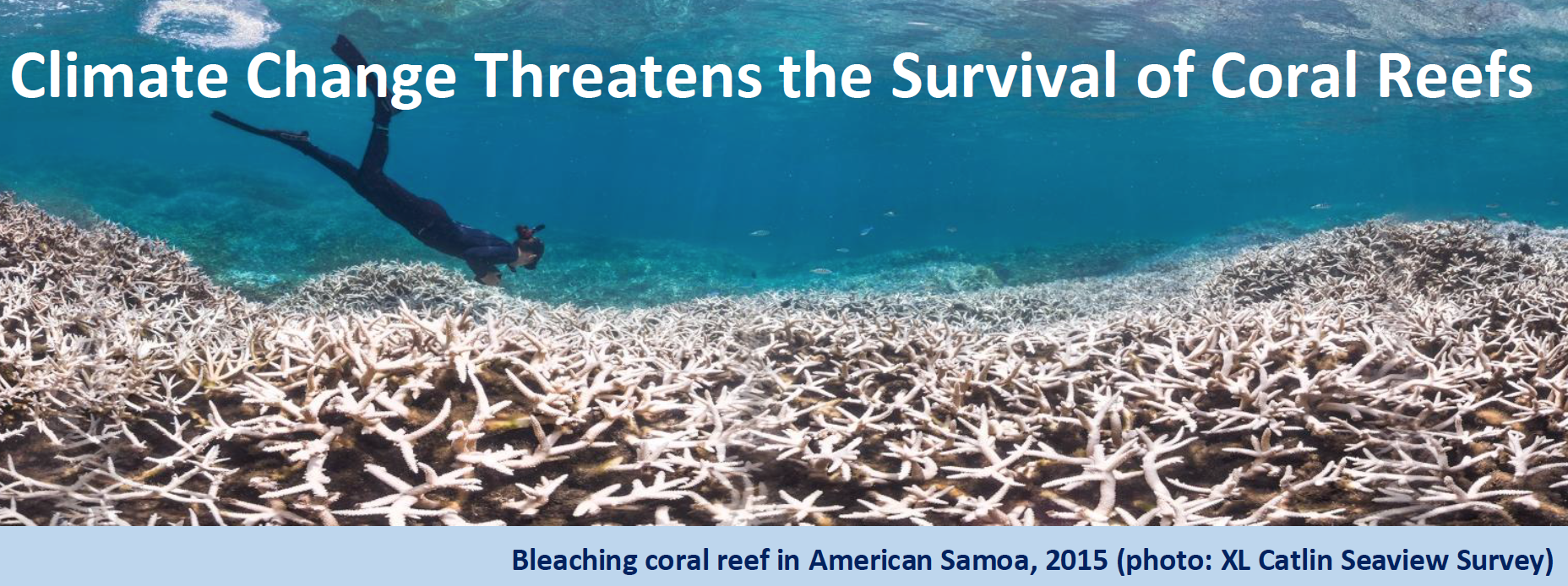
One can be logically sound but be ethically and morally irresponsible.  Ignoring what experts are saying, making sweeping and unsubstantiated statements that there is nothing we can do, that it’s just nature, and the Earth will be fine is really the same as having the power to do something to save lives and not doing it.  And this is why I agree that the conversation about climate change has to shift away from science and facts and be more about compassion, about love for our fellow human beings, valuing equality so that we all have the same chance to adapt and survive the changing climate, and about taking responsibility for the home that sustains us all.  These are important values regardless of what is causing the climate to change and these are things we can address and even already have some solutions for.  Of course I know that is even overly idealistic to think that such a solution of addressing people on an emotional level might work.  Hell it’s difficult to find a religion that unanimously agrees poverty is something we should do something about. I feel pretty bleak in general about us actually doing something about climate change.  It requires people to move beyond nationalism, beyond their own religious beliefs and worldview, which tend to not be very worldly at all.  Maybe we can’t win against the forces of nature, but it sure would nice if we could overcome the forces that divide us as a species.  We can try.  Maybe in the end it really is easier to move mountains.

Under Pressure

I’ve been away from blogging for a little while as work became quite busy and stressful as I was given a project that normally would take several months to prepare for and was given two and half weeks.  I’m not complaining though, I am still very fortunate to have the job that I do, and in the end it was a very rewarding outcome.  I had to organize a Science Olympiad tournament for 40 regional high schools and middle schools and it ended up going very well.  I didn’t actually have to do this task, but if I didn’t a lot of kids would have been hurt, and a lot of teachers very angry and so it really wasn’t something that I took any time to consider, I just knew it had to be done, and I did it because it was the right thing to do.

http://www.youtube.com/watch?v=psYQMY69gLo

It got me thinking a lot about stress on how much it affects our behavior.  It cost me my spring break and I was bitter about that.  In that time I was also certainly less attentive to others in my life.  I was more moody, snapped a little more than I probably should have at people that I care about and had a lot of trouble sleeping.  The guilt of snapping at people at being less attentive to others, and lack of sleep are positive feedbacks which worsen your condition.  I am fortunate that it was only a rough few weeks.  I am fortunate to even have a spring break. I am fortunate that even though the semester still has lots of work left in it, there will be summer holidays starting in early May.  There are people who face what I face, every single day of the year, with additional stresses associated with finances that I do not face.  When I reflect on how irrational I might be in times of stress I think about the cumulative effect such things must have some people.  How hard they might struggle to find a way out, who they might time to blame their stress on, and wonder what things they might rely on to find peace.  It makes a lot of irrationality in the world understandable.

At the same time it makes you really question why it has to be that way.  We have the resources to feed everybody, we have the knowledge and ability to give good health care to everyone.  We know a lot about the universe and how to give people quality education, and we know the things that make people truly fulfilled and happy.  We know a lot about our own imperfections and biases so that we can avoid the pitfalls of our flaws.  We know better ways to correct deviant behavior, we know better ways to reduce the possibility of criminal and violent behavior, and we know better ways to raise.  We may not know everything, but we know better.  “Civilized” society seems so counter to how we operate as humans that somedays I really question whether or not it is all worth it.  Even though we might live longer on average than our hunter gatherer predecessors, and can avoid many of the deaths from natural disasters that our predecessors could not, sometimes I do wonder whether or not it was all worth it, and whether or not we shouldn’t all still be climbing trees to pick fruit.  And yeah maybe it would be sad to lose a few people to drought, or malaria, but so much death nowadays seems to be preventable and avoidable.  The destruction in Belgium and Turkey recently really makes one question whether all this is worth it.  Has any of this civilization experiment increased happiness?  Benefitted the home we call Earth?  Given our evolution as a species perhaps this trajectory was unavoidable, but it feels so much easier to accept deaths caused by the pitfalls of living in the wild over seeing death occur from senseless acts of violence that will never lead to any gain, or seeing children die from hunger while not very far away somebody sits on a fortune of money and resources they do not even need.

Alright, I know this is not very cheery and I am not helping much to increase human happiness either, but I think many people share these thoughts.  I of course do believe that this trajectory of civilization was to avoid human suffering and nobody really imagined the consequences we are facing now.  Maybe these are the growing pains we must go through.  I hope that our intelligence is great enough to get us out in the end.  Perhaps the real shame is that our lifetimes are still too short to be able to see the end result of all this suffering.  I wonder if a 13th century scholar who watched people die from plague after plague, and endless crusades and wars, could visit us now if he would actually be impressed with our moral progress.  Maybe what we have now is further than he or she ever dreamed.  Maybe they would remind me to consider myself lucky that I live in such times and that now that they have seen the change possible over the long march of time that there was every reason to continue to have hope and strive for more.  And if there is one thing that I know for sure is that nothing has ever been made better by despair.  And if I want a world in which people do not live in despair and have reason to be hopeful then I must lead by example, even if I only touch a handful of people in my world.  Who knows how far the ripples of our impact will travel through time.

Diminishing the Hate

The divisive ideological culture that we have in the U.S. appears to be getting worse with time.  It’s been growing on my mind, that more than anything else this might be the biggest problem we face in this country.  Because that “other side” isn’t going to magically disappear, and the very serious problems we face in this country are only going to be solved through coming together and bridging the gap that separates us.  I’ll admit that I am at a loss at how to effectively do this, but one thing has caught my eye, that I think might help.

One thing is that I think we have to stop posting things on social media that are just negative sound bites of what politicians or what celebrities say.  I think just the absolute large exposure of hateful and/or negative messages legitimizes the hate more than it does make it go away.  And the exposure might get around to some people that might not normally have seen it and those people might say “Hey, I actually think this hateful message might be right and not hateful.”  More importantly the key is how do we diminish the impact of such messages, I think one of those things is to literally ignore it.  Some of these things are so ridiculous that we literally waste our time sharing it and trying to shame the message.  There is a blogger on patheos that I follow called the Friendly Atheist.  As well-meaning as he is, he often brings up ridiculous things that are being said by small time pastors in small communities in the south, and now all of a sudden people are seeing it all over who follow him.  Now most who would follow this blogger will be like yeah, this pastor is an idiot, but some people follow atheist bloggers to argue, and to show their followers the ridiculous stuff the “other side” is saying.  Now a story that might not have gone beyond a local community or anywhere is bring spread around the country.  That’s not good.

Now I know you are probably saying, “well it’s important that these terrible ideas are challenged, and thus we must say something!”.  I don’t mean to argue that we shouldn’t oppose such things, and so before I address this, I want to add one more thing that is also I think unhelpful and leads into what I think is a better way to oppose.  The inspiration for this post came from an article that a friend posted yesterday.  A very compassionate and comparing individual, and I am sure we all know such people and the article was titled “While Trump Spews Hate, These Muslims Just Raised $100,000 for San Bernardino Victims”.  Now compare this to this article “Muslims Raise Funds for Families of San Bernardino Victims”.  Can you spot the difference in the titles?  Not only that, nowhere in the second article do we see an attack on those who are prejudiced against Muslims.  Now you might say well shouldn’t a good article represents both sides?  Not necessarily, because this article is simply reporting a reaction by the Muslim community to help the victims.  This is objective reporting.  Now if there were Muslim communities that were cheering, than yes it would be important to report that too, but my point is that when you read the headline of the first article there is an attack on Trump and his supporters.  Those who support Trump will immediately have a physical reaction that will prevent them from effectively ingesting the good works done by the Muslim.  I have written about this before and this is sometimes referred to as the “backfire effect”.  Now I am not saying all hateful messages shouldn’t be addressed, but most sound bites are hardly substantive.  We make all sorts of rational arguments about why they are wrong, but the sound bite itself (which sometimes is even out of context) contains no substance and thus from a rebuttal standpoint requires little substance in return.  And when we post that message it makes those who might support that message simply feel attacked and thus less likely to listen to all your rational arguments.  But when hateful or negative messages are spread with substance, by all means a substantive response is important.  But maybe this is best addressed in an op-ed to your local paper, or a blog rather than Facebook or Twitter.

What I suggest is simply posting the positive message when you are outraged by something.  Don’t post an article about what some hateful pastor has said in a rural community in Alabama, but perhaps post an article about what more progressive pastors are saying that would lead to increased tolerance and inclusion.  Post the rational arguments instead of only posting them in response to something ridiculous that is said.  If what you consider to be a negative and/or hateful message has merit, force those who support it to make their own substantive arguments to rationalize it.  Force them to think.  What I find is that even if I agree with you, I might get angrier and such an emotional state does not help me either in terms of seeing us a group who has to work together and I feel more helpless at how divided we are, even if I do feel that my friends are on my side.

My thoughts here are not meant to be judgmental, but rather a call to action for others as well as myself because I know I have been guilty of this at times too.  It’s easy to let our outrage get the better of us.  There is a lot of it out there today.  But most people, I think, would rather get along with their fellow man and a friend than an enemy.  This is one thing we all have in common.  So the next time you get upset, think about how you can spread the rational and the positive, without spreading the anger, the outrage and the remarks that attack rather than inform.

Imitation and Approval

When I was 12 years old I went to Bible Camp.  It was my first time going to camp, going away for a week without having any parents, grandparents, aunts or uncles.  Luckily my second cousin went so I would know someone and that was probably the only reason I wasn’t too scared to go.  I am not sure why my mom chose to send me to a bible camp, but as a Christian I am sure she hoped that I was receive some good education about religion, the bible, etc.  When I was there I was eager to impress the counselors and leaders.  They had a bible verse a day and a contest at the end to give a free camp hat to anyone who could memorize all the verses.  I was the only who could do it.  I used to have a good memory.  Maybe I still do, I just can’t remember.  At camp they also talked a lot about prayer and how praying could help you get the things you wanted in life, as long as you were good and you really believed.  For me the idea of prayer was exciting because I thought maybe it could work to stop my dad’s drinking.  So I opened my heart and let Jesus Christ in.  The counselors were so happy.  All of them congratulated me.  They were so kind and so pleased with my decision.  After camp was over, I was so excited I had made the decision because I knew it was going to make others in my life so happy.  My mother, my grandmother, aunts and uncles.  And on top of that I was told that if I was good and really believed that my prayers would be answered.  I had many tangible reasons to be very happy about it all.  It had very little to do with heaven or hell, or some events on alternate planes of existence, but the way it made others in my life happy, and the way it might help my dad to stop drinking was very exciting.  Of course none of my praying made any difference to my dad drinking and in the end the excitement of my decision to let Jesus into my heart faded and it became clear how the entire belief system had any relevance to life if one of the things they touted the most didn’t work.  I believed as much as a 12 year old could.  But the fact that prayer doesn’t work is not really the subject on my mind, but rather that as I reflect I see how much of a child I really was.  I completely didn’t understand the complexities of the religion or the Bible.  I was clearly caught up more in the joy that the adults in my life felt by my decision rather than really grasping the importance of what a religion means to someone’s life.

Dhyan_forkandknife

It takes very little time with an infant/toddler to see how much they want to imitate others.  And while I am sure there is an evolutionary aspect to this, because obviously if we have survived as long as we have, it makes sense to copy our parents, but what is also clear is our reaction to that imitation.  Because when he successfully uses a fork, or successfully gets up on a chair by himself, climbs the stairs etc, there is much applause.  There is much excitement and happiness.  All in the house are happy and pleased at this ability to accomplish these tasks that move them closer and closer to adulthood.  Every child can’t wait to do things older people can do. They can’t wait to grow up.  As children we are always looking for the approval of our adults.  We may rebel when we don’t get it, but initially, we want to be noticed by those we look up to.  As children we are somewhat helpless and getting adults to like you and notice you, is a way to make sure that they take care of you, teach you, spend time with you.  If you can impress an adult then this is a bonding experience.  Something we all seek.

dhyan_laptopFor all my dad’s faults he was fairly adamant about choosing a religion as being a choice to make as an adult.  That children didn’t have the capacity to understand the decision and thus did not want my mother to influence as children.  This was not something my mother or Mennonite grandmother could really help doing, but it was certainly tempered compared to many other children and I am quite thankful for my dad in that, because it’s clear to me that he was right.  Even at the age of 12 I could not understand a religious belief system.  From my mother I may not have adopted her belief system, but I learned about her charity, her kindness, her compassion, her perseverance, and the fact that she is someone who likes to ask questions and research the answers.  As I watch my child grow I can see that it’s less important what I believe, but rather how I act.  These are the things that will shape him.  Brainwashing him into a certain set of beliefs seems pointless over my actions being moral.  My child was born an atheist and if he decides that he wants to pursue a belief system as a guide to live his life then it will be his own choice, not because I’ve prescribed a doctrine for him to follow.

With the idea of God being “our Father”, I sometimes wonder if God isn’t the ultimate helicopter parent.  A way for people to still constantly seek approval from a parent-like figure.  It seems somewhat unnatural to me now to maintain such an attitude into adulthood.  As children it makes sense to have this attitude, but as adults we are supposed to no longer be seeking approval and be the role models for our young.  I guess as social animals it’s easy for such hierarchies to remain.  The only problem is, if there is no God then all we’re really doing is trying to make a non-existent entity happy and a lot of difficult to interpret texts written by men on what God actually wants to be made happy.  That seems like a wholly unhealthy way to live life.

The Pope is a Great Guy, but…

Of course if you are in the U.S. you know that life is all a buzz because the Pope is here.  Democrats are happy, Republicans are mad, life can’t get better for us liberals right?

Now don’t get me wrong…I think this pope is miles ahead of popes in the past and I really love his positive messages about doing something about climate change, helping refugees, and taking care of the poor. But….

On the topic of climate change, there this group, let’s call them a hell of a lot of scientists across numerous scientific disciplines who have been saying we need to do something about climate change.  But if the Pope says, then we better start listening.

There are a large group of people who feel great compassion for the poor and already believe we should be helping them.  The Pope says we should help them and so now we better start listening.

There are a lot of people who think we need to deal with the humanitarian crisis in Syria better.  The Pope has made it clear we must help, so now we better start listening.

And look, I get it to a certain point, because there is a large portion of this country who only start to take things seriously when it is said by religious authority, but that doesn’t mean we should really be happy about it.

Secular humanists and those that value the scientific method as the best way to try and understand how the universe works are years ahead of the church on these kinds of issues and yet nothing can be done about it until the Pope says to do something about it?

But here is the thing, the Pope is right, but there is nothing about his religion beliefs that are germane to the issues he speaks of.  Helping the poor is a matter of acting out of our natural capacity to feel empathy, it speaks to equality, and human rights.  There is nothing divine about it.  Doing something about climate change has nothing to do with the story of Jesus Christ.  Once again it is being proactive about reducing suffering and listening to what 1000’s of scientists are saying who have spent years and years researching changes to our environment.  If there was no Pope and no God this would all still be the right thing to do, because why let people suffer?

So I’m happy that the Pope is saying all these things, but there are many among you have been saying these things all along.  Intelligent and compassionate people.  They aren’t called the Pope but maybe they are worth listening to as well. To me it’s a bit sad that we have to look to a man who says many things other have said all along, but just because he is the Pope it becomes relevant.

It is science alone that can solve the problems of hunger and poverty, of insanitation and illiteracy, of superstition and deadening custom and tradition, of vast resources running to waste, of a rich country inhabited by starving people… Who indeed could afford to ignore science today? At every turn we have to seek its aid … the future belongs to science and those who make friends with science. – Jawaharlal Nehru – 1961

The choice of having children: Not having children

In this series I have tried to take a look at the process of having children from the standpoint of essentially energy. In that what we have is a finite amount of it, and having children requires quite a lot. I have also tried to show that having children is a decision that is related to both the individual and the community. Population control is something practiced by man since we first became a species both through planned pregnancies and the unfortunate act of infanticide in extreme cases where the individual or group was threatened by a severe lack of resources. As we make our way into the modern era we find more and more couples in western countries with strong economies to be choosing to have fewer or no children. Should we be concerned by this?

Dhya_iowaAs someone who has entered the community of being a parent, I can honestly say there is a great joy to being a parent that no amount of rational thought beforehand could have prepared me for. No matter how many other parents I talked to and even if they could tell me their joy I would not know what it is like to have one of my own. Part of me wants to shout out to the world that this is an experience that is worth doing and yell at people to have some babies! But what do I know? We all know people who are extremely stressed, who are burning candles at both ends. Some are in imperfect marriages and feel unsupported by their spouse, or don’t get any joy about the combined effort of working with their spouse to raise children. Some people may have had horrible parents themselves, thus feeling ill-equipped to do the same. Some feel driven by their careers, feeling fulfilled in their everyday life, liking what they do and may actually prefer to give to the world in this way. Some, simply through deep introspection feel that they don’t have what it takes to be a parent, whether it’s a lack of energy or patience, too much anxiety or stress, depression, or other reasons. I came across this article, and I really loved it. There is lots of good stuff in it, but the important point that I got from it is, “Is it anymore selfish to have children than to not?”

If having kids is as wonderful as I’m feeling about it, and I’m doing this act that gives me an intense amount of joy, what difference is there between me and the woman who wants to focus on her career, wants to travel, wants to have smashing social gatherings with her friends? Should we force anybody to give up the things they want to do so that they can instead save money for her child’s tuition, travel less because every trip requires more money than it did before, seeing their friends less socially because babysitters are expensive, or trading a night out for dinner for a play date with a fellow parent? In todays world, having children may actual decrease happiness for many people, and is this the environment we want kids raised in?  If I’m honest there is a part of me who misses my life before children, but not so much that I regret it in any way. None of it feels like a sacrifice and I had a lot of freedom for a lot of years, and then I chose, with my wife, to have children.  We did, and are happy with our choice in every possible way. Why should it feel like sacrifice if it is what I wanted?  And if you’re a parent and it does feel like a sacrifice you probably should have thought about it more before having children. There are some hard days, but it’s just part of being a parent and I really don’t mind.

In my last post I looked at the issue of abortion, because here is a situation in which we judge women for terminating a pregnancy and killing an unborn fetus, and yet we also find we are treating many women who choose not to have children with nearly the same level of incredulity.  I am not saying the anti-abortion crowd is the same as those that are critical of women who don’t have children, but it’s sad that women really can’t win it seems unless they are popping out babies and loving every minute of it. Regardless of whether it was planned, or unplanned if you don’t want kids women are made to feel that there is something wrong with them. Like they are “going against the natural order of things”, to quote the article above.  And this is not a fair judgment.

But this is why I wrote this series is because human life is not simply about reproduction. Certainly a species needs to reproduce, but remember what I said in the first post? Our evolutionary advantage is intelligence. So here we have this social species, living in a now global community, who is intelligent. We are the most intelligent species on the planet (at least in theory) and our survival is not just about a numbers game. There is a reason other species have big litters, lay a 1000 eggs, or reproduce more frequently.  It is simply because if they didn’t, they would not survive. They are preyed upon, they have more accidents, they cannot cure themselves of disease, they cannot heal their injuries. Living in the wild is a hard life. In fact given that we evolved in the wild, and were limited in our rate of reproduction given our non-sedentary lifestyle, it reveals how important our intelligence was to our survival. But even if you wanted to argue that it was a numbers game for humans too, well you might have something…we’ve quite successfully made it to 7 billion people, I would say that we aren’t in any danger of dying off too quickly unless some gigantic asteroid hits the planet without warning.

As we move into the modern world, the newly acquired sedentary lifestyle which has led to a massive population has also led to a wide variety of roles that people can play in society and specialize in. Instead of everyone being a jack of all trades, we have people who are just really good at a few things and really just do one job. Whether that is a better way to live, I can’t say, but that’s sort of how society is right now, and we all work together with our different skill sets to make society function. Some people really want to be parents, some people really don’t. And we really need to be okay with that, because we are just fine. I can guarantee you that should something happen that would leave only a few thousand of us standing, everybody would pull together and start breeding like bunnies again to the best of our ability. Even homosexuals would probably kick in a few sperm here and a few eggs there to help humanity out. And if you want to be a lover of the natural order of things, I ask you to think about what is natural about dumping massive amounts of carbon and other pollutants into the air, hunting species to extinction, dumping plastic and toxic waste into the oceans, collective radioactive material and bringing it to the surface, and then expecting everybody to create even more people to do even more of all this stuff we are doing to the planet, all so they can experience the joy of having children. Now who is selfish?

But listen, I’m not knocking parents either, I’m only saying that we need to all relax and recognize that we all might feel passionate about different things and this is okay, because it is that diversity that enriches humanity.   What is best is that we all fulfill our roles well, not all fulfill the same role. If civilization is to have any advantage to our hunter-gatherer days it is that we can use the extra time that farming has given the rest of us to make the world a better place, and this doesn’t need to be done by everybody having children. For many there are some pretty good reasons not to have children, and we should respect the intelligence that was shown to make that decision, and the same intelligence should be put into those who want to have children as well. Raise your children well. Raise them to decrease the suffering of others. Raise them to make the world a better place.   Spend less time worrying about whether or not other people are having children, because there are many ways to make the world better. Future generations will be fine as long as, whatever we do, we use that intelligence that has helped make it this far.

What Makes A Good Human?: Final Thoughts

I will try not to make this too lengthy, but this series has been a journey writing it and I felt a more holistic summation was in order.

One of the things that occurred to me that I was writing it was that was I sounding too much of a person of privilege in my posts.  I certainly felt like that at times.  If I could say one more thing about what makes a good human might also be luck.  The country I was born in, the parents I got, the extended family, that were very loving, and of course my wife and friends all played a role in making me what I am, and for giving me the time and freedom to ruminate, contemplate, learn the right lessons from my experiences for me to even be able to write this.  Of course luck isn’t really in our control, and perhaps it is who we are that draw at least some of the people into our life and keep them there.  But there are those who are born to parents who stifle their curiosity. When does the parent or parents who work long hours to provide for their children find the time for curiosity themselves or get a chance to play?  There are those who spoil their children rotten and make them prideful and without humility.  What of those who struggle about even what to put their faith in, fearing a repetition of past mistakes?  I was thinking about how would a person who lived in the inner city slums of Mumbai, or Rio find solitude?  And then of course what about those who have clinical psychological conditions like narcissism and thus are excessively self-centered?  How does the psychopath learn empathy when physically incapable of it?  While there may be some solutions to this, early recognition and special nurturing techniques are often necessary and so my words in this series may be nothing more than the words of someone who has, overall, had it pretty good.

One positive thing I have noticed in my life is that none of these qualities however belong to any one specific class, race, culture or region.  I have seen the poorest with the least reason to be generous and compassionate be more so than those with the means to bring more good into this world than they do.  And I have seen the busiest parents with little time for play themselves, make those sacrifices simply so that their children have that advantage.  Life is dynamic, and always changing.  Some qualities we may have to put to the side to move past a certain point where we can bring them back.  It would be idealistic to say we can have these qualities at all times, and in all places.  And while it would be nice if it were so, such utopian fantasies should never occupy our thoughts for too long.

If asked who I wrote this all for, I would say firstly for me.  That in itself may sound self-centered, but I desire to become more than I am always, and this journey has helped me greatly in recognize the areas in my life where I might know how I should be in theory, but haven’t been in practice.  It has helped me look at areas where I want to grow also.  But I think that I also wrote this series for those of you who do such a wonderful job exemplifying these qualities as well.  It is those who have been the fortunate in this world who, like rocks striking the surface of the pond can send ripples into the world to try and make it a better place.  And when I say fortunate I don’t mean that your life has all been a “walk in the park” (and certainly mine hasn’t always been either) but have overcome great adversity to be where you are now.  I also don’t list these qualities to emphasize that we should all be the same. As I have tried to make clear along the way we all exemplify different levels of these qualities, and as I mentioned above, sometimes we may suppress these qualities in ourselves to be able to foster it others, like our children.  I think a good human exemplifies these qualities, but our individuality is what decides which of these qualities drives us most strongly.  Some people may strive for more balance, others may selflessly always give their time to others, some may love learning and sharing that knowledge, others display great acts of courage that inspire.  I do think that all these qualities, should always exist as sparks within ourselves, and we should never let them go out.

I was talking to a friend yesterday and she asked me why I even blog.  And I guess central to who I am is that I believe that we are a lot more similar than we are different, and I want to always try to look at things that bring us together rather than those things that drive us apart.  So I guess in looking at things that make a good human, I wanted to try to see if I could come up with what I felt was a comprehensive but simple list of things that I’ve seen in my life that make the world a better place for all.  I am sure there are other things that might be added, and as I continue to grow and learn perhaps I would add things to this series.  But if we can all agree on at least 8 things, that then I think that is a good start. 🙂

Peace.

Swarn

What Makes A Good Human?: Faith

Well, if you know me, you might be surprised at this quality.  And to be honest this is one that I wasn’t sure I was going to include but could not really make it fit as part of any of the other ones and so have put it here. This one is 6th in the series and so if you were keeping count there will still be two more to come for a total of 8 (as opposed to the 7 I thought I was going to blog about in my intro to this series).  Hey I did say that this list was not set in stone, and my final quality justifies this change quite well so stay tuned. 🙂

So let me be clear here that when I say faith, I do not mean religious faith, nor do I mean blind faith.  The first definition of faith is “complete trust or confidence in someone or something”, and this is the faith I am talking about. Perhaps I place too much importance on stress and too much importance on living in the present moment, but one of my reason for including faith is borne out of the fact that we are exceptionally good future thinkers. It might be somewhat natural to think about the past, and of course we live in the present, but what value is thinking about the future, when the future is uncertain. Of course we can see the value in thinking about the future from simple mechanical movements like anticipating the trajectory of a ball as we reach out to catch it, to having grand visions of the future that we work to make a reality. Our imaginations and our ability to envision a path to turn what is in our minds into a reality is a great strength, and it’s safe to say our ability to think about the future is greater than any other creature. There is a double edge to this sword and that is worry. We worry about that uncertain future at times, and we worry that what we want to happen will not come to pass. Much of the grief we often feel when we lose somebody important (whether from death or breaking up our relationships) comes from a loss of a future that will now no longer exist with that person. Our ability to imagine the future is so strong that it can feel as real as any present moment. In a previous post in this series I talked about the value of play for helping us be in the moment, so too does faith. Whereas play helps us become lost in the moment, faith can help us focus on the present by making us feel like “everything will be alright”. Faith can give us hope and keep us steady.

One of the reasons that the future is so uncertain is that we can’t account for all the variables in any particular problem. And even if we could, there would be several that are simply not in our control. Wanting to fix things that are beyond our control is one big source of worry and stress whether it is a personal situation or the larger sadness we might feel over big problems like world hunger, gender inequality, or racism as individuals most of us can only do so much. The weight and burden of the future can drag us down and we need something to ease the mind and focus on the present. It is not surprising that faith is always used in the context of something that we feel is good. Whether it is a supernatural being who we believe is watching out for us, loves us, and protects us, to more tangible things like faith that a good friend will come through for us, a general optimism about the improvement of society, and perhaps most importantly a faith in ourselves that we can overcome challenges in our way. In reality none of these things are sure things despite what past experience might tell you. You may actually fail at what you are attempting, even if you’ve handled similar or even the same situations before. Society may get worse. Your friend may not come through despite how often they might have come through for you before.  The world is dynamic and constantly changing. Your friend is changing, you are changing, and society is changing and so there will always be some unknown variables. We can also be wrong that we understood a past experience properly to ensure similar results in the future. Humans are prone to Type I errors (seeing patterns or connections where none exist) and quite often we don’t understand our experiences fully. However, without some faith we’d always be questioning and doubting and while there may be a time for questions and doubt, to dwell on such things constantly can also be equally wasteful. Doubting your friend all the time may actually strain your relationship. Doubting yourself all the time may make you actually more prone to making mistakes. Being pessimistic about the world may actually make you less happy and less able to make a positive impact, which is the only way the world is going to get better, if we do something about it.

Richard Dawkins and others are often quoted as saying that faith and science are not compatible because science makes conclusions based on evidence, where as faith makes conclusions despite evidence. I tend to disagree with this notion, because I feel that to develop faith it cannot be built on nothing. In my experience what people disagree on is what people consider evidence. I wrote about this previously here and here. A large of the aim of religious institutions in keeping members of their faith is to discredit contrary evidence. If the evidence against what you have faith in seems faulty you are less likely to let it change your mind. But we’ve all had changes of faith as evidence is presented to us. What happens if that friend lets us down a few times? Chances are, our faith in them will be lessened. What happens if we start getting inundated with all the evil that happens in the world? We start to lose our faith and optimism in humanity. What can happen when let ourself down? We start to lose faith in ourself, which is often a scary place emotionally to be at. I think faith is born honestly in most cases, and I think if left unhindered we would adjust the things we have faith in over time as we continue to question, experience and learn. The important part is that faith should be changeable and it should be personal. When we indoctrinate children about what they should have faith in this is from a developmental context abusive, because the stronger our faith becomes in something, the less likely we are able to adjust it over time because of how beliefs work in our brain. The inability to change what we have faith in as we experience and learn new things leads to an unhealthy conflict: the struggle to remain static in a dynamic world. I think some people might wonder, what is the point of having faith if it may change some time in the future? Because the world may seem chaotic, painful and beyond comprehension at times, it makes some sense to have faith in an order, an intention, or a purpose that is forever and unchangeable. However, it’s only a convenient illusion that will become harder and harder to maintain with time without willfully ignoring contrary evidence.

There are no guarantees in life and it’s okay to be wrong about what you put your faith in. Everybody has been wrong about things before. Being wrong is one of the greatest shared human experiences. I do understand, however, that it can be distressing to admit when we are wrong about things, even more so when we invest a lot of time into having faith about someone or something. Faith as a result is perhaps the trickiest of all the qualities I’ve discussed so far because it can cause us to double down even when the odds are against us. In my opinion the thing to keep in mind is to let your faith work for you, and to not let your faith gain mastery over you. And don’t expect others to share your faith. That’s simply not realistic. But if I were to pick some basic things to have faith in, it would be this:

  1. Change is inevitable
  2. You have it in you to deal with that change
  3. Everything will be alright because changing what you have faith in is not a loss, it’s a gain – for you must have learned something new in order to get to where you are now.

What Makes A Good Human?: An Introduction

If you read the title you are probably wondering, who am I to write prologues, or preludes, or introductions?  What’s all this about?  Your blogs are only marginally interesting to begin with, why should I read anything doesn’t really tell me anything?  All fair questions, and the best answer I can come up with is that, good things come to those who wait.  Of course it’s also true that sometimes good things come to people in an instant, but this is not one of those occasions.

A fellow blogger I met when I first started my blog asked me what I was my goal in having a blog, because clearly it’s not all for yourself or you wouldn’t be putting your writing on the internet.  I knew the answer at the time, but was modest about saying it aloud, and I guess I still am, but ultimately I do want to inspire people.  Inspiration is an interesting topic in itself, something worth having a blog post about someday, but the truth is I don’t know that anybody could say how to inspire others.  It’s something you can’t really predict.  Sure there are ways you can communicate more effectively, more enthusiastically.  Inspiring someone through written word I think is more difficult than face to face, and I am not sure that my writing is that good yet.  But I believe inspiration comes also through expressing ideas and asking questions and that is the route I have taken.  Given the number of followers I have that read my blog I can tell that my writing is limited in how it has impacted others, and that’s okay.  Ultimately some of the blogs I enjoy following the most are ones that have a nice sense of community, and it would be nice to get to that point and just have a handful of people that regularly comment and read my blogs who have interesting things to say and interesting and well thought out points of view.  I think I’m moving closer to that as I have met some wonderfully intelligent and thoughtful bloggers over the past couple of years.  But that doesn’t mean that the blog  isn’t also for me.  It is also where I can explore, where I can get my thoughts out and help me sort out things in my own mind.  So while I hope the things I write mean something to others, I am also happy in the way that it helps me grow and learn.

My next series of blogs, which this is an introduction for, are what I consider to be the essential qualities of a good human.  These qualities that I am going to write about represent a culmination of years of thought on the matter.  So while it might seem overly bold, and though there may be disagreements, these are not qualities I have arrived at quickly or arbitrarily.  I make no claims that such a list may not change as I continue to learn and grow, and I have also, through careful thought, tried to condense it to as small a list as possible.  Not because that is necessarily important, but because over the course of my life I have come to see connections between certain qualities and realized that perhaps such qualities might exist under a much larger umbrella.  These qualities have been alluded to in my writing before and blogging thus far has helped crystallize ideas in my mind.   I also don’t make the claim either that these are overly original either, but I hope to make people think about these qualities in a slightly different way, specifically to try to broaden one’s views of this quality as very often people have a very narrow definition.

I like to have pictures in my blog posts, but really couldn’t think of any. I’m Canadian though and there will be 7 qualities. Boom.

One of my first posts when I started my blog discussed the dangers of categorization.  We are species who constantly makes poor correlations as a result of our tendency to make Type I errors, which is to find patterns and connections where none exist.  As I have also written before I grew up in two cultures being biracial and this helped me see from an early age that the innate goodness of a human being had little to do with religion or culture and yet these are characteristics that we seem to tie to goodness or badness most often.  And of course as I grew older I have seen even more judgments of character based on gender, class, job, education, etc.  It might be natural that we make these poor assumptions simply because we are bound to make determinations about a person’s quality based on the people we know throughout our lifetimes.  I have often observed that most prejudice of any kind comes from a lack of exposure to diversity, not because of it.   If I were to say something positive about myself, it’s that I do always try to look for the goodness in all people. As a result I have never shied away from getting to know somebody from a different walk of life because it seems the more people I get to know, the more I am convinced that they way we separate ourselves from others is false and ultimately harmful.  In that vein I have thought a lot about what are the qualities that good people have in all those different walks of life I have encountered.  This, in addition to what I’ve learned through my education has led to me to conclude that there are 7 things that we must all have.  The fact that 7 became the number has me already a little worried that I’m not right, because the number 7 is full of romance, but try as I might I couldn’t think of any more or any less, so I’m just going to go with it.

Finally I just want to emphasize that all these qualities I will blog about over the coming months are equally important.  So much so that missing even one of these qualities can be problematic.  While the degree to which each of us has these qualities may depend on the individual I believe that all are qualities we must demonstrate and develop every day.  There were times that I thought there was a ranking to these qualities, but now I am not so sure.   Anyway, enough of this introductory business.  I shall end this by thanking you for reading this and my blog and hope to hear your thoughts in the coming months as I complete this series of posts.

Returning Your ticket

Let’s say you are on a big cruise ship. Over 6,000 men, women, and children are on board.  This cruise ship promises to take you to paradise and it’s not a lie either. A place where everybody is happy, nothing bad ever happens, and everybody gets along in love and friendship.  Children are laughing and smiling and running around.  Nobody

From http://www.freefitnesstips.co.uk

is hungry or hurting.  Everybody lives in harmony.  There was no charge to even be one of the passengers.  You’re on for free and who wouldn’t pass up such an opportunity.

As you are making your way to paradise, the captain announces that due to some unknown structural defects that they need to get rid of about 100 passengers or the boat will sink.  Fortunately there are an equal amount of bad criminals who have done some bad things and don’t really deserve paradise on board and the captain knows who they are and asks everybody else to throw those people overboard.  Would you still want to be on that boat?  Keep in mind that by even looking the other way, you are an accessory.  But many people, I think, given the promise of such a wonderful destination they could make it work for their conscience.

Now rewind the scenario and the same announcement comes on and says we need to unload 100 passengers or we all sink, and paradise will never be reached.  It’s only 100 people and still some 6,000 people will get to go to paradise.  But everybody wants to go so nobody volunteers.  People get tense and some people start deciding for themselves who might be bad or good, who might be too old to survive the journey and thus can justify getting rid of them.   Would you still want to be on the boat?  Again doing nothing to help still makes you an accessory.  In this scenario, not that the group who stays must develop some sort of justification for why those people will have to die.  Judging them without evidence, making assumptions, perhaps developing a philosophy that gets people to volunteer, convincing the more gullible of passengers that they will get to paradise anyway by making the sacrifice (even though they don’t know that to be the case, no matter how strongly they believe it to be so).

Let’s rewind again except this time the captain announces that his good friend the Grim Reaper will be coming around and taking the lives of 100 people at random.  It

From http://wiki.urbandead.com

could be your child, your friend, your wife.  Slowly everybody watches 100 people keel over without knowing why they had to die.  Would you still want to be on that boat?  If you stayed, what justification would you come up with to be okay with those deaths?

Let’s rewind one more time.  Instead of the Grim Reaper, the captain announces that everybody will be restrained while a psychopathic killer, wrought by the same person who made the paradise, will be coming around to kill 100 random people.  Having little control over his actions and lack of moral center, he will beat, rape, and torture these people before he kills them.  Many or all of these people are innocent.  Most importantly some are children. Young children, perhaps even babies.  Children in their innocence and purity must be physically and sexually abused in order to reach this paradise.  Would you still want to be on the boat?  What justification would you invent to be okay with this if you stayed?

In one the most influential books to me was The Brothers Karamazov by Fyodor Dostoevsky.  In that book one of the Brothers Ivan is having a conversation with his younger brother Alyosha in a chapter I believe called “Revolution”.  Ivan is an atheist and a collector of news stories around Russia of atrocities committed against children.  He questions the religious harmony that Christianity offers (I do not single out Christianity here, only relaying the religion that was used in the book).  We are all supposed to follow The Bible and follow its moral teachings.  The goal being that we will all come to know God on Earth and secure our place in Heaven afterwards.  But we are also supposedly given free will and thus some do not follow.  This allows for the possibility of great harm to innocent children: abuse, rape, torture, death (not even counting all the natural/accidental causes that take the lives of children).  Ivan claims that if this is the price of harmony then he would like to “respectfully return his ticket” to the Creator.

In reading that passage, I could not help but agree with Ivan.  Being a father now only reinforces that idea more.    If there is a Creator who is omnipotent and decides what happens to all His creation and that there is a reward of Heaven for those who are good, then I submit that this existence is simply not worth the price given all the suffering that does and has taken place already to get there.   There are of course many other atrocities that happen to adults, that make it not worth the price either, but it is especially hard when I think of the harm that comes to children.  The logic of a Creator who commands us to act according to His moral guidelines in order to achieve some post material existence paradise at the expense of harm to innocent people, simply does not add up.  It’s not enough for me to say that “God works in mysterious ways” or that “no one can know the mind of God”.  It’s not enough for me to know that God has taken the innocent up to Heaven either.  Because what is the point of this existence if they had to suffer here?  And for the life of me I really don’t understand why that can be enough of an explanation for anyone else.  I’m open to any and all explanations as to why the tears of a suffering child are worth this paradise?