You Know It Just Ain’t Easy

There are a lot of things in this world…perhaps brought about by humans, but nevertheless exist at least as part of our lives.  They are important things, things we fight for, things we live for.  I’m speaking of things like freedom, justice, love, spirituality, loyalty, equality, truth, and there are probably others that I’m not thinking of right now.  These things often give rise to a lot of disagreements in terms of what they mean, they often lack a specific definition, and very much depends on one’s perspective based on the family, culture, society in which we were raised.
But they do. And maybe sometimes they should.

All of these things are core to who we are as a species and have the ability to impact our own personal happiness and sense of well-being, as well as how we treat each other and all life in general.  All of these things can also be extremely frustrating because of how different we view them.  Ever tried to love someone who wasn’t all that impressed with the way you did it? Ever had someone question your loyalty even when you thought your behavior expressed loyalty?  Ever fought for some group’s freedom, but have the very same group question the way in which you fight for that freedom or even claim that you weren’t helping but making things worse?  Ever believe something was very important to spiritual health only to be told by someone else that it was irrelevant?  The truth is that that all of these things are really really complex, regardless of how simple and natural it might feel to you.  These things are often very dynamic, leaving us with moral and ethical conflicts over time, sometimes changing our views slowly or rapidly as we experience new things.  They are often tied strongly to our emotions and sometimes seem beyond reason, they are just how we feel.  It also tends to be not very satisfying to be alone with our perspectives.  We seek connection to those who share similar perspectives and points of view.  I would say all this is good, and that our perspective should change over time.  We should be seriously considering other points of view and striving towards some sort of universal truth about these things even if we never actually reach it in our lifetime.  Because if we can nail down these things it is the benefit of all.

However there is another core part of who we are as a species.  We don’t like things that are hard to define.  We like to organize, we would prefer things to be simple.  Simple is less costly, it gives us more time for other things.  We spend less time sitting their thinking when we need to make sure we’re safe, getting resources to survive.  It’s very evolutionary. When things are actually hard, when they are not quite within our grasp, that’s when the real trap springs.  Our need for organization, categorization, and simplicity begins to create rules.  It begins to create rituals.  Rules and rituals are easy.  I’m not saying that we haven’t created some convoluted rules and rituals, but they are easy because we know that when we follow them the conclusion is guaranteed.  At least that’s the way we tend to think.  They give us the intangible in tangible form.  They turn things that are dynamic into the static.  It takes things that might take a lifetime to learn into an instant discovery.  For those with a penchant for defaulting to authority, it is a Godsend. Literally.  And while it might be natural for us to do these things, it is a complete disservice to these lofty ideals and values we live and die for.  And maybe it’s not even a bad thing that we try to create a system that fits these things, but when we reduce it to the system alone things usually turn out badly.  Love has to be more than just placing a ring on someone’s finger.  Justice has to be more than just an immutable punishment for an immutable law.  Whenever we think we’ve reached a state of equality or discovered a truth, we must still question and test instead of resting on our laurels.

The Geocentric Theory. One of the best examples of human fallibility and seeing connections in nature.

I think that we have developed a very good “way of knowing” with the scientific method. It is demonstrably the best way of knowing we have so far.  It takes very little effort to look around the world and see that the best way is not only not the only way in which people come to know things, and it is often by no means obvious.  I mean it’s not to say we don’t start off life as little infants constantly testing and trying to understand our world through observations, but we do often make mistakes in trying to understand the world around us.  Mostly related to our tendency to find patterns that done’t exist.  Our senses often deceive us because we evolved for life in a small geographic environment, with a small group of people, and that is often what matters the most.  As “ways of knowing” get better and more effective, it reveals our fallibility.  It tells us we aren’t as smart as we think we are, and that we might not be doing things as well as we could.  Even as a scientist, who feels like I know my way of thinking is a more reliable one, it can often not feel like enough in a world with so much suffering and when so many need help quickly.  It is not realistic to simply wait for people to come around to a better way of looking at things.  As much as I like to philosophize “ways of knowing” we must also remember that such things are not so easily divorced from “ways of feeling”.

Collapse after angle of repose is exceeded

History tells us that change comes through slow increments like weathering and erosion and also through suddenness of revolution, yet in both cases forcing it doesn’t necessarily help matters.  It’s like life is like a slope of sand which slowly over time, grain by grain is deposited on a slope until we reach some critical mass beyond the angle of repose and the weight of the sand causes a sudden change in the landscape.  With no real way to predict which grain of sand will cause it all to shift and give way.  It’s like we all have to really try to do better, while at the same time just watch it all happen as if we aren’t even a part of the story.

So what is the answer to seeing eye to eye on these very important values?  I don’t know.  I think the best we can do is accept that things change, and that nothing is settled.  We can still try to create rules, as long as we are not a slave to them.  We can try to make things tangible, as long we accept that those rituals are empty without a lifetime of effort.  One thing we can say for certain is that life would lose far too much flavor if it all could be settled so easily.  We must accept that life is hard in large part because it simply can’t be done alone. And while I might be an idealist thinking that we might someday reach at least some level of harmony among all humanity, I see no harm in striving towards that.  What we have to gain, I think, is too great to just give up and say “It can never happen”.  As I always say, there is much more in this world that we all have in common than what drives us apart.

The Long Silencing of Women

Sometimes I think about this world, and all the problems we have and begin to wonder what kind of world it would be if women were considered truly equal to men.  Imagine all those gifted females throughout history who would have made amazing leaders, who would have made amazing scientists, scholars, inventors, who would have made amazing artists, performers, musicians and who were instead suppressed, killed, treated as property, relegated to one role only.  A society thrives on its intellectual capital.  How much have we lost?  We will never know.

And how much are we still losing?  Here are some important things to note about the state of women around the world:

Women are still very much treated like property.  It has only been in recent history that the dowry system has gone away in many parts of Europe and North America, but it is still quite prevalent in many countries.  The idea that a daughter’s family should have to pay, just to have their daughter become the property of a man, and that failure to give an adequate dowry ends in violence against the woman is deplorable.

If this was not dark enough, when it comes to women being treated as property one only has to look to human traffickingWomen make up 98% of all humans sold for bonded sex or labor.

When women are seen as objects or property rape is even more common place.  These rape statistics are truly horrible to read.  And if you want to get all picky on how hard it is to collect rape statistics and you don’t trust these numbers you can factor in a liberal margin of error and still be see some devastating numbers.  And the difficulty in ascertaining how common rape is, should give you more cause for alarm than less.  Darkness is much more successful remaining hidden than exposed.  Some highlights from the linked article (which is well referenced) is that somewhere between 60-99% of all rapes are committed by men, and 91% of rape victims are female.  Also 97% of rapists will never spend a day in jail, and to those who think there is a large amount of false rapes reported, this number ranges only between 0.7% and 8%.  So even by your most liberal margin of error the raping of women is far too common.  Especially given that it is estimated that only 40% of rapes are reported to authorities.  These statistics are largely just from North America where rape statistics are easier to gather. A U.N. study found that “worldwide, a whopping 25% of men (1 in 4) had raped someone in their lives. 1 in 10 (10%) had raped someone who wasn’t their partner.”

Not unrelated to the points above is the greater crime of outright killing of our daughters, both in the womb and without.  In countries where women have limited opportunities for employment, where women will cost their family great financial burden from having to pay dowries, females are aborted or killed as babies disproportionately.  While this number favors countries of India and China, it estimated that about 200 million females are aborted or killed as infants every year.  That is 1/35th of the world population.  In other words 3 out of every 100 pregnancies end in death for that fetus or child solely on the basis of gender.  As I’ve argue before there is a strong correlation between abortion and infanticide and what the cost of that child is to the family.  A woman is a cost and a burden to many families.  There is logic or rationale for why this must be so.

On how much money can a daughter bring to a family if she is uneducated? In a not too terrible statistic 53% of the world’s out-of-school children are girls, however, 2/3 of the illiterate people in the world are women.  Indicating a different quality of education for women, or different amount of time girls are allowed to stay in school.  Educated women make better choices about their health and pregnancy.  For example in Mali, women with a secondary education or higher has an average of 3 children, whereas those with no education have 7.  Women without education tend to not use birth control or even know about it, thus uneducated people, who can provide less successfully for their children have more of them.  In Pakistan the difference between gender in education is an astounding nearly 700,000 less girls being educated instead of boys (although to be fair an even more astounding statistic is that over 5.5 million children are without education in Pakistan).

What do the statistics say about women and politics?  Here is a list of major countries that have only within the last 125 years or so have even given women the power to vote.  For much of “civilized” history women have had little or no say in choosing who governs them.  And how do we stand right now on the role of women in actually governing?  This link shows the incredible disparity in representation in government around the world between men and women.  Perhaps the most telling statistics from this article is that what is considered a successful benchmark for women in government is 30%.  Women make up 50% of the population and yet a goal of 30% is considered admirable. Few countries have reached that benchmark.  Currently only 22% of all national parliamentarians were women.

In science trends are more promising.  Women still only make up 42% of all science careers in the U.S.  A great international study that looks at the role of women when it comes to published scientific papers, finds that males outnumber females as lead authors in every country.  The authors admit that this may be due to the predominance of senior scientists that are men and this may hopefully change in the future, but currently women are still under-represented in science.  The study also notes “despite more than a decade of policies aimed at levelling the playing field. UNESCO data show that in 17% of countries an equal number of men and women are scientists. Yet we found a grimmer picture: fewer than 6% of countries represented in the Web of Science come close to achieving gender parity in terms of papers published.”

I won’t even pretend to have even listed all issues women face.  There are of course many others, a lot of them ripples of the deep impact from the even greater patriarchy of the past.  Even those ripples will take time to calm, and return us to equilibrium.

I am not insensitive also to issues that men face, some are very harmful and perpetuate the very serious realities that women face also.  Men have their burdens, but it is clear than women have the heavier load.  A burden they never chose to carry, a burden that men have given them.  This is not the oppression of a minority; this is the oppression of half of the human population.  Oppression so deep and ingrained that many women are even complicit to their own oppression, thinking that the extra burden they carry is normal and deserved.  I don’t care to point out how religion plays a role in all of this, although gender bias is deeply ingrained in many religious doctrines, and denying many women a place in the religious hierarchy.  The point is, there is zero moral justification for the way so many women are treated in this world.

To all the women who weren’t able or aren’t able to be all they could, I just want you to know that as someone who continues to strive towards being a better feminist, I hear your voices.  It may do no good to wonder what could have been, but we all should be in the business of wondering what could be.


*I dedicate this post by my friend Victoria over at Victoria Neuronotes.  A more intelligent and compassionate woman you will not meet.

The Bible Could Use Some Updating

During many ages there were witches. The Bible said so. The Bible commanded that they should not be allowed to live. Therefore the Church, after eight hundred years, gathered up its halters, thumb-screws, and firebrands, and set about its holy work in earnest. She worked hard at it night and day during nine centuries and imprisoned, tortured, hanged, and burned whole hordes and armies of witches, and washed the Christian world clean with their foul blood.
Then it was discovered that there was no such thing as witches, and never had been. One does not know whether to laugh or to cry…..There are no witches. The witch text remains; only the practice has changed. Hell fire is gone, but the text remains. Infant damnation is gone, but the text remains. More than two hundred death penalties are gone from the law books, but the texts that authorized them remain.
“Bible Teaching and Religious Practice,” Europe and Elsewhere

I’ve used this quote often in debating and discussing religion with people. And I’d like to pose the question, why can’t we edit the Bible? Now of course I have a general problem with any book that is 2000 years old being a meaningful guide about how to live life now, but get to know any Christian and you’ll find that the amount of principles in the Bible they actually live by are a small portion of them. More importantly, the Bible is filled with so many contradictory verses that people can literally pick and choose the bible-based philosophy that suits them. Of course if we are going to edit the Bible who gets to decide what goes in and what goes out? Perhaps a committee should be formed. It doesn’t seem like that should be too hard to do considering that is how the Bible was originally formed about half millennia after Jesus Christ was supposed to have lived.

Now we all know that there are some really great Christian people out there. And these great Christian people would like you to know:

  • We support gay people
  • We support evolution
  • We support science
  • We support education
  • We would rather avoid war
  • We know the Bible isn’t meant to be taken literally
  • We think helping those that are less fortunate is important
  • We know it’s our belief and we don’t need proselytize
  • While we might not choose to have abortions ourselves we support a woman’s right to choose
  • We think birth control is an important part of health care
  • We think separation of church and state is important
  • We are comfortable with other people’s religious beliefs even if we don’t agree
  • We think taking care of the Earth is part of our responsibility as God’s children
  • We live our life as close to being like Jesus as possible

Let’s face it, such Christians are great.  They are enjoyable people to be around.  They don’t like those other extreme groups that call themselves Christians, but clearly aren’t.  All their fire and brimstone talk, their eye for an eye mentality, their inability to adapt to the times, their wanting to pass laws that are prejudicial and not pluralistic.  They would also like you to know that though there were dark times in Christianities past, those people were not the true Christians.  No matter how mainstream it was.  Good Christian congregations existed even in the darkest of times and those are the people that truly understood the Bible.  And by the way, the Bible has so many positive verses in it.  Things about loving your neighbors, not judging others, helping the poor, being compassionate, loving your family.  The list goes on.

So this is brilliant.  Such Christians truly help to make the world a better place and if there are right about it all, then we probably should have paid more attention to these models of morality.  I’m not being sarcastic in the least.  However….

We have to ask ourselves then, where did these less than savory Christians come from?  Who are these people who are divisive and judgmental?  Who are these people that would rather force their religious beliefs down our throats rather than allow us to exercise the free will that God so desperately wanted us to have so we could choose to love Him?  Why do they so pedantically want to take a book that is supposed to be word of God literally.  Why do they insist on taking some verses that are prejudicial and hateful instead of verses that are peaceful, tolerant and compassionate?  Why do they focus on instill fear instead of love?  Why aren’t they turning the other cheek? Why aren’t they interpreting the Bible correctly?Why aren’t all Christians the good people they are supposed to be?

Well maybe it’s because they had bad teachers of their faith.  Maybe it’s because they have low levels of education.  Maybe it’s because their parents were judgmental, strict people who never gave their children the freedom to ask questions and really explore their faith.  Maybe they grew up in an intolerant environment.  And all these things are possible, but wouldn’t anybody turn out to be a rather less than good person in such an environment?  And maybe the reason you are a good person is because you were raised in a good and loving environment and wouldn’t anybody turn out the same way regardless of their religion?  And why should the word of God Himself, the perfection of perfection, the only omniscient presence in the universe depend  so much on someone’s level of education, how they were raised?  Why is it so easy to get it wrong and misinterpret it?

But what if there is a much more insidious possibility?  What if those “bad” Christians actually think they are good Christians.  What if they think Christians like you are the problem?  What if they have as much biblical support for their way of thinking as you do for yours?  What if there are actually more lines in the bible that promote violence, oppression of women, and persecution of non-Christians than ones that actually are against these behaviors?  What if all those lines about there being witches and making slaves out of people are still in there even though we, as a society, no longer promote such ideas?  (By the way witch accusations may be making a comeback!) What if they are ignoring just as many verses that disagree with their worldview, as you are ignoring to support your worldview?

The Christian bible has been translated from language after language, and is already different from the original due to the difficulties in translating the Bible.  Many of the books of the Bible cannot be verified to have been written by the author that is claimed.  The Bible is certainly not in the same form always and the books of the Bible have been put together well after Jesus’ death.  So what would be so bad about editing the Bible.  Because if there are people out there who are actually using bad parts of the bible and as a result are not good Christians, wouldn’t it be worth removing those parts? Wouldn’t it be worth including some extra stuff that wasn’t in the Bible because it was not known then, but it is known now?  I mean if the word of God as described in the Bible is outdated and not even used by good Christians, why have it in there?  Why no just leave it on the shelf in libraries so people can see what the Bible used to be like?  Have it simply as a historical reference to what life was like 2000 years ago.  Because it seems to me that the word of God is confusing a lot of people.  So maybe it’s time to separate the wheat from chaff in the Bible so that God is a little more justified in separating the wheat from the chaff after we die.  And if you are worried about the morality of editing an original historical work, then also consider the morality of leaving a whole lot of archaic and horrible practices in the Bible and selling it as the word of God.  And if you are worried about where to start, George Carlin has risen from the dead to help you with a few suggestion on amending the 10 commandments.

Without an update, the Bible is really just a string of stories, laws, and lessons that range from violently psychopathic to ultra loving and compassionate in which we are all just picking and choosing the things we want to support the type of person we already are.


What Makes A Good Human?: Humility

It is with pride that I introduce the next important quality to being a good human.  Well not too much pride.  I mean I could be wrong.  This is all just my opinion after all.  Anyway it’s humility.  Out of all the seven deadly sins, the one considered the worst and the one in which all others can stem from, it is pride.  It was pride that caused Lucifer’s fall into Hell in the Bible.  Pride, ego, conceit, whichever turn you prefer to use all of these are ultimately harmful to an individual and society.  When the self, or when a group puts themselves above others, saying they are better, failing to notice the achievements of others, and excessively admires themselves this is a recipe for disaster.  A lack of empathy, narcissism, bullying, oppression all stem from conceit.  Humility is the cure for this disease.

Sitting down, Jesus called the Twelve and said, “Anyone who wants to be first must be the very last, and the servant of all.” – Mark 9:35

Humility in practice can be difficult to achieve, however.  For instance, we know that having a positive self-esteem can be beneficial for increased happiness and confidence.  So isn’t having some pride important?  Should I not be proud of my accomplishments?  And what about the other end of the spectrum?  Should I go around saying “I’m not worthy, I’m but a speck of dust at the bottom of your shoe, I shall default to your wisdom, intelligence, and might?”  This is not humility either.  It’s either not genuine, or simply fear.  Humility is not submission.  Humility does not ask us to put ourselves beneath others, only to consider the possibility.  Anyone we meet regardless of age, status, race, gender, etc., may have something to teach us. They may be doing something in a better way that we are not.  They may have a piece of wisdom about something that we do not have.  It asks to consider the possibility that we may enjoy a privilege that they do not and to understand that should that privilege be taken away, we may be no better than anybody else. Humility asks to accept the fact that we may be different but no better or worse and thus is a seed for equality.

“When pride comes, then comes disgrace, but with the humble is wisdom.” – Proverbs 11:2

Humility is challenging to master because of its subtlety.  It does not eliminate pride, but it tempers pride.  There’s a difference between telling someone you are a good teacher, and that you are the best teacher.  This is why “excessive” admiration of self is included in the definition of pride.  So you may become an expert in something, but you can admit that someone might know more.  You can admit that you might not know everything.  You can admit that you might have been wrong about something.  Humility doesn’t prevent us from being confident and proud of our accomplishments but it simply reminds us that we are far from perfect, that we can still grow and learn.  Humility feeds into curiosity in this way, and then curiosity can feed back into humility.  As we continue to learn new things we may realize we didn’t know as much as we thought we did, thus humbling us.

The servants of the Most Merciful are those who walk upon the earth in humility, and when the ignorant address them, they say words of peace. – Surah Al-Furqan 25:63

Humility is probably one of the central tenets of every major religion; speaking to the dangers of pride and the importance of being humble before others and before God.  I feel that one of positive aspects of God is to be a constant reminder that there are forces more powerful than yourself in the universe.  As an atheist we can get our feelings of humility through science itself.  One cannot help but feel small in the context of a universe that science has shown to be quite large and magnificent.  We know we are mostly helpless against major disasters like hurricanes, floods, earthquakes, and volcanoes.  We know we are the product of evolution, one of many animals and plants on this planet and that we must share it.  Evolution teaches us that we are specially adapted to our environment, but so is every other species and thus we have no more right to life than any other. Our actions impact others and ourselves, and we must be careful not to have too much conceit as a species lest we bring about the end to our own existence or the existence of other species.  Science by its very nature is humble, because it is constantly skeptical, constantly asking questions, constantly self-corrects as it moves forward.  It can never be too big for its britches because it usually isn’t long before someone comes along and improves, refines, or disproves an idea already established.  And this is why those who have fundamental religious views can never truly be humble, because if you are in position that you are so certain that you are correct that no other well-evidenced idea has the ability to change your mind then humility is not one of your strong suits.  Humility is also accepting the possibility that you might be wrong, perhaps even about some very important things you believe in.

Be humble, be harmless,
Have no pretension,
Be upright, forbearing;
Serve your teacher in true obedience,
Keeping the mind and body in cleanness,
Tranquil, steadfast, master of ego,
Standing apart from the things of the senses,
Free from self;
Aware of the weakness in mortal nature. 

-Bhagavad Gita

Another important aspect of humility comes about in the aspect of love.  For most of us we have our strengths and weakness, but when entering into a relationship it is easy to put our defenses up, to make positive impressions, and to be our best self.  This is a difficult illusion to keep up, and some are better than others.  We can fearful of exposing our weaknesses and faults.  However, if we really want someone to love us for who we are, we must be genuine.  Humility tears down the walls of conceit and gives way to revealing our vulnerability.  This is often the scariest part of any relationship because when someone sees your vulnerability they can exploit it and really hurt you.  Humility is there to remind you that neither you or the person you love is perfect. And for someone to truly love you for who you are, such humble exposure to each other is, I believe, a necessary part of a long lasting, loving relationship.

It is humility that exalts one and favors him against his friends. – Kipsigis Proverb (Kenya)

Can one be too humble? Yes.  There are times when at least the appearance of confidence, and/or decisiveness is important.  There are times when you may have to take charge.  There are times when you are the smartest or most capable person in the room.  Being humble to the point where your self-esteem is so negatively impacted that you fail to recognize your own accomplishments is harmful.  Humility to the extreme can often just seem self-deprecating and is not a strong quality to have. Humility’s role is to always be there, hovering, and keeping us from getting too complacent.  Humility keeps us vigilant.  Humility reminds us we may have more to learn.  Humility helps us love better.  Humility helps us recognize that we are finite and have limits.  The most wonderful thing about humility is that while it erodes pride, ego, conceit, whatever you want to call it, it is at the same time very empowering.  I believe it draws good people to you, and surrounds you with love and friendship; people you can trust. It also empowers by giving you a sense of gratitude for all the blessings, good fortune, and love that you have in your life.  When you are genuinely humble you know that life isn’t always in your hands and that one must take time to be thankful for what you have.  This is something we all need to do more often.

Science…not Science

I read a couple of troubling articles today about some forensic techniques that were used by the FBI that were used as evidence in criminal cases and were sold by the FBI as reliable techniques, but as it turns out were not the case.  Those articles can be found here, and here.

In a horrible fit of madness I looked at some of the comments, and of course there are plenty of conspiracy people there, but what was more interesting is how many people thought that this was confirmation that scientific consensus doesn’t mean anything, or how science is unreliable, and many of these people were clearly conservatives who are climate change deniers.  It annoys me to see science and logic so misunderstood, so I thought I just write down a few thoughts.

First of all it’s important to remember that one case of science being misused is not evidence that all science can’t be trusted.

Second, this is not a case of science being misused.  The science was correct the entire time, it’s the FBI that lied about the science.  Whether it was the forensics people themselves who misrepresented the science or lead investigator in charge of the case is unclear, but it was actually objective scientific investigation that showed the corruption of the FBI.  There were actually peer-reviewed publications that demonstrated the lack of reliability of these techniques, just as there are 1000’s and 1000’s of peer-reviewed journal articles that establish the truth of human-induced climate change and this is much different than someone having the truth in a journal article, but then lying about it in terms of how that knowledge is applied.

Third, you could call what the FBI is doing bad science, but you can also see how easily that bad science was uncovered by the recent investigation.  However when it comes to climate change, even their own scientists agree about the evidence for human-induced climate change.  The party just refuses to listen.

More careful investigation of this exposure of the FBI’s techniques is  not an indictment of science, but rather something that reveals it’s value at uncovering bias.


The Moral of the Story

I was ‘talking’ with a fellow blogger who is a nurse, and as I am a meteorologist we were trying to figure out who had it worse.  Was it more annoying to deal with the “climate change deniers” or the “anti-vaxxers”.   I agreed his was more annoying, because while human induced climate changed is well-evidenced it is always going to receive a lot of political blowback in a fossil fuel dependent world and it is both a complex and new problem facing us.  Vaccinations on the other hand have worked so well and have eradicated disease so completely that people don’t remember why they even get them and instead have invented dangers to receiving them because they can no longer see the purpose.    It’s as routine as opening your mouth and saying “Ahhh”.  People don’t really question that, but it doesn’t inject anything into you and is sort of hard to get upset about, but I think when some medical advancement has been around so long and so successful we forget the reason and just see it as possibly something that isn’t necessary.

This led me to wonder if the same thing wasn’t true for how we understand morals.  One of the common things you hear from atheists is that many theists are under the impression that we do not have a moral and ethical code.  That such thing is not possible if we don’t have God and some supernatural system of punishment and reward.  I remember my mom, who is Christian, telling me at some point that our sense of right and wrong must come from God or else where would we get it from?  The general answer is easy of course, we are taught them by our parents and others.  We have authority figures that tell us what is right and what is wrong (even though you can convince a child that things that are wrong are actually write, like prejudice and intolerance).  The point is if as children we seem to get our morality from the authority figures in our life, perhaps it’s not surprising that many people, especially those who have no qualms about relying on the “rightness” of authority, that morality comes from what many consider the ultimate authority, God.  But it seems obvious to me that morality can easily be derived through scientific investigation.  Morality though has been around well before the scientific method, but humans have been around for a long enough time that we’ve been living a social experiment of morality and have simply been learning.  At one time the things we take as obvious might not have been overtly obvious, even though I think some of the big ones we could figure out rather quickly as they would not be a beneficial for survival.  Just like we stopped questioning why vaccines are important, perhaps we stopped questioning why certain immoral acts are wrong, such that people assume that it all must have come from some other plane of existence.

Some morals are certainly cross-cultural, like physical and sexual harm to other people’s children.  This one would be a pretty obvious natural (perhaps genetic) trait because our survival does depend on the survival of the next generation.  Anything that threatens that would be considered immoral.  Unfortunately in many places physically or psychologically hurting your own child is not seen as wrong.  It wasn’t so long ago here that, unless something got really severe, you were hardly considered in the wrong for disciplining your child with a belt or the back of your hand.  Some people still adopt that attitude unfortunately in North America, and it can be worse in other countries.  Regardless though we generally do go to ridiculous (and perhaps psychologically detrimental) lengths to protect children.  In general though killing is not quite viewed the same way.  Many think it’s okay to kill criminals (apparently it sometimes doesn’t even matter the crime…resisting arrest is enough), and killing in war is not only tolerated, but often cheered about.   For some time killing your wife in a crime of passion was often considered justifiable.  And many civilizations have committed genocide in our past and that has gone unpunished.   So even of the most basic commandments “thou shall not kill” isn’t clear cut, so this obvious sense of right and wrong we are supposed to get from God looks pretty muddy.  And if we are worried about some sort of eternal punishment system it’s amazing the ways we can justify killing when we need to dodge that one.

But let’s look at it from the perspective of “unlawful killing” which is why modern translations say “murder” instead of kill in the 10 commandments.  Thus we already have human law deciding what killing is lawful and unlawful.  This is not an overly divine commandment already.  We know that before civilization we roamed in smallish hunter gatherer bands.  Maybe a few hundred people at most.  This was a time before Christianity, before the 10 commandments, so let’s assume this group doesn’t know right from wrong.  Like a small town, in these small groups, you knew everyone.  Surviving in the wild is not easy and everybody had a role to play, and everybody shared and worked together.  Studies of hunter-gatherer tribes today show them to be rather egalitarian in compared with much of civilized society so let’s look at this as a group that gets along.  So we have a group of a few 100 people, and because they have no God to tell them between right and wrong they think murder might be just something that’s okay to do.  What would be the results of a few people that decided to commit a murder every once in awhile:

  1. Population decline and lack of genetic diversity – We could at the very least learn that there is a murder rate that is not healthy for the survival of the group. Through cooperation, life was made easier, but the group gets smaller, things get harder. Population can only increase so fast. So at the very least, if murder is okay, we can’t do it too often.
  2. Loss of those with specialized or exceptional skill. While daily tasks required teamwork there would have been certain people with more extraordinary skill. A tribe may also only have one person who does a particular job. Murder could reduce the chance for survival if such people are killed.
  3. Growing fear and distrust. If people are being murdered, people are less likely to cooperative. Some people will simply be scared they will be next and be more cautious and protective. Some people will be angry at the loss of their child, brother, sister, etc. This will cause others to fight back. There may be false accusations, which builds more anger and distrust.
  4. They are diminishing their own chance for survival. Once a murderer is discovered, those that committed the murders may find themselves a victim.

Now there are probably even more things that could be listed as to why murdering would not be a good idea, the least of which that we are by definition a social species for whom survival depends on our being in a group, and being able to work well in that group.  It simply isn’t in our nature to murder our own, and there is a lot of good reasons why murder would not be a good idea.  However when it comes to other groups, all bets are off.  We may be xenophobic due to bad experiences with other groups before, or simply be xenophobic because someone who we don’t know simply isn’t somebody we can implicitly trust, and thus we can justify killing others that are not part of our society.  This is why war is not against the law, but murder is.  We can do similar thought experiments with many other basic things that cause harm, like stealing, or any action that causes harm both physically and emotionally.   But even if it was not in our nature, this social experiment has been going on for some time and it seems quite reasonable to assume that even if there was not a morality inherent in us through birth, if at the very least we have a driving force to survive then many of the morals we have today would result through experience and observation and concluding how to survive better.

As a population we continue to adjust.  Different groups share moral truths just as they would share any other type of knowledge.  And so perhaps much of what we consider right and wrong is handed to us without that rediscovering process, but you can still see the impact of people doing the right thing and wrong thing today.  Because even though I think that on average humans are more moral in civilized society today than in the earlier days of civilization, we still have a ways to go.  People who are doing good and bad things are not of one particular faith or philosophy.  If you have compassion and care about how you make others feel, you will discover yourself how to behave in a way that’s more positive everyday as you grow and learn also.  It is the scientist in us that helps us become more moral.  If anything, the Bible demonstrates this more completely as the old testament has very much an eye-for-an-eye mentality, but the new testament is very much about forgiveness, redemption, and compassion.  Even God seemed to find a more moral way of dealing with enemies. Thus I don’t think it’s surprising that morality should progress in the same way that science does.


Tin Foil Hats

Hey, Travis, when everybody is out to get you, paranoid is just good thinking!

– Dr. Johnny Fever


If there is one group of people that I despise arguing with, it is conspiracy theorists.  I find it even more frustrating than debating someone with strong religious convictions.  Maybe it’s just because I can sympathize better with people with strong religious beliefs because I have been exposed to religion and have had family who have strong religious beliefs.  Now both types of people are belief driven and in many ways there is no difference at least in terms of how neural pathways are formed and how the impact of reinforcing those neural pathways impacts the brain, but there is something about conspiracy theorists that seems more concerning.  Maybe this is true only for religious fundamentalists in the west.  In other areas of the world I would fear religious fundamentalists much more, but maybe it’s because with religion the crux of the debate falls to the supernatural and with the supernatural there is no way to disprove it.  For those who have faith it’s tangible and real and this is what governs their thinking.  A lot of times if you bring into the realm of the real world you can often find common ground and agree on things, even if you disagree on the mechanism.  In fact I’m pretty sure I’d be less surprised if someone found actual evidence of the existence of God than some of the conspiracy theories that some people believe in as being real.

When it comes to conspiracy theorists, the troubling part to me is that all of what they believe is easily disprovable.  There are no supernatural forces at work; it’s a conspiracy that involves this plane of existence.  It’s physical and tangible in a very real sense.  We can actually settle the debate.  With God, you’re never going to settle it, because God cannot be disproven in a strictly logical sense (of course that’s because for something to exist the onus for proof is on those that would assert its existence).

I was talking to a colleague recently who is a geologist.  He had told me before that his father was very conservative and does not think evolution is real.  More than not accepting the scientific evidence he has invented a conspiracy theory in which all fossils are fabricated and made in a factory somewhere and then scientists plant them around the world so that they pretend they have evidence.  It just blew my mind when he told me.  The amount of fossils we have is enormous and the time and energy to make all of those, plant them all over the world, all so that we could tell a false narrative about the origins of life are astronomical for me to even wrap my head around it.  Of course I’ve heard the general theme before that evolution is just a conspiracy to try and disprove the Bible and I literally don’t understand.

As an atmospheric scientist of course the one I deal with the most is the conspiracy associated with global warming.   Thousands and thousands of scientists all banding together trying to get greedy off that alternative energy money and trying to destroy the poor fossil fuel companies who apparently are struggling to make ends meet.  Debates usually go something like this:

Me. “As somebody who studies this and understands how the atmosphere works…” I list a lot of hard evidence, and explain how the greenhouse effect works.

CT (Conspiracy Theorist)  Evidence ignored and the grand retort is “But other people are experts too and they disagree”.

Me. Thinking, ohh they want to try to take that right now  “Actually not really, few people who deny climate change are actually atmospheric scientists, and none of them have been able to publish any scientifically sound papers in peer-reviewed journals on the subject.  Such scientist’s research is always funded by oil companies.”

CT:  “That’s because the journals are controlled by the IPCC and they prevent any contrary evidence from getting published.”

Me: *bangs head*

The back and forths are usually longer, but this was just a glimpse. One thing I have noticed that is common with all these debates is that they never address any scientific evidence you present directly.  So in retrospect, debate is a bad word.  They have no defense on the workings of antigens, the physics behind the greenhouse effect, or the random mutations of genes.  There is always some larger organization involved pulling the strings, shadow networks, cover-ups, secret e-mails, vast sums of money involved.  They post links to sites that reference other articles written by someone with equally little knowledge of what they are talking about.  There are vague references to events that never happen, or if they did happen there is no way to prove that they happened.   And why do these conspiracy theories always involve the government or scientists?

Governments are for the most part, simply incompetent.  The level of organization they need to have to pull some of the shit off that people give them credit for is truly astounding.   The really corrupt ones are so obviously corrupt and drunk on power there is no need of secrecy they do it right in front of your face.  And of course I know many scientists.  They are some of the finest people I know: curious, intelligent, and for the most part noble and compassionate.   Corrupt scientists are few and far between and are easily exposed because scientists believe that what they are doing is valuable and important and have zero tolerance for those that would make a mockery of the scientific process and allow bad science to flourish.
Now certainly you might say at this point, while we have never proven the existence of a supernatural deity, there have been conspiracies.  To that, I say most definitely and in fact that’s what makes conspiracies relatively short-lived and small.  Because people are generally good and if there is some conspiracy that is causing harm to people, and lying to people it’s not long before somebody’s conscience gets the better of them and they get the message out.  In fact, this would seem to put a natural limit into how large a conspiracy can grow.  Once it gets too big or too harmful, whistleblowers will come out of the woodwork.  And there will be tangible evidence of this conspiracy and unsubstantiated hypotheses are no longer necessary.

I have decided that I need to stop engaging such people.  But it’s hard, because there some of the conspiracy theories, if allowed to spread, can cause real harm.  Like ones related to climate change or vaccinations and then I find it hard to keep quiet because lives are literally at stake.  Ultimately it feels like people who purport conspiracy theories enjoy the attention, the feeling of importance that they are part of the minority and they get it and everybody else has been duped.  Perhaps it’s just ego.  Perhaps it’s just pure and utter fear of a world they don’t understand. Perhaps it’s just people wanting to believe in something do badly that they will invent anything to rationalize that belief.  I don’t know.  I’d be curious to learn how some of my other readers deal with conspiracy theorists.


Note:  A study was conducted to determine whether Tin Foil Hats really protect your thoughts being read.  Turns out it makes it worse.  At least that’s what “physics” tells us. (That’s the punch line if you don’t want to read the article).

He Blinded Me With Science

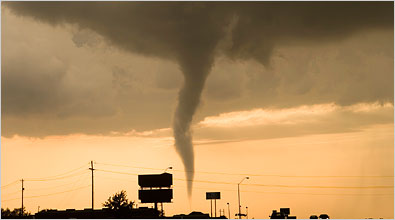
As a meteorologist and scientist I am very familiar with many pseudoscience arguments and websites like creation science, new age science, anti-climate change arguments, and all the conspiracy theories that go along with it.  My colleague recently turned me on to a little gem of a website.  Somebody has ‘solved’ tornadoes.  I hope you click on the site.  Not only will the guy who owns this WordPress website be excited that he has so many hits, but you will immediately be able to tell that this person isn’t playing with a full deck.  At first I laughed a lot as I read it, but the more I read it, the more I actually started to be impressed.  Now don’t get me wrong, it’s not that I’m impressed with the actual ideas here, they are completely wrong, but I was impressed with how much time and thought this person has gone into thinking about the problem.  I don’t want to post any individual blog posts linked here, because I really don’t care to have this person start harassing me, but if you go through a number of them you’ll see that he has talked to some real experts in the field (although it’s unclear about whether he has e-mailed them or actually talked to them personally), he has posts where he has retracted some of his statements and then explained why he retracted them.  He has designed experiments to test his hypothesis as well.  In fact I’m a bit jealous that this guy actually has more blog followers than me.  Did I say jealous?  I meant frightened.  Anyway, what I thought what was really interesting is that here is a very unique belief system which has blossomed into something rather complex.  One that to my knowledge nobody else really believes (at least not yet, or at least I hope not yet) and yet bears much similarity to existing belief systems.  So I thought it might be interesting to deconstruct it a little and see what we get.

At the heart of every belief system is at least one premise that is accepted as true, without being supported by any empirical observations.  Once this is accepted as

From http://www.nc-climate.ncsu.edu

true, much can be built from it.  For instance many religious belief systems accept as fact that there is a God and goes on from there.  Many times of course there are several faulty premises.  It could be that they stem from an original, but it’s hard to say.  Let’s take a look at the one’s that seem to this gentleman’s starting point

Premise 1:  The jet stream is a conscious entity that is thirsty for water and thus tornadoes are a result of the jet stream needing to suck up water.  I guess that makes a tornado a giant straw.

Premise 2:  Moisture is the most important factor in determining density differences in buoyant air. (Actually it’s temperature).

Premise 3:  Meteorology is a cult, and meteorologist simply believe in old and outdated arguments that have never been proved experimentally.

From this all sorts of things are possible.   If you were to accept the first two things as truth you would come up with a very different scenario for how and why thunderstorms and tornadoes form.  The 3rd premise is what then allows him to never have to rethink the first two.  People who could argue intelligently with him and are more knowledgeable are meteorologists and since they are part of a belief based cult they can’t possibly be correct or unbiased.

Another important part of a belief system is the inequality in standards the proponents of the belief system must live up to in comparison to non-believers.  For

From http://static01.nyt.com

instance, those against gay marriage will expect everyone to respect their right to be legally bound in holy matrimony, but do not have to respect the rights of homosexuals.  As is often the case pseudoscience literature like this, the expectation of other is to provide rigorous proof, yet no such proof is given by this gentleman as he espouses his hypothesis about how and why tornadoes form.   At its root I feel this comes from a lack of humility.  To be so sure you are right about something that you are beyond the need for evidence, and that you are beyond the ability of anybody (regarding their experience and expertise) to change your mind is to be so prideful that even Donald Trump would be impressed.  It is also a sad state to be in.  As I’ve argued before since reinforcing beliefs releases dopamine in the brain, over time as the neural pathways become so entrenched into a belief, this person literally will become ill to consider anything else.  The stronger the argument you make, the less likely you will get anywhere.

So what’s the harm in all of this?  Perhaps very little since there is a certain amount of crazy that even the most clueless about the subject won’t buy into.  Nevertheless there is at least enough science jargon on his website that people who are not educated about the issue may think there is controversy and conspiracy.  Just like many who are not educated about climate change think the same way.  There was at least one commenter who reblogged one of his articles saying it was an interesting “new theory”.  I wanted to also introduce this website and blog post as a lead in to a discussion of the age of information (or misinformation) that we live in.  This person has self-published a book for sale on amazon and has done a lot of writing on this subject.  If he had a little bit of money and/or web savvy he could make his site one of the top hits on google when people search for information about tornadoes.  Critical thinking skills are even more important today than they were before the internet to be able to navigate the flood of information that we are faced with on any one subject area.  Anyway, keep well everyone and stay away from thirsty jet streams!

The Perfect Blog Post

From http://www.allposters.com

A concept that has fascinated me for some time is that of perfection.  People will say something is perfect, but what does that really mean?  If we look at the dictionary definition we see that perfect means having no mistakes and flaws or completely correct and accurate.  But all of these words have some subjectivity to them.  Few people agree on what a mistake or flaw is.  And is anything completely correct and accurate?  If something can be, we often find that there is disagreement here also.

It seems to me that perfection is ultimately an ideal that everybody holds, but that nobody really agrees on.  In this way I find it very similar to the concept of God.  And many people say God is perfect and so the analogy is even stronger in that respect.  Nobody can really agree on the nature of God and everybody holds a slightly different view of what God wants and how He/She behaves.    In addition to the fact that I believe it is not up to the atheist to disprove the existence of God (but up to the theist to prove the existence of God), it seems also a fruitless task to disprove something which is not clearly defined.  Perfection seems to me exactly like this.  If perfection is an ideal and what is ideal is subjective to the person holding the ideal then perfection as a concept maybe limited in value to all but the individual.  Which means just like you shouldn’t be trying to enforce your vision of God on anybody else, perhaps we should also not be so adamant that others share our view of perfection.

Can we truly experience a shared value of perfection?  Many have tried to define a perfect system of government, a perfect society or

From http://dancearchives.net

civilization, a perfect self, but it is unclear that everybody agrees with those ideals, and many times they seem so implausible to reach that it seems that they will simply be rejected because some feel they are not rooted in reality.  But I think those that try to come up with these “universal” ideas of perfection do believe they are obtainable, at least in some distant future.  I hold similar ideals as I am sure all you do as well.  It seems to me though that we define this conceptual perfection beyond the present, but feel that the goal of perfection is not so far away that we can eventually reach it.  Science might give us some better clues as to what some perfect state might be, but to do so we would have to be sure we knew absolutely all the variables.  And we are far, far away from that and it seems likely we will never be at a state in which we know everything about the universe.

The next question then is, well what if we really do reach some state of perfection?  I wonder if we can simply be content and happy in the long term, before we are really start thinking about how things could be even better.  This seems true at an individual level or even if we do have some shared value of what perfection is.  Unless we knew everything (highly unlikely) it seems like we would always be searching for more and that perfection is not possible.

Finally I think then it is worth asking the question, are such ideals like perfection a good thing?  If it is a goal we can never reach does it prevent us from being content and happy in life?  The answer is maybe.  I think if you accept that perfection is some point on the horizon that you can move towards but never reach (or at least not reach easily or quickly) then you might instead to learn to appreciate the journey you take to get there.  If on the other hand you believe the perfect state is actually reachable in a tangible way and you don’t get there, then this can leave one frustrated, disappointed and unhappy.

While I ponder about perfection frequently, the most recent inspiration was looking at my son.  He seems perfect.  He has no mistakes or IMG_7532flaws.  He will make mistakes and he will have flaws however.  Thus I began to wonder if maybe, even as a concept, perfection doesn’t exist.  It’s just something we believe in but have no evidence of.  Because he is who he is, and while we will try to nurture him positively into the world, everything about his life will be different than mine and who he ends up as will be who he is supposed to be.  He is supposed to make mistakes and have flaws.  Thus he is in accordance with his nature.  As we all are.  Our nature is to change, to grow, and be imperfect.  In the end perhaps we are all according to our nature, and maybe that is what perfection really is.  The good news is, nobody is saying you have to like it.

I think it is very important, however, that we have these lofty concepts, and that we continue to dream of better ways to live life, because it could be that in our imaginings we do end up moving towards some better future.  I think as long as we remain humble about our dreams of perfection and be willing to modify and change our ideals when life presents us with new information then the concept of perfection can have meaningful purpose.