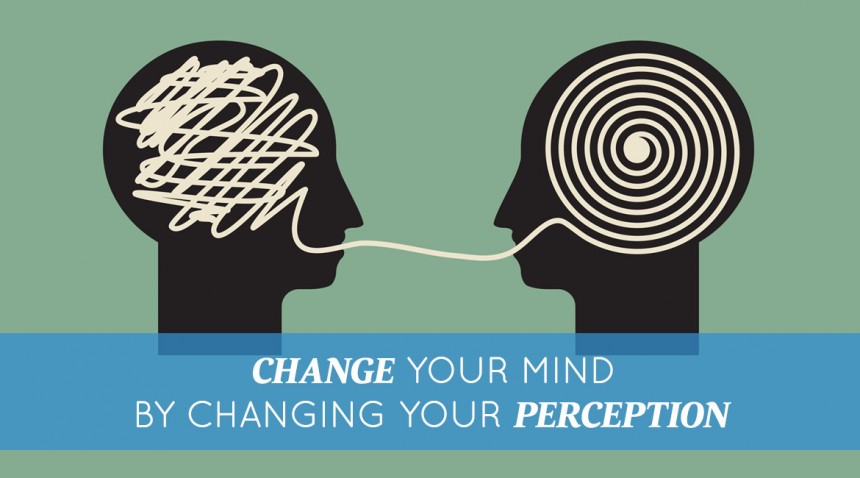
Rhapsody #109 – Entropy and Disorder

Recently I wonder,
Why don’t more of us just spend our days crying?
I’m just so tired of being outraged,
But the things people do to each other.
It’s enough to really make you question: What’s it all for?

I’m also tired, of being tired.
But what right do I have to complain?

The very essence of life is survive,
And there are some strong people out there,
Who have been at the receiving end
Of senseless and unimaginable cruelty,
And there is a toughness there that often goes unnoticed
The toughness to choose to stand on this Earth another day
To try and move through each moment
While painful memories gnaw at them
Trying to drag them back down into a hole of despair.

And people have the gall to criticize safe spaces,
You can’t really know what another person’s been through,
Yeah you may be tougher, but so what,
Life isn’t all about toughness,
Toughness is just the cost of life,
It ain’t none of the flavor.
And everybody…I mean everybody has their safe spaces
Just for some people their safe space is in their head,
Manifesting into a black and white world,
Full of a few simple rules that will keep them alive,
Those rules are the fiction they cling to,
Just to feel safe while they rail angrily at everybody,

Word to the wise,
None of us are safe.

The only real rules are in physics,
And it’s like a chess board.
The set up looks ordered and tidy,
But the universe isn’t the set up, it’s the game.
We don’t know how the game will play out,
And it might amaze you to know,
There are more possible moves in a game of chess,
Than electrons in the universe,
And somehow the universe has chess in it.

One thing makes me feel better and also worries me,
Is that from the perspective of the universe we are all idiots
The universe is behaving exactly as it should
We are too,
There are so many mysteries about us to discover
And the universe has us in it
So many people think they understand
The nature of the universe
The nature of us
What happened to humility?

You may think now that this should all come back to a single unifying point,
So that the strands of what I said could clump together,
Maybe a hammer that swings down and crushes life.
But that’s not this universe.
The last time we were one thing,
The last time we were all the same,
Somewhere in the neighborhood of 14 billion years
We were hurled off into space and change began
Branching into smaller and smaller strands,
Moment by moment,
And we’re all unique and we’re all beautiful
We’re all kinds of freaks of nature,
And that’s how we’re all equal
And maybe accepting and loving that thought,
Is all we can really hope for.

And then I ask myself,
Is all this self-indulgent pondering of the grandeur of the universe,
Just a way to make myself feel better?
Maybe it keeps me strong to take on the world,
Maybe it’s my safe space
But if we all have a safe space
The best we can do is try to move that space
Into something, bigger and more elastic
With lots of blurred edges
Because learning never stops
And change, is our only certainty

Free Will and Changing Your Mind

There was a very good question posed to Sam Harris on his podcast which was:

“If free will is an illusion, why are intentions morally relevant?”

Sam Harris’ answer was very good, but I wanted to throw in my own answer as well.  This also brought to the fore questions I have been asking for years and has led me on a path to learn about the brain and cognitive science: “How effectively can we change our own minds about things?  And what is the manner in which we can change our mind?”  Now perhaps to some, the question posed to Sam Harris doesn’t seem related, but I think there is a very important connection here.

Whether or not you agree that free will is an illusion or not, isn’t something I want to debate with right now.  I haven’t heard a compelling reason in favor of the idea of free will in some time.  I think what the more interest question is to understand why people are against the idea of free will being an illusion.  Sure you could argue that religion is part of that reason, but even secular people are uncomfortable with the idea.  The question posed to Sam Harris says it all.  If there is no free will, how is anybody responsible for their actions?

The word responsible is the word that doesn’t belong here, and this is what most people seem to miss.  This has important consequences for our justice system.  So then why do intentions matter?  The reason why intentions matter is because of what it says about your brain.  Let’s say I’m driving and I accidentally hit a cyclist, what does this say about me as a person?  I may be careless on the road.  Maybe I need to take some more driver training classes.  Maybe I need glasses.  Maybe if I’ve gotten into numerous accidents it means I probably shouldn’t drive any more.   What if I feel genuine remorse for what I’ve done?  Doesn’t that say something about how my brain works as well?  Do I belong in jail?  I don’t think so.  But if on the other hand I see that cyclist and get a sinister grin on my face and speed up and mow that cyclist down, what does this say about me?  It says that I am a person who takes joy about causing harm to others.  I might not feel remorse…maybe I do…but there would be something troubling about my mind that speaks to what future actions I am likely to take.  What if I know the cyclist and hate the person and that’s why I mow them down?  This also says something troubling about future actions I might make.  Because who might be the next person I hate, and what might I do to them?

I have talked about the idea of “personal responsibility” before and as I write this post it becomes even clearer why that phrase confuses me.  Having a party centered around personal responsibility seems to be an even bigger mistake.  We are a social species and it’s easy to say we are responsible for ourselves, but I don’t think that’s really the case.  It is the environment which shapes the individual and we have laws in large part not to control individual behaviors but to protect society.  It seems to me that it is we as a society, as other people in a person’s life that intervene to impact someone’s behavior.  And when a person does change their behavior it is a response to what society values, or through some personal experience in interacting with society or their environment that changes one’s mind.  If I am going around running people down with my car, whether accidentally, or on purpose, it is society that in some way says hey you can’t be doing that and finds an appropriate way to make me less of a danger.  If I take it upon myself to make changes, it is because of some emotional reaction to what I’ve done that is the impetus for change.  Rather than a decision to change, my body, my mind doesn’t want to feel a certain way and thus pushes me in a direction to not feel that way again.  My consciousness of that motivation is what gives me the illusion of free will.

Change in an individual seems to be a result not of an individual’s decisions, but rather the environmental context in which we live.  If society hasn’t shaped us to be more receptive to changing our mind, it is actively intervening to try and convince us to reform our views.  Sometimes successfully, sometimes not.  It seems that there is no real reason for me to want to change my mind about anything when I think about it.  I mean if what I believe has kept me alive so far, to be of an age to reproduce and raise children to a sufficient age so they can reproduce then what I believe must be pretty reasonable.  Now for a social species it could be that what I believe is very counter to surviving well with the people around me.  But as long as I generally believe what the “group” believes I’ll probably be alright.  Whether those beliefs are true or not makes no difference.  It really doesn’t even make a difference if they are harmful, providing that harm doesn’t lead to any consequences that would significantly reduce my chances to reproduce.

As we realize the global society that we live in, and that more and more of us are infringing on each other cultural and intellectual space, as we become more acutely aware of the harm of certain beliefs and values, not just in our community but over the entirety of the planet, I feel it’s important we start asking how can we all get along?  What values should this global community have?  What differences can we afford to maintain and still get diversity?  Does diversity’s value diminish over time if we hope for unity among humankind?  And given how difficult it seems to be to change one’s mind, what are some beliefs we could have that would provide a backdrop to growth for a better future where less humans suffer, and well being is increased?  It is this last question I want to explore a bit more in future posts.  I think tied to this is the area of human emotion which I have become more intrigued with of late.  I think that our emotional and reasoning side are more tied together than we think and that without emotions, at least for humans, growth isn’t possible.

Me, Too

From my friend Sarah, who is an amazing warm, intelligent, and thoughtful human being. It hurts to see how often she has been reduced to a superficial object by men.

sarahmariebee's avatarMilkweed for Monarchs

1923772_25463666436_727_n


When I was 8, a classmate was picking on a friend of mine. When I told him to stop, he punched me in the side of the head so violently, I lost my hearing in one ear until the following morning.

When I was 13, I was chased around the neighborhood by a boy who thought it was fun to slap me with a wet towel until he finally tackled me and put his hands down the top of my bathing suit. I had bruises for two weeks.

When I was 14, I realized my sweater was inside out after gym class and asked a teacher if I could use his classroom to change. He barricaded the door so no one else could get in, but stayed in the room and didn’t avert his gaze once while I took off my sweater.

When I was 15 and in my…

View original post 622 more words

Murder Addiction: Hollywood’s real problem?

Hollywood, CA – Today horror and shock turned into sympathy and understanding as serial murderer Harry Weinberg admitted to the public that he is in fact a victim of murder addiction.  Just a week ago it was finally discovered that Weinberg had been murdering young female actresses for over 2 decades, and police had thought they caught one of the most monstrous serial killers in U.S. history, but todays heartfelt speech by Weinberg softened the hearts of many when they realized, that like many of us or people we know, he too was suffering from addiction.

Weinberg is a Hollywood mogul known to many for producing some of the most prolific films over the last 30 years and owner of one of the biggest Hollywood Studios Mallowmax.  Having scores of great films under his belt it was hard for even this journalist to not give him some leeway after his impassioned words.  Weinberg said, “I guess you could say that I might be responsible for that first murder, but you know I felt I had pretty good reasons for it.  You never think that doing it once will spark a lifelong desire that you can’t explain.  Before I knew it I had murdered 5 more young actresses in a week.  It’s like it didn’t even matter if they were talented or not at first, and then it became sort of a game.  Like the more talented they were, the more I wanted to murder them.  It really escalated in ways I never imagined.  But now I know I need help and am going to check myself into a clinic that specializes in murder addiction and get the treatment I need…finally…it’s been so long…”  Weinberg then broke into sobs at which point law enforcement officer Sgt. David Wolski, who had initially arrested Weinberg, also became overwhelmed by emotion.  We had a chance to talk to Wolski after Weinberg’s announcement. “When I first started investigating this case I was in a state of horror.  Finding out how he took advantage of the dreams and hopes of young actresses who had no recourse but to trust him and walk into his home.  This type of manipulation is typical of your average serial killer.  FBI profilers made this quite clear.  But now after hearing about how he’s struggling with addiction…well to be honest I don’t know if it’s moral anymore to put him in jail. He’s sick, and he needs help.  Law enforcement will be meeting with the District Attorney’s office later today to discuss our next move.  But I think it’s clear at this point that a lot lighter sentence is warranted.”

Others in Hollywood have also come under fire during this scandal for not alerting authorities earlier of the murders that were heavily rumored to be taking place.  Several big actors have been named in knowing about Weinberg’s behavior including Hollywood star Bob Afflert.  Afflert, however denies any explicit knowledge when we talked to him, “Listen you hear rumors sure.  It happens all the time.  This is a tough business.  Sometimes people say it’s murder getting ahead here, but you know…you think that’s just an expression.  I never thought someone would actually be getting murdered.  I mean sure there are many days that go by where a young actress doesn’t show up to a set, but dreams are dashed 20 times a minute in this industry, you just figure, here’s another actress who couldn’t make it and has gone back to her farm in Iowa or something.  As I look back, yeah I can see now that a lot of them were probably being murdered.  It’s sad to look back and think of all those lives lost.  But no more sad than a powerful and wealthy man suffering from addiction.  I hope he gets the help he needs.  As a powerful and wealthy male myself, I realize it’s all too easy to fall into addiction like this.  Nobody is going to bring those girls back to life, so I hope that moving forward we can focus more on the help he needs and not the hurt he caused.”

Nevertheless public outrage remains high and questions the structure of an industry that could support this type of behavior so long.  They worry that Weinberg isn’t the only one who has behaved this way, as young actresses going missing has been a common theme throughout Hollywood’s history.  People wonder if this incident will finally change the culture of silence and looking the other way that has been a mainstay in the industry, or whether more young actresses will be murdered under the guise of everybody’s favorite cliché: “That’s show business!”

Thoughts on Cultural Appropriation

I’ve been meaning to post on this subject for some time, but haven’t been able to find the right words.  I am not sure it’s something that I have any definite answer for so I hope it generates some discussion.  Some people say it’s just something made up by the left, like privilege.  I find such people who say things like that are the most guilty of cultural ignorance and what privilege actually means.  However one of the ways the topic seems to continue to come up is in terms of things like dreadlocks, or Halloween costumes.  Most of the times the topic comes up these don’t seem like really clear cases of cultural appropriation, but I try to listen and think about it more deeply because it is important.  Most recently I was listening to a podcast interview with Nicholas Christakis who is a physician and sociologist who, along with his wife, was at the center of a cultural appropriation issue at Yale.  I’ll get back to him in a second.

As someone who is half Indian (not native, but from India Indian) my life experience has been very different when it comes to cultural emulation.  Indians generally see it as a form of flattery.  Whether we have been visiting their country or whether in Canada.  There is a real sense in the community that we are valued when white Canadians want to eat our food, dance our dances, or dress in our clothing.  Growing up there was nothing more exciting than seeing a white person who could eat a spicy curry and then get up in Indian garb a kick ass on the dance floor doing the bhangra.  My dad was always someone who wanted to learn about other cultures.  We would often go out for dinner to different ethnic restaurants and he would order foods he’d never tried and he would always ask the waiter or waitress what the usual way the food was eating.  He wanted to use chopsticks or fingers where applicable.  For my dad experiencing the culture wasn’t just trying the food but eating it in a way they did.  For my dad, part of understanding culture was living it as much as you could, even if it was only in small ways.  The warmth he received by people of those other cultures for his honest interest and attempts to do as they did always inspired me to have the same attitude in my life.

A recent cultural appropriation incident in the NBA. Lin wears dreads.
A gracious response from Lin. Noting Martin has Mandarin characters as a tattoo.

I have noticed in my time in the U.S. the sentiment being different and it has become more heated in recent years.  Now of course it should make perfect sense.  Some readers might already be saying, well the history of Indians in Canada is different than African-Americans in the U.S.  There is no doubt about it.  Cultural appropriation is a real thing and I think Nicholas Christakis did a good job of defining it in the podcast.

“The notion of cultural appropriation, the kernel of the idea there, is that some communities of people are so denigrated that not only are they killed and wiped out, but all of their ideas and culture is stolen from them, they are effaced and that all that’s left is a kind of caricature of who they are and there is some truth to that …it’s like adding insult to injury…[like] not only do I engage in genocide,  but I take all your ideas and your culture as well and don’t even credit you and who am I to do that?”

There is no question that this has been done to native peoples in North America, and that this has been done to African-Americans here in the U.S.  Anybody who doubts the existence of cultural appropriation is blind to some real history.  However, if we are interested in making the world a better place, we still have to answer the question about the best way to move forward.  When I see someone genuinely interested in my culture to the point of wanting to emulate it, I don’t see a thief, I see an ally.  They might not be able to experience the lived experience of being someone of my race, but I see someone willing to defend my rightful place as an equal human in society.  Christakis that things have maybe gone too far:

“…now, the whole history of ideas, culture, art, and music is endless theft.  [because really] it’s endless modification, and transformation and exchange of ideas and of thought and musical and artistic forms and so forth”

I find myself agreeing here.  I mean we could get really ridiculous if we wanted to.  Someone could refer to African-Americans behaving badly as thugs, and this is offensive, because we know what the common usage of that word means, but then if I yelled out…”No that’s not offensive to black people, that’s offensive to me because the word is of Hindu origin and your appropriating my culture!”  As Christakis says to trace back practices and ideas back to one particular culture is tricky business indeed.  Culture has been stolen before, it’s been given, it’s been modified, it’s been incorporated, it’s been fused.  It’s complicated.  How do we right all of the wrongs and still move past it?  I guess we are struggling to answer that question as humans.

As I go back to my personal experience I think what matters most is that attitude you have towards another person’s culture.  If I’ve been discriminated against, which is a painful experience, I certainly don’t want others to experience it, but I want them to understand it.  At the same time I don’t want the best things about my culture to remain hidden, when I can share them.  If people are truly interested in my culture, think it’s beautiful, neat, cool, awesome, fascinating, that to me is when humans come together.  The fact that you might not be able to experience the worst of what I face, doesn’t mean, if you’re interested, that you can’t experience the best of my culture.  At least that’s my attitude.

But it’s true that there are some extremely marginalized groups in this country, and I can’t claim to know what that feels like.  I can understand the source of that frustration given the history, and the fact that we live in a country where many don’t admit there are racial problems, where history is white-washed and there is a lot of glossing over the atrocities in which this country was founded.  There are reasons to be angry, but I still hope there is a path forward.  I still hope there is way to make sure people understand the history and the wrongs that have been done, while still having the wisdom to include those who truly enjoy what your culture has to offer.  I agree that people’s cultures aren’t costumes for Halloween, these are things people of those cultures wear everyday, and so appreciating cultures is also something you do everyday.  I think there are lots of people out there like that and I think it’s something to embrace.

Please share your thoughts, I don’t profess any scholarly knowledge here, and would enjoy hearing other voices on this matter.

*Note:  If you’re interested in learning more about the incident at Yale beyond the article I linked, I encourage to read the e-mail that started it all by Erika Christakis which I thought was a thoughtful one.  You can then watch the YouTube video where Nicholas Christakis is surrounded on campus.  I challenge you to watch the whole video.  I couldn’t stomach the whole thing. He handled the situation as heroically as possible.  Also here is the podcast interview with Nicholas Christakis.  The first hour relates to the incident.

My Two Pence Worth

This is probably the most opinionated thing I’ve ever said in public.  Not sure I should say it, but I guess everybody bubbles over a little.  I don’t know why the Trump/Pence football PR stunt seems like the last straw for me.  Maybe it’s just because they go from the still more respectable “clueless and not very nice” people, to two people who are legitimately and with forethought kicking their voters in their head.   It’s just despicable.  Forget about the wasting of taxpayer money for this stunt, but the very fact that they are intentionally trying to divide people as a form of theater…bad theater, is truly embarrassing.  It’s like they know the harder they kick their voters in the head the more their base holds on.  Because if they give up on him now they would have to admit that they’ve been kicked in the head all this time.  And the thing is it, I get it.  We’ve all had it happen before.  We’ve all got sucked in more than we should and the embarrassment is too much to bear.  But the embarrassment always gets you in the end anyway, and you always suffer more than you should by sticking with something that you thought understood well, but isn’t really what you thought it was. I know it sounds like I’m blaming those who voted for Trump, but I’m not.  Also, I might be just as stubborn had I been duped so badly.

It takes a corrupt system to begin with to get this Trump/Pence winning combination as leaders.  It’s been built over years from politicians from both sides of the aisle.  We all get that many of you who voted for Trump were reaching for somebody who you thought was an outsider, who could challenge the status quo.  What ended up winning was much different.  What ended up winning was the very set of values that corrupts those with power.  Trump didn’t come to end dysfunction, he IS dysfunction.  The only sense I can make out of any of it is that the rich white in America were bored and just wanted to see people fight.

But maybe my cynicism is wrong and in some grand design these soulless people will have us all joining the protesting NFL players and getting down on one knee, and a new golden age for this country will dawn.  My fear, however, is that if we keep accepting unintelligent and compassionless leadership, eventually somebody whose more competently ruthless will come along and the only knee we’ll get down on is one of servitude and the great American experiment will be over.  They want you to believe that freedom is bullying people into obedience.  This paradox has to become clear to everybody.  You can just as easily be a slave to the state as you can be a slave of it.  There are no real winners here.  I promise there will be no “I told you so’s”.  There is no joy in it knowing every minute this level of dysfunction remains in office we are one step closer to a lot more suffering and that’s just not a place worth going to if we can avoid it.

I hope we can avoid it.

Ouroboros

Wandering through neural mazes,
I am always lost when I find you,
Your pose is casual, blocking the path,
Like you were waiting for me,
Knowing I’d be there even when I didn’t,
Reminding me of memories I never made.

In the waning days of summer,
There is a scar that I am thankful for,
And yet find it so hard to forgive,
It pulses along with my pulse, counting time,
I ache as the trees do, as the leaves fall,
Still I smile at the splendor of colors.

The things that you are so frightened of,
Are the things I love the most,
I held my face to you like a mirror,
A mere, still in a deep forest,
And you ran like a hunted hart,
Avoiding refreshing pools as your thirst swelled.

I am now bound to chase with no quarry,
As I watch you run with no pursuer,
Participants in a game that must be played,
Do I choose to play, or is fate unescapable,
I’ve tried clawing and surrendering
Neither choice gives me any peace.

Braving the Storm

For centuries your hurricane raged,
I’ve studied,
I’ve seen,
I’ve felt,
So much damage wrought,
I’ve watched your lightning split them asunder,
Your winds bent us to the ground,
Some just snapped,
Or were torn up by the roots,
And your waters swept them out to sea,
Their suffering erased from history,
A monster disguised as nature,
Fooling even the most benevolent,
Who were wise enough to be part of the storm,
Instead of under it.

We who did not break,
We who had a moment to breathe,
We gathered up our energy,
And we began to turn,
A counter-swirl to their spin,
Our storm grew,
We needed to show them,
That we could be as mean and nasty,
Since they refused to subside,
So we matched their maelstrom,
Roaring in a different hemisphere,
They called our storm the enemy,
A crime against nature,
But the more their vortex spat at us,
The more weary they became

And still our hurricane answers the call,
The only way we know how,
Chasing each other around the globe,
But vigilante justice still looks like devastation,
Too angry to be beautiful,
Too easy to draw in survivors,
Fueling the anger,
How can we be peaceful?
But before judgment is passed,
Remember who they destroyed,
For we only scoured the earth,
From the rubble and the ruin,
Of foundations callously laid,
Now you can rebuild civilization,
And humanity can be strong and beautiful

Lost in Thought

I thought of you and it was like a day dream,
One that you choose to get lost in,
There you were in the distance,
It’s a long bench,
But I can tell you’re getting closer,
There are sparks, oh yes,
But they’re far away,
So they don’t look like individual sparks,
Kind of a blur,
But it’s nice because there’s still a light,
Just about to burst into bright,
I’ll be honest, I can’t tell, it’s far away,
And just like that I pop out into the street,
Just another person out walking,
Ambling over to my favorite coffee shop
Tapping my fingers to an unknown tune,
And sometimes you’d appear,
In a glance, out of the corner of my eye.
Like a memory in a different lifetime.

The Wrong Standards – Arguments against the relevancy of biological differences between men and women as having meaning in society

In my last post I talked about a hoax perpetuated by Peter Boghossian and James Lindsay, which I argued was not only a bad hoax that didn’t prove what it set out to prove, but seems to be indicative of misogyny in higher academic circles as well.  I’d like to use this as a launching point into two future posts.  This one I am going to address James Lindsay’s claim that gender studies ignores biological differences completely and whether or not this is even important, and then I thought it would be interesting to look in more detail at the gender imbalance that does exist at the higher echelons of intelligence,  and academics.

So let’s begin our investigation into biological differences between men and women with the assumption that such differences exist.  There are clearly some genetic differences and if it’s a collection of genes that go into our various behavioral qualities it’s plausible that there are differences.  But let’s go a step further and say some of the stereotypical ones are true.  An employee at Google reminded us of several of them.  So let’s say men or more aggressive/assertive, more competitive, they are about things, and have a high drive for status, and let’s say, and I hate to even pretend this is the case, that men handle stress better and are less neurotic.  Anybody who’s seen the typical working mother knows that it’s probably more likely that men just don’t have as much stress, but for now let’s assume this is the case.  So conversely this assumes that women are more agreeable, cooperative, don’t have a high drive for status and prefer to have a more balanced lifestyle, are more about people over things (this sort of translates also to the stereotype of women being better nurturers than men), and don’t handle stress as well.

The first thing that matters of course is how different are these things.  In a previous post I talked about some basics about statistics and that any trait is distributed about some mean value.  If the difference between men and women in some trait like aggression is small, there is a lot of overlap.  Meaning there are many women who are as aggressive as men and increased probability that some women will be more aggressive than some men. The main difference is that you will only find men in the hyper-aggressive end of the distribution, and only find women at the far opposite end of the aggression distribution (super timid?).  Whatever metric you might use to measure aggression the closer the averages between men and women the less presumptive you could be about any particular gender having that trait.  It’s arguable though that even if there is more separation if you were interviewing applicants for a job this would not be something you could simply assume and use as a basis for making your decision.  That is still discrimination.  Even if the odds are in your favor there is still a chance you could be unfairly punishing somebody solely based on their gender instead of their individual qualities.

But let’s say the differences were significant enough to have some meaning.  Are any of the traits that women are supposed to have bad for any reason?  Our friend at Google actually doesn’t consider them bad, but simply wants to say that maybe there is just some natural reason for why there aren’t more women in tech and hey who are we to fight nature?

Imagine a society that was built valuing the traits that are so “obviously” female.  What would that world look like?  Could we say it was worse?  Let’s say you were a man going in for a job interview at a corporation.  In this world where the feminine traits were valued, where they are the ones that society was built around you might hear things like this at your interview:

EMPLOYER:  Now you list here on your application that one of your strengths is competitiveness.  How do you think you would fit into the cooperative philosophy we have here at our company?

EMPLOYER:  I’m a bit worried that your aggressiveness might be a problem in a leadership role.  We’re looking for someone who is more thoughtful before making decisions and listens more carefully to ideas that come from their team over making decisions unilaterally.

EMPLOYER:  As a man we know you are more about things, but things are used by people, and so really what we are looking for is a more people focused person.

EMPLOYER:  We think it’s great that as a man you can handle stress really well, but our company has gone to great lengths to creating a stress free environment so that’s not a quality we are looking for.

EMPLOYER:  As you know children are the future and the key to a child’s development is having a parent home in those early times especially.  Given that men aren’t interested in a more balanced lifestyle you’ll simply be expected to take on more responsibilities as your female colleagues go on leave without compensation for those extra duties.  And given that we are playing an important role in our children’s welfare, those extra duties you take aren’t considered as additional experience when being considered for promotion.

A female friend of mine were talking and she just said to me, “I am not exactly sure what life should look like, but if I were to build it all back up from scratch, it wouldn’t look like this.”  I think another thing we have to consider when we are analyzing studies that purport differences between males and females is how much of our society is structured with maleness as the standard.  If women and men have different traits as a result of their biology then much of what we see in society will naturally show women as being disadvantaged as compared to men in a society that is built on traits they on average excel at.  There is nothing inherently better about favoring competitiveness over cooperativeness, there is nothing inherently better about favoring things over people.   Why should assertiveness be more rewarded over being agreeable?  These are all examples of a male standard that women are being forced to meet for no reason other than this is a man’s world.  Even the way we do education could be argued as being structured with male education in mind, given for a long time educating women wasn’t a priority as they weren’t expected to utilize that knowledge in a career.  So if men and women learn differently, maybe we are forcing them to conform to a different style of learning.  Now, I’m not saying that biologic differences don’t exist, but it seriously casts some doubt on any study that is trying to disentangle biological differences between men and women in a world that still uses maleness as the gold standard that everyone must meet.

Finally the onus is on those who purport biological differences in traits between male and female to demonstrate that they are significant and useful in any way.  There a lot of reasons to doubt that this is the case.  In a series of meta-studies and research findings by psychologists by Janet Shibley Hyde, Elizabeth Spelke, and Diane Helpern indicate little to no difference between cognitive abilities in language and mathematics among men and women.  Their results are summarized here.  From this same summary, Spencer (1999) found:

“… that merely telling women that a math test had previously shown gender differences hurt their performance. The researchers gave a math test to men and women after telling half the women that the test had shown gender differences, and telling the rest that it found none. Women who expected gender differences did significantly worse than men. Those who were told there was no gender disparity performed equal to men.”

In another study by Gneezy et. al (2009) differences in competitiveness between women and men is challenged.  Participants from villages that are matriachal (Khasi) and patriarchal (Maasi) in India were asked to take part in a game of throwing tennis balls into a basket:

“They were given a choice of a simple payment for the task—about 40 US cents—or they could earn three times as much if they beat they the other player. Among the Maasai, half the men chose to compete, while only a quarter of the women chose to. Among the Khasi, not only were the results reversed, but Khasi women were even more competitive than the Maasai men: 54% of the women opted to compete, as did 39% of the Khasi men.”

The clear role that socialized gender roles plays in differences between men and women is highlighted in a paper by Guiso et. al (2008) where employers were asked to make quick decisions about who to hire for a job based on performance on a 4 minute math sprint exam:

“Men and women employers alike revealed their prejudice against women for a perceived lack of mathematical ability. When the only information that the employers had was a photograph of the candidate, men were twice as likely to be hired for the simple math job, no matter whether it was a man or woman doing the hiring, the team reports online today in the Proceedings of the National Academy of Sciences. The hiring bias did not disappear when candidates self-reported their ability on the task, in part because women tended to underestimate their ability while men tended to boast. And even when the employers received accurate information about the actual performance of the candidates, the bias did not fully disappear. The more prejudiced a person was, as measured by the Implicit Association Test, the less likely they were to correct their bias.”

Confirming the findings from this study as well as outlining the difficulty with pointing to biological differences as any sort of major cause for the  presence of women with high levels of cognitive abilities and leadership roles, I strongly recommending reading this article by Halpern et al (2012) published in Scientific American.

The article will make a nice launching point into my next post where I talk about the intersection of feminism and atheism or lack thereof.  What seems clear is that there continue to be strong biases against women in both academia and in the work place.  While such bias still exists in our society it seems more apt for the Boghossians, Lindsays, and Shermers of the world to spend more of their time worrying about that imbalance instead of mocking a field which may not be as bereft of scholarship as they claim, and which may have some valid arguments to make.  And if they are the scientists they claim to be and going to rail against a field which denies biological differences between men and women, they should also make sure that all the findings out there fit that assertion.  It seems far from clear that those differences are significant enough to be meaningful in any gender make up of any corporation, tech company, or university.

It may be that at some point biological differences do give us important information that can help men and women achieve better states of well-being in reaching their full potential, but it seems clear we are far from that stage in our society.  Only once we truly see that there is no career or field that women are less qualified for, and that we live in a world that puts emphasis on good human values, not male values, should biological differences really be part of the discussion.