I was at the gym the other day and there are a number of TV’s there and as is often the case ESPN Sports Center was on. I couldn’t help but notice the difference between the male and female anchors. The females standing in there skirts or dresses, never below knee length, always wearing heels. In fact one anchor, Nicole Briscoe, was recently complimented with “respect for being pregnant while also wearing heels”. Alternatively, the men were well dressed and looking comfortable. It is of course a massive double standard and sports isn’t the only place where such a double standard exists, but I couldn’t help but thinking even if we have a standard of beauty that we say we want to appear on TV such a standard is not evenly applied to men. Men aren’t forced to wear tight fitting clothes, clothes that actually might be restrictive or uncomfortable. When you look at the the bios of all the ESPN staff, anchors, reporters and columnists, you can see through these many pages a trend in the women all being fairly attractive and reasonably young unless they are a very famous former player. What’s clear is that when you look at the men there is no similar standard. While they all may be required to be smartly dressed the standard deviation in age, height, and, in my estimation, attractiveness is far greater. Women must fit a narrow mold, while men are allowed to represent the diversity of body shapes, facial features, ages, and levels of balding.
Yes those heels probably are uncomfortable. Pregnant or not.
More disturbingly than this is the level of vitriol that often women face who are involved with sports writing and sports reporting. I recently posted this video on Facebook but I thought it was important enough to post on my blog as well, because I think it’s important that we be vigilant about counteractive the horrible comments these women received. This video was hard to watch, and that’s what tells me that it might be worth it for a lot of people to watch it. The comments these women received reminded me a lot of the type of comments that Anita Sarkeesian has received by trying to introduce a more balanced female perspective into the video game world. It seems to me that sports are still seen as a male domain, and intruding on that domain has costs to women who try to do so. If you aren’t pretty to look at, you shouldn’t be there. And if you try to be more than just a pretty face, like have a mind, then you are going to be sorry. This seems to be the overall message. Just anecdotally I tried to look at a couple of the female profiles on twitter to see I could see additional evidence, and what I found is that horrible comments, like the ones in the video happen but are rare. However, what you also see are plenty of comments objectifying the reporter/anchor. Comments about how hot she is, or her legs, and as you can imagine worse at times.
I try to focus on the progress that has been made and try to remain hopeful. Double standards are getting less in the music and entertainment industry. Sports for women are gaining more popularity and more air time. I try to remind myself that 20 years ago, seeing a female at all reporting or as an anchor on a sports show was unheard of unless it was a sport which actually involved women. There seems to be these last bastions of maleness in our culture which is being fought against with all the misogynistic vitriol they can muster. Some might argue that it is the internet that allows these people to express such horrible words in a largely anonymous fashion, and maybe that’s true to a certain extent, but it also exposes such behavior as well. I have a hard time believing that such attitudes are a function of the internet, but rather just a larger forum of expression for attitudes that already existed. This video reminds us that even if we aren’t saying the words to someone’s face they still have the same impact, and I also hope that this video reminds men to pay attention. These men had an extremely hard time saying these things to the women, and it is likely that they aren’t the type of men who say such things, but they can be part of the solution which is to call out such despicable and hurtful behavior. Not to be chivalrous or to gain favor with an attractive sports personality on, but simply because it is the right thing to do. Do it equitably, to all women who are trying to make a living doing something they enjoy, whether it is on social media or a night out with the boys. And maybe you won’t change any minds, but to be apathetic to such attitudes towards women is the same as compliance in my opinion. And even if it is only words, we all know what a short road from words to actions there is. I’m not saying twitter attacks are always the best way to combat these attitudes, but I encourage men to take up the mantle of fighting these attitudes in a manner that seems most effective to them. At the same time maybe we can also change the standards by which women are placed into these roles. So it’s not just about what they wear and how pretty they are, but by their passion and knowledge for sports (or whatever subject they are passionate about). Perhaps if we only want a woman on TV for her pretty face and tight clothing, is it any wonder that so many men only see them as being valuable for such superficial qualities?
Shame is the topic today. I’ve decided though that I want practice being more creative with my writing. While I enjoy writing out my thoughts in essay form, and many of you have been kind of enough to appreciate it as well, variety is the spice of life, and I need to practice more variety of expression. Especially I still have this dream of one day writing some sort of work of fiction, and so I need to practice wordcraft and storytelling more. And I venture it to such an area, I risk making myself more vulnerable as I express a part of myself I am less confidence in my ability to express. The connection between vulnerability and shame was brought to my attention this week through a wonderful TED talk. This culture of shaming,
especially through social media has been on my mind a lot over the past year or so, since I saw an excellent interview on the Daily Show with Jon Ronson. An article on the book he has published is here. So I shall let the talk and the article do the intellectual speaking for me, and I will instead put forth this poem on the subject. In my head this poetry would be expressed as a rap, or rather a dialogue between two rappers. In my head are a lot of the songs from the musical Hamilton which I am sure had somewhat of influence on my mode of expression. lol Also, fear not, in my head I also know I have the least amount of street cred to be rapping. 🙂
I’m not a lynch mob, I’m just here all alone, Reading about things that I don’t condone, Concerning people I’ve never really known, And shaming them from behind my telephone
You’re fat, you’re ugly, and you’re a fool, You’re so fucking dumb, didn’t you go to school? Are you even dimly aware of the newest rule? Exposing what you are, makes me look cool.
You see, I’ve made the world a better place, By showing you don’t belong in the human race I got no time to check the facts of your case, You can try to efface, but mistakes won’t erase
Each like I get invigorates me, And helps me hide my vulnerability, I don’t make mistakes, you want civility? It’s curt, but your hurt’s not my responsibility.
A million views, the shares have swirled, Filled with mocking laughter, insults hurled, I’m a link in this chain of shame that’s unfurled, A virtual crowd that’s crushing your world
Do you like what I said, do you feel remorse, Do you feel bad enough to correct your course? I scream and scream until my voice is hoarse, Shame is my game, I’m a dangerous force.
But what if you’ve not made anything better?
Addicted to shaming, bound by a fetter,
You’re just another follower, not a jet-setter,
Passing judgment on others letter by letter
Shame never informs, has little to tell,
Gives you nothing to build, and nothing to sell,
There’s no way it will ever serve you well,
Don’t be a part of that shaming carousel.
Was that 8 second verdict more than it seemed?
Shame them to goodness, is that what you schemed?
They’d learn their lesson, is this what you dreamed?
Do you think that’s how souls are really redeemed?
Instead you put a hole in the soul of those that you shame,
Anger, isolation, depression just fan the flame,
Of violence and hurt, now you’re partly to blame,
Should you make a mistake, do you deserve the same?
We need to focus on things that make us whole,
Don’t stride to divide, and stop being a troll,
Kindness and charity, let that be your goal,
Be a model of compassion, let that be your role
So you see with such ease we’re blind to the pain,
That we cause for momentary emotional gain,
In a world filled with hurt it’s so hard to stay sane,
Shaming doesn’t help, we’ve got to refrain
I speak from experience, I know how you feel,
To stare at the screen and think it’s all real,
But what part of the heart do your actions reveal?
Forsaking personal growth for mass appeal.
Oppose what is wrong, but don’t dehumanize,
Know your own imperfections, try to empathize,
Keep on yearning for learning and you’ll grow to be wise,
Add joy to the world and watch your spirit rise
It has been a rough past few days. Even though I thought I had thinned my social media friends to a group of more reasonable people, you still end up seeing the most ridiculous comments come up under friends’ threads in regards to the Syrian refugee situation. And still there are others that you feel obligated to keep as friends, but at this point I just feel like I can’t do it anymore. While I feel that it is important to not isolate myself intellectually, what I see through social media does not present me with intellectual diversity, only differing opinions. Opinions not based on any evidence, but simply fear and rhetoric. Is it important for me to know that such viewpoints exist? Sure. But I know they exist now, and I think it’s time to be done with it. Let’s face it. Social media just isn’t the place to change anybody’s mind. There was one person whose opinion I influenced in my entire 7 years or so on Facebook. I remember it fondly. It was a beautiful moment. Perhaps I hoped I could relive that moment again somehow, but either I’m utterly awful and changing people’s mind, or social media just isn’t the place to do it. Or maybe it’s both. Either way the result is the same. My sanity and well-being is more important, because being bombarded with the kind of people there are out there just drains me of my strength. And I’m not talking about ISIS. I expect evil to exist, but I also expect us to fight that anyway we can. Not just with guns, but with the most powerful weapon we have against hate and that is compassion and love. And I just don’t see enough of it right now.
A lot of the impetus for this e-mail came from reading an article this morning here about fear. Something I knew, but I reminder of how fruitless the battle is on social media is no matter how many studies or facts you post, ultimately what you are fighting is fear. People who don’t want Syrian refugees are afraid. Whether that fear is unfounded or not, this is the culture we live in. Politicians (especially on the GOP side) and the media love to make people afraid. People who are afraid are easier to control, the less likely they are to think critically, and the less likely they are to use reason to get them out of that state of fear. I must ask myself the question then if engaging someone in an issue directly isn’t working, how do I make people less afraid? I can find no way to easily do that on social media, so I’ve decided that ultimately maybe it’s better that if social media is going to be relaxing and enjoyable than I just need to make it a community that I want to be in. I’ve thought about dropping Facebook altogether, but with family far and wide, and good friends I want to stay in touch with I know that’s not realistic, but maybe it’s my own weakness, or maybe it’s just age, but I can’t keep getting bombarded with bigotry and hatred every time a tragic event happens and we have the compassionate reaction continues to get treated as the worst idea ever.
To those of you who are afraid. I wish I could take that fear away. I wish I could help you realize that statistically, the real things you should be afraid of in this world have nothing do with refugees fleeing for their lives, black people, or gay people. I wish I could convince you that nobody is coming for your guns, nobody is persecuting you for being Christian, nobody is turning your children autistic or trying to poison you with vaccines, and the anthropogenic climate change is a real problem and not a liberal agenda by scientists. I wish I could convince you that most people really do want to help you and that most people want to simply enjoy the same feelings of freedom and safety that you have even if you do live in too much fear to really enjoy the life you’ve been given.
Many of you who live in fear, live in a land of what ifs. I wish I could ask you to ask a different set of what ifs too. What if things actually get better if we help people? What if by embracing the unknown it becomes known and we aren’t so afraid anymore? What if instead of creating more enemies, you gain more friends. What if defeating an enemy is actually done through compassion than hate? What if those people who you dehumanize are not that different from you? What if the difference in whether the outcome of a situation is good or bad, depends mostly on your attitude and that you can make things better simply facing a situation with courage, love, and humility, instead of running and hiding? And since history teaches that empires often crumble, what I really wish is that you seriously sit down and ask the question what if that destitute Syrian refugee who once had all the comfort in the world but who is destitute, scared and has lost friends, family, and love ones was you? Really think about it. Really think about what kindness would mean to you at that point. Really think about how desperate you might be to even have a remote chance of feeding your children.
And finally to those whose concern for the homeless and impoverished in our own nation have come to the fore. Assuming you are not just making excuses, then bravo. We have a lot of people who suffer here too. We have growing income inequality, a shrinking middle class. We have a high cost of tuition that prevents many people from getting educated unless they start off life in a great deal of debt. We have a lack of sex education, we have a lack of social support for families who need more maternity and paternity leave. We have disparity in public education K-12, and many states that lack funding, accurate historical textbooks, and are forced to not teach strongly supported scientific theories like evolution, the big bang and anthropogenic climate change. We have a corrupt political system that favors money over serving the people. We have incarcerated far too much of our population for minor crimes, and a tilted justice system against minorities that prevent them achieving the equal status that law guarantees them. We have spent vast sums of money on foreign wars that haven’t seemed to make us feel any safer, and have most likely bred more harm in the world than we have helped. And if this compassion that is overflowing in your heart for your fellow man or woman here in the U.S. I encourage to fight for it every day, not just on days where we talk about Syrian refugees being let into the country. I encourage you to always be politically active and vote for those people who can bring about the change we need to help our own people. I even have a presidential candidate just for you. 🙂
You live in a country that over time has helped many impoverished people from other countries. You have helped women, blacks, and LGBT’s become more equal and gain more freedom. These are all things to be proud of. Compassion requires perseverance as well, so don’t ever think you are done.
I’ve been thinking a lot about technology lately. There are times when I feel I have made it too big a part of my life. While I tend to be positive about this new age we live in, as I’ve written before, there are times when I feel like I might not be made for it because it can get very draining. I see too much of the compassionless banter in comments sections or Facebook threads; story after story of tragedy, injustice, or prejudice. Then there are times when I miss it. There are people I have good conversations with over the internet. There are moments where I laugh, and there are plenty of moments when I learn something valuable, something important, and something that will make me a better person. I think about my many friends, some who I have known in person and live far away from, and I can still keep in touch and follow their lives to a certain extent. I care and wonder about them often and the internet gives me ways of staying in touch that would be harder without it. Some friends, I have never even met in real life, yet all of who I enjoy learning from, getting to know better, and some who have become as close as any other friend in my life, always provide me with an enriching experience. In some ways I feel like my life would be less for not having met them and am thankful I have this thing called the internet that has such long arms that I can reach across the world and hold on to people that seem amazing to me and when they reach back I know it’s the beginning of a wonderful relationship.
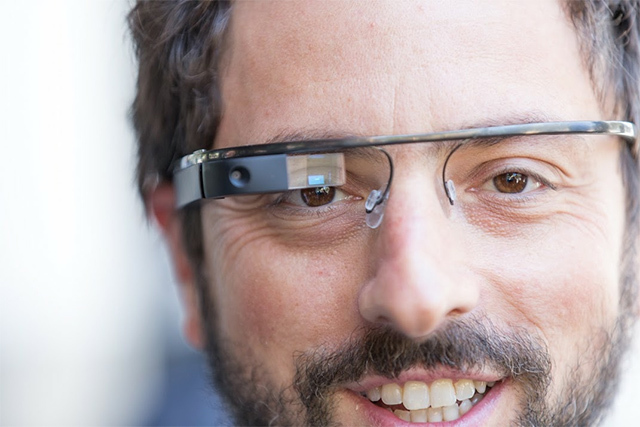
I’ve been listening to a podcast on NPR called Invisibilia and one episode on there is looking at how computers have changed our lives and how they might change our lives in the future. What’s interesting is that you find many people who have zero problem with the way computers and related technology (smart phones, tablets, Google glasses) have become a regular part of our lives and have made us better humans. They are ready for the future and all the wonders it will bring. One gentleman named Thad Sturner believes that in time humans will have interfaced with computers so completely that eventually we will all become essentially cybernetic. Those that have lived more “integrated” lives claim that the technology has made them better in every way, from how well they do their job to more meaningful face to face interactions with other humans.
Still of course there are those who have a not so favorable view of it. It can be addictive like anything else, and often not in a healthy way. The validation we often get when we post things on-line through likes and comments can often give us a dopamine release but doesn’t necessarily help us really solve problems we might have or understand issues that make us upset. A study of Chinese tweets found that anger was the most common emotion expressed over social media, and the anonymity of the internet can cause many people to let out cruelty that they would never let out in a face to face situation. However that anonymity can also allow people to participate in discussions and express themselves in positive ways, that they may be too shy to do face to face, or because of societal pressures that prevent them from expressing themselves in ways that they would wish.
Rather than spend a lot of time posting all the research about how social media and the internet has or can change us, what’s clear is that academically a lot of people are studying it. People find adverse effects and positive effects. It seems to me that most of what gets posted are negative impacts of technology or that our choices are between using technology and dealing with the consequences or backing away from it because it is seen as an unhealthy source of stress, shame, or anger. But perhaps the time has come where we shouldn’t be trying to fight technology. Our children are going to be immersed in this world, and while there is no doubt that developmentally children need time away from the screen, they are still going to be using smart phones, and tablets, and computers regularly in their lives. So what they really need from parents, teachers, and society is the simple acceptance of this fact and need to be taught what are the harmful and beneficial behaviors in this new world of the internet and social media. They need to learn about better ways to communicate through this medium. They need to be reminded that technology is always a tool to be used as a means to end, and not the end itself. As a tool, the internet, computers, social media have a vast variety of uses some good and some bad; some enhancing our functions, some suppressing or adversely shaping our functions. As parents of this next generation we must help our keeps be effective navigators in this digital world, not just literate in finding information and surfing the web, but navigating the emotions, the attitudes, the pitfalls, and the advantages of this world. Just like being aware of cognitive biases helps us perceive the world in a better way. Being more aware of the impacts of computers in our lives will help us utilize the technology better. I would support modern research about the interaction between humans, computers, and social media being used to design a curricula to be taught to school children. Perhaps around middle school. I think it’s become that important.
I had recently reblogged a couple of good ethics posts about robots and artificial intelligence and what challenges our future holds. This era is coming sooner or later and so it’s time we gave up the fight against these technologies and start using them in a more moral and impactful way. I say this not in any kind of judgment either, but rather as one who struggles with this myself. We need to gain the literacy and positive ethics with this technology so that as new technology develops with the potential to be more world changing, that we can don’t find ourselves behind the curve as we seem to be today on the more negative aspects.
I for one am making a vow that I am going to work to use technology in a way that enhances me and my world instead of diminishing me and my world.
As I have immersed myself more into the world of social media, commenting on articles, the blogosphere there’s a very real attraction to it for me. I like putting ideas out there, I like being social, meeting people I never would have met. Overall I’m very positive about the way we communicate. Douglas Adams in a wonderful speech he gave (transcript here) talked about how humanity has made enormous leaps via, what he calls, the four ages of sand. Sand being made of silicon he outlines the 4 ages as:
1) Using silicon to make glass for the telescope
2) Using silicon to make glass for the microscope
These two allowed us to see the macro and micro universe around us.
3) The silicon chip. Computers with their ability to do many calculations quickly allowed us to model the process of how things work.
4) Silicon for fiber optics in the communication age.
Although of course at the time of the speech we didn’t use satellite as much as we do today, but there are still a lot of computer chips involved in those! The point is that Douglas Adams saw the power of being able to communicate with people remotely as a powerful tool.
Yet when we look at this great age where the world is being connected we tend to get overwhelmed by stories of social media addiction, the loss of time spent in the physical world, face to face communication, and some often harmful interaction.
It is this last one that is on my mind right now. I watched the interview recently with Jon Ronson on The Daily Show and he has a new book where he talks about internet shaming. One of the people he focuses on in his book is Justine Sacco. You may remember her, she was the one who made a joke tweet on her way to South Africa from Heathrow and from only having 170 followers to a landslide of people waiting to lambaste her at the end of her flight. His book looks at the history of shaming and what it means in todays day and age. He wrote a good piece in the New York Times if you don’t want to read the book. It’s a great article, long, but most definitely worth a read.
After years of using digital media for communication there are many challenges to overcome. I think that ultimately when you write things that people are going to read, you have to be a great writer. Without our physical gestures and voice intonation it’s easy for meaning to get lost. It’s easy for a joke to sound serious. It’s easy for well meaning advice or information to sound condescending. It’s easy for sincerity to be taken as sarcasm. But I was thinking that good writers are not so unambiguous and we pick up things like sarcasm and sincerity better. Maybe when we communicate through writing we need to think about how we say it more deeply before we do so. I think part of the illusion lies in the fact that we think we are actually having a conversation and try to type out things like we are, but in fact communicating through writing is not very much like a face to face conversation at all. Justine Sacco’s life was destroyed for making a joke to her few twitter followers, poking fun at white privilege and walked out of a plane into an absolute hellscape of a virtual mob who wanted her to hang. Someone on twitter was even there to take her picture as she walked off the plane.
This story also reminded me of recent events concerning the pizzeria owners who said they wouldn’t cater a gay wedding. A friend of mine linked me an article about how we really don’t benefit from publicly shaming those owners regardless of how discriminatory and prejudiced their views might be. Seeing that those bigots had over $800,000 raised in their name infuriated me and I could feel the anger rise in me and wanted to join the mob of people shaming the for their views. Luckily it occurred to me that being upset and shaming bigots doesn’t really change anything and that it would be better to put goodness into the world instead and decided to set up a fundraising account for an LGBT youth group in Indiana that does a lot of good work in schools and for young members of the LGBT community.
It’s amazing how easily we can succumb to being part of “the mob” through digital media. I’ve been caught up in it and I am sure many who read this have as well. When you reflect on it, it’s an empty feeling though. You get to feel bold for being part of
a righteous fight, and yet remain anonymous in that sea of virtual people calling out for someone’s blood. This is the other facet of the age of the internet is that posting comments behind the veil of a computer screen, or smart phone screen is that we feel protected and thus we say and do things we wouldn’t normally do. Everybody is familiar with “trolls” and the divisiveness they cause with their comments. In the end best advice really is “don’t feed the trolls”, but someone always does and arguments ensue. I know for me the internet allows me to be bolder than I am perhaps in real life and while sometimes I think it helps me gain some additional confidence in myself, more often I just use the internet as a shield to give compliments and say things I am too shy to say in person. Too often I also find myself assuming a more negative intention in the comments of others because the internet is full of people saying things that I don’t think they would say to your face. It’s kind of like how drinking affects people. Some people become open and honest in a kind way, others become belligerent and mean. For me I feel that it’s something I have improved on and need to keep improving to be the man on the internet that I am in real life.
I am not down on the communication age, I just feel like we’ve invented an important bit of technology that we haven’t figured
out how to use to the best of its ability yet. I think that there are a lot of important ways that the internet can be used that our too valuable to ignore. We can learn about issues all over the world that can foster our love of humanity and can help us see that we do truly live in a global community. Social media was used to organize a revolution in Egypt to overthrow a terrible dictator (sorry Egypt it hasn’t gotten much better), when in the past there would have been no easy way to send the message to everybody simply through a land line. Social media has been used to bring things to the light that would have caused more harm. A video of cop shooting a man in the back, racist chants from a sorority in Oklahoma, a video of a NFL football player knocking out his wife (not really about exposing the football player, but how it helped exposed how the NFL organization tried to cover up evidence they had about the incident) are examples of how the sharing of certain information has value. But I think we owe it to ourselves to try and take ourselves away from the mob mentality. What if Justine Sacco had made her joke to your face. Even if you weren’t clear that it was a joke would have you ran down the halls calling her a racist? You probably would have just removed yourself from her social circle, but you could have also taken her aside and turned it into a teachable moment about why her joke might not be found as funny, or asked follow up questions to understand her intention. Shaming is a terrible thing and how many of us have made jokes or comments we regret? How many times have we been wrong in our attitude or thinking and needed a chance to learn from our mistakes to come out better on the other side? Doesn’t everybody deserve that chance? Is it necessary to traumatize somebody for a few thoughtless words? Let’s instead try turn negatives into positives. Let’s try to teach instead of shame. Let’s try to understand instead of judge. I am no saint in this area, but I’m going to keep trying, because the benefits of this communication age I think are enormous. It is our disconnection from each other that leads to fear and mistrust I believe, and we can know and understand so many more people and issues today than we could 30 years ago and I truly believe that the power of the internet can lead to a new golden age for humanity.
If there was one thing Facebook is good for (or possibly bad for) is the dispensing of canned advice through adages, proverbs, clichés, and quotes from a random assortment of famous people. I’m not going lie, I do love a good quote now and then. There have been great minds in our history who have profound things to say. There is one adage that annoys me to no end, and so you’ll have to forgive for doing a little bit of venting.
“God only gives you only what you can handle”.
Now this has nothing to do with me being an atheist. Even if I was a theist this statement would be wholly false. Like many of the adages floating out there on social media at best this applies to first world citizens, but even then it still seems like it could end up insulting a lot of people.
My first thought when I first heard the expression: well how many people die of starvation every day? For your information 1.5 million children starve to death in the world each year. That’s over 4,000 children a day, or about 1 child every 20 seconds. Clearly these children were given a situation in which they could not handle. Why would God give children such a situation to begin with?
What about all the people who die of cancer, heart disease, or other fatal conditions? What about the people who suffer nervous breakdowns, have undiagnosed trauma, severe depression? What of those who go a step further and tragically take their own life?
There is no doubt that all of us have a certain amount of adversity we have to face in life. We of course want to survive and for the most case if we can handle it, we will. Nobody wants to just let a difficult situation destroy their lives, or weaken them to the point of personal neglect. Ultimately we handle adversity the best way can, and hope that we are better and stronger for it afterwards. But there are plenty of situations that are beyond one individual.
What is most bothersome about the saying is what it implies about you if you couldn’t handle the situation. If God gives you only what you can handle, if you didn’t handle it, then it must be your fault in some way. You must be doing something wrong. If this message is supposed to give you strength to handle a situation, failure to do so may not bring you the peace you desire.
In the end it is a fairly empty piece of advice, applicable to relatively mild situations, and really only verifiable in hindsight to someone who got through a difficult situation successfully. Personally I think we can come up with something a little more helpful than this expression.
I have been reading a lot of Isaac Asimov lately. I am not sure if all lovers of science fiction would love Isaac Asimov, but if you are interested in the human condition I think Asimov would be your thing. His understanding of human nature is phenomenal and his writing of the future seems to me more of a commentary on who we are as a people and what we are capable of then attempt to be some sort of prognosticator of the future. To me that
is the best part of good science fiction and I am sure it is to many as well.
One of his books that really got me thinking was The Naked Sun which is part of his Robot Series. In it he paints a picture of a planet called Solaria that has been colonized by Earth and is similar in size to Earth but has only 20,000 people. The people are very spread out having vast estates that are similar in size to something like Delaware. In this future people have robots and especially on Solaria where the ratio is around 10,000 to 1 for every human. Robots do everything. Build all the houses, maintain the grounds, cook the food, and basically tend to every human need. It is a world without human contact, where even sex becomes mechanical and only for the purposes of breeding. And that breeding is only selective because they always maintain the population at exactly 20,000.
Earth on the other hand is crowded with everybody living in cities and all cities at populations of 10 million or more. While human touch is still a part of everyday life, there are many social conventions that act to keep people’s privacy intact. Not overly different from today’s city life really.
Both societies seemed very plausible in the way they developed and I started to think of how we might be trending in a direction of isolation whether it is an isolation in which we are surrounded by others or a physical isolation in which human contact in unnecessary or unwanted. We know from studies of anthropology that we started off in hunter-gatherer groups; a society in which we were dependent on each other for survival. Survival was a result of the coordination of each member’s skill set applied with extreme vigilance. As we have developed civilization, larger populations, and new technologies, life has essentially become easier for some of us, and quite a bit harder for a lot of other people. The disparity in standard of living makes the culture of the “haves” admirable to the “have nots”. It seems, at least in this country, that many spend a lot of time reducing the value of the poor, on whose backs our comfort is maintained. It seems to me though that the culture of the “haves” is not necessarily one to admire, and is perhaps not beneficial for our health.
In the house I grew up in, my parents knew most of the people on our street. Perhaps not well, but knew their names, and a few of our neighbors they did know well. I know there are some neighborhoods where people remain very close, but think there is a lot more distrust towards neighbors today than there was in the past. I know the names of two people on my block and that’s it. As I write this article to post it on my blog I am reminded that while it may touch the lives of others, perhaps many of them I will not meet. I will not shake their hands, not see their smile, not hear their laughter, not embrace in warmth and friendship. Like the people of Solaria a large percentage of my interactions are not face to face. Is it simply because these types of interactions are not part of the mental grammar in which I was raised or are we moving towards a world in which physical interaction is less and less necessary?
And the truth is that if I wanted I really don’t need to rely on anyone if I so chose to except for in very impersonal and indirect ways. I can still conduct
my business, get groceries, get a car fixed etc, but don’t really need to get to “know” any of them and certainly no need to touch them or for them to touch me. You can do most of your shopping on-line and have things brought to your door. Banking and paying bills can be done on-line. As a professor I could even be a solely on-line teacher. And while I would still be reliant on society, my need to actively engage in it is not necessary. Of course, that is not to say I couldn’t be a good person and give money to charities, I’d still be paying taxes, I may even be a fantastic teacher who can write well enough and give interesting exercises that will expand the minds of others. The question is, is that the kind of future we want to be. Clearly what I’ve outlined is a lot of personal choice, but it seems that this is a trend amongst those who are as privileged as me and worse yet it seems that this type of lifestyle is almost admired.
For those who do know me, you know I’m not a technophobe and I don’t think technology is evil, but I do think it is worth stopping and thinking about the lives we lead and whether we are going in a direction we want to be going, not only as an individual but as a species. Is it simply not part of our
mental grammar to be surrounded by millions, making cities a place of almost fighting against the idea of community due to sensory overload in comparison to smaller and more rural communities? Do we have specific social traits that come from millions of years of evolution such that we do ourselves harm as we become less and less reliant on the close proximity of our fellow man? Or do we simply adjust easily to the times and simply find happiness where we find it? What seems clear is that many of our prejudices and distrust comes from a lack of familiarity and empathy with struggles and hardships of others. In some ways the power of the internet and new technologies bring us so much closer in an informational way, but less so in a physical way. Does learning about someone’s struggle from a distance build the level of compassion necessary to help them in any meaningful way? Or is it something that I can just say I care about, disseminate the information to others and then move on to the next interesting tidbit of information.
If I had something important to say, I should be glad that it could so easily reach a million people or even more. But is it better to reach a million people without my smile, a friendly tone of voice and warm embrace? Or do I change the world more through the interaction with a few hundred people that I meet while volunteering at a soup kitchen? I guess Isaac Asimov’s writing made me worry that despite global warming the world might be getting colder. It made me pause and wonder whether we may be trending towards more separation and isolation and thus towards less empathy and more apathy.
For me I will keep working on it, try to find the right balance. I have now spent too much time in the digital world and I will now go spend time with the family. 🙂
Twas the night before Christmas, and Facebook was quiet,
No weather whines or “election rigged” riot,
I examined a link, posted without care,
Of the 20 hottest celebrities without any hair.
As I pondered on my next riveting status,
I heard a faint tapping at my window lattice,
I should have got up, for I was no craven,
But was distracted by a meme of Poe and The Raven,
Then out on the lawn there arose a loud clatter,
So I quickly checked Twitter to see what’s the matter,
No tweets about accidents or troublesome boys,
I even searched for the hashtag, #whatsthatnoise
Then back to my news feed, but still heard a scuffle,
Couldn’t write a status with this annoying kerfuffle,
What’s all this jingling, hooves clomping on wood,
Perhaps a little TikTok would do me some good.
From somewhere above a voice so merry and thick,
I wondered if this could be the fabled St. Nick,
If it is I should make this my status forthwith!
But according to Snopes it’s just urban myth
So I went back to scrolling through pop culture ga-ga,
This guy says he’s Antifa and also a MAGA
Then came a rustle from the chimney behind me,
Oh…party tomorrow, thank God Facebook reminds me
So I clicked yes to join and asked what can I bring?
Then watched a YouTube video, “When Bad Carolers Sing,”
I coughed as I waved away all the soot in the air
While enjoying a clip of Mr. Stephen Colbert.
Was that heavy boots stomping over to the tree,
I probably should get up and have a look-see,
But this post about Lymphoma, a disease we must beat,
Says I must love cancer if I don’t repost this toute de suite.
It must be my wife carrying some neatly wrapped boxes,
Hey there’s that video about the sound made by foxes,
I can’t get enough of hearing them yelp,
And my honey would tell me if she needs any help.
Then a whole bunch of statuses appeared in a flurry,
Santa’s been sighted! To your window! Please hurry!
I laughed and I scoffed and replied “No thank you, I’ll pass”
Besides have you Nicki Minaj’s ass?
My Twitter followers rebuked me and begged me to look,
But hadn’t an interest in some fat clumsy crook,
Locations of the statuses, were all in my town,
But Santa’s not real can we all please calm down?
I decided to end this hysteric aberration,
And get the final truth from the folks at Fox Nation,
You see Santa’s a commie or a socialist at best,
Giving handouts to children at Biden’s behest
As I started a feud between the left and the right,
There was a crack of a whip that gave me a fright,
So I decided to get up and saw tracks of a sleigh,
I guess Twitter was right, it HAD snowed today.
Then it struck me what status I knew I must type,
Before talking to family in the morning on Skype,
The Christmas spirit filled me with joy and delight
“Merry Christmas to all!” Would you all please click Like?
“Nothing in the world is harder than convincing someone of an unfamiliar truth” – said by Kvothe in A Wise Man’s Fear by Patrick Rothfuss
Every person on the planet can agree on one thing. The world could be a better place. For those of us who strive towards equality, wish to reduce human suffering, and care about the planet as a whole the world looks fairly messed up. Some people ignore the problems. That’s a bit selfish perhaps, but the weight can be a lot to bear and we all have our limits, so who am I to judge? Some people are definitely selfish because instead of trying to fight it they simply become part of the problem. Trying to get a share of what they think is theirs. If the world is going to be unfair then why not do whatever it takes to be a winner and not a loser? In recognizing that we are a cooperative species, to me the fight to making the world more fair is always worth it even if the goal is never achieved and feels like a continual uphill battle that sometimes gets steeper and not gentler. As a whole, we are simply better when we are working together to solve problems. Problems do arise, even ones not of our own making. Even ones that do arise because of our own making we can’t always blame ourselves, because hey nobody’s perfect and hindsight is 20/20 (at least we hope).
In this age of information and social media the amount of people that can be in contact with each other has expanded exponentially. As a result we see the vast array of opinions out there. Some people are clearly uneducated about the subject but seem very excited that they can say something and somebody will see it. Some people make comments simply to anger people and cause an outrage or what is known as being a troll and this has been a topic of much discussion lately. How we deal with people who make inflammatory comments or are very hostile towards the author of an article or another person commenting on a thread. Interestingly inflammatory comments that support the view of a particular piece is not seen as negative, only the person who disagrees. I would argue that if you read an article that say expresses a Democratic point of view and in the comments you say something like “Just another example that Republicans are pieces of shit” then you are just as bad as anybody you consider a troll in the ensuing comments.
Spurned by a few incidents in the recent past and also by this excellently written article about making better arguments in politics I wanted to express my thoughts about how we might be able to engage people we disagree with in a more meaningful way. The quote that starts this article is something that just struck me as the wisest words ever written when I read them and speaks to why if you like to debate and engage people with different points of view, why you are rarely successful.
Picture from Amazon.com
The article that I linked in the previous paragraph talks about biases we have. For a very comprehensive look at our biases and beliefs I also strongly recommend reading the The Believing Brain by Michael Shermer. It’s a brilliantly constructed book and very educational. His argument is that we believe first and rationalize later. I think your immediate intuition sees the truth in that. Right now you might think well that’s what the other guy does, but if you are really honest with yourself you’d realize you do it too. It takes a lot of discipline to let your reasoning side take over, and suppress that “gut feeling” to believe what you think is right. As a result of this tendency to believe first and then rationalize those beliefs, when absorbing a new piece of information we tend to see it in a light that supports our beliefs rather than negate them.
Another bias we have that is the main part of the article is the self-serving bias. The idea that in order to protect our self-esteem or sense of self-worth we must reject ideas that make us feel like we are wrong about something. As the article says is we are wrong about one thing, then what else might we be wrong about, and then how do we deal with the idea of not being as smart as we think we are? This is why I think one of the most important human virtues we can have is humility as I wrote about in a previous blog post. Being wrong about something is a tough thing to deal with. What is strange to me is that I think we can all agree that we’ve experienced being wrong before. If you reflect on your life you’ll realize you actually got through it and you are actually okay. Nevertheless we still tend to not deal to well with it in the moment. Just like dealing with addiction, admitting you have a problem is the first step. 🙂 In this case, don’t worry because everybody has these biases and so everybody has this problem. So I would like to provide what I think is a helpful guide to getting people to see things from your point of view. And if right now you are asking, “Why should I listen to this guy?” Well because quit frankly I’m right dammit! 😉
Be the person you would like others to be
Painting by Miles Halpern
Don’t you hate it when someone is not sympathetic to you and the oppression or struggles you face? It makes you angry, it makes you not really like that person, and it makes you frustrated. So what should your response be? Most people seem to respond by being equally dismissive to others and their problems. What if, however, you tried to remain that sympathetic and compassionate person you hoped the other person would be? What if you said “I’m sorry you can’t understand how the incident made me feel, and even though I don’t know why you can’t be sympathetic to my struggles I sincerely hope that you never have to feel the way that I do right now.” If someone cannot demonstrate compassion for your genuine reason for being angry about something or being hurt about something, being afraid of something, or whatever is causing a negative emotion that is all the more reason to give sympathy towards them in return. Give them an example of what sympathy and empathy is all about. Maybe nobody has ever showed them any and so they literally don’t know it’s value or what it’s about. Maybe they had an ultra-chauvinistic father who never allowed them to show their feelings and were always told “Buck up and be a man you pussy!” Imagine growing up with that all your life. How much compassion would you have as an adult? Gandhi said “Be the change you’d like to see in the world” and so if you feel your worldview is superior in making this world a better place, make sure that you are genuinely being the type of person you would like to see in others.
Also haven’t you ever had someone in your life who you really respected because they seemed like a good person. You admired them. You wanted to be like them. You are more likely to cause a change in someone’s behavior by being a positive role model rather than someone who berates them for their ideas. Why would anyone want to be like someone who just belittles people for their beliefs even when those beliefs are misguided. Because to the person with those beliefs…well they believe it and thus think they are not misguided.
Make sure you have a good sense of self-worth
What’s this you say? I thought this was the problem. The article I linked actually talks about using daily affirmations to enhance your self-worth as being important in being able to face things that you might be wrong about so that there is no net loss in self-worth. I think the author glosses over this to almost make it seem like a trick you are using rather than genuinely building your self-worth. If you have low self-esteem it can be hard to debate or argue with someone in a constructive manner. Obviously if you barely value yourself, the few things that you do value about yourself, you will be even more afraid of losing. Building a true sense of self-worth takes time and experience. It takes an admission of your faults and the continual persistence to improve. It takes trying not make the same mistake twice, even if it sometimes happen. Practice humility, forgiveness, and spend time just observing and reflecting on those experiences before forming an opinion. Then learn about how other people experience the world and try to pick out the commonalities in your experience rather than focusing on the differences. Your self-worth will grow actually when you recognize that the world doesn’t revolve around you. Self-worth and self-centered are completely different but often get tangled.
Make sure you respect the self-worth of others
From hellobeautiful.com
I’m not asking you to admit you’re wrong or say somebody else is right, but when you are humble and are willing to at least to consider the possibility that you might be at least partially wrong about your point of view, you will find that you move to a place of being inquisitive about where someone else’s point of view comes from. This will lead you to ask more questions to see where that person is coming from. It will help you get to know the person and that person now knows that you are interested in who they are, and are simply not just interested in making them feel like they are wrong. After all who wants to listen and take seriously someone who is only interested in pointing out how right they are, and how wrong you are? It doesn’t matter if you are actually right and that the other person is actually wrong. People have a lot of wrong ideas not because they choose to be wrong but because they have been conditioned in their environment to see the world differently.
Recently there has been a lot of arguments in social media about racism and reverse racism. What if someone is trying to advance the position that reverse-racism of blacks against whites is just as big of a problem as racism against black people? You can respond angrily, dismissively, you can throw out all sorts of data and you’ll probably notice this makes no difference whatsoever. What if instead you said “Hmmm…you know that hasn’t been my experience. Can you tell me what makes you think that way? Have you experienced racism as a white person? If you have I am really sorry about that because I have personally experienced racism as well. Maybe we could share our experiences. Because I know how much it hurts when someone assumes something about you based on the color of your skin.” In reality of that interaction with someone it doesn’t matter that as a whole blacks are not treated as equals and that white people do enjoy a position of privilege in society, because that person has simply been shaped by their experiences and their interpretation of those experience. Sometimes being able to see the big picture is also a position of privilege. It probably means you have had greater opportunities for education and slightly better income so that you have leisure time to explore a topic in more detail. Perhaps parents who were interested in different points of view, valued diversity, etc. Not everyone is lucky enough to have that. Showing respect for a person and their experiences that led them to what they think is true today, is a better way to be heard by that person. You might just tear down a few walls and find that you might not be that different at all.
Be willing to walk away
This seems pretty obvious. A common piece of advice told by parents who want their child to not get into a physical fight. It is true for fighting with words as well. If you are hitting a wall with someone and trying harder each time, you will probably find that the wall is only getting thicker and harder. You probably don’t even notice the tone of your dialogue change, but in my observation not just in other arguments I have watched, but when I’ve had a chance to look back at my own words I realized that the angrier I get, my logic gets worse and my tone becomes more inflammatory. Being a more experienced teacher I now have more experience in just watching people who have trouble learning. Being a good teacher is to find alternative ways in which someone can learn what you are saying and all those ways require patience and understanding. So I think I am better at it that I was, but one can always improve.
More importantly of course getting angry, frustrated, and stressed because someone simply doesn’t “get it” is no way to live life. It could be your inability to argue effectively, it could be your tone, and of course it could be completely and absolutely all their fault. So what? Maybe it is possible that they will simply never, ever agree with you so why waste your time and energy? If you really feel convinced that you could make your argument better, then don’t keep arguing maniacally, but step away and reflect. Pay less attention to the content of what you have said, but how you have said it. Look less at the content of what they have said but try to pay attention to the experiences that may have led them to that line of thinking and try starting again. The point is, if you feel yourself starting to get angry or frustrated, you should probably just stop. Because I guarantee that you will not only not win, but you will have to deal with an emotion that can quite honestly ruin your day.
True change takes time
Photo by Alan Cleaver via flickr
Plenty of times in my life I have thought I have made no impact and sometimes weeks, months, or years later I see someone who has changed their position on something that they seemed so sure of in the past. Most teachers will have stories of students who they couldn’t motivate, were often at odds with, and felt sadness that they weren’t able to “reach” that student. Only to get an e-mail a year later with an apology, or a revelation from that student, saying that they realize now how their behavior was wrong and that they appreciate you for trying to motivate them and believing in them. Many times in the moment I have felt frustrated at being told I’m wrong about something. I might even argue my case further even if I am out of additional legs to stand on. Then I sit and think. I read some more. Realize that maybe something I read, or something somebody told me was wrong. Or perhaps I realized that I hadn’t looked at a previous experience in the right way, and that I hadn’t perhaps learned all the lessons from it I should have. Nowadays I try to let that person know that they were right about something and I was wrong. In the past when my own self-esteem wasn’t strong I was often too embarrassed to admit it to that person. That doesn’t mean that person didn’t have an effect on me. So it may seem like wishful thinking, but don’t ever think your exchange didn’t have any value at all. Because you never know. It may happen years down the road, or the change may be ever so slight but because it caused someone to look in a different direction, it sets them down a path of learning they never would have gone down before without you.
——–
As a final thought I want to make it clear that I don’t pretend any of this is easy, or that I am the awesome person that I describe here. I HATE being wrong and in my experience most other people do too. Perhaps its because I have gotten older that the accumulation of things I have been wrong about has added up to such a proportion that it has humbled me. I don’t know. What we consider right and wrong however is a product of many things. A function of space and time. Perhaps instead of thinking of yourself as being wrong about something, think of it as “Maybe I don’t know everything there is to know about something. So maybe I’m not wrong, just not as right as I could be.” 🙂 Play nice and remember it’s a big sandbox. There is room for a lot more people in it than you think. 🙂


 actions there is. I’m not saying twitter attacks are always the best way to combat these attitudes, but I encourage men to take up the mantle of fighting these attitudes in a manner that seems most effective to them. At the same time maybe we can also change the standards by which women are placed into these roles. So it’s not just about what they wear and how pretty they are, but by their passion and knowledge for sports (or whatever subject they are passionate about). Perhaps if we only want a woman on TV for her pretty face and tight clothing, is it any wonder that so many men only see them as being valuable for such superficial qualities?



 Cloak Unfurled